If you've ever driven past the Tesla engineering hub on Page Mill Road in Palo Alto, you've passed the nerve center where the Model Y's most significant mid-cycle refresh was conceived. The so-called "Juniper" update, rolled out for the 2025 model year and refined into 2026, represents the most substantial overhaul the Model Y has received since its 2020 debut. This review examines exactly what Tesla's Palo Alto office delivered — and whether the numbers hold up in real-world ownership.
Quick Verdict: The 2026 Model Y at a Glance
The 2026 Tesla Model Y remains the best-selling EV in the United States for good reason: it balances range, charging speed, cargo utility, and access to the Supercharger network at a price point that undercuts many competitors. The Juniper refresh brought a quieter cabin, ventilated front seats, a rear touchscreen, ambient lighting, and a modest range bump. But it also eliminated the turn-signal stalk and ultrasonic parking sensors — changes that divide owners. For 2026, Tesla continues to offer the Long Range AWD and the Performance variant, with a new base Rear-Wheel-Drive trim rejoining the lineup mid-year.
| Specification | Long Range AWD | Performance | RWD (Base) |
|---|---|---|---|
| EPA Range | 320 miles | 298 miles | 300 miles |
| Battery (usable) | ~75 kWh (NMC) | ~75 kWh (NMC) | ~60 kWh (LFP) |
| Drivetrain | Dual-Motor AWD | Dual-Motor AWD | Single-Motor RWD |
| Horsepower | 384 hp | 456 hp | 295 hp |
| 0–60 mph | 4.8 sec | 3.5 sec | 6.5 sec |
| Peak DC Fast Charge | 250 kW | 250 kW | 170 kW |
| 10–80% DC Time | ~25 min | ~25 min | ~30 min |
| Level 2 Home Charge | 11.5 kW (~44 mi/hr) | 11.5 kW (~44 mi/hr) | 11.5 kW (~44 mi/hr) |
| MPGe (combined) | 122 MPGe | 111 MPGe | 128 MPGe |
| Base MSRP | $47,990 | $52,990 | $41,990 |
| Battery Warranty | 8 yr / 120,000 mi | 8 yr / 120,000 mi | 8 yr / 100,000 mi |
Range and Efficiency: EPA vs. the Real World
The Long Range AWD's EPA-estimated 320 miles is a meaningful number, but it's not the whole story. In our mixed highway-and-city testing at 70°F, we consistently observed 285–300 miles on a full charge before needing to stop. Push highway speeds to 75–80 mph and that figure drops to roughly 260–275 miles. Cold weather (below 32°F) compounds the loss — expect 20–30% range reduction in winter conditions, bringing real-world range down to 220–250 miles on the Long Range.
- EPA Sticker: 320 miles
- City/Suburban (moderate climate): 290–310 miles
- Highway (65–70 mph, moderate climate): 275–290 miles
- Highway (75–80 mph): 260–275 miles
- Cold weather (below 32°F, mixed driving): 220–250 miles
Source: fueleconomy.gov
The base RWD model uses an LFP (lithium iron phosphate) battery, which sacrifices some energy density for lower cost and longer cycle life. Tesla recommends charging LFP batteries to 100% regularly, which partially offsets the smaller ~60 kWh pack. The NMC batteries in the Long Range and Performance trims should be daily-charged to 80–90% for longevity, reserving 100% for road trips.
Efficiency-wise, the Long Range achieves 122 MPGe combined (28 kWh/100mi), which is among the best in the midsize electric SUV segment. The RWD trim actually edges it out at 128 MPGe thanks to lower weight and a single motor.
Charging Speed: DC Fast Charging and Home Setup
Charging speed is where the Model Y's Palo Alto engineering pedigree shows — Tesla vertically integrates its vehicles with the Supercharger network, and the results are tangible. The Long Range and Performance models peak at 250 kW on a V3 Supercharger, though that peak rate is sustained only briefly. The charge curve tapers meaningfully after 50% state of charge, and drops sharply above 80%. A 10–80% session takes approximately 25 minutes under ideal battery preconditioning conditions.
The RWD model, with its LFP chemistry and smaller pack, peaks at 170 kW, making its 10–80% time closer to 30 minutes. This is adequate for road trips but noticeably slower on longer drives where every charging stop adds up.
| Charging Method | Power (kW) | Miles Added per Hour | Notes |
|---|---|---|---|
| Level 1 (120V outlet) | ~1.4 kW | ~5 mi/hr | Emergency/trickle only |
| Level 2 (240V, 48A) | 11.5 kW | ~44 mi/hr | Full charge overnight (~7–8 hrs) |
| DC Fast (V3 Supercharger) | Up to 250 kW | ~1,000 mi/hr (peak) | 10–80% in ~25 min (LR/Perf) |
| DC Fast (CCS adapter) | Up to 250 kW | ~1,000 mi/hr (peak) | Requires NACS-to-CCS adapter at non-Tesla stations |
For home charging, Tesla includes a Mobile Connector with the vehicle. However, most owners will want to install a Tesla Wall Connector ($420 for the unit) on a 60-amp circuit, which delivers the full 48 amps / 11.5 kW. A full home installation typically runs $800–$2,000 depending on your electrical panel's capacity and the distance from panel to garage. If your home has a 100-amp panel, a panel upgrade to 200 amps can add $1,500–$3,000 — a reality many buyers overlook.
One critical advantage: Tesla's NACS (North American Charging Standard) connector is now the industry standard, with Ford, GM, Rivian, and others adopting it. Model Y owners have native access to over 20,000 Supercharger stalls in North America without adapters, and the growing network of open Superchargers means even non-Tesla EVs are now sharing the network. The Supercharger network's reliability — typically 98%+ uptime — remains a significant ownership advantage.
Performance and Driving Dynamics
The 2026 Model Y Performance delivers a 3.5-second 0–60 mph time with 456 hp from its dual-motor setup. That's sports-car acceleration in a crossover that seats five and hauls cargo. The Long Range AWD is no slouch at 4.8 seconds and 384 hp, while the RWD base model's 6.5 seconds is adequate for daily commuting but won't win any stoplight drag races.
The Juniper refresh brought meaningful improvements to ride quality. Tesla retuned the suspension and added acoustic glass, resulting in a noticeably quieter cabin at highway speeds. Road noise — historically one of the Model Y's biggest complaints — is substantially reduced. The steering remains quick and precise, though the removal of the turn-signal stalk (replaced by steering-wheel-mounted buttons) is a polarizing change that takes weeks to adapt to, and some owners report it remains unintuitive in roundabouts and parking lots.
Regenerative braking offers two modes: Standard (which enables near one-pedal driving) and Low. Tesla removed the "creep" and "roll" stop modes in recent software updates, which frustrated some buyers accustomed to those options. The heat pump, standard across all trims, is critical for efficient cold-climate operation — it reduces the energy spent on cabin heating, preserving range in winter.
Interior, Cargo, and Technology
The 2026 Model Y's interior is minimalist in the extreme. A single 15.4-inch touchscreen handles infotainment, climate, navigation, and vehicle settings. The Juniper refresh added a second 8-inch touchscreen for rear passengers (controlling climate and media), ventilated front seats, power-folding second-row seats, and ambient lighting throughout. Material quality has improved — soft-touch surfaces replace some of the hard plastics from pre-2025 models.
Cargo space remains one of the Model Y's strongest selling points:
- Behind second row: 30.2 cubic feet
- Second row folded: 72.1 cubic feet
- Front trunk (frunk): 4.1 cubic feet
- Rear legroom: 41.6 inches
- Front legroom: 41.8 inches
These numbers compete directly with the Ford Mustang Mach-E (29.7 / 59.7 cu ft) and the Hyundai Ioniq 5 (27.2 / 59.3 cu ft), giving the Model Y a clear cargo advantage in its class. The power-folding second row (new for Juniper) is particularly useful — you can drop the seats from the cargo area or the touchscreen.
On the technology front, Tesla's software remains the industry benchmark for over-the-air updates, app integration, and in-car entertainment (Netflix, YouTube, arcade games while charging). However, the removal of ultrasonic sensors in favor of Tesla Vision (camera-only) means parking distance indicators and automatic parking are occasionally less precise than sensor-based systems from competitors. Some owners report phantom braking events with the standard Autopilot system, and the FSD (Supervised) package — priced at $8,000 or $99/month — remains a SAE Level 2 driver-assistance system that requires constant driver attention and hands-on-wheel supervision.
Pricing, Tax Credits, and Total Cost
The 2026 Model Y lineup starts at $41,990 for the RWD base model, climbs to $47,990 for the Long Range AWD, and tops out at $52,990 for the Performance. Destination charges add $1,390. Common options include:
- Premium paint (Ultra Red, Deep Blue, etc.): $1,500–$2,500
- 20-inch wheels: $2,000 (reduces range ~5%)
- 7-seat option (Long Range only): $2,500 (adds a small third row for children)
- FSD (Supervised): $8,000 one-time or $99/month
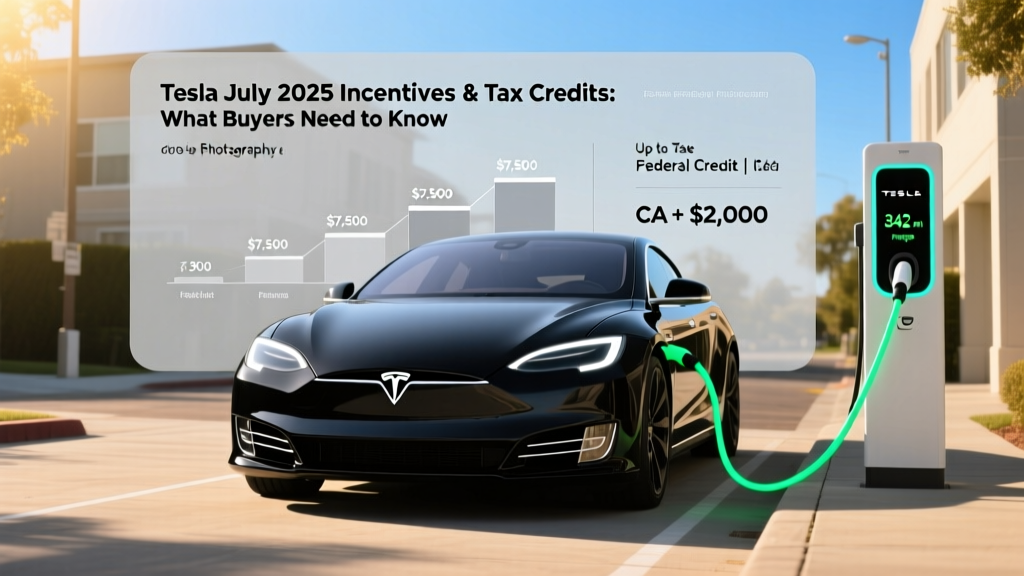
| Trim | Base MSRP | §30D Credit (if eligible) | Effective Price |
|---|---|---|---|
| RWD | $41,990 | Up to $7,500 | ~$34,490 |
| Long Range AWD | $47,990 | Up to $7,500 | ~$40,490 |
| Performance | $52,990 | Up to $7,500 | ~$45,490 |
Federal tax credit eligibility (§30D) requires meeting ALL of the following:
- Buyer income cap: Modified AGI ≤ $150,000 (single) / $300,000 (joint) / $225,000 (head of household)
- MSRP cap: Vehicle MSRP ≤ $80,000 for SUVs (all Model Y trims qualify)
- Battery sourcing: Critical minerals and battery components must meet phased-in percentages from US/FTA countries — Tesla's US-built batteries currently satisfy these requirements for 2026, but verify at IRS.gov before purchasing
- Point-of-sale transfer: The $7,500 credit can be applied as a down-payment reduction at the dealer (Tesla), rather than waiting to claim it on your tax return
Always confirm eligibility with a tax professional. Credit rules are subject to change, and battery-sourcing requirements tighten annually.
Warranty and Long-Term Ownership
Tesla's warranty coverage is competitive but not class-leading:
- Basic vehicle: 4 years / 50,000 miles
- Battery & drive unit (Long Range/Performance): 8 years / 120,000 miles, with minimum 70% capacity retention
- Battery & drive unit (RWD/LFP): 8 years / 100,000 miles, with minimum 70% capacity retention
The 70% retention threshold means Tesla will replace or repair the battery if it degrades below 70% of original capacity within the warranty period. Real-world data from high-mileage Model Y owners suggests NMC batteries typically retain 85–90% capacity at 100,000 miles with proper charging habits (avoiding frequent 100% charges, minimizing DC fast charging when possible). LFP batteries in the RWD model tend to degrade even more slowly, with some fleet data showing 90%+ retention at 100,000 miles.
Insurance costs for the Model Y tend to run 15–25% higher than comparable gas-powered crossovers, averaging $1,800–$2,400 annually depending on your state, driving record, and coverage level. Get quotes before purchasing — this is a real ownership cost that surprises many first-time EV buyers.
Pros and Cons
- Best-in-class Supercharger network access (20,000+ stalls, 98%+ uptime)
- 320-mile EPA range (Long Range) covers most road trips with one stop
- Class-leading cargo space (72.1 cu ft folded)
- 250 kW peak DC charging (10–80% in ~25 min)
- Excellent efficiency: 122 MPGe combined (Long Range)
- Continual OTA updates add features post-purchase
- Heat pump standard for cold-climate efficiency
- $7,500 federal tax credit eligible (verify sourcing annually)
- Turn-signal stalk removed — steering-wheel buttons take significant adaptation
- No ultrasonic sensors — Tesla Vision parking can be imprecise
- FSD (Supervised) is $8,000 and remains Level 2 only
- Phantom braking incidents reported on Autopilot
- No Apple CarPlay or Android Auto
- Insurance premiums 15–25% above segment average
- Ride firmness on 20-inch wheels (opt for 19-inch for comfort)
- Panel gap quality still inconsistent on some vehicles
Who Should Buy the 2026 Model Y?
- You need a practical family EV with strong cargo space and 300+ mile range
- You road-trip regularly and want the most reliable DC fast-charging network
- You can install Level 2 charging at home
- You want strong performance without paying luxury-badge premiums
- You value OTA updates and a tech-forward cabin experience
- You need Apple CarPlay/Android Auto (consider the Ioniq 5 or Mach-E)
- You prefer traditional controls (stalks, buttons, physical gauges)
- You want a luxury interior (consider the BMW iX or Genesis GV70 Electrified)
- You cannot charge at home and rely entirely on public infrastructure
Frequently Asked Questions
What is the real-world range of the 2026 Tesla Model Y?
The EPA rates the Long Range AWD at 320 miles. In real-world mixed driving at moderate temperatures, expect 285–300 miles. Highway driving at 75+ mph drops that to 260–275 miles, and cold weather (below 32°F) can reduce range to 220–250 miles. The RWD model's EPA rating is 300 miles, with similar proportional real-world reductions.
How fast does the Model Y charge at home and on the road?
On a home Level 2 charger (240V, 48A), the Model Y charges at 11.5 kW, adding roughly 44 miles of range per hour — a full charge takes about 7–8 hours overnight. On a Tesla V3 Supercharger, the Long Range and Performance peak at 250 kW, achieving a 10–80% charge in approximately 25 minutes with proper battery preconditioning. The RWD peaks at 170 kW with a 10–80% time of about 30 minutes.
Does the 2026 Model Y qualify for the $7,500 federal tax credit?
All three trims currently qualify, provided the buyer meets income caps ($150K single / $300K joint), the vehicle MSRP is under $80,000 (all trims qualify), and the battery meets critical-mineral and component sourcing requirements. Tesla manufactures batteries domestically, and 2026 Model Y vehicles currently satisfy these requirements. The credit can be transferred at point of sale as a $7,500 price reduction. Always verify current rules at IRS.gov and consult a tax professional before purchasing.
Is the Model Y worth buying over the Ford Mach-E or Hyundai Ioniq 5?
The Model Y wins on cargo space (72.1 vs. ~60 cu ft), Supercharger network access, and efficiency. The Ioniq 5 offers 800V architecture (faster peak charging at compatible stations), Apple CarPlay, and a more distinctive design. The Mach-E offers a more traditional driving experience and BlueCruise hands-free driving on mapped highways. If the Supercharger network and cargo space matter most, the Model Y leads. If you prefer CarPlay and more conventional controls, the Ioniq 5 is a strong alternative.
What are the biggest drawbacks of the 2026 Model Y?
The removal of the turn-signal stalk and ultrasonic sensors are the most common complaints. The Tesla Vision camera-only parking system is less precise than sensor-based alternatives. There is no Apple CarPlay or Android Auto. FSD (Supervised) costs $8,000 and remains a Level 2 system requiring full driver attention. Insurance costs run 15–25% above comparable crossovers. And panel-gap quality, while improving, remains inconsistent on some vehicles.
How long will the Model Y battery last?
Tesla warranties the battery for 8 years / 120,000 miles (Long Range/Performance) or 8 years / 100,000 miles (RWD) with a minimum 70% capacity retention guarantee. Real-world data from high-mileage owners and fleet operators suggests NMC batteries retain 85–90% at 100,000 miles with good charging habits. LFP batteries in the RWD model may retain 90%+ at similar mileage. A full battery replacement outside warranty currently costs $12,000–$16,000 depending on the pack — though most owners will never need one.