2026 Tesla Model Y: The Benchmark Compact EV SUV Gets a Major Refresh
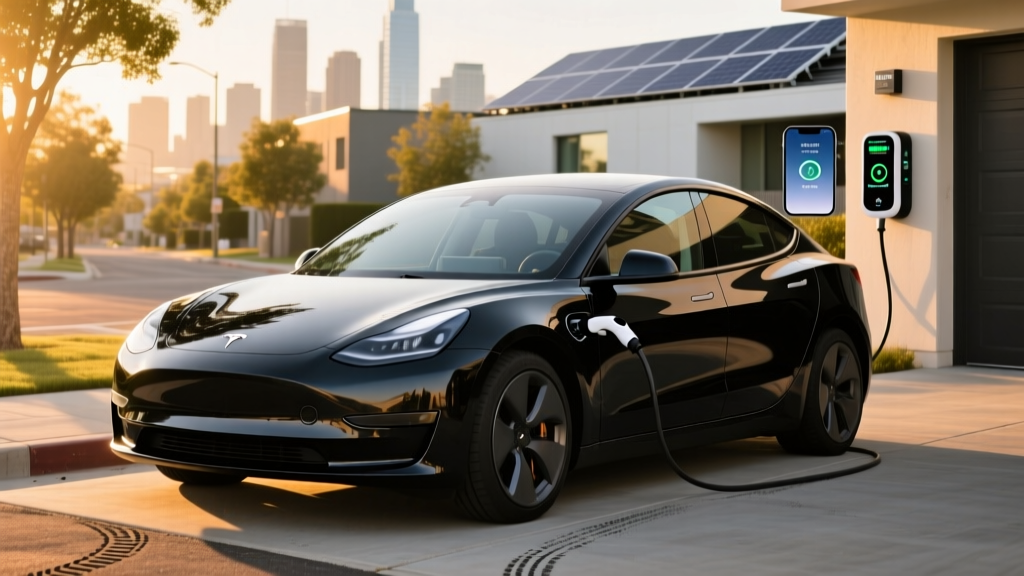
The Tesla Model Y remains the best-selling electric vehicle in the United States for good reason: it delivers class-leading efficiency, access to the most reliable DC fast-charging network, and continuous over-the-air improvements. For 2026, Tesla has rolled out the "Juniper" refresh — a comprehensive update that sharpens the exterior, overhauls the interior with premium materials and a rear touchscreen, and tweaks the powertrain for marginally better range and ride comfort. If you've been searching for detailed Tesla car pics to see what's changed, the visual differences are immediately apparent: slimmer LED light bars front and rear, a more sculpted hood, flush door handles, and new wheel designs that improve aerodynamic efficiency.
But looks only go so far. What matters to EV buyers is the hard data — range, charging speed, pricing after incentives, and how this stacks up against a growing field of competitors like the Hyundai Ioniq 5, Ford Mustang Mach-E, and Chevrolet Equinox EV. This review breaks down every number that matters.
Full Specifications at a Glance
| Specification | Long Range RWD | Long Range AWD | Performance AWD |
|---|---|---|---|
| EPA Range | 320 miles | 300 miles | 277 miles |
| Battery (usable) | ~75 kWh (NMC) | ~75 kWh (NMC) | ~75 kWh (NMC) |
| Drivetrain | Rear-Wheel Drive | Dual-Motor AWD | Dual-Motor AWD |
| Horsepower | 346 hp | 384 hp | 456 hp |
| 0–60 mph | 5.8 sec | 4.8 sec | 3.5 sec |
| Max DC Fast Charge | 250 kW | 250 kW | 250 kW |
| 10–80% DC Time | ~25 min | ~25 min | ~25 min |
| Level 2 Charge Rate | 11.5 kW (~44 mi/hr) | 11.5 kW (~44 mi/hr) | 11.5 kW (~44 mi/hr) |
| Efficiency (MPGe) | 123 MPGe combined | 117 MPGe combined | 111 MPGe combined |
| Efficiency (kWh/100 mi) | 27 kWh | 29 kWh | 30 kWh |
| Cargo Volume (rear seats up) | 30.2 cu ft | 30.2 cu ft | 30.2 cu ft |
| Cargo Volume (rear seats folded) | 72.0 cu ft | 72.0 cu ft | 72.0 cu ft |
| Base MSRP | $44,990 | $47,990 | $52,490 |
Source: EPA Fuel Economy and Tesla Model Y configurator. Specs reflect 2026 model year.
Range and Efficiency: EPA Sticker vs. Real World
Real-world expectation: 270–290 miles on mixed highway driving; 230–260 miles in sustained cold weather (below 30°F) or at sustained speeds above 75 mph.
The 2026 Model Y Long Range RWD achieves an EPA-estimated 320 miles on a full charge — a modest but meaningful bump over the pre-refresh model, aided by improved aerodynamics and slightly revised battery management. The Long Range AWD drops to 300 miles, while the Performance variant settles at 277 miles due to stickier tires, larger wheels, and more aggressive powertrain tuning.
In real-world driving, Tesla's efficiency remains a standout. On a 70°F day with mixed city and suburban driving at moderate speeds, hitting 300+ miles on the Long Range RWD is achievable. However, highway road trips at 75–80 mph typically yield 260–280 miles of usable range before you'll want to stop. Cold weather is the great equalizer: in sustained sub-freezing temperatures, expect a 15–25% reduction, putting real-world winter range at roughly 230–260 miles for the Long Range AWD.
The Juniper refresh retains the heat pump introduced in earlier model years, which significantly reduces cabin-heating energy draw compared to resistive heaters. This is one reason the Model Y loses less range in cold weather than competitors still using PTC heaters. Still, preconditioning the battery before fast charging — a feature Tesla handles automatically when you navigate to a Supercharger — is essential for achieving peak charge rates in cold conditions.
Charging Speed: Supercharger Network Advantage
| Charging Level | Power / Rate | Miles Added per Hour | Notes |
|---|---|---|---|
| Level 1 (120V household) | ~1.4 kW | ~4–5 mi/hr | Emergency/trickle only |
| Level 2 (240V home/work) | 11.5 kW (48A) | ~44 mi/hr | Full charge in ~7 hours |
| DC Fast Charge (Supercharger V3/V4) | Peak 250 kW | ~162 mi in 15 min | 10–80% in ~25 min; tapers sharply above 80% |
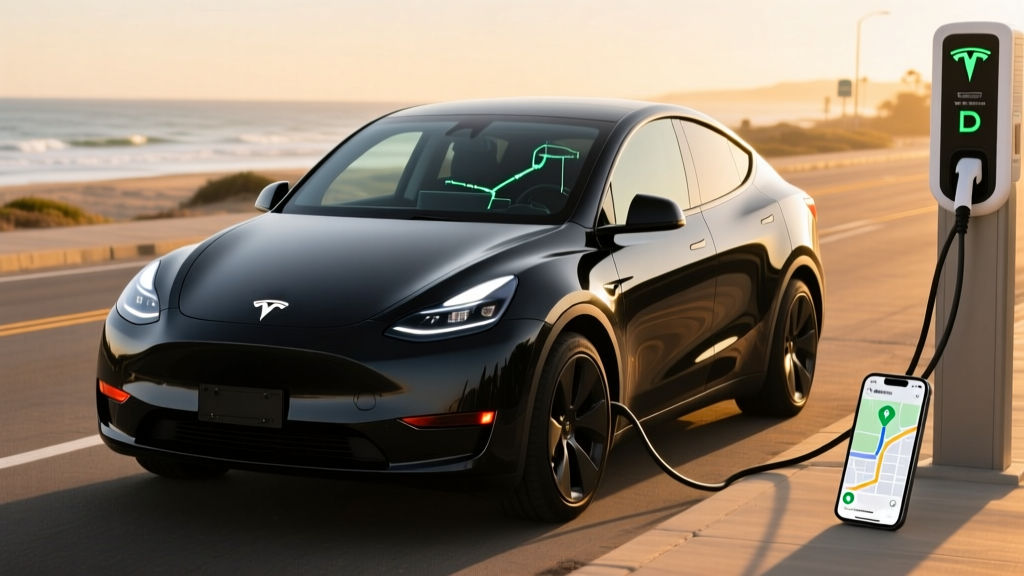
Tesla's Supercharger network remains the gold standard for public DC fast charging — not because of peak power (250 kW is matched or exceeded by Hyundai's 800V architecture at 350 kW chargers), but because of reliability, density, and seamless plug-and-charge integration. You pull up, plug in, and charging begins without an app, RFID card, or payment screen. As of 2026, Tesla operates over 6,500 Supercharger stations in North America, with V4 cabinets increasingly deployed alongside legacy V3 stalls.
The charging curve is the critical detail most spec sheets omit. The Model Y peaks at 250 kW only between roughly 10–30% state of charge (SoC). From 30–60%, it sustains around 150–180 kW. Above 80%, the rate drops dramatically to protect battery longevity — often below 50 kW. This is why Tesla (and every other automaker) quotes 10–80% times rather than 0–100%. Plan to unplug at 80% on road trips; the last 20% can take as long as the first 70%.
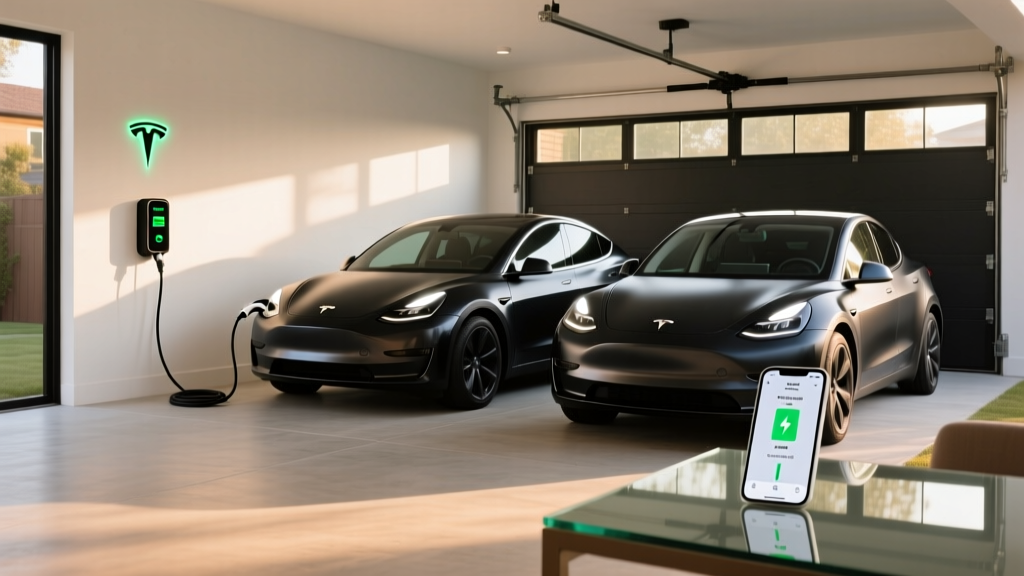
At home, the onboard charger accepts up to 11.5 kW on a 240V/60A circuit (48 amps continuous, per the 80% NEC rule). This means you'll need a NEMA 14-60 outlet or a hardwired Wall Connector installed by a licensed electrician on a circuit rated for at least 60 amps. A full charge from near-empty takes roughly 7 hours — easily accomplished overnight. Most owners who charge nightly at home rarely visit public chargers except on road trips.
Performance and Driving Dynamics
Even the base Long Range RWD delivers a 5.8-second 0–60 mph time with 346 horsepower — quicker than most gas-powered compact SUVs. The dual-motor Long Range AWD drops that to 4.8 seconds with 384 hp, providing confident highway merging and all-weather traction. The Performance variant hits 60 mph in 3.5 seconds with 456 hp, which is sports-car territory in a family crossover.
The Juniper update brings revised suspension tuning with frequency-selective dampers, addressing one of the pre-refresh Model Y's most common complaints: a firm, sometimes harsh ride over broken pavement. The 2026 model is noticeably more compliant while retaining the low center of gravity and sharp turn-in that the battery-pack architecture provides. Steering remains quick and precise, though feedback is limited — a characteristic of most electric power steering systems.
Regenerative braking in the Model Y offers strong one-pedal driving capability. Lifting off the accelerator produces significant deceleration, allowing many drivers to rarely touch the brake pedal in city traffic. However, Tesla removed the user-adjustable regen setting several model years ago, so the level of regeneration is fixed — a point of frustration for drivers who prefer to modulate coasting behavior.
Interior, Tech, and Cargo: The Juniper Overhaul
This is where the 2026 refresh earns its keep. The Juniper interior represents a genuine generational leap: ventilated front seats (finally), ambient lighting, acoustically laminated glass on all windows for reduced cabin noise, premium textile and wood trim replacing the previous piano-black plastic, and — crucially — an 8-inch rear touchscreen for passengers to control climate, media, and view navigation.
The 15.4-inch center touchscreen remains the command hub, running Tesla's proprietary infotainment OS. It handles navigation, media (Netflix, YouTube, Spotify while parked), climate, vehicle settings, and the visualization for Autopilot and FSD (Supervised). There is no Apple CarPlay or Android Auto — a dealbreaker for some buyers, though Tesla's native navigation and media integration are robust enough that most owners adapt within a week.
Cargo space remains generous at 30.2 cubic feet behind the second row and 72.0 cubic feet with the 60/40 split rear seats folded. The front trunk (frunk) adds additional storage for charging cables or a small bag. Rear legroom measures 41.6 inches — competitive with the class — though the sloping roofline cuts into headroom for taller passengers in the outboard seats.
Driver Assistance: Autopilot and FSD (Supervised)
Tesla Autopilot and Full Self-Driving (Supervised) are Level 2 driver-assistance systems. The driver must remain fully engaged, hands on the wheel (or providing steering-torque input), and eyes on the road at all times. These are NOT autonomous or self-driving systems. Only Level 4 services like Waymo operate without a human driver.
Every Model Y ships with Basic Autopilot, which includes Traffic-Aware Cruise Control and Autosteer (lane-centering) on highways. The optional FSD (Supervised) package — $8,000 as a one-time purchase or $99/month as of 2026 — adds Navigate on Autopilot (automatic highway interchanges), Auto Lane Change, Autopark, Summon, and traffic-light/stop-sign recognition. Tesla continues to iterate on FSD via over-the-air updates, and the 2026 version shows marked improvement in urban driving scenarios. However, it still requires active supervision and can make unpredictable decisions in construction zones, unmapped areas, or complex intersections.
Pricing, Trims, and Federal Tax Credit Eligibility
| Trim | Base MSRP | As-Tested (typical options) | Est. Federal Credit (§30D) | Effective Price |
|---|---|---|---|---|
| Long Range RWD | $44,990 | $46,490 | Up to $7,500* | ~$38,990 |
| Long Range AWD | $47,990 | $49,990 | Up to $7,500* | ~$42,490 |
| Performance AWD | $52,490 | $55,990 | Up to $7,500* | ~$48,490 |
*Federal tax credit eligibility under IRS §30D depends on multiple requirements:
- MSRP Cap: SUVs must have an MSRP at or below $80,000 — all Model Y trims qualify.
- Buyer Income Cap: Modified AGI must not exceed $150,000 (single), $225,000 (head of household), or $300,000 (joint filers).
- Battery Sourcing: A percentage of critical minerals and battery components must be sourced from the U.S. or FTA-partner countries. Tesla has significantly increased North American sourcing for the 2026 Model Y, and most vehicles currently qualify for the full $7,500. Confirm your specific VIN's eligibility at purchase.
- Point-of-Sale Transfer: As of 2024, buyers can transfer the credit to the dealer at purchase, reducing the upfront price rather than waiting for a tax refund.
Options that push up the as-tested price include FSD (Supervised) at $8,000, premium paint colors ($1,000–$2,500), and 20-inch wheels ($2,000, which reduce EPA range to ~295 miles on the Long Range AWD). Destination charges add approximately $1,390.
Pros, Cons, and the Competition
Pros
- Class-leading efficiency (27 kWh/100 mi on LR RWD)
- Supercharger network: unmatched reliability and coverage
- Juniper interior is a genuine quality leap — ventilated seats, rear screen, quieter cabin
- Strong performance across all trims (3.5s to 5.8s 0–60)
- Over-the-air updates continuously add features
- Spacious cargo area (72 cu ft max) with flat load floor
- Full $7,500 federal tax credit eligibility (verify VIN)
Cons
- No Apple CarPlay or Android Auto
- FSD (Supervised) remains Level 2 — requires full driver attention despite the name
- Fixed regenerative braking — no driver adjustment
- 250 kW peak DC charge rate trails Hyundai/Kia's 800V architecture (350 kW capable)
- Minimal physical controls — everything routed through the touchscreen
- Insurance costs run 15–30% higher than comparable gas SUVs in many states
Model Y vs. Key Competitors
The Hyundai Ioniq 5 offers 800V architecture for faster peak charging (up to 350 kW on compatible chargers) and a more distinctive design, but its EPA range tops out at 305 miles and its public charging experience outside the Tesla network remains inconsistent. The Ford Mustang Mach-E provides engaging driving dynamics and CarPlay support, but its efficiency and range trail the Model Y. The Chevrolet Equinox EV undercuts on price but lacks the performance and Supercharger access (though GM vehicles now have Supercharger adapter access as of 2025).
Look at competitors if: You need Apple CarPlay, prefer physical buttons, want the fastest possible DC charging (Ioniq 5 on 350 kW chargers), or find Tesla's minimalist interior too austere.
Warranty and Long-Term Ownership
Tesla provides a 4-year/50,000-mile basic vehicle warranty and an 8-year/120,000-mile battery and drive unit warranty for the Model Y Long Range and Performance trims. The battery warranty guarantees that the pack will retain at least 70% of its original capacity during the coverage period. If degradation exceeds 30% before 120,000 miles, Tesla will repair or replace the battery at no cost.
Real-world degradation data from fleet operators and owner surveys suggests that NMC packs in Teslas typically lose 5–8% capacity in the first 50,000 miles, then plateau with a very gradual decline. Many Model 3 and Model Y vehicles have surpassed 150,000 miles with 85–90% original capacity retained. The NMC chemistry used in Long Range and Performance trims offers higher energy density than LFP (lithium iron phosphate), but LFP — used in the Standard Range RWD variant — tolerates regular 100% charging without accelerated degradation and may offer longer cycle life, albeit with lower range.
Who Is the 2026 Tesla Model Y For?
The Model Y is the default recommendation for buyers who want a practical, efficient, tech-forward electric SUV and have access to home charging. It excels as a daily commuter (low operating costs, strong regen for city driving), a family hauler (spacious cargo, good safety ratings from NHTSA), and a road-trip vehicle (Supercharger coverage makes long-distance travel genuinely practical). It's less ideal for buyers who prioritize traditional infotainment integration, want physical climate controls, or live in areas with limited home-charging options and no nearby Superchargers.
Frequently Asked Questions
What is the real-world range of the 2026 Tesla Model Y?
The EPA rates the Long Range RWD at 320 miles, but real-world highway driving at 70–80 mph typically yields 270–290 miles. In cold weather below 30°F, expect 230–260 miles. The Long Range AWD drops to a 300-mile EPA rating with proportionally similar real-world reductions.
How fast does the Model Y charge at home and on the road?
On a 240V Level 2 home charger (48A), the Model Y charges at 11.5 kW, adding about 44 miles of range per hour — a full charge takes roughly 7 hours. On a Tesla Supercharger (DC fast charge), it peaks at 250 kW and reaches 10–80% in approximately 25 minutes, though charging slows significantly above 80% SoC.
Does the 2026 Tesla Model Y qualify for the $7,500 federal EV tax credit?
Yes, all Model Y trims fall under the $80,000 SUV MSRP cap and Tesla has confirmed North American battery sourcing that meets 2026 critical-mineral and component requirements. However, buyer income limits apply ($150K single / $300K joint), and you should verify your specific VIN's eligibility at the point of sale. The credit can be transferred to the dealer to reduce the purchase price upfront.
How much does the Model Y cost after tax credits?
The Long Range RWD starts at $44,990 MSRP and drops to approximately $37,490 after the full $7,500 federal credit (before destination, options, and state incentives). The Long Range AWD lands around $40,490 after credit, and the Performance near $44,990.
Is the Tesla Model Y worth buying over the Hyundai Ioniq 5 or Ford Mach-E?
If charging-network reliability and efficiency are your top priorities, the Model Y remains the benchmark. The Ioniq 5 charges faster on 350 kW chargers and offers CarPlay; the Mach-E drives more engagingly. But the Supercharger ecosystem, superior MPGe, and Juniper interior improvements give the Model Y the edge for most buyers in 2026.
What's the biggest drawback of the Model Y?
The lack of Apple CarPlay/Android Auto and the absence of physical buttons are the most common complaints. Everything — climate, glovebox, mirror adjustment — is controlled through the central touchscreen, which requires a learning curve and can be distracting while driving.