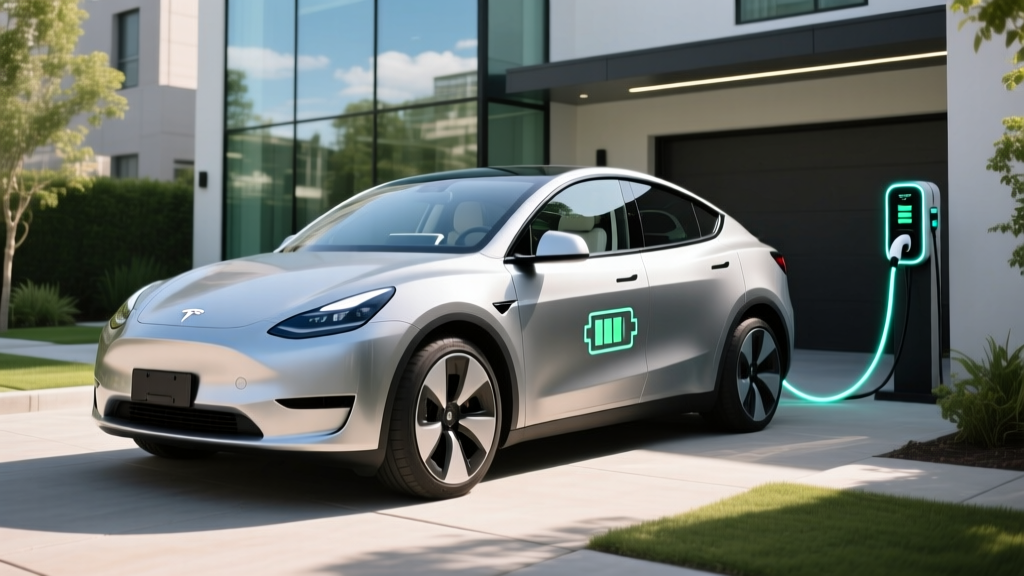
If you've been searching "ben tesla" — likely a quick-typed hunt for the best Tesla to buy — you're not alone. The 2026 Tesla Model Y remains the default answer for most EV shoppers: a compact electric SUV that balances range, charging speed, cargo space, and access to the Supercharger network. After the significant "Juniper" refresh that debuted for the 2025 model year, the 2026 Model Y carries forward with minor trim and pricing adjustments, cementing its position as the best-selling EV in the United States.
This review breaks down every number that matters — EPA range versus what you'll actually see on the highway, DC fast-charging curves, real ownership costs after the federal tax credit, and how it stacks up against the Hyundai Ioniq 5, Ford Mustang Mach-E, and Chevrolet Equinox EV.
2026 Tesla Model Y: Quick Verdict
The Model Y Long Range AWD is the sweet spot: 320 miles of EPA range, dual-motor all-wheel drive, and a starting price that keeps it under the federal tax credit MSRP cap. The Performance trim sacrifices about 30 miles of range for a 3.5-second 0-60 time that embarrasses sports cars at stoplights. The base Rear-Wheel Drive model offers the lowest entry price but drops below the 300-mile threshold most buyers want.
For 2026, Tesla has standardized the NACS (North American Charging Standard) port across all trims, meaning native Supercharger compatibility without adapters. The interior receives ventilated front seats as standard on Long Range and above, and the ambient lighting strip from the Juniper refresh continues to elevate what was once a spartan cabin.
| Spec | RWD (Base) | Long Range AWD | Performance AWD |
|---|---|---|---|
| EPA Range | 295 mi | 320 mi | 290 mi |
| Battery (usable) | ~60 kWh (LFP) | ~78 kWh (NMC) | ~78 kWh (NMC) |
| Drivetrain | Rear-Wheel Drive | Dual-Motor AWD | Dual-Motor AWD |
| Horsepower | 295 hp | 384 hp | 456 hp |
| 0–60 mph | 6.6 sec | 4.8 sec | 3.5 sec |
| Peak DC Charge | 170 kW | 250 kW | 250 kW |
| 10–80% DCFC | ~25 min | ~22 min | ~22 min |
| Level 2 Rate | 11.5 kW (~37 mi/hr) | 11.5 kW (~44 mi/hr) | 11.5 kW (~44 mi/hr) |
| EPA Efficiency | 130 MPGe / 26 kWh/100mi | 122 MPGe / 28 kWh/100mi | 111 MPGe / 30 kWh/100mi |
| Base MSRP | $44,990 | $48,990 | $53,490 |
| Cargo (rear seats up) | 30.2 cu ft (76.2 cu ft folded) | ||
| Battery Warranty | 8 years / 120,000 miles | ||
Range and Efficiency: EPA Sticker vs. Real-World Miles
EPA Estimated: 320 miles (Long Range AWD)
Real-World Expectation: Expect 270–295 miles on mixed highway/city driving at moderate temperatures. Sustained 75+ mph highway driving drops this to roughly 250–270 miles. In freezing conditions (below 32°F / 0°C), plan for 20–30% range loss, bringing usable range to approximately 220–255 miles without preconditioning.
The 2026 Model Y Long Range uses an NMC (nickel manganese cobalt) battery pack with approximately 78 kWh of usable capacity. NMC chemistry offers higher energy density than LFP, which is why the Long Range achieves 320 EPA miles in a package that doesn't sacrifice cargo volume. The base RWD model uses an LFP (lithium iron phosphate) pack — heavier and less energy-dense, but with a longer cycle life and the ability to charge to 100% daily without degradation concerns.
Efficiency varies meaningfully by trim. The RWD model achieves 130 MPGe combined (26 kWh per 100 miles), making it one of the most efficient compact electric SUVs available. The Performance trim's stickier tires and more aggressive tuning drop it to 111 MPGe. According to EPA data at fueleconomy.gov, the Long Range AWD sits at 122 MPGe combined.
For context, a gas-powered compact SUV averaging 28 MPG combined would cost roughly $2,100 per year in fuel at 15,000 miles driven and $3.90/gallon. The Model Y Long Range, charged entirely at home on a national average electricity rate of $0.16/kWh, would cost approximately $670 per year — a savings of about $1,430 annually.
Charging Speed: DC Fast Charging and Home Level 2
Charging speed is where the Model Y's 2025 Juniper architecture continues to pay dividends. The Long Range and Performance trims support a peak DC fast-charge rate of 250 kW on V3 Superchargers, with a 10–80% session taking approximately 22 minutes under optimal conditions (battery preconditioned, ambient temperature above 50°F).
Here's the nuance most spec sheets omit: peak kW is not sustained kW. The Model Y hits 250 kW briefly between roughly 10–20% state of charge, then tapers progressively. From 50–80%, expect speeds closer to 100–130 kW. This is why the 10–80% time is a more honest metric than peak kW alone. On a 300-mile road trip, plan for one 20–25 minute charge stop if you leave at 90% SoC.
| Charging Level | Power | Miles Added Per Hour | Typical Use Case |
|---|---|---|---|
| Level 1 (120V) | ~1.4 kW | ~4–5 mi/hr | Emergency / overnight trickle |
| Level 2 (240V, 48A) | 11.5 kW | ~37–44 mi/hr | Home daily charging |
| DC Fast (V3 Supercharger) | Up to 250 kW | ~1,000+ mi/hr (peak) | Road trips, quick top-ups |
| DC Fast (V4 Supercharger) | Up to 250 kW* | Similar to V3 | Newer Supercharger stations |
*The Model Y's onboard architecture caps at ~250 kW; V4 stalls capable of higher rates will not charge the Model Y faster than V3.
At home on a Level 2 Wall Connector (240V, 48-amp circuit), the Model Y Long Range adds approximately 44 miles of range per hour. A full 10–100% charge takes roughly 8.5 hours — easily accomplished overnight. Installation of a 240V/60A circuit typically costs $800–$2,000 depending on panel proximity and local permit requirements. The Tesla Wall Connector itself retails for approximately $475.
One 2026 advantage: with the industry-wide adoption of NACS, the Model Y charges natively at every Tesla Supercharger without an adapter. For non-Tesla DC networks (Electrify America, EVgo), Tesla includes a CCS adapter in the glovebox, though these networks increasingly support NACS directly.
Performance, Handling, and Drivetrain
The Model Y Performance's 3.5-second 0–60 mph time makes it one of the quickest SUVs on the road at any price. Dual-motor all-wheel drive provides confident traction in rain and light snow, with torque vectoring between the front induction motor and rear permanent-magnet motor.
The Long Range AWD's 4.8-second sprint is more than adequate for highway merging and passing, and its ride quality improved significantly with the Juniper suspension retuning — softer over sharp bumps while maintaining composed body control through corners. The RWD model at 6.6 seconds feels brisk by conventional standards but noticeably a step behind in a vehicle this heavy (~4,400 lbs for Long Range).
Regenerative braking on the Model Y is strong but no longer offers the true one-pedal driving experience of earlier Teslas. Tesla removed the adjustable regen setting several model years ago, and the 2026 model requires occasional brake pedal use for complete stops. The friction brakes are rarely used in daily driving, which extends pad and rotor life substantially — many owners report original brake pads beyond 80,000 miles.
Interior, Cargo, and Technology
The Juniper interior overhaul addressed the most common criticism of pre-2025 Model Ys: cabin warmth and material quality. The 2026 model features a full-width ambient lighting strip, ventilated front seats (Long Range and above), acoustic glass on all windows, and a rear-seat touchscreen for climate and media control.
Cargo volume: 30.2 cubic feet behind the second row, expanding to 76.2 cubic feet with the rear seats folded. The front trunk (frunk) adds approximately 4.1 cubic feet — useful for charging cables or a small bag. Rear legroom measures 41.6 inches, competitive with the class.
The 15.4-inch center touchscreen runs Tesla's proprietary infotainment system. There is no Apple CarPlay or Android Auto — a dealbreaker for some buyers, a non-issue for Tesla loyalists. Navigation, media (Spotify, Apple Music, Tidal built in), and vehicle controls all route through this screen. The system is responsive and receives over-the-air updates regularly.
Driver assistance: Tesla's Autopilot comes standard and includes adaptive cruise control and lane-centering on highways. Full Self-Driving (Supervised) is a $8,000 option (or $99/month subscription) that adds automatic lane changes, navigation-on-ramp-to-off-ramp highway driving, and city street capabilities.
SAE Automation Level: Level 2
Both Autopilot and FSD (Supervised) are SAE Level 2 driver-assistance systems. The driver must remain fully engaged, keep hands on the steering wheel, and monitor the road at all times. These are not self-driving systems. Tesla's camera-only vision approach has improved substantially, but driver supervision is non-negotiable for safety.
Pricing, Trims, and Federal Tax Credit Eligibility
| Trim | Base MSRP | Est. w/ FSD | Potential §30D Credit | Effective Price* |
|---|---|---|---|---|
| Rear-Wheel Drive | $44,990 | $52,990 | Up to $7,500 | ~$37,490 |
| Long Range AWD | $48,990 | $56,990 | Up to $7,500 | ~$41,490 |
| Performance AWD | $53,490 | $61,490 | Up to $7,500 | ~$45,990 |
*Effective price assumes full $7,500 federal credit eligibility. Actual credit depends on battery sourcing, buyer income, and tax liability.
The IRS §30D Clean Vehicle Credit provides up to $7,500 for qualifying new EVs, split into two halves: $3,750 for meeting critical-minerals sourcing requirements and $3,750 for battery-component manufacturing in North America. Key eligibility rules for 2026:
- MSRP cap: SUVs must be priced at or below $80,000. All Model Y trims qualify.
- Buyer income cap: Modified AGI must not exceed $150,000 (single), $225,000 (head of household), or $300,000 (joint).
- Battery sourcing: Critical minerals and component requirements tighten annually. Tesla's shifting supply chain means eligibility can change mid-year — verify at purchase.
- Point-of-sale transfer: As of 2024, buyers can transfer the credit to the dealer at purchase, reducing the upfront price rather than waiting for a tax refund. The Model Y qualifies for this.
- Tax liability: The credit is non-refundable. If your federal tax liability is less than $7,500, the credit is capped at your liability amount (unless transferred at point of sale, which bypasses this limitation).
As of early 2026, the Model Y Long Range AWD has qualified for the full $7,500 credit at most dealerships, though buyers should confirm current sourcing compliance on the fueleconomy.gov tax credit lookup before signing paperwork.
Model Y vs. Key Competitors: Which Should You Choose?
| Spec | Tesla Model Y LR | Hyundai Ioniq 5 LR | Ford Mach-E ER | Chevy Equinox EV RS |
|---|---|---|---|---|
| EPA Range | 320 mi | 310 mi | 312 mi | 319 mi |
| Peak DC Charge | 250 kW | 350 kW (800V) | 150 kW | 190 kW |
| 10–80% Time | ~22 min | ~18 min | ~36 min | ~30 min |
| 0–60 mph | 4.8 sec | 5.1 sec | 5.1 sec | 5.8 sec |
| Base MSRP (AWD) | $48,990 | $52,600 | $50,875 | $43,900 |
| Charging Network | Supercharger (native) | NACS adapter / Supercharger | NACS adapter / Supercharger | NACS adapter / Supercharger |
| Apple CarPlay | No | Yes (wireless) | Yes (wireless) | Yes (wireless) |
Choose the Tesla Model Y if: You prioritize Supercharger network access without adapters, want the quickest performance in the segment, value OTA software updates, and don't need Apple CarPlay.
Choose the Hyundai Ioniq 5 if: Fastest DC charging is critical (800V architecture), you want CarPlay/Android Auto, and prefer a more conventional interior layout with physical buttons for climate.
Choose the Ford Mach-E if: You want a more traditional driving feel, prefer a dealer service network nearby, and value CarPlay integration.
Choose the Chevy Equinox EV if: Lowest starting price matters most, and you can accept slower DC charging speeds in exchange for a lower monthly payment.
Pros, Cons, and Ownership Realities
Pros
- 320-mile EPA range (Long Range) is class-leading
- Supercharger network access — still the most reliable DC fast-charging network in the U.S.
- Over-the-air updates continuously add features
- Strong resale value relative to EV segment
- Excellent cargo space (76.2 cu ft) and practical hatchback form factor
- Low running costs — ~$670/year in electricity vs. $2,100+ in gas
Cons
- No Apple CarPlay or Android Auto — a persistent omission
- Everything routes through the touchscreen — no physical climate knobs
- FSD (Supervised) is expensive ($8,000) and still requires full driver attention
- Service center availability varies widely by region — some areas have long wait times
- Insurance premiums run 15–25% higher than comparable gas SUVs
- Cold-weather range loss is significant without garage parking and preconditioning
Battery and powertrain warranty: Tesla covers the Model Y battery and drive units for 8 years or 120,000 miles (whichever comes first), with a capacity retention threshold of 70%. In practice, Tesla's NMC packs have shown degradation curves that plateau around 90% state of health after 50,000 miles, with gradual loss thereafter. LFP packs in the RWD model may degrade even more slowly, though long-term data is still accumulating.
Who Is the 2026 Model Y Best For?
Daily commuters (20–60 miles round trip): Ideal. Home Level 2 charging means you start every morning with a full battery. The Long Range's 320-mile buffer means you'll charge at home 2–3 times per week at most, even with detours and HVAC use.
Families with kids: The 30.2 cu ft cargo area handles double strollers, sports gear, and weekly grocery runs. Rear legroom is generous. The rear touchscreen keeps passengers entertained. However, there's no built-in rear-seat entertainment with streaming — you'll need tablets.
Road trippers: The Supercharger network makes long-distance travel the Model Y's strongest advantage over competitors. Plan 20–25 minute stops every 200–250 miles, and use the car's built-in trip planner which automatically routes through chargers and preconditions the battery.
Towing: The Model Y is rated for 3,500 lbs of towing capacity (Long Range and Performance, with the factory tow hitch). This handles small boat trailers, bike racks, and light utility trailers but is not a heavy-duty towing solution.
Frequently Asked Questions
What is the real-world range of the 2026 Tesla Model Y?
The EPA rates the Long Range AWD at 320 miles. In mixed real-world driving at moderate temperatures, expect 270–295 miles. Sustained highway driving above 75 mph reduces this to 250–270 miles. In sub-freezing weather, plan for 220–255 miles unless you precondition the battery while plugged in.
How fast does the Model Y charge at home and on the road?
At home on a Level 2 (240V, 48A) Wall Connector, the Long Range adds about 44 miles of range per hour — a full charge overnight in roughly 8.5 hours. On a DC fast charger (V3 Supercharger at 250 kW), a 10–80% session takes about 22 minutes with a preconditioned battery.
Does the 2026 Model Y qualify for the $7,500 federal EV tax credit?
As of early 2026, the Model Y qualifies for the full $7,500 §30D credit, subject to buyer income limits ($150K single / $300K joint), the $80,000 SUV MSRP cap (all trims pass), and battery-sourcing requirements that can change throughout the year. The credit can be transferred at point of sale to reduce your purchase price immediately. Always verify current eligibility at IRS.gov before purchasing.
Is the Tesla Model Y worth buying over the Hyundai Ioniq 5 or Ford Mach-E?
The Model Y wins on Supercharger network reliability, cargo volume, and software integration. The Ioniq 5 charges faster on DC (18 vs. 22 minutes, 10–80%), and both the Ioniq 5 and Mach-E offer Apple CarPlay. If CarPlay is non-negotiable, look elsewhere. If charging-network confidence and OTA updates matter most, the Model Y remains the strongest pick.
How long will the Model Y battery last?
Tesla warranties the battery for 8 years or 120,000 miles with a 70% capacity retention guarantee. Real-world data from high-mileage Teslas suggests NMC packs retain approximately 85–90% capacity at 100,000 miles under normal use. Battery replacement out of warranty costs approximately $12,000–$16,000 depending on pack size, though most owners never need one.
Is Tesla's Full Self-Driving worth $8,000?
FSD (Supervised) is a Level 2 driver-assist system — not autonomous driving. It handles highway on-ramp-to-off-ramp navigation and some city-street driving competently, but you must remain fully engaged. For most buyers, the standard Autopilot (included) is sufficient. The $99/month subscription option lets you trial FSD without the upfront commitment.