Quick Verdict: Still the Benchmark for Cars With Lane Assist
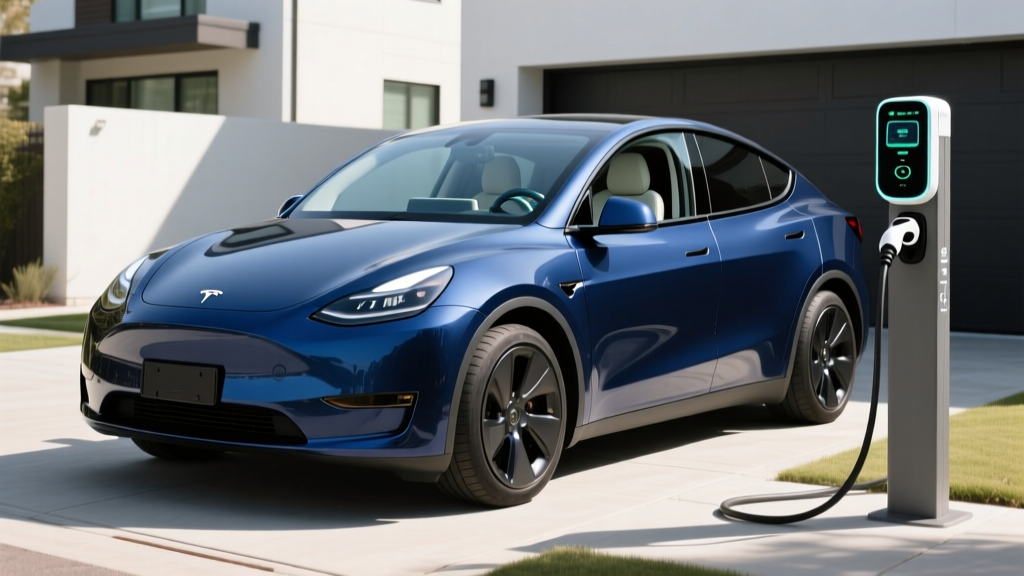
The 2026 Tesla Model Y remains the best-selling electric vehicle in the United States for good reason. Among cars with lane assist and advanced driver-assistance systems (ADAS), the Model Y's standard Autopilot package delivers some of the most confident lane-centering and adaptive cruise control available at any price point. With an EPA-estimated range of up to 320 miles on the Long Range AWD trim, a refreshed Juniper design, and access to the largest DC fast-charging network in North America, the Model Y continues to set the template that competitors chase. But with the Hyundai Ioniq 5, Ford Mustang Mach-E, and Chevrolet Equinox EV all closing the gap in 2026, buyers deserve an honest, numbers-driven breakdown before signing.
| Spec | Long Range AWD | Performance AWD |
|---|---|---|
| EPA Range | 320 miles | 293 miles |
| Battery (usable) | ~78 kWh (NMC) | ~78 kWh (NMC) |
| Drivetrain | Dual-motor AWD | Dual-motor AWD |
| Horsepower | 384 hp | 510 hp |
| 0-60 mph | 4.8 seconds | 3.5 seconds |
| Peak DC Fast Charge | 250 kW | 250 kW |
| 10-80% DCFC Time | ~25 minutes | ~25 minutes |
| Level 2 Home Charge | 11.5 kW (~44 mi/hr) | 11.5 kW (~44 mi/hr) |
| MPGe (combined) | 111 MPGe | 102 MPGe |
| Efficiency | 30 kWh/100 mi | 33 kWh/100 mi |
| Cargo (rear seats up) | 30.2 cu ft | 30.2 cu ft |
| Cargo (rear seats folded) | 72.1 cu ft | 72.1 cu ft |
| Base MSRP | $44,990 | $51,490 |
Range and Efficiency: EPA vs. the Real World
The Long Range AWD carries a 320-mile EPA estimate, while the Performance trim drops to 293 miles due to stickier tires and more aggressive tuning. Efficiency on the Long Range comes in at 111 MPGe combined (30 kWh per 100 miles), per fueleconomy.gov, making it one of the most efficient electric crossovers in its class.
Real-World Range Reality Check
EPA Sticker: 320 miles (Long Range AWD)
Expect in practice:
- City/suburban commuting (mild weather): 300–330 miles — regenerative braking and low speeds work in your favor.
- Highway driving at 70-75 mph: 260–285 miles — aerodynamic drag is the Model Y's biggest efficiency enemy.
- Cold weather (below 32°F) highway: 210–245 miles — expect 20–30% range loss from battery resistance and cabin heating. The heat pump helps, but physics wins.
The Model Y's NMC (nickel manganese cobalt) battery chemistry prioritizes energy density over the cycle-life longevity of LFP (lithium iron phosphate). Tesla recommends daily charging to 80% for NMC packs, reserving 100% for road trips — a practice that preserves long-term state of health.
Charging Speed: DC Fast Charging and Home Level 2
Charging speed is where Tesla's Supercharger network advantage becomes tangible. The 2026 Model Y peaks at 250 kW on a V3 Supercharger, adding roughly 162 miles of range in 15 minutes under ideal conditions. However, that peak rate is not sustained — the charge curve tapers significantly above 60% state of charge (SoC).
| Charging Level | Power (kW) | Miles Added per Hour | Notes |
|---|---|---|---|
| Level 1 (120V household) | ~1.4 kW | ~5 mi/hr | Emergency/trickle only |
| Level 2 (240V home Wall Connector) | 11.5 kW | ~44 mi/hr | Full charge in ~7 hours |
| Level 2 (public 7.2 kW) | 7.2 kW | ~28 mi/hr | Common at workplaces/malls |
| DC Fast (Tesla V3 Supercharger) | Peak 250 kW | ~650 mi/hr (peak) | 10-80% in ~25 min |
| DC Fast (CCS adapter, 350 kW station) | Peak 250 kW | ~650 mi/hr (peak) | Same curve; station cap irrelevant |
Charging curve reality: From 10–50% SoC, the Model Y sustains roughly 200–250 kW. From 50–80%, it drops to 80–120 kW. Above 80%, expect 30–50 kW. This is why 10-80% is the practical metric — charging past 80% at a public station is rarely worth the time. The built-in navigation system automatically preconditions the battery when you navigate to a Supercharger, warming it to optimize charge acceptance. Skipping preconditioning on a cold battery can double your 10-80% time.
Tesla now includes a CCS adapter with new vehicles, unlocking Electrify America, EVgo, and other non-Tesla networks — though Supercharger reliability still leads the industry.
Lane Assist, Autopilot, and Driver-Assistance Tech
For buyers specifically searching for cars with lane assist, the Model Y's standard Autopilot suite is a primary draw. It includes:
- Traffic-Aware Cruise Control: Maintains set speed and following distance.
- Autosteer (Lane Centering): Keeps the vehicle centered in clearly marked lanes on highways and surface streets.
- Lane Departure Avoidance: Applies corrective steering if you drift without a turn signal.
- Automatic Emergency Braking: Forward collision mitigation.
- Blind Spot Monitoring: Visual alerts on the center display.
SAE Automation Level: Level 2
Despite the "Autopilot" and optional "Full Self-Driving (Supervised)" branding, the 2026 Model Y operates at SAE Level 2. The driver must remain fully engaged — hands on the wheel (or torque applied), eyes on the road, and ready to take over instantly. Tesla's cabin camera monitors driver attention and will issue escalating warnings, eventually slowing the car to a stop if the driver is unresponsive. This is not autonomous driving. Level 4 robotaxi services like Waymo operate without any human driver; the Model Y requires yours at all times.
The optional Full Self-Driving (Supervised) package, priced at $8,000 (or $99/month as of early 2026), adds automatic lane changes, on-ramp to off-ramp highway navigation, traffic light and stop sign recognition, and a more assertive city-street driving mode. FSD has improved substantially with Tesla's end-to-end neural network approach, but it still requires active supervision and occasionally makes puzzling decisions in construction zones or complex intersections. For most buyers, the standard Autopilot lane assist is excellent and sufficient — we recommend trying FSD on the monthly subscription before committing $8,000.
What Lane Assist Does NOT Do
- Does not navigate construction zones reliably — cones and shifted lanes confuse the system.
- Does not replace driver attention — you are legally and practically responsible for the vehicle.
- Does not work well in heavy rain, snow, or when lane markings are faded or absent.
- Does not handle roundabouts or unprotected left turns without FSD (Supervised).
Interior, Cargo, and Daily Practicality
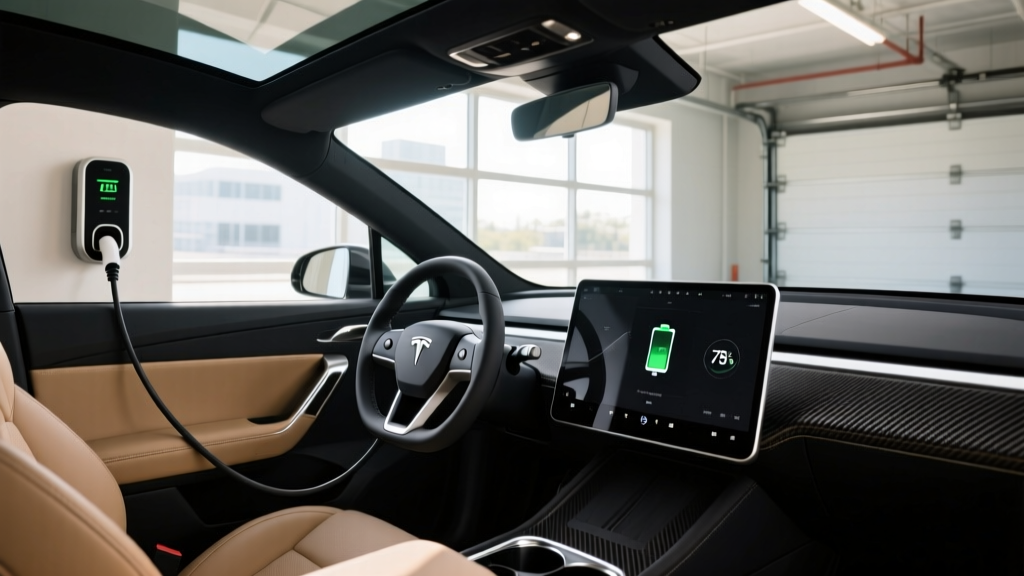
The Juniper-refreshed Model Y interior is a noticeable step up from pre-2025 models. Tesla added ventilated front seats, ambient lighting, a rear-seat touchscreen, improved sound insulation, and higher-quality soft-touch materials. The minimalist layout remains — a single 15.4-inch center touchscreen handles everything from climate to media to vehicle settings. There is no instrument cluster; speed and navigation info appear in the top-left corner of the main display.
Dimensions and space:
- Front headroom: 41.0 inches
- Front legroom: 41.8 inches
- Rear headroom: 39.4 inches
- Rear legroom: 41.6 inches — generous for adults on longer trips
- Cargo behind rear seats: 30.2 cu ft
- Cargo with rear seats folded: 72.1 cu ft
- Front trunk (frunk): 4.1 cu ft — fits a charging cable bag or small backpack
The Model Y's cargo area is slightly smaller than the Hyundai Ioniq 5 (behind rear seats) but more usable than the Ford Mustang Mach-E thanks to its wide hatch opening and flat load floor. For families with two kids and a double stroller, the Model Y handles the load comfortably. Towing capacity is rated at 3,500 pounds when properly equipped — adequate for a small utility trailer or a pair of dirt bikes, but not a camper.
Pricing, Trims, and Federal Tax Credit Eligibility
The 2026 Model Y is offered in two trims:
| Trim | Base MSRP | As-Tested (typical config) | Est. After §30D Credit |
|---|---|---|---|
| Long Range AWD | $44,990 | $46,490 (w/ Red paint, no FSD) | ~$37,490 (if eligible) |
| Performance AWD | $51,490 | $52,990 (w/ 21" wheels) | ~$45,490 (if eligible) |
Federal tax credit (§30D) eligibility: The Model Y Long Range AWD and Performance AWD both fall under the $80,000 MSRP cap for SUVs/crossovers. However, qualifying for the full $7,500 credit depends on several factors that change frequently. As of 2026, the IRS requires:
- Buyer income caps: Modified AGI ≤ $300,000 (joint), $225,000 (head of household), $150,000 (single).
- MSRP cap: ≤ $80,000 for SUVs, vans, pickups; ≤ $55,000 for sedans. The Model Y qualifies as an SUV.
- Battery sourcing: Increasing percentages of battery components must be manufactured or assembled in North America, and critical minerals must be sourced from the U.S. or FTA partners. Tesla's U.S. battery production gives the Model Y a strong position here, but exact eligibility can shift as sourcing rules tighten annually.
- Point-of-sale transfer: Since 2024, buyers can transfer the credit to the dealer at purchase, reducing the purchase price directly rather than waiting for a tax refund.
Always verify current eligibility on irs.gov or with a tax professional before relying on the credit in your budget. State and local incentives may stack on top but vary by jurisdiction.
Battery Warranty and Long-Term Ownership
Tesla covers the Model Y's battery and drive unit with an 8-year / 120,000-mile warranty (whichever comes first), guaranteeing a minimum of 70% capacity retention over that period. This is competitive with the Hyundai/Kia 10-year/100,000-mile battery warranty, though Hyundai's longer time coverage is noteworthy for high-mileage commuters.
Based on Tesla's own fleet data and third-party tracking, NMC Model Y packs typically lose about 8–12% capacity over the first 100,000 miles, with degradation slowing significantly after the initial break-in period. Following the 80% daily charge recommendation and avoiding frequent DC fast charging in extreme heat will help preserve state of health. A full battery replacement out of warranty runs $12,000–$16,000 at current pricing — a figure worth noting for second-owner buyers.
Pros and Cons
Pros
- Standard Autopilot lane assist is among the smoothest and most reliable in the industry
- Access to 6,000+ Tesla Superchargers in North America — the most reliable DCFC network
- 320-mile EPA range covers most commutes and road trips without range stress
- Excellent efficiency at 30 kWh/100 mi — lower electricity cost per mile than rivals
- Over-the-air updates add features and improvements post-purchase
- Strong cargo versatility with hatchback design and flat-folding rear seats
Cons
- No physical buttons — all controls through touchscreen can distract while driving
- FSD (Supervised) at $8,000 remains a Level 2 system requiring full driver attention
- Ride quality is firm — road imperfections transmit more than in the Ioniq 5 or Mach-E
- Insurance premiums run 15–25% higher than comparable gas crossovers
- Panel gaps and paint quality, while improved, still trail legacy automakers at this price
- No Apple CarPlay or Android Auto — Tesla's proprietary infotainment only
Who Should Buy the 2026 Model Y?
Choose the Model Y If:
- You want the most proven lane-assist and driver-assist system in a mainstream EV.
- You road-trip regularly and value Supercharger network reliability over everything.
- You need a versatile family crossover with strong cargo space and AWD capability.
- You can charge at home and want to minimize per-mile fuel cost.
Look Elsewhere If:
- You prefer traditional controls and a more cushioned ride — try the Hyundai Ioniq 5 or Kia EV6.
- You want Apple CarPlay integration — the Mach-E and Equinox EV support it.
- You need a longer battery warranty for peace of mind — Hyundai/Kia's 10-year coverage leads.
- Most of your driving is below 30°F in winter — consider a model with a larger battery buffer or an LFP option.
Frequently Asked Questions
What is the real-world range of the 2026 Tesla Model Y?
The EPA rates the Long Range AWD at 320 miles, but real-world results depend heavily on conditions. Expect 300–330 miles in mild-weather city driving, 260–285 miles on the highway at 70+ mph, and 210–245 miles in freezing temperatures on the highway. Preconditioning and moderate speeds help close the gap.
How fast does the Model Y charge at home and on the road?
On a Tesla Wall Connector (Level 2, 11.5 kW), the Model Y adds roughly 44 miles of range per hour, reaching a full charge overnight in about 7 hours. On a V3 Supercharger (DC fast charging), it peaks at 250 kW and charges from 10% to 80% in approximately 25 minutes, though the rate tapers significantly above 60%.
Does the 2026 Model Y qualify for the $7,500 federal EV tax credit?
The Model Y's MSRP is under the $80,000 SUV cap, and Tesla's North American battery sourcing positions it well. However, your personal eligibility depends on income limits ($150K single / $300K joint MAGI), and battery component sourcing rules that tighten annually. Verify on irs.gov before purchasing. The credit can now be applied at point of sale.
How does the Model Y's lane assist compare to competitors?
Tesla's Autosteer is consistently rated among the best lane-centering systems available. It handles gentle curves, lane merges, and highway traffic with smooth, confident inputs. Ford's BlueCruise (available on the Mach-E) offers hands-free driving on pre-mapped divided highways but requires a subscription. GM's Super Cruise (available on some models) is similarly hands-free on mapped roads. Hyundai/Kia's Highway Driving Assist 2 is capable but slightly less refined in lane centering. None of these are self-driving — all require active supervision (SAE Level 2).
Is the Model Y worth buying over the Ioniq 5 or Mach-E in 2026?
The Model Y wins on charging network access, efficiency (kWh/100 mi), and driver-assist polish. The Ioniq 5 wins on interior design, ride comfort, and its 10-year battery warranty. The Mach-E wins on driving dynamics and Apple CarPlay support. If Supercharger access matters to your lifestyle, the Model Y still holds a tangible edge — though the gap is narrowing as other networks expand and CCS adapters become standard.
What does FSD (Supervised) actually do, and is it worth $8,000?
FSD adds automatic lane changes, highway on/off-ramp navigation, traffic light recognition, and city-street autosteer. It has improved dramatically with Tesla's end-to-end neural network, but it still requires constant supervision and occasionally hesitates or makes unexpected routing decisions. At $8,000 (or $99/month), we recommend the monthly subscription to evaluate it on your actual commute before committing. For most drivers, standard Autopilot lane assist covers 90% of the benefit.