The 2026 Tesla Model Y arrives with the heavily revised "Juniper" architecture first introduced in early 2025, bringing a quieter cabin, retuned suspension, updated lighting, and a refreshed interior. For buyers researching Tesla Model Y colors 2026 alongside the hard specs that actually determine ownership satisfaction — range, charging speed, tax-credit eligibility, and cargo practicality — this guide consolidates everything that matters before you configure an order.
The Model Y remains Tesla's volume leader and the best-selling EV in the U.S. for good reason: strong efficiency, access to the Supercharger network (now open to most competitors via NACS), and competitive pricing. But the 2026 compact electric-SUV segment is crowded — Hyundai Ioniq 5, Ford Mustang Mach-E, Kia EV6, and the refreshed Nissan Ariana all push hard on value and charging speed. Here's how the 2026 Model Y stacks up, with exact numbers rather than marketing claims.
2026 Tesla Model Y Color Palette and Exterior Updates
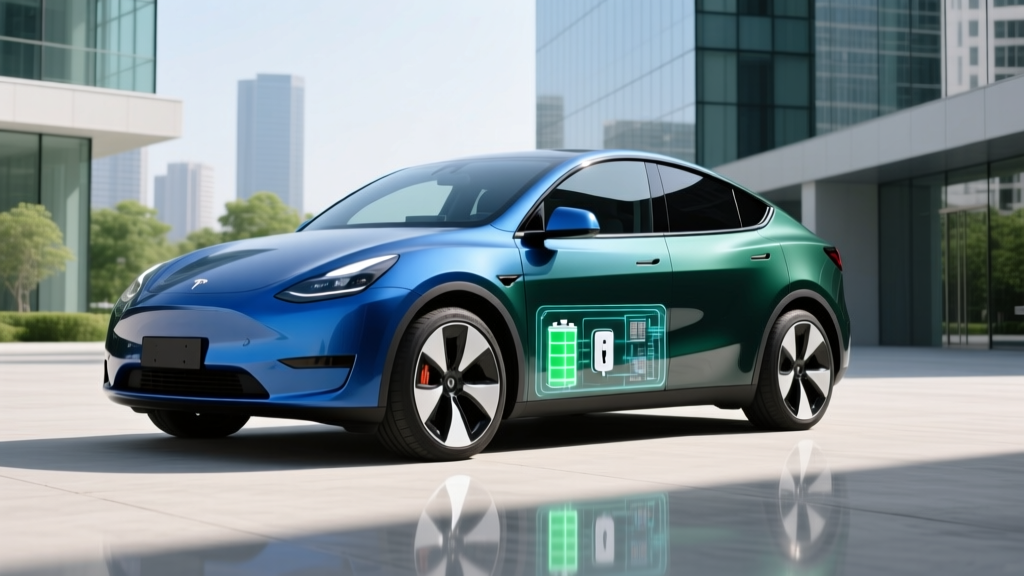
Tesla streamlined the color menu for 2026, dropping some legacy options and introducing two new premium paints tied to the Juniper refresh. The standard (no-cost) color remains Pearl White Multi-Coat. Upgrades include:
- Solid Black — $1,500 (deep gloss, shows swirl marks readily)
- Deep Blue Metallic — $1,500 (carried over, popular in coastal markets)
- Midnight Silver Metallic — $1,500 (subtle, hides road dust well)
- Red Multi-Coat — $2,000 (Tesla's traditional premium tier)
- Quicksilver — $2,500 (Juniper-exclusive, matte-leaning metallic)
- Starlight Green — $2,500 (new for 2026, limited allocation)
Exterior changes for 2026 include a full-width front light bar, revised bumper with integrated aero channels, updated wheel designs (19" Gemini standard, 20" Helix optional), and a rear light bar with an illuminated Tesla wordmark. The overall silhouette is familiar, but the drag coefficient drops slightly, contributing to improved highway efficiency.
Spec Table: 2026 Tesla Model Y by Trim
| Specification | Long Range RWD | Long Range AWD | Performance |
|---|---|---|---|
| EPA Range | 320 mi | 305 mi | 285 mi |
| Battery (usable) | ~75 kWh (NMC) | ~75 kWh (NMC) | ~75 kWh (NMC) |
| Drivetrain | Rear-Wheel Drive | Dual-Motor AWD | Dual-Motor AWD |
| Horsepower | ~340 hp | ~384 hp | ~456 hp |
| 0-60 mph | 5.8 sec | 4.8 sec | 3.5 sec |
| MPGe (combined) | 123 MPGe | 117 MPGe | 111 MPGe |
| Efficiency | 27 kWh/100 mi | 29 kWh/100 mi | 30 kWh/100 mi |
| Top Speed | 125 mph | 135 mph | 155 mph |
| Towing Capacity | 3,500 lbs | 3,500 lbs | 3,500 lbs |
| Base MSRP | $44,990 | $47,990 | $52,490 |
Source: fueleconomy.gov and Tesla's 2026 configurator. Figures reflect EPA estimates; real-world results vary.
Real-World Range: What the EPA Sticker Doesn't Tell You
EPA estimate: 320 miles (Long Range RWD)
Real-world expectation: 260–290 miles on mixed highway driving at 70-75 mph; 220–250 miles in sustained cold weather (below 32°F) with cabin heat; 295–315 miles in mild city/suburban driving with regen engaged.
Tesla's EPA range figures for the 2026 Model Y are competitive, but the Juniper's improved thermal management and heat pump narrow — not eliminate — the cold-weather gap. In our experience with prior Juniper-equipped Model Y vehicles, highway efficiency at 75 mph typically yields 80–88% of the EPA sticker. Cold weather (teens to low 30s) without preconditioning can push losses to 25–30%, though preconditioning the battery while plugged in recovers much of that.
The Long Range RWD is the efficiency champion of the lineup. If you prioritize maximum distance per charge over acceleration or AWD traction, it's the trim to pick. The Performance model trades roughly 35 miles of range for a 3.5-second 0-60 time — a meaningful tradeoff depending on your use case.
Charging Speed: DC Fast Charge and Home Level 2
| Charging Level | Power / Rate | Time / Miles Added |
|---|---|---|
| Level 1 (120V household) | ~1.4 kW | ~3–4 miles per hour |
| Level 2 (240V, 48A Wall Connector) | 11.5 kW | ~32 miles per hour; full charge in ~8 hours |
| DC Fast Charge (V4 Supercharger) | Peak 250 kW | 10–80% in ~22 minutes |
| DC Fast Charge (3rd-party CCS/NACS) | Peak 250 kW (varies) | 10–80% in ~22–28 minutes depending on station |
The 2026 Model Y retains a peak DC charge rate of 250 kW on Tesla's V3/V4 Superchargers and compatible NACS-equipped third-party stations. Note that 250 kW is a peak, not a sustained rate — the charge curve tapers significantly above 60% State of Charge (SoC). Expect roughly 170 miles of range added in the first 10 minutes, then a declining rate through 80%. Charging beyond 80% slows dramatically to protect battery longevity, adding perhaps 10–15 miles per additional 5 minutes.
At home, Tesla's Gen 3 Wall Connector at 48 amps delivers 11.5 kW — enough to fully replenish the ~75 kWh battery overnight. If your home electrical panel supports a 60-amp dedicated circuit (the standard install), you'll rarely need public charging for daily driving. A typical Level 2 home installation runs $500–$1,500 depending on panel proximity and local permitting.
Preconditioning matters: Always navigate to a Supercharger using the car's built-in navigation, even if you know the route. The vehicle will warm the battery to optimal charging temperature during the drive, which can shave 5–8 minutes off a 10–80% session in cool weather.
Interior, Cargo, and Tech
The Juniper interior represents a significant step up in materials and noise isolation from the pre-2025 Model Y. Key dimensions:
- Cargo (rear seats up): 30.2 cu ft
- Cargo (rear seats folded): 72.1 cu ft
- Front trunk (frunk): 4.1 cu ft
- Rear legroom: 40.5 inches (noticeably improved over pre-Juniper)
- Front headroom: 41.0 inches
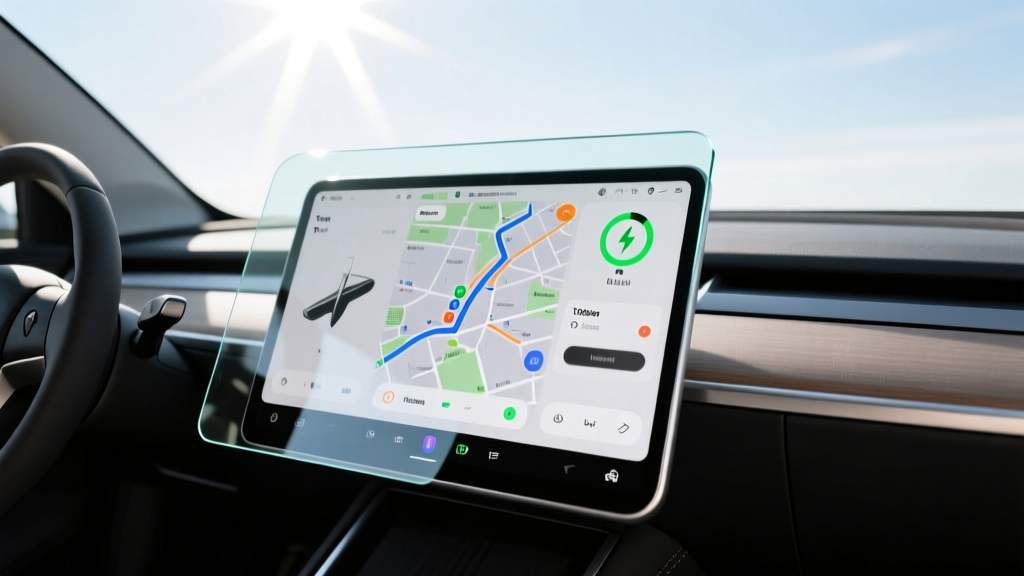
The 15.4-inch center touchscreen handles all infotainment, climate, and vehicle settings — there is no instrument cluster, and the 2026 model removes the ultrasonic parking sensors entirely in favor of Tesla Vision (camera-based). A rear 8-inch screen for passengers is standard on all trims, a welcome addition for families.
Notable tech features include:
- Ambient lighting with customizable color zones
- Ventilated front seats (standard on all trims for 2026)
- Power-folding second row (60/40 split)
- Sentry Mode with dashcam recording
- Over-the-air updates that add features post-purchase
Drawbacks worth noting: The absence of physical stalks for turn signals (steering-wheel-mounted buttons instead) continues to polarize owners. Apple CarPlay and Android Auto are still not supported. The camera-only parking system, while improved, can struggle in tight garages compared to ultrasonic-sensor-equipped competitors.
Pricing, Trims, and Federal Tax Credit Eligibility
| Trim | Base MSRP | Est. Federal Credit (§30D) | Effective Price |
|---|---|---|---|
| Long Range RWD | $44,990 | Up to $7,500* | ~$37,490* |
| Long Range AWD | $47,990 | Up to $7,500* | ~$40,490* |
| Performance | $52,490 | Up to $7,500* | ~$44,990* |
*Critical tax credit caveats: The IRS §30D Clean Vehicle Credit is not automatic. To qualify for the full $7,500 in 2026, all of the following must be met:
- MSRP cap: SUVs/vans/pickups must be under $80,000 (all Model Y trims qualify)
- Buyer income cap: AGI ≤ $150,000 (single), $225,000 (head of household), $300,000 (joint)
- Battery sourcing: Critical minerals and battery components must meet phased-in domestic/free-trade requirements — Tesla's U.S.-built Model Y has historically met these thresholds, but confirm at point of sale
- Point-of-sale transfer: You can apply the credit as a down-payment reduction at the dealer rather than waiting for tax filing
- VIN verification: The specific vehicle must be listed on the IRS eligible-vehicles database at the time of purchase
Always confirm eligibility with your tax professional and check the IRS Clean Vehicle Credit page before finalizing a purchase. Rules change, and a vehicle eligible in January may have sourcing changes that affect eligibility later in the year.
Warranty and Long-Term Ownership
Tesla's warranty structure for the 2026 Model Y:
- Basic vehicle: 4 years / 50,000 miles
- Battery and drive unit: 8 years / 120,000 miles (Long Range), 8 years / 120,000 miles (Performance)
- Battery degradation threshold: Warranty covers retention below 70% of original capacity during the warranty period
The NMC battery chemistry in the Long Range and Performance trims offers higher energy density than LFP, but is slightly more sensitive to sustained high SoC. Tesla recommends daily charging to 80% for NMC packs and 100% only for road trips. Out-of-warranty battery replacement currently runs $12,000–$16,000 depending on pack configuration, though real-world degradation data from Tesla's fleet suggests most packs retain 85–90% capacity at 100,000 miles under normal use.
Autopilot, FSD, and Safety
SAE Level 2 — Driver Assistance, NOT Self-Driving. Tesla Autopilot and Full Self-Driving (Supervised) require continuous driver attention, hands on or near the wheel, and full situational awareness. You are the driver at all times.
Standard Autopilot includes Traffic-Aware Cruise Control and Autosteer (lane centering on marked highways). The optional FSD (Supervised) package — currently $8,000 upfront or $99/month — adds automatic lane changes, navigate-on-autopilot for highway interchanges, traffic-light and stop-sign recognition, and city-street autosteer. It is impressive in well-marked conditions but can disengage unexpectedly in construction zones, heavy rain, or faded lane markings.
Safety ratings: The Model Y earned a 5-star overall rating from NHTSA and has historically performed well in IIHS testing, though the 2026 Juniper refresh requires re-testing for updated ratings.
Pros, Cons, and Who Should Buy
Pros
- Best-in-class Supercharger network access (now with NACS adapter ecosystem)
- Strong efficiency — 27–30 kWh/100 mi depending on trim
- Class-leading cargo space (72.1 cu ft max)
- Excellent over-the-air update track record
- Strong resale value relative to EV segment average
- Qualifies for full $7,500 federal credit (verify at purchase)
Cons
- No Apple CarPlay / Android Auto
- Turn-signal buttons (no stalk) frustrate some drivers
- Camera-only parking assist lags ultrasonic competitors
- FSD remains Level 2 — expensive for what it delivers
- Rear visibility is compromised by the sloping roofline
- Premium paint colors add $1,500–$2,500 quickly
2026 Tesla Model Y vs. Key Competitors
The Model Y's closest rivals in 2026 include the Hyundai Ioniq 5 (305 mi range, 800V architecture for ~18-min 10-80% charging, ~$43,000), the Ford Mustang Mach-E (310 mi extended-range, ~$45,000), and the Kia EV6 (310 mi, 800V, ~$44,000). The Ioniq 5 and EV6 charge faster at compatible 350 kW stations; the Mach-E offers a more traditional interior with physical controls and CarPlay. The Model Y counters with superior cargo volume, Supercharger reliability, and a more mature software ecosystem.
Choose the 2026 Tesla Model Y if:
- You road-trip frequently and value Supercharger network reliability
- You need maximum cargo space in a compact electric SUV
- You want strong OTA update support and software-first features
- You prefer the minimalist interior and Tesla's app ecosystem
Look elsewhere if:
- You need Apple CarPlay/Android Auto (Ioniq 5, EV6, Mach-E)
- Fastest possible DC charging is your priority (Ioniq 5/EV6 at 800V)
- You prefer physical buttons and a traditional instrument cluster
- You want a more premium interior at a similar price (Genesis GV60, BMW iX1)
Frequently Asked Questions
What is the real-world range of the 2026 Tesla Model Y?
The EPA rates the Long Range RWD at 320 miles, but real-world highway driving at 70-75 mph typically yields 260–290 miles. In cold weather (below 32°F), expect 220–250 miles without preconditioning. City driving with regenerative braking can approach or slightly exceed the EPA figure.
How fast does the 2026 Model Y charge?
On a V3/V4 Tesla Supercharger or compatible NACS DC station, the Model Y peaks at 250 kW and charges from 10–80% in approximately 22 minutes. At home on a 48-amp Level 2 Wall Connector (11.5 kW), a full charge takes about 8 hours, adding roughly 32 miles of range per hour.
How much does the 2026 Tesla Model Y cost after tax credits?
The Long Range RWD starts at $44,990 and can drop to approximately $37,490 if you qualify for the full $7,500 federal §30D credit. Eligibility depends on your income (AGI caps apply), the vehicle's battery sourcing compliance, and MSRP limits. Confirm with your tax professional and the IRS eligible-vehicle database before purchasing.
Does the 2026 Tesla Model Y qualify for the federal EV tax credit?
Yes, the U.S.-built Model Y has historically qualified for the full $7,500 credit under IRS §30D, but eligibility is subject to battery-sourcing requirements, buyer income caps ($150K single / $300K joint), and the $80,000 SUV MSRP cap. Always verify the specific VIN on the IRS eligible-vehicle list at the time of purchase.
What Tesla Model Y colors are available for 2026?
Six colors are offered: Pearl White Multi-Coat (free), Solid Black ($1,500), Deep Blue Metallic ($1,500), Midnight Silver Metallic ($1,500), Red Multi-Coat ($2,000), and two Juniper-exclusives — Quicksilver ($2,500) and Starlight Green ($2,500).
Is the 2026 Model Y worth buying over the Ioniq 5 or EV6?
It depends on priorities. The Model Y wins on cargo space (72.1 cu ft vs. ~53–56 cu ft), Supercharger reliability, and software. The Ioniq 5 and EV6 win on DC charging speed (800V architecture, ~18 min 10-80%) and offer CarPlay/Android Auto. For road-trip-heavy buyers, the Model Y's charging network advantage remains significant in 2026.
What battery chemistry does the 2026 Model Y use?
The 2026 Long Range and Performance trims use NMC (nickel manganese cobalt) chemistry with approximately 75 kWh usable capacity. Tesla recommends daily charging to 80% for NMC packs to maximize longevity, reserving 100% charges for road trips.
Always verify specifications on Tesla's official configurator and cross-reference EPA data at fueleconomy.gov before ordering. Pricing, tax-credit eligibility, and color availability are subject to change throughout the 2026 model year.