Quick Verdict: What a Macan Electric Lease Actually Costs
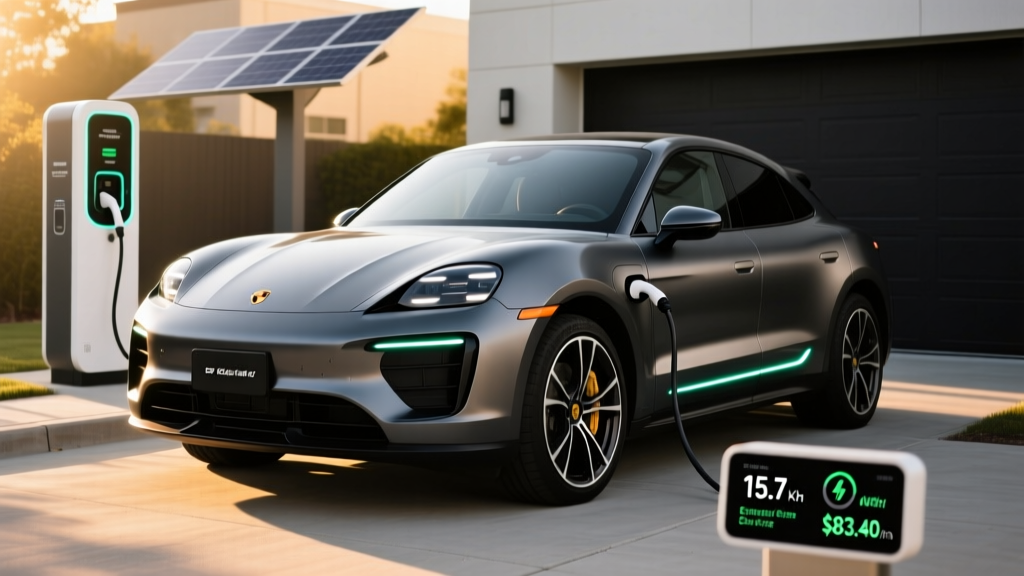
The 2026 Porsche Macan Electric is a performance SUV that blends Porsche driving dynamics with an 800-volt architecture, up to 312 miles of EPA range, and blistering charge speeds. But before you sign a lease, the math matters. Between a base MSRP starting around $78,800, premium insurance rates, and federal tax credit rules that may or may not apply to your lease, the real monthly and five-year cost requires a closer look.
This guide breaks down every ownership cost factor — from charging per mile to depreciation trends — so you can evaluate a Macan Electric lease against a gas-powered Macan or competing EVs like the BMW iX or Audi Q8 e-tron.
2026 Macan Electric: Key Specs at a Glance
| Spec | Macan Electric (Base) | Macan 4 Electric | Macan Turbo Electric |
|---|---|---|---|
| Base MSRP | ~$78,800 | ~$84,900 | ~$105,300 |
| Battery (usable) | 95 kWh (NMC) | 95 kWh (NMC) | 95 kWh (NMC) |
| EPA Range | ~312 mi | ~307 mi | ~283 mi |
| Real-World Range (highway/cold) | ~250–275 mi | ~245–270 mi | ~225–250 mi |
| Max DC Charge Rate | 270 kW | 270 kW | 270 kW |
| 10–80% DC Fast Charge | ~21 min | ~21 min | ~21 min |
| Level 2 Charge Rate | 11 kW | 11 kW | 11 kW |
| Horsepower | 335 hp | 402 hp | 630 hp |
| 0–60 mph | 5.4 sec | 4.9 sec | 3.1 sec |
| MPGe (combined) | ~88 MPGe | ~86 MPGe | ~80 MPGe |
| Battery/Powertrain Warranty | 8 yr / 100,000 mi | 8 yr / 100,000 mi | 8 yr / 100,000 mi |
Sources: Porsche USA, fueleconomy.gov. Real-world range estimates reflect highway driving at 70+ mph and cold-weather conditions (below 40°F), which typically reduce EPA range by 15–25%.
Federal Tax Credit (§30D): Does It Apply to a Macan Electric Lease?
The IRS §30D Clean Vehicle Credit offers up to $7,500 for qualifying new EVs — but eligibility hinges on multiple overlapping rules, and for 2026, the Macan Electric faces challenges.
- MSRP Cap: SUVs must have an MSRP at or below $80,000. The base Macan Electric (~$78,800) barely qualifies; the Macan 4 and Turbo do not.
- Buyer Income Limits: AGI must not exceed $300,000 (married filing jointly), $225,000 (head of household), or $150,000 (individual). Based on the tax year of delivery or the prior year — whichever is lower.
- Battery Sourcing Requirements: The $7,500 credit splits into two halves — $3,750 for critical minerals sourcing and $3,750 for battery component manufacturing. Both must be met for the full amount. Sourcing rules have tightened significantly through 2025–2026 under the Inflation Reduction Act, with increasing percentages required from the US or free-trade-agreement partners.
- Point-of-Sale Transfer: As of 2024, buyers can transfer the credit to the dealer at purchase, reducing the upfront cost. On a lease, the credit technically goes to the lessor (the financing entity), but most Porsche Financial Services leases pass this savings to the lessee as a capitalized-cost reduction.
- Foreign Entity of Concern (FEOC) Rule: Battery components from FEOC entities (primarily Chinese manufacturers) disqualify the vehicle. This has narrowed eligibility across many EVs.
The Macan Electric Lease Loophole: Under IRS guidance, leased vehicles are treated differently than purchased ones. The commercial vehicle credit (§45W) can apply to leases without the same MSRP, income, or sourcing restrictions. Many luxury EV lessees benefit from this "lease loophole," where the leasing company claims the credit and passes savings through the monthly payment. Confirm with your Porsche dealer and a tax professional whether the 2026 Macan Electric qualifies under the lease structure — this can be worth $7,500 in capitalized-cost reduction even if a purchase would not qualify.
5-Year Total Cost of Ownership Breakdown
Below is a realistic five-year ownership projection for a 2026 Macan Electric (base trim) versus a comparably equipped gas-powered Macan S, assuming 12,000 miles/year, home Level 2 charging, and current energy/fuel prices.
| Cost Category (5 Years) | Macan Electric (Base) | Macan S (Gas, ~$68k MSRP) |
|---|---|---|
| Purchase/Lease (after credit) | ~$71,300 (if $7,500 credit applies) | ~$68,000 |
| Fuel / Electricity | ~$4,860 | ~$12,240 |
| Insurance | ~$17,400 | ~$13,200 |
| Maintenance | ~$2,100 | ~$5,400 |
| Depreciation (est. 5-yr) | ~$35,650 (50%) | ~$30,600 (45%) |
| Total 5-Year Cost | ~$95,660 | ~$98,840 |
Assumptions: electricity at $0.16/kWh (national avg. residential), Macan Electric efficiency ~3.0 mi/kWh; gas at $3.80/gal, Macan S at 19 MPG combined. Insurance based on national luxury-SUV EV averages. Depreciation from Edmunds/KBB luxury EV trends. Actual costs vary by region, driving habits, and utility rates.
Charging vs. Gas: The Per-Mile Math
The Macan Electric consumes roughly 33–35 kWh per 100 miles (about 3.0 mi/kWh). At the US residential average of $0.16/kWh:
- Electric cost per mile: ~$0.053–$0.056
- Gas Macan S cost per mile: ~$0.20 (at 19 MPG combined, $3.80/gal)
That's roughly $0.14–$0.15 per mile saved, or about $1,680–$1,800 per year at 12,000 miles. Over five years, fuel savings reach $7,380–$9,000 — the single largest ownership advantage of going electric.
Insurance: The Hidden Cost of EV Ownership
EV insurance premiums run 15–30% higher than comparable gas vehicles, and luxury EVs like the Macan Electric sit at the top of that range. The reasons are structural:
- Higher repair costs: Battery pack damage, even minor, can result in total-loss declarations due to safety protocols around high-voltage components.
- Specialized labor: Fewer body shops are certified for 800V-system repairs, driving up labor rates.
- Parts cost: Replacement body panels and proprietary components carry Porsche pricing.
- Vehicle value: Higher MSRP directly increases comprehensive and collision premiums.
Expect annual premiums of $3,200–$3,800 for the Macan Electric, versus $2,400–$2,800 for a gas Macan S. Over five years, that's an additional $4,000–$5,000 in insurance costs. Shop quotes from EV-friendly insurers (GEICO, Progressive, and Lemonade offer competitive EV rates in some states) before signing.
Maintenance Savings: Where EVs Quietly Win
| Maintenance Item | Macan Electric (5-yr cost) | Gas Macan S (5-yr cost) |
|---|---|---|
| Oil Changes | $0 | ~$1,200 (10 changes × $120) |
| Brake Pads/Rotors | ~$200 (minimal wear from regen) | ~$1,600 (2+ replacements) |
| Transmission Fluid | $0 (single-speed) | ~$400 |
| Coolant / Filters | ~$300 | ~$600 |
| Tire Rotation/Replacement | ~$1,600 (EVs wear tires faster) | ~$1,400 |
| Total | ~$2,100 | ~$5,200 |
Regenerative braking dramatically extends brake pad life — many EV owners report original pads lasting 80,000+ miles. However, the Macan Electric's weight (~5,200 lbs) and instant torque wear tires faster than a gas equivalent. Budget for premium tire replacement around year 4.
Depreciation and Resale Value: The EV Uncertainty
Luxury EVs have depreciated faster than their gas counterparts over the past three years. According to Kelley Blue Book and iSeeCars data, premium electric SUVs have seen 5-year depreciation rates of 45–55%, compared to 35–45% for equivalent gas luxury SUVs.
Factors weighing on Macan Electric resale value:
- Battery degradation concerns: While the 95 kWh NMC pack is warrantied for 8 years / 100,000 miles (retaining at least 70% capacity), used buyers remain cautious.
- Rapid tech advancement: Solid-state batteries and faster-charging competitors arriving in 2027–2028 could make current 800V systems feel dated.
- Tax credit erosion: As federal incentives evolve, used-EV pricing recalibrates.
- Porsche brand premium: Historically, Porsche holds value better than most luxury marques — the Macan nameplate specifically has strong resale demand, which partially offsets the EV depreciation penalty.
For a lease, depreciation is the lessor's problem — your monthly payment already prices in the expected residual value. This is one reason leasing a luxury EV can be smarter than buying: you avoid the risk of steeper-than-expected depreciation.
State, Local, and Utility Incentives
- California: CVRP rebate (income-dependent, up to $7,000 for qualifying buyers)
- Colorado: State tax credit up to $5,000 for new EVs
- New York: Drive Clean Rebate up to $2,000
- Utility rebates: Many utilities (PG&E, ConEd, Xcel Energy) offer $250–$1,500 for home charger installation or off-peak charging credits
Check your state's energy office website and your utility's EV program page for current offerings. These can stack with the federal credit, meaningfully reducing your effective lease cost.
Lease vs. Buy Decision Framework for the Macan Electric
- You want to avoid long-term depreciation risk on a luxury EV
- The §45W lease loophole gives you access to the $7,500 credit even if a purchase would not qualify
- You plan to upgrade to newer battery tech in 3–4 years
- You drive under 12,000–15,000 miles/year (lease mileage limits apply)
- You qualify for the full §30D credit on purchase (income, MSRP, and sourcing all met)
- You drive high annual miles and want no mileage cap
- You plan to keep the vehicle 6+ years and ride out depreciation
- You want to build equity and potentially benefit from the used-EV credit at trade-in time
Frequently Asked Questions
How much does a 2026 Macan Electric lease cost per month?
With an MSRP of ~$78,800 (base), a 36-month lease with $7,500 capitalized-cost reduction (from the lease loophole credit) typically lands between $950–$1,150/month depending on money factor, residual, and down payment. The Turbo trim pushes well past $1,400/month.
Does the Macan Electric qualify for the $7,500 federal tax credit?
For a purchase, the base Macan Electric (~$78,800) barely fits under the $80,000 SUV MSRP cap, but battery-sourcing rules may reduce or eliminate the credit. On a lease, the commercial credit loophole (§45W) may allow the full $7,500 to pass through regardless of sourcing. Verify with your dealer and tax advisor — rules are subject to change.
What is the real-world range of the Macan Electric?
EPA estimates 312 miles for the base trim. In real-world highway driving at 70–75 mph, expect 265–280 miles. In cold weather (below 32°F), range drops to approximately 230–250 miles. The 800V system's heat pump helps mitigate winter losses compared to EVs without active thermal management.
How fast does the Macan Electric charge?
At a 350 kW-capable DC fast charger (with battery preconditioning), the Macan Electric peaks at 270 kW and charges from 10–80% in approximately 21 minutes. On a Level 2 home charger (11 kW / 48A), a full charge takes about 9 hours — practical for overnight charging. Note that charge speed tapers significantly above 80% SoC to protect battery health.
Are EVs more expensive to insure than gas cars?
Yes — typically 15–30% more for luxury EVs. The Macan Electric's higher repair costs, specialized body-shop requirements, and vehicle value all contribute. Budget $290–$320/month for insurance, and compare quotes from multiple carriers.
How well will the Macan Electric hold its value?
Luxury EVs currently depreciate 45–55% over five years, somewhat worse than gas equivalents (35–45%). However, Porsche's brand strength and the Macan nameplate's popularity partially offset this. Leasing transfers the depreciation risk to the lessor, which is one of the strongest arguments for leasing this vehicle.
What home charging setup do I need?
A 240V Level 2 charger (48 amps recommended, NACS or CCS1 connector depending on your market) on a dedicated 60-amp circuit. Installation costs range from $800–$2,000 if your electrical panel has capacity. If a panel upgrade (to 200A service) is needed, add $1,500–$3,500. Consult a licensed electrician for your specific situation.