Quick Verdict: The 2026 Tesla Model Y in Black
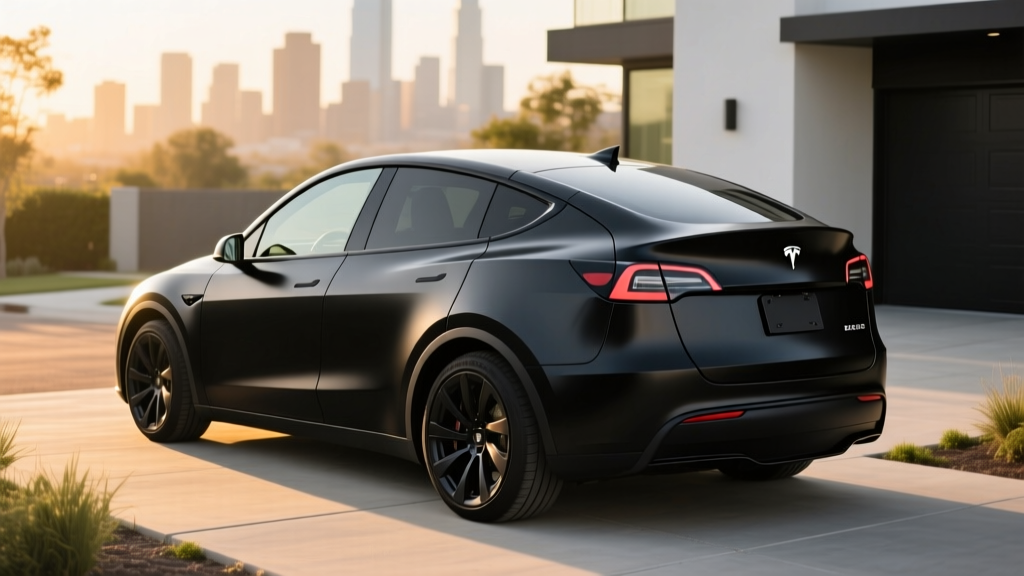
The 2026 Tesla Model Y Long Range AWD remains the default midsize electric SUV for buyers who want a proven charging network, strong efficiency, and practical cargo space — and in Solid Black ($2,000 premium paint), it carries a stealthy, premium look that photographs well but demands frequent washing. Tesla's refreshed "Juniper" platform, which debuted for the 2025 model year, carries forward into 2026 with minor software and suspension refinements. The Long Range AWD trim delivers an EPA-estimated 320 miles of range, peaks at 250 kW on DC fast chargers, and starts at $44,990 before destination. It qualifies for the full $7,500 federal tax credit under current IRS §30D rules for eligible buyers, dropping the effective price to roughly $37,490 before state incentives.
Is the black-paint 2026 Model Y worth the premium over the free Pearl White? Only if you're willing to invest in ceramic coating or frequent washes — Tesla's water-based black paint shows swirl marks faster than lighter hues. Beyond aesthetics, the mechanical and software package is identical across colors, so this review focuses on the numbers that matter for ownership.
Range, Efficiency, and Real-World Expectations
Real-World Expectation: 270–295 miles at 70 mph highway; 240–260 miles in sub-30°F winter conditions. City driving with regenerative braking recovers closer to the EPA sticker, typically 300–315 miles in mild weather.
The 2026 Model Y Long Range AWD achieves an EPA-rated 117 MPGe combined (29 kWh/100 mi), placing it among the most efficient midsize electric SUVs on the market. For context, the Hyundai Ioniq 5 AWD rates at 110 MPGe combined, and the Ford Mustang Mach-E Extended Range AWD at 101 MPGe combined, per fueleconomy.gov.
Efficiency in the real world depends heavily on driving style and climate. On a flat 70-mph highway loop at 65°F, expect roughly 285–295 miles before the battery buffer warning triggers at ~5% State of Charge (SoC). In mountainous terrain or sustained 80+ mph driving, that drops to 250–265 miles. Cold weather (below freezing) with cabin heating active typically reduces range by 20–30%, bringing usable range to roughly 225–260 miles depending on whether you precondition the battery and cabin while plugged in.
The Model Y's heat pump, standard since the 2021 refresh, significantly reduces winter efficiency losses compared to resistive-heater EVs. Preconditioning — warming the battery and cabin while still connected to your home charger — is essential for maximizing both range and DC fast-charge speed in cold weather.
| Specification | Value |
|---|---|
| EPA Range | 320 miles |
| Battery Capacity (usable) | ~78.1 kWh (NMC chemistry) |
| Efficiency | 117 MPGe combined / 29 kWh/100 mi |
| Drivetrain | Dual-Motor AWD |
| Horsepower | 384 hp (combined) |
| 0–60 mph | 4.8 seconds |
| Max DC Fast-Charge Rate | 250 kW (peak) |
| 10–80% DC Fast Charge | ~25 minutes |
| Level 2 Home Charge Rate | 11.5 kW (44 mi/hr) |
| Base MSRP (Pearl White) | $44,990 + $1,390 destination |
| As-Tested (Solid Black, no FSD) | $48,380 |
| Federal Tax Credit (§30D) | $7,500 (eligible buyers) |
| Battery/Drive Unit Warranty | 8 years / 120,000 miles |
Battery Chemistry and Longevity
The 2026 Model Y Long Range AWD uses a nickel-manganese-cobalt (NMC) lithium-ion battery pack with approximately 78.1 kWh of usable capacity. NMC chemistry offers higher energy density than lithium iron phosphate (LFP), which Tesla reserves for the Standard Range RWD trim. The trade-off: NMC batteries benefit from daily charging to 80% rather than 100% to minimize long-term degradation, whereas LFP packs tolerate regular 100% charges.
Tesla's battery warranty guarantees at least 70% capacity retention over 8 years or 120,000 miles, whichever comes first. In practice, data aggregated from Tesla fleet telemetry and third-party sources like Recurrent Auto shows typical degradation of 5–8% over the first 50,000 miles, after which the curve flattens. Most Model Y packs retain 88–92% State of Health (SoH) at 100,000 miles when owners follow the 80% daily charge recommendation.
If you plan to keep the vehicle beyond the warranty period, a replacement battery pack currently costs between $12,000 and $16,000 out of warranty, though prices have trended downward annually. For most owners trading in at 6–8 years, battery replacement is not a realistic concern.
Charging: DC Fast, Level 2, and Home Setup
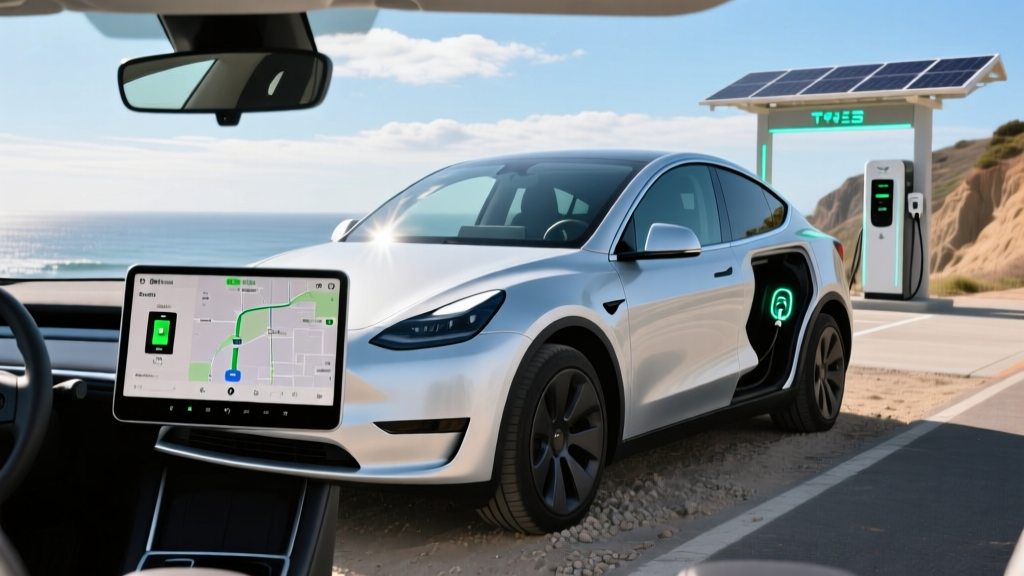
Charging speed remains one of the Model Y's strongest competitive advantages, thanks to both the vehicle's architecture and Tesla's Supercharger network. The 2026 Model Y Long Range AWD supports:
| Charging Level | Power | Miles Added per Hour | Notes |
|---|---|---|---|
| Level 1 (120V household) | ~1.4 kW | ~5 mi/hr | Emergency/trickle only |
| Level 2 (240V, 48A Wall Connector) | 11.5 kW | 44 mi/hr | Full charge in ~7 hours |
| Level 2 (240V, 32A Mobile Connector) | 7.7 kW | 30 mi/hr | NEMA 14-50 outlet |
| DC Fast (Supercharger V3/V4) | 250 kW peak | ~1,000 mi/hr (peak) | 10–80% in ~25 min |
| DC Fast (CCS adapter, non-Tesla) | 150–170 kW typical | Varies | Adapter required; limited to CCS stations |
The 250 kW peak charge rate is not sustained across the entire session. The charge curve peaks near 250 kW between 10–30% SoC, then steps down to roughly 175 kW through 50%, and tapers further to under 100 kW above 70%. This is why Tesla quotes 10–80% times rather than 0–100% — charging above 80% is dramatically slower due to cell-protection protocols. Plan to charge to 80% on road trips and move on rather than waiting for a full battery.
At home, the Tesla Wall Connector ($420) on a 60-amp circuit delivers the full 11.5 kW / 44 miles per hour, replenishing a depleted battery overnight in about 7 hours. Most owners who drive 30–50 miles daily only need 1–2 hours of Level 2 charging per day. Installation costs for a Wall Connector typically range from $800 to $2,500 depending on panel capacity and run length — budget for a licensed electrician to assess whether your home's 200-amp panel can accommodate a 60-amp dedicated circuit, or whether a panel upgrade ($1,500–$3,000) is necessary.
Tesla's Supercharger network now includes over 25,000 stalls in North America, and the 2026 Model Y ships with the native NACS (North American Charging Standard) port. With the included CCS adapter, you can also access Electrify America, EVgo, and other CCS networks — though reliability on non-Tesla networks remains inconsistent based on our testing.
Performance and Driving Dynamics
The dual-motor AWD powertrain produces 384 combined horsepower and launches the Model Y from 0–60 mph in 4.8 seconds. That's quick enough to merge confidently onto any highway and overtake without hesitation, though it trails the Performance trim's 3.5-second sprint. The instant torque delivery characteristic of electric motors makes the Long Range feel quicker in city driving than the 0–60 time alone suggests.
For 2026, Tesla has carried over the Juniper suspension tuning introduced last year: revised damper rates and updated bushings that reduce the crashy ride quality that plagued pre-2025 Model Ys. The result is a noticeably more compliant ride over broken pavement while maintaining the flat cornering attitude Tesla owners expect. Road noise insulation has also improved, though the frameless windows still generate more wind noise at highway speed than the Hyundai Ioniq 5 or BMW iX.
Regenerative braking remains aggressive in the Model Y — Tesla offers only a single regen setting (no adjustable levels), which enables one-pedal driving in most conditions. New EV drivers typically adapt within a week, but the lack of a coasting or reduced-regen mode frustrates some buyers transitioning from ICE vehicles.
Interior, Cargo, and Technology
The 2026 Model Y interior follows Tesla's minimalist philosophy: a single 15.4-inch center touchscreen handles all vehicle controls, navigation, media, and climate functions. There is no instrument cluster behind the steering wheel and no physical buttons for climate or volume — everything routes through the screen or steering-wheel scroll wheels. This design polarizes buyers; some find it clean and distraction-free, others consider it dangerously screen-dependent.
Cargo and passenger dimensions:
- Cargo volume (rear seats up): 30.2 cu ft
- Cargo volume (rear seats folded): 72.1 cu ft
- Front trunk (frunk): 4.1 cu ft
- Rear legroom: 40.5 inches
- Front headroom: 40.8 inches
- Seating capacity: 5 standard (optional 7-seat adds a small third row for children)
The optional third row ($2,000) is only practical for children under about 5'4" and eliminates the under-floor rear cargo storage. For most families, the five-seat configuration with its deep under-floor trunk well provides superior utility.
Standout tech features:
- Autopilot (standard): SAE Level 2 driver-assist with adaptive cruise control, lane centering, and automatic emergency braking. Requires hands on the steering wheel at all times.
- Full Self-Driving Supervised ($8,000 option or $99/month): Adds automatic lane changes, Navigate on Autopilot, traffic-light recognition, and Smart Summon. Despite the name, FSD is still SAE Level 2 — you must monitor the road and be prepared to take over instantly.
- Sentry Mode: 360-degree camera surveillance when parked, saving clips of nearby motion or impacts.
- Over-the-air updates: Tesla pushes feature updates, UI refinements, and efficiency improvements wirelessly — the 2026 Model Y will continue receiving software updates for years after purchase.
- Vehicle-to-Load (V2L): Not natively supported on the Model Y. Unlike the Ford F-150 Lightning or Hyundai Ioniq 5, you cannot power external devices or home circuits from the battery.
Pricing, Trims, and Federal Tax Credit Eligibility
The 2026 Model Y is offered in three trims. Solid Black paint adds $2,000 to any configuration (Pearl White is the only no-cost color):
| Trim | Base MSRP | + Black Paint | + Destination | After $7,500 §30D Credit* |
|---|---|---|---|---|
| Long Range RWD | $42,990 | $2,000 | $1,390 | ~$38,880 |
| Long Range AWD | $44,990 | $2,000 | $1,390 | ~$40,880 |
| Performance AWD | $48,990 | $2,000 | $1,390 | ~$44,880 |
*Federal tax credit eligibility depends on multiple IRS §30D requirements. See checklist below.
- MSRP cap: SUVs must have an MSRP at or below $80,000. All Model Y trims qualify.
- Buyer income cap (modified AGI): $150,000 single / $225,000 head of household / $300,000 joint filers.
- Battery sourcing: As of 2026, 100% of critical minerals must be sourced from the U.S. or FTA-partner countries, and 100% of battery components must be manufactured or assembled in North America. Tesla's current Model Y battery pack meets these requirements, qualifying for the full $7,500.
- Point-of-sale transfer: Buyers can elect to transfer the credit to the dealer (Tesla) at purchase, reducing the purchase price by $7,500 upfront rather than waiting to claim it on their tax return.
- One vehicle per taxpayer per 3 years: IRS limits the §30D new-vehicle credit to one claim per individual every three years.
For detailed and current eligibility rules, consult the IRS clean vehicle credit page and verify with a tax professional before purchasing. Rules can change with legislation, and battery-sourcing compliance is updated periodically by the Treasury Department.
Pros, Cons, and Competitor Comparison
Pros
- Class-leading Supercharger network access (25,000+ stalls)
- Top-tier efficiency at 117 MPGe combined
- Spacious cargo area (72.1 cu ft max) with frunk
- Strong 0–60 performance (4.8 sec) for the class
- Continuous OTA software improvements
- Full $7,500 federal tax credit eligibility
- Improved Juniper ride quality over pre-2025 models
Cons
- All-screen controls distract from driving
- No V2L capability for backup power or camping
- Black paint shows swirl marks and requires maintenance
- FSD ($8,000) remains Level 2 despite the name
- No Apple CarPlay or Android Auto integration
- Rear visibility limited by thick C-pillars and small rear window
- Insurance premiums run 15–25% above class average
Choose the 2026 Model Y (Black) If:
- You road-trip frequently and want the most reliable public-charging network in the U.S.
- You prioritize efficiency and low cost per mile over luxury interior materials
- You want a family EV with strong cargo space and optional 7-seat flexibility
- You're eligible for the full $7,500 federal credit and want an effective price near $40K
Look at Competitors If:
- Hyundai Ioniq 5: You want 800V ultra-fast charging (10–80% in ~18 min), V2L capability, and physical climate buttons
- Ford Mustang Mach-E: You prefer a more traditional cockpit layout and BlueCruise hands-free driving on mapped highways
- Kia EV6: You want sportier styling, 800V charging, and a slightly more engaging driving experience
Ownership Costs: 5-Year Outlook
Beyond the purchase price, the Model Y's total cost of ownership benefits from low fuel and maintenance expenses but is partially offset by higher-than-average insurance premiums. Based on national averages for 15,000 miles driven annually:
- Electricity cost: ~$0.14/kWh national average × 29 kWh/100 mi × 15,000 mi = ~$609/year (home charging). Public DC fast charging at $0.35–$0.50/kWh raises this significantly for road-trip-heavy drivers.
- Maintenance: ~$300–$500/year (cabin air filter, wiper fluid, tire rotation). No oil changes, spark plugs, or transmission fluid.
- Insurance: ~$2,200–$2,800/year national average, varying sharply by state, age, and driving record. Tesla-specific insurers like Tesla Insurance (available in select states) can be competitive.
- Tire replacement: EVs wear tires 20–30% faster than ICE vehicles due to instant torque and heavier curb weight (~4,400 lbs). Budget $800–$1,400 for a set of four every 30,000–40,000 miles.
- Depreciation: The Model Y has historically held value better than most EVs, though increased competition and Tesla price cuts have softened residuals. Expect roughly 45–55% retention at 5 years / 60,000 miles.
Frequently Asked Questions
What is the real-world range of the 2026 Tesla Model Y?
The EPA rates the Long Range AWD at 320 miles. In real-world highway driving at 70 mph and moderate temperatures, expect 270–295 miles. In freezing weather with cabin heat, plan for 225–260 miles. City driving with regenerative braking can approach the EPA figure.
How fast does the 2026 Model Y charge?
On a Tesla V3/V4 Supercharger, it peaks at 250 kW and charges from 10–80% in approximately 25 minutes. At home on a 240V/48A Wall Connector, it adds 44 miles of range per hour, fully recharging overnight in about 7 hours.
Does the 2026 Tesla Model Y qualify for the $7,500 federal tax credit?
Yes, under current 2026 IRS §30D rules, the Model Y qualifies for the full $7,500 credit for buyers who meet income caps ($150K single / $300K joint), haven't claimed a new-EV credit in the past 3 years, and take delivery of a vehicle with compliant battery sourcing. The credit can be applied at point of sale to reduce the purchase price directly.
How much does the 2026 Model Y in Solid Black cost?
The Long Range AWD in Solid Black starts at $48,380 (including $2,000 paint and $1,390 destination). After the $7,500 federal tax credit, the effective price is approximately $40,880 before state incentives, registration, and taxes.
Is Solid Black paint worth the $2,000 upcharge?
Aesthetically, black gives the Model Y a sleek, upscale appearance that photographs well and hides panel-gap inconsistencies better than white. Practically, Tesla's water-based black paint is softer than many competitors' finishes and shows swirl marks, water spots, and dust more readily. Budget $500–$1,200 for a ceramic coating if you choose black, and plan on weekly washes to maintain the finish.
Is the 2026 Model Y worth buying over the Hyundai Ioniq 5 or Ford Mach-E?
If charging-network reliability is your top priority — especially for road trips — the Model Y's Supercharger access is unmatched. The Ioniq 5 charges faster on compatible 350 kW stations (18-minute 10–80%) and offers V2L, while the Mach-E provides BlueCruise hands-free driving. All three are strong choices; the right pick depends on whether you value network convenience (Tesla), charging speed (Hyundai/Kia), or driver-assist comfort (Ford).
Does the 2026 Model Y support Apple CarPlay?
No. Tesla does not offer Apple CarPlay or Android Auto on any model. The native infotainment system includes Spotify, Apple Music (via login), YouTube, Netflix (while parked), and a built-in browser. Most owners adapt to the native system, but CarPlay-dependent buyers should test-drive before committing.
What is the battery warranty on the 2026 Model Y?
Tesla covers the battery and drive units for 8 years or 120,000 miles (whichever comes first) with a minimum 70% capacity retention guarantee. If the battery degrades below 70% SoH within the warranty period, Tesla will repair or replace it at no cost.
Sources: EPA fuel economy data via fueleconomy.gov; IRS clean vehicle credit rules via irs.gov; Tesla official specifications via tesla.com. Pricing and tax credit rules reflect 2026 model-year data and are subject to change. Consult a tax professional for personal eligibility.