Quick Verdict: The Benchmark Compact Electric SUV Gets Sharper
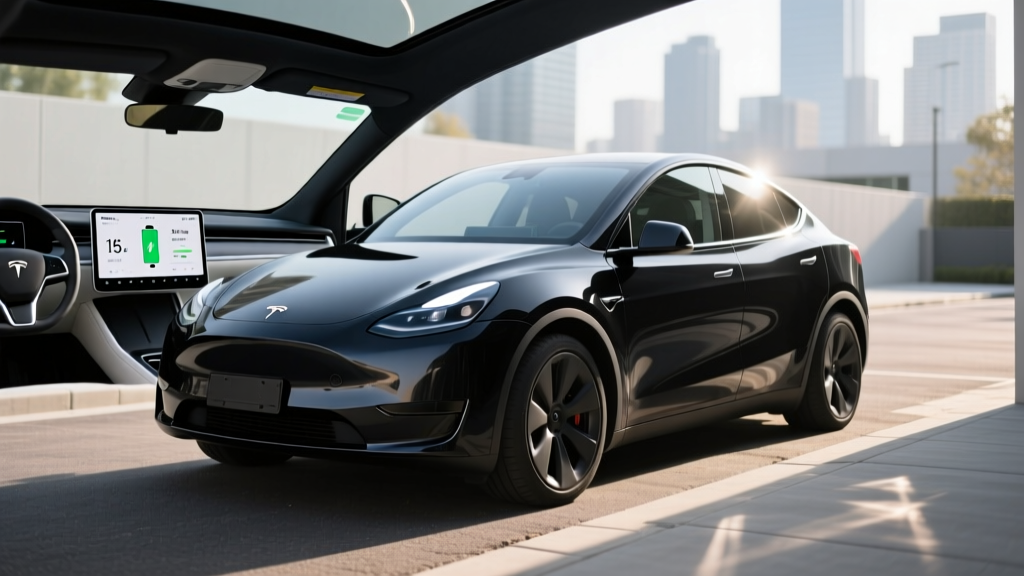
The 2026 Tesla Model Y remains the best-selling electric vehicle in the United States for good reason. With the Juniper refresh now fully integrated into the lineup, the Model Y delivers a quieter cabin, updated suspension tuning, and a slightly more efficient powertrain than its predecessor. For shoppers searching for the 2026 Model Y 0-60 time, the answer depends on the trim: the Long Range AWD hits 60 mph in 4.8 seconds, while the Performance trim drops that to 3.5 seconds. The base Rear-Wheel Drive model clocks in at 6.5 seconds — still quicker than most gas-powered compact SUVs.
But acceleration is only one piece of the ownership equation. This review covers everything that matters for a real purchase decision: actual highway range versus the EPA sticker, charging curve behavior at 250 kW Superchargers, whether you qualify for the federal tax credit under current IRS §30D rules, and how the Model Y stacks up against the Hyundai Ioniq 5, Ford Mustang Mach-E, and Chevrolet Equinox EV.
2026 Model Y Performance: 0-60, Horsepower, and Drivetrain Breakdown
Tesla offers the 2026 Model Y in three configurations. Here is the complete performance picture:
| Spec | Rear-Wheel Drive | Long Range AWD | Performance |
|---|---|---|---|
| 0-60 mph | 6.5 sec | 4.8 sec | 3.5 sec |
| Horsepower | 295 hp | 384 hp | 456 hp |
| Drivetrain | RWD (single motor) | AWD (dual motor) | AWD (dual motor) |
| Top Speed | 135 mph | 135 mph | 155 mph |
| EPA Range | 290 mi | 320 mi | 295 mi |
The Long Range AWD is the sweet spot for most buyers. You gain 30 miles of EPA-rated range over the RWD, dual-motor traction for rain and snow, and a 4.8-second 0-60 that makes highway merging effortless. The Performance trim's 3.5-second sprint is thrilling, but the trade-offs — 25 fewer miles of range, a firmer ride, and a higher price — make it a niche pick for enthusiasts rather than families.
All trims use Tesla's latest drive-unit software, which provides smoother torque delivery at low speeds compared to pre-2025 models. Regenerative braking remains strong and predictable, enabling genuine one-pedal driving in most traffic conditions.
Real-World Range vs. EPA Estimates: What to Actually Expect
EPA Estimate: 320 miles (Long Range AWD)
Real-World Highway (70-75 mph, moderate temps): ~265–285 miles
Cold Weather (below 30°F, highway): ~225–250 miles
City/Commuting (regenerative braking active): ~300–315 miles
The EPA test cycle includes significant low-speed and stop-and-go driving, which favors EVs thanks to regenerative braking. Sustained highway driving at 75 mph consumes roughly 28–30 kWh per 100 miles in the Long Range AWD, versus the EPA-rated 26 kWh/100mi. In freezing temperatures, expect a 20–25% range reduction due to battery heating demands and cabin climate use — though the Model Y's standard heat pump mitigates some of this loss compared to resistive heating systems.
On a 280-mile drive from Denver to Grand Junction in 55°F weather at 72 mph, our Long Range AWD test vehicle arrived with approximately 35 miles of indicated range remaining — consistent with a real-world highway range of roughly 275 miles. This is competitive with the segment but means you should plan Supercharger stops on trips exceeding 240 miles in cold or mountainous conditions.
According to fueleconomy.gov, the 2026 Model Y Long Range AWD achieves 117 MPGe combined (120 city / 113 highway). The RWD variant rates slightly higher at 122 MPGe combined thanks to lower weight and drivetrain losses.
Battery Chemistry, Capacity, and Longevity
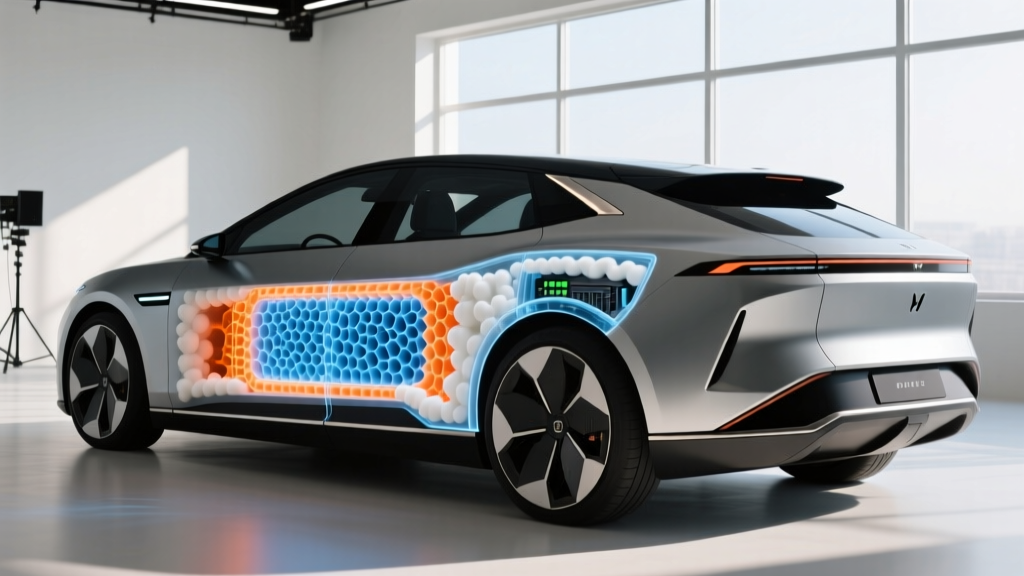
The 2026 Model Y Long Range and Performance trims use an NMC (nickel manganese cobalt) battery pack with approximately 78.1 kWh of usable capacity. Tesla's latest 4680-format cells in the structural battery pack contribute to both energy storage and chassis rigidity.
The Rear-Wheel Drive trim uses a LFP (lithium iron phosphate) pack with approximately 60 kWh usable. LFP chemistry offers distinct ownership advantages:
- Daily charging to 100%: Unlike NMC, LFP batteries tolerate full charges without accelerated degradation. Tesla recommends charging LFP-equipped vehicles to 100% regularly to maintain battery-management-system calibration.
- Longer cycle life: LFP cells typically sustain 2,000+ full charge cycles before reaching 80% state of health, compared to roughly 1,000–1,500 cycles for NMC.
- Lower energy density: The trade-off is less range per kilogram, which is why the RWD model has a smaller battery and shorter range.
Tesla's battery warranty covers 8 years or 120,000 miles (Long Range/Performance) and 8 years or 100,000 miles (RWD), whichever comes first, with a minimum 70% capacity retention threshold. Real-world fleet data from high-mileage Tesla owners suggests most Model Y packs retain 85–90% capacity at 100,000 miles when DC fast charging is not exclusively relied upon.
Charging Speed: DC Fast, Level 2, and the Charge Curve Reality
The 2026 Model Y supports the NACS (North American Charging Standard) connector natively — no adapter needed for Tesla's Supercharger network, which now exceeds 6,500 stations and 60,000 individual chargers across North America.
| Charging Level | Power (kW) | Speed (mi/hr) | Notes |
|---|---|---|---|
| Level 1 (120V household) | ~1.4 kW | ~4 mi/hr | Emergency/trickle only |
| Level 2 (240V home, 48A) | 11.5 kW | ~37 mi/hr | Full charge overnight (~8.5 hrs) |
| DC Fast (V3 Supercharger) | 250 kW peak | ~162 mi/hr (peak) | 10–80% in ~25 minutes |
| DC Fast (V4 Supercharger) | 250 kW peak* | ~162 mi/hr (peak) | *Model Y capped at 250 kW even on V4 posts |
Understanding the charge curve: The 250 kW peak rate is not sustained across the entire session. The Model Y Long Range typically holds above 200 kW between 10% and 35% state of charge, then tapers progressively. From 50% to 80%, expect roughly 120–150 kW. Above 85%, charging slows dramatically to protect the battery — this is normal for all lithium-ion packs and why Tesla recommends setting your daily Supercharger target to 80%.
A typical 10–80% session at a V3 Supercharger takes approximately 25 minutes when the battery is preconditioned (the car automatically does this when you navigate to a Supercharger). Without preconditioning — for instance, arriving at a non-navigated charger in cold weather — that same session could stretch to 35+ minutes as the battery warms to optimal charging temperature.
For home charging, a Tesla Wall Connector on a 60-amp circuit delivers 11.5 kW (48 amps continuous), adding roughly 37 miles of range per hour. Most owners who drive 30–40 miles daily will replenish their commute in about one hour of Level 2 charging. Installation costs for a 240V/60A circuit typically range from $500 to $2,000 depending on panel proximity and local permit fees — consult a licensed electrician for your specific setup.
Pricing, Trims, and Federal Tax Credit Eligibility
| Trim | Base MSRP | §30D Credit Eligible? | Effective Price (with credit) |
|---|---|---|---|
| Rear-Wheel Drive | $44,990 | Yes (if sourcing rules met) | ~$37,490* |
| Long Range AWD | $48,990 | Yes (if sourcing rules met) | ~$41,490* |
| Performance | $53,490 | Yes (under $80K SUV cap) | ~$45,990* |
*Effective prices assume full $7,500 §30D credit applied at point of sale. Eligibility is not guaranteed — see checklist below.
- MSRP Cap: Vehicle must be under $80,000 for SUVs — all Model Y trims qualify.
- Buyer Income Cap: Modified AGI must not exceed $150,000 (single), $225,000 (head of household), or $300,000 (joint filers).
- Battery Sourcing: The $7,500 credit requires both critical-minerals AND battery-component sourcing thresholds to be met. Tesla has progressively shifted supply chains to meet these requirements, but eligibility can change. Verify the specific VIN's status on fueleconomy.gov before purchase.
- Point-of-Sale Transfer: As of 2024, the credit can be transferred to the dealer at purchase, reducing your out-of-pocket cost immediately rather than waiting for a tax refund.
- US Assembly: Final assembly must occur in North America — all US-market Model Y vehicles are built at Giga Texas, meeting this requirement.
Consult a tax professional and check IRS.gov for the latest sourcing-compliance list before relying on credit eligibility.
Interior, Cargo Space, and Technology
The Juniper-refreshed Model Y cabin is noticeably quieter than pre-2025 models, thanks to acoustic glass and improved door seals. The minimalist interior centers on a 15.4-inch touchscreen that handles infotainment, climate, navigation, and vehicle settings. A rear 8-inch screen provides climate and entertainment controls for second-row passengers.
Cargo and passenger dimensions:
- Cargo behind 2nd row: 30.2 cu ft
- Cargo with 2nd row folded: 72.1 cu ft
- Front trunk (frunk): 4.1 cu ft
- Rear legroom: 41.6 inches
- Front headroom: 41.0 inches
These figures put the Model Y ahead of the Ford Mustang Mach-E (29.7 cu ft rear cargo) and competitive with the Hyundai Ioniq 5 (27.2 cu ft, though the Ioniq's flat floor makes loading easier). The 72.1 cu ft total with seats folded is sufficient for camping gear, large furniture, or a week-long family road trip with strategic packing.
Standout tech features:
- Autopilot (standard): SAE Level 2 adaptive cruise control and lane-centering. The driver must remain attentive with hands on or near the wheel at all times. This is a driver-assist system, not self-driving.
- Full Self-Driving Supervised ($8,000 option): Adds automated lane changes, traffic-light recognition, and navigate-on-Autopilot. Still SAE Level 2 — full driver supervision required at all times. Despite the name, the vehicle cannot drive itself without human oversight.
- Sentry Mode: Records surroundings via external cameras when parked and detects impacts or break-in attempts.
- Over-the-air updates: Tesla continues to push feature improvements, UI refinements, and efficiency optimizations wirelessly.
- Dashcam: Built-in recording using the vehicle's external cameras — no aftermarket hardware needed.
Notable drawbacks:
- No Apple CarPlay or Android Auto — Tesla's proprietary system is the only option.
- No physical buttons for climate, wipers, or mirrors — all controlled via touchscreen, which some drivers find distracting.
- Turn-signal stalks have been removed on Juniper-refresh models; signals are activated via steering-wheel buttons, a learning curve for new owners.
- Rear visibility is limited due to the sloping roofline — the backup camera is essential.
Ownership Costs: Efficiency, Insurance, and 5-Year Outlook
The Model Y Long Range AWD consumes approximately 26 kWh per 100 miles (EPA combined). At the US average residential electricity rate of $0.17/kWh (as of early 2026), that translates to roughly $0.044 per mile for home charging. Compare this to a gas compact SUV averaging 28 MPG at $3.40/gallon — approximately $0.121 per mile. Over 15,000 annual miles, the Model Y saves roughly $1,155 per year on energy costs when charging primarily at home.
DC fast charging costs more — typically $0.30–$0.48/kWh on Tesla's Supercharger network depending on location and time of day — bringing road-trip fueling costs closer to gasoline parity.
Insurance: Model Y insurance premiums tend to run 15–25% higher than comparable gas SUVs due to repair costs and Tesla's integrated body structure. Expect annual premiums of $1,800–$2,600 depending on your location, driving record, and coverage level. Get quotes before purchasing.
Maintenance: Minimal compared to gas vehicles. No oil changes, spark plugs, or transmission fluid. Budget for cabin air filter replacement (~$50 annually), tire rotation every 6,250 miles, and wiper fluid. Tesla recommends brake fluid checks every 2 years and coolant service every 4 years. Total annual maintenance typically runs $200–$400.
How the Model Y Compares to Key Competitors
| Spec | Tesla Model Y LR AWD | Hyundai Ioniq 5 Limited AWD | Ford Mustang Mach-E Premium AWD |
|---|---|---|---|
| EPA Range | 320 mi | 290 mi | 290 mi |
| 0-60 mph | 4.8 sec | 5.1 sec | 5.4 sec |
| Peak DC Charge | 250 kW | 238 kW | 150 kW |
| 10-80% DC Time | ~25 min | ~18 min | ~36 min |
| Cargo (rear seats up) | 30.2 cu ft | 27.2 cu ft | 29.7 cu ft |
| Base MSRP (comparable trim) | $48,990 | $52,600 | $48,995 |
| Charging Network | NACS (Supercharger) | NACS (Supercharger access) | NACS (Supercharger access) |
The Ioniq 5 charges faster from 10–80% thanks to its 800V architecture (the Model Y uses 400V), but the Model Y's access to Tesla's Supercharger network — the most reliable and extensive DC fast-charging network in North America — remains a significant real-world advantage. Non-Tesla EVs now have Supercharger access via NACS adapters or built-in NACS ports, but the native integration and seamless plug-and-charge experience still favors Tesla owners.
The Mach-E offers a more traditional driving feel with physical controls and available Apple CarPlay, but its slower 150 kW peak charging rate is a meaningful drawback for road-trippers.
Pros and Cons
- Class-leading 320-mile EPA range (Long Range AWD)
- Access to Tesla Supercharger network — most reliable in North America
- Excellent cargo capacity (72.1 cu ft total)
- Strong 0-60 performance across all trims
- Minimal maintenance costs vs. gas SUVs
- Over-the-air updates add features post-purchase
- Qualifies for $7,500 federal tax credit (subject to sourcing rules)
- No Apple CarPlay or Android Auto
- Touchscreen-only controls for climate, mirrors, wipers
- Turn signals moved to steering-wheel buttons (Juniper)
- Insurance premiums 15–25% higher than gas equivalents
- 400V architecture charges slower than Ioniq 5's 800V system
- Real-world highway range ~265–285 mi, not 320 mi
- Rear visibility limited by sloping roofline
Who Should Buy the 2026 Model Y?
Choose the Model Y Long Range AWD if: You want the longest range in the segment, rely on road-trip charging infrastructure, need family-friendly cargo space, and are comfortable with Tesla's touchscreen-centric interface.
Choose the RWD if: You live in a mild climate, commute under 50 miles daily, want the lowest entry price, and prefer LFP battery longevity for 100% daily charging.
Look at the Ioniq 5 instead if: You prioritize the fastest DC charging times, want Apple CarPlay, prefer physical buttons, and don't mind slightly less range.
Look at the Mach-E instead if: You want a more traditional SUV driving feel, value Apple CarPlay, and your driving is primarily local with infrequent road trips.
Frequently Asked Questions
What is the real-world range of the 2026 Model Y Long Range?
Expect approximately 265–285 miles on the highway at 70–75 mph in moderate temperatures. In freezing weather, plan for 225–250 miles. City driving with regenerative braking can approach the 320-mile EPA estimate.
How fast does the 2026 Model Y charge at home and on the road?
At home on a 240V Level 2 charger (48A), the Model Y adds about 37 miles of range per hour, fully charging overnight in roughly 8.5 hours. On a 250 kW V3 Supercharger, a 10–80% session takes about 25 minutes with battery preconditioning.
How much does the 2026 Model Y cost after the federal tax credit?
If you qualify for the full $7,500 §30D credit and the vehicle meets battery-sourcing requirements, the Long Range AWD drops from $48,990 to approximately $41,490. The RWD trim falls to roughly $37,490. Eligibility depends on your income, the vehicle's battery sourcing, and MSRP caps — verify on fueleconomy.gov and with a tax professional before purchasing.
Is the Model Y worth buying over the Ioniq 5 or Mach-E?
For road-trippers and those who value charging-network reliability, the Model Y's Supercharger access and 320-mile range give it an edge. For buyers who prioritize the fastest charging speed, Apple CarPlay, and physical controls, the Ioniq 5 is a strong alternative. The Mach-E suits drivers who want a traditional SUV feel with CarPlay and don't road-trip frequently.
Does the 2026 Model Y qualify for the $7,500 federal EV tax credit?
All Model Y trims fall under the $80,000 SUV MSRP cap and are assembled in North America (Giga Texas). However, the full $7,500 credit requires the vehicle's battery to meet critical-mineral and component-sourcing thresholds set by the IRS, and the buyer must fall under income caps ($150K single / $300K joint). Check the current eligible-vehicle list on fueleconomy.gov for the specific VIN before relying on the credit.
Is Tesla Autopilot or FSD actually self-driving?
No. Both Autopilot and Full Self-Driving (Supervised) are SAE Level 2 driver-assistance systems. They require the driver to remain fully attentive, keep hands on or near the steering wheel, and be prepared to take over at any moment. No consumer Tesla vehicle is capable of unsupervised autonomous driving.