The 2026 Tesla Model 3 remains the benchmark compact electric sedan — not because it's the newest EV on the market, but because Tesla's relentless iteration keeps refining what was already a class-leading package. From its Highland redesign to its latest powertrain efficiency gains, the Model 3 Long Range and Performance trims deliver real-world usability that competitors still chase. This review covers every number that matters: EPA range versus what you'll actually see on the highway in January, DC fast-charge curves, battery chemistry trade-offs, and the data infrastructure — including Tesla's data centers — that powers the Full Self-Driving system buyers increasingly factor into their purchase decisions.
2026 Tesla Model 3: Quick Specs at a Glance
| Specification | Model 3 RWD | Model 3 Long Range AWD | Model 3 Performance |
|---|---|---|---|
| EPA Range | 272 mi | 363 mi | 315 mi |
| Battery (usable) | ~57.5 kWh (LFP) | ~75 kWh (NMC) | ~75 kWh (NMC) |
| 0–60 mph | 5.8 sec | 4.2 sec | 2.9 sec |
| Horsepower | 271 hp | 346 hp | 510 hp |
| Drivetrain | RWD (single motor) | AWD (dual motor) | AWD (dual motor) |
| Peak DC Fast Charge | 170 kW | 250 kW | 250 kW |
| 10–80% DC Time | ~30 min | ~25 min | ~25 min |
| Level 2 Home Charge | 11.5 kW (~44 mi/hr) | 11.5 kW (~44 mi/hr) | 11.5 kW (~44 mi/hr) |
| MPGe (combined) | 132 MPGe | 131 MPGe | 119 MPGe |
| Base MSRP | $38,990 | $47,740 | $52,990 |
Source: fueleconomy.gov and Tesla.com, 2026 model year. Prices exclude $1,390 destination fee.
Real-World Range: What the EPA Sticker Doesn't Tell You
Tesla's efficiency advantage is real: the Long Range model achieves roughly 26 kWh/100 mi in mixed driving, among the best in its segment. The heat pump (standard on all 2026 trims) mitigates cold-weather losses compared to older resistive-heating EVs, but physics still wins in sub-freezing temperatures. If your commute is under 60 miles round-trip, even the RWD trim covers a full week without charging. For road-trippers, the 363-mile Long Range EPA rating means comfortable 250-mile legs between Supercharger stops with a buffer — a meaningful advantage over 250-mile-range competitors.
Battery Chemistry: LFP vs. NMC in the 2026 Model 3
Tesla continues to segment the Model 3 lineup by battery chemistry, and understanding this distinction is critical to ownership satisfaction:
| Factor | LFP (RWD Trim) | NMC (Long Range / Performance) |
|---|---|---|
| Energy Density | Lower (~160 Wh/kg cell) | Higher (~260 Wh/kg cell) |
| Cycle Life | 3,000+ cycles (excellent) | 1,500–2,000 cycles (good) |
| Daily Charge Recommendation | Charge to 100% regularly | Charge to 80% daily; 100% for trips |
| Cold-Weather Performance | More range loss in cold | Better low-temp performance |
| Cost | Lower (no cobalt/nickel) | Higher |
| Best For | Daily commuters, warm climates | Road trippers, cold climates, performance |
The LFP (lithium iron phosphate) pack in the RWD model is a longevity standout — Tesla explicitly recommends charging to 100% at least weekly to keep the battery management system calibrated. The NMC (nickel manganese cobalt) packs in the Long Range and Performance trims deliver more range and better cold-weather output but benefit from daily 80% charge limits for long-term health. Both chemistries are covered by Tesla's battery warranty (details below).
Charging Speed: Supercharger Network and Home Setup
| Charging Level | Power (kW) | Miles Added per Hour | Notes |
|---|---|---|---|
| Level 1 (120V outlet) | ~1.4 kW | ~4–5 mi/hr | Emergency/trickle only |
| Level 2 (240V, 48A) | 11.5 kW | ~44 mi/hr | Full overnight charge (~7–8 hrs) |
| DC Fast (RWD max) | 170 kW peak | ~650 mi/hr (peak) | 10–80% in ~30 min |
| DC Fast (LR/Perf max) | 250 kW peak | ~1,000 mi/hr (peak) | 10–80% in ~25 min |
The 250 kW peak DC fast-charge rate on Long Range and Performance trims is sustained for roughly the 10–50% state-of-charge window, then tapers progressively. Expect an actual 10–80% session at a V3 Supercharger to take about 25 minutes — fast enough for a restroom-and-coffee break. The RWD's 170 kW peak is noticeably slower on long road trips, adding roughly 5–7 minutes to each stop.
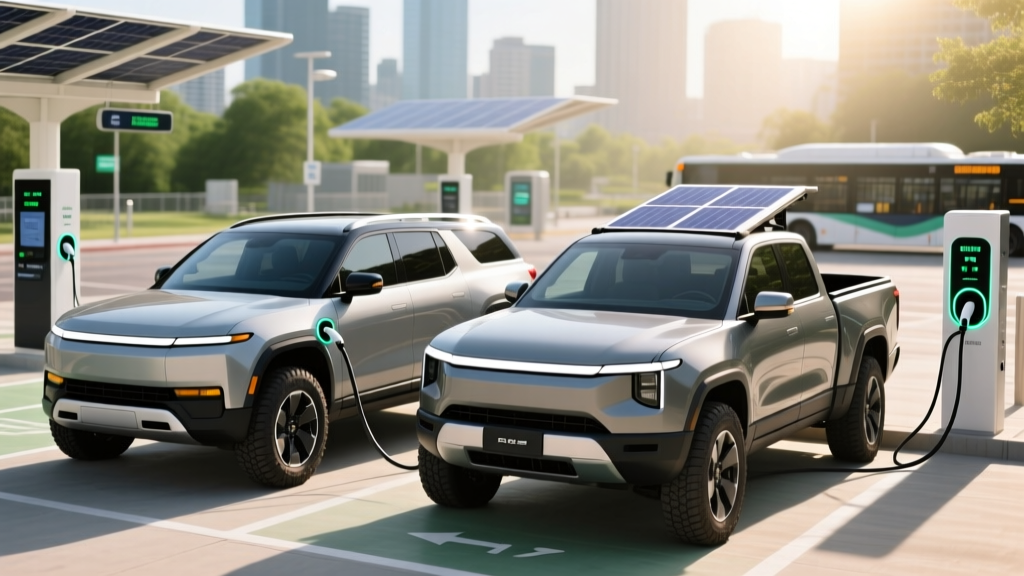
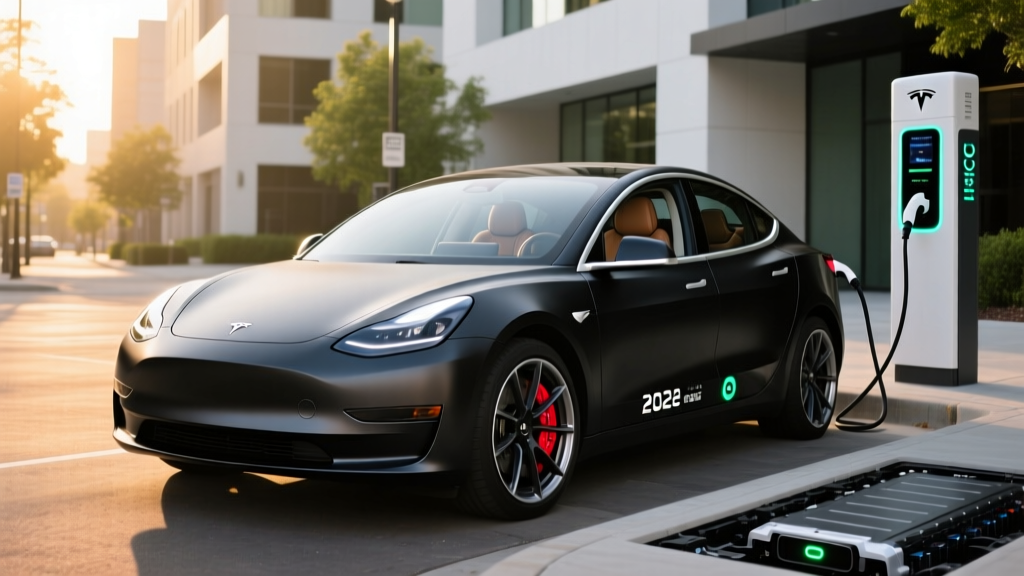
At home, a Tesla Wall Connector on a 60-amp circuit delivers the full 11.5 kW (48A), replenishing a depleted Long Range battery in roughly 7.5 hours. Installation typically runs $800–$2,000 depending on panel proximity and local permitting. For buyers without home charging access, Tesla's Supercharger network — now exceeding 25,000 stalls in North America — remains the most reliable public DC network, though NACS adapter availability for non-Tesla EVs has increased station congestion at some urban locations.
FSD, Tesla's Data Centers, and the AI Infrastructure Behind Autopilot
The 2026 Model 3 ships with Tesla's latest Hardware 4.0 (HW4) sensor suite and offers two driver-assistance tiers: Basic Autopilot (included, SAE Level 2) and Full Self-Driving (Supervised) ($8,000 one-time or $99/month, also SAE Level 2). Neither system makes the car self-driving — the driver must remain attentive and is legally responsible for vehicle operation at all times.
What makes Tesla's driver-assist approach distinctive is the data flywheel behind it. Tesla operates massive data centers — including its Dojo supercomputer facility in Palo Alto — to process billions of miles of real-world driving footage captured by the Tesla fleet. This training pipeline powers the neural networks that handle lane-keeping, intersection navigation, and FSD's city-street capabilities. Tesla's data center infrastructure processes petabytes of video data to iteratively improve FSD models, a back-end operation most EV buyers never see but increasingly hear about in tech and automotive coverage.
The practical question for buyers: FSD (Supervised) in 2026 handles most highway and suburban scenarios competently but still requires intervention in construction zones, complex unprotected left turns, and adverse weather. It is not a hands-off system, and the $8,000 cost is difficult to justify for commuters on predictable routes where Basic Autopilot already provides adaptive cruise and lane centering. For buyers considering FSD primarily for its promised future autonomy, understand that Tesla has projected full self-driving capability "next year" since 2016, and regulatory approval for unsupervised operation has not been granted in any U.S. jurisdiction as of 2026.
Pricing, Trims, and Federal Tax Credit Eligibility
| Trim | Base MSRP | Federal §30D Credit | Effective Price (est.) |
|---|---|---|---|
| Model 3 RWD | $38,990 | Up to $7,500* | ~$31,490* |
| Model 3 Long Range AWD | $47,740 | Up to $7,500* | ~$40,240* |
| Model 3 Performance | $52,990 | Up to $7,500* | ~$45,490* |
*Federal EV tax credit eligibility under IRS §30D depends on buyer income caps ($150K single / $300K joint MAGI), vehicle MSRP caps ($55,000 for sedans), battery critical-mineral and component sourcing requirements, and point-of-sale transfer election. Verify current eligibility at irs.gov before purchase. The Model 3 sedan qualifies under the $55,000 MSRP cap on all trims.
All three 2026 Model 3 trims fall under the §30D sedan MSRP cap of $55,000. The point-of-sale transfer option, now well-established, allows qualified buyers to apply the credit as an immediate price reduction at the dealer (or Tesla direct) rather than waiting for a tax refund. However, battery sourcing requirements — specifically critical-mineral and foreign-entity-of-concern rules — can reduce or eliminate the credit depending on the specific battery batch. Tesla has worked to qualify its U.S.-built battery packs, but buyers should confirm credit eligibility with Tesla at order time and consult a tax professional for their specific situation.
Interior, Cargo, and Daily Livability
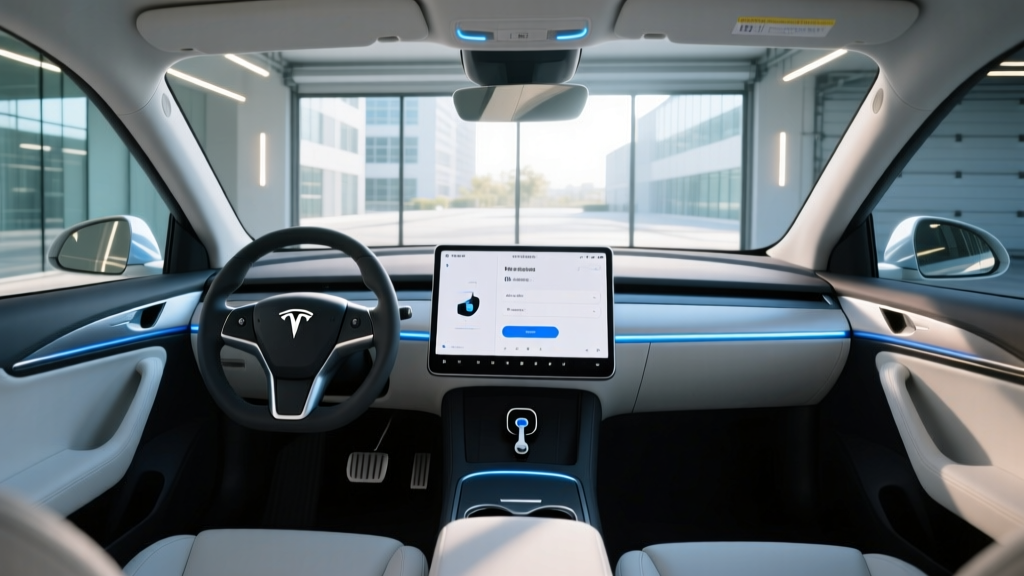
The 2026 Model 3's minimalist interior — a single 15.4-inch center touchscreen, no instrument cluster, no physical stalks (turn signals are steering-wheel buttons) — continues to polarize. The ventilated front seats and ambient lighting added in the Highland refresh carry forward, and rear-seat legroom (35.3 inches) accommodates adults comfortably on trips under two hours.
Cargo volume stands at 23 cu ft (trunk + frunk combined), competitive with the Hyundai Ioniq 6 (12.3 cu ft trunk only, no frunk) and slightly behind the BMW i4's 16.6 cu ft trunk. The Model 3's frunk adds practical grocery-and-cable storage that most sedan competitors lack. Rear seats fold 60/40 for longer items.
Warranty and Long-Term Ownership
Tesla's warranty coverage for the 2026 Model 3:
- Basic Vehicle: 4 years / 50,000 miles
- Battery & Drive Unit (RWD): 8 years / 100,000 miles, minimum 70% capacity retention
- Battery & Drive Unit (Long Range / Performance): 8 years / 120,000 miles, minimum 70% capacity retention
The 70% retention threshold is standard for the industry. Real-world degradation data from Tesla's own fleet reports suggest NMC packs lose roughly 10–12% capacity over the first 100,000 miles, with LFP packs showing even less measurable degradation thanks to their chemistry advantages. Out-of-warranty battery replacement costs remain high — roughly $12,000–$16,000 for a Model 3 pack in 2026 — but the vast majority of owners will never need one within typical ownership periods.
Who the 2026 Model 3 Suits Best
Choose the Model 3 Long Range AWD if: You take regular road trips, live in a cold-weather state, or need the 363-mile EPA range buffer for unpredictability. This is the best all-around Model 3 for most buyers.
Choose the Model 3 Performance if: You want a 2.9-second 0–60 sports sedan that happens to be electric, and you're willing to trade ~50 miles of range for the thrill. Track-mode capability is a genuine differentiator.
Pros and Cons
- Class-leading efficiency (26 kWh/100 mi)
- Supercharger network reliability
- 363-mi EPA range on Long Range
- Over-the-air updates continuously add features
- Strong resale value relative to EV segment
- Lowest effective price after §30D credit
- No physical turn-signal stalks (love it or hate it)
- Rear visibility is limited; relies on camera
- FSD ($8,000) still requires full driver attention
- Service center wait times can stretch weeks
- LFP RWD loses more range in cold weather
- No Apple CarPlay / Android Auto
Frequently Asked Questions
What is the real-world range of the 2026 Tesla Model 3?
The Long Range AWD achieves 363 miles EPA; expect roughly 300–320 miles in real-world highway driving and 250–270 miles in cold weather below 30°F. The RWD's 272-mile EPA rating yields approximately 230–245 miles highway.
How fast does the Model 3 charge at home and on the road?
At home on a Level 2 Wall Connector (11.5 kW), the Model 3 gains ~44 miles of range per hour, fully charging overnight. On DC fast chargers, the Long Range and Performance peak at 250 kW, reaching 10–80% in about 25 minutes. The RWD peaks at 170 kW with a ~30-minute 10–80% time.
How much does the 2026 Model 3 cost after the federal tax credit?
If you qualify for the full §30D credit ($7,500) and elect point-of-sale transfer, the Model 3 RWD starts at roughly $31,490, the Long Range at ~$40,240, and the Performance at ~$45,490. Eligibility depends on income caps, MSRP limits, and battery sourcing rules — verify at irs.gov.
Is the Model 3 worth buying over the Hyundai Ioniq 6 or BMW i4?
The Model 3 Long Range offers more EPA range (363 vs. Ioniq 6's 361 and i4's 307 miles), access to the Supercharger network, and a lower effective price after credits. The Ioniq 6 charges faster (up to 350 kW on 800V architecture) and offers physical controls. The BMW i4 delivers a more traditional luxury interior. For most buyers prioritizing range, charging infrastructure, and value, the Model 3 remains the default choice.
Does the 2026 Model 3 qualify for the federal EV tax credit?
All three trims fall under the $55,000 MSRP cap for sedans. Full $7,500 credit availability depends on the buyer's MAGI (under $150K single / $300K joint), the specific battery's critical-mineral and component sourcing compliance, and point-of-sale transfer election. Confirm with Tesla at order time and consult a tax professional.
What role do Tesla data centers play in the Model 3 experience?
Tesla's data centers, including its Dojo supercomputer, process billions of miles of fleet driving data to train the neural networks powering Autopilot and FSD (Supervised). This back-end infrastructure is what enables Tesla's over-the-air driving-assistance improvements — every Model 3 on the road contributes data that refines the system for all owners.
Sources: fueleconomy.gov (EPA range and MPGe data), Tesla.com Model 3 specs, IRS.gov Clean Vehicle Credits, NHTSA.gov safety ratings.