Quick Verdict: The Model 3 in 2026
The 2026 Tesla Model 3 remains the benchmark compact electric sedan — not because it's flawless, but because no rival matches its combination of efficiency, charging infrastructure access, and over-the-air refinement. For buyers weighing a Tesla 0 down lease versus purchase, the math hinges on your mileage habits, local incentives, and how you value the Supercharger network. This review breaks down every number you need to decide.
| Spec | RWD (Base) | Long Range AWD | Performance |
|---|---|---|---|
| EPA Range | 272 mi | 363 mi | 315 mi |
| Battery (usable) | ~60 kWh (LFP) | ~75 kWh (NMC) | ~75 kWh (NMC) |
| Peak DC Fast Charge | 170 kW | 250 kW | 250 kW |
| 10–80% DC Time | ~28 min | ~22 min | ~22 min |
| Level 2 Home Rate | 11.5 kW (~44 mi/hr) | 11.5 kW (~44 mi/hr) | 11.5 kW (~44 mi/hr) |
| 0–60 mph | 5.8 sec | 4.2 sec | 2.9 sec |
| Horsepower | 271 hp | 346 hp | 510 hp |
| Drivetrain | RWD | Dual-Motor AWD | Dual-Motor AWD |
| MPGe (combined) | 142 MPGe | 132 MPGe | 121 MPGe |
| Base MSRP | $38,990 | $47,740 | $54,990 |
Source: EPA fueleconomy.gov, Tesla.com. Figures reflect 2026 model year.
Range & Efficiency: Real-World vs. EPA Sticker
EPA Estimated Range: 272 mi (RWD) / 363 mi (Long Range AWD) / 315 mi (Performance)
Real-World Expectation: In mixed highway driving at 70–75 mph, expect roughly 230–250 mi from the RWD trim and 300–330 mi from the Long Range. In sub-30°F winter conditions with cabin heating, range can drop 20–30%, bringing the RWD down to ~190–210 mi and the Long Range to ~250–280 mi. City driving with regenerative braking recovers energy and often meets or exceeds EPA figures.
The RWD Model 3 uses a lithium iron phosphate (LFP) battery, which trades energy density for longevity and thermal stability. Tesla recommends charging LFP packs to 100% regularly — a significant daily-range advantage over NMC packs, which prefer an 80% daily ceiling for long-term health. The Long Range and Performance trims use nickel-manganese-cobalt (NMC) chemistry, offering higher energy density but requiring more careful state-of-charge management.
Efficiency is where the Model 3 shines. The RWD achieves 142 MPGe combined (roughly 24 kWh/100 mi), making it one of the most efficient EVs on the market. That translates to lower electricity costs per mile — typically $0.04–$0.06/mi on residential rates versus $0.12–$0.16/mi for a comparable gas sedan at current fuel prices.
Charging Speed: DC Fast Charge & Home Level 2
Charging speed is the Model 3 Long Range's strongest practical asset. On a V3 or V4 Tesla Supercharger, the Long Range peaks at 250 kW and sustains above 150 kW through roughly 60% state of charge before tapering. The 10–80% sprint takes approximately 22 minutes — fast enough for a restroom-and-coffee road-trip stop.
| Charge Level | Power (kW) | Miles Added per Hour | Typical Use Case |
|---|---|---|---|
| Level 1 (120V) | ~1.4 kW | ~3–5 mi/hr | Emergency / trickle top-up |
| Level 2 (240V, 48A) | 11.5 kW | ~44 mi/hr | Overnight home charging |
| DC Fast (RWD) | 170 kW peak | ~650 mi/hr (peak) | Public fast charging |
| DC Fast (Long Range / Perf) | 250 kW peak | ~1,000 mi/hr (peak) | Supercharger / CCS stations |
The RWD trim's 170 kW peak is adequate but noticeably slower on road trips — plan for ~28-minute stops instead of ~22. All 2026 Model 3 variants come with the NACS (North American Charging Standard) connector natively, granting direct access to the 25,000+ Tesla Supercharger stalls without adapters. With an adapter, CCS stations from Electrify America and EVgo are also accessible, though Tesla's proprietary network remains the most reliable for long-distance travel.
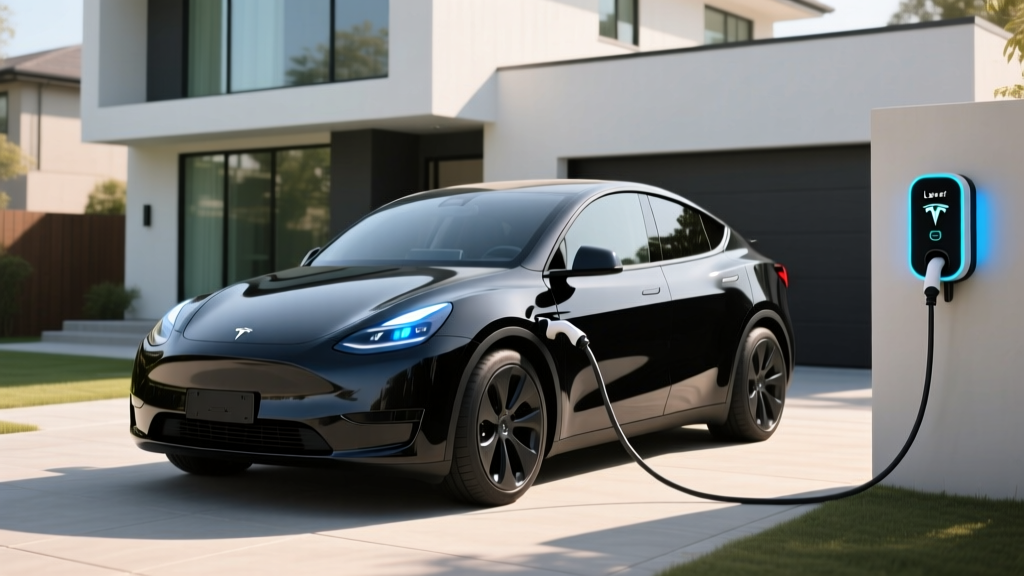
Home charging reality: A full Level 2 install (Tesla Wall Connector or equivalent on a 60A circuit) typically costs $800–$2,000 including electrician labor and permits, depending on panel proximity. Most owners charge overnight from 20–80% in under 5 hours on Level 2 — more than sufficient for daily commuting.
Performance & Driving Dynamics
Even the base RWD Model 3 delivers brisk acceleration at 5.8 seconds to 60 mph — quicker than most turbocharged gas sedans in its price range. The Long Range drops that to 4.2 seconds with dual-motor all-wheel drive, while the Performance variant hits 2.9 seconds, putting it in sports-car territory.
The 2026 "Highland" refresh brought meaningful improvements to ride quality. Revised suspension tuning, acoustic glass, and additional sound deadening have transformed what was once a firm, noisy cabin into a genuinely comfortable cruiser. Steering remains precise and communicative, though the lack of a traditional instrument cluster and the reliance on the central touchscreen for nearly all controls (including speed readout and gear selection via stalk removal) still polarizes some drivers.
Regenerative braking is strong and consistent. Tesla removed the user-adjustable regen setting in recent model years — one-pedal driving is the default and only mode. Most owners adapt within a week, but if you prefer a coasting feel, this is worth testing on a demo drive.
Interior, Cargo & Technology
The 2026 Model 3 cabin is minimalist by design. A single 15.4-inch touchscreen handles infotainment, climate, navigation, and vehicle settings. A rear 8-inch screen for back-seat passengers was added in the Highland refresh. Material quality has improved — ventilated front seats, ambient lighting, and woven textile accents are now standard across trims.
Cargo space: 23 cu ft total (trunk + frunk). The trunk offers 21 cu ft with a wide hatch opening, while the front trunk (frunk) adds 2 cu ft — enough for a charging cable bag or small backpack. Rear legroom measures 35.3 inches, adequate for adults under 6 feet but tighter than a Hyundai Ioniq 6 or BMW i4.
Driver assistance: Basic Autopilot (lane centering + adaptive cruise) is standard. Full Self-Driving (Supervised) remains a $8,000 add-on or $99/month subscription. It is critical to understand that FSD is an SAE Level 2 system — the driver must remain attentive, hands on or near the wheel, and ready to intervene at all times. It is not autonomous driving.
SAE Automation Level: Tesla Autopilot and FSD (Supervised) are Level 2 driver-assistance systems. The vehicle can steer, accelerate, and brake under certain conditions, but the human driver is fully responsible for monitoring the road and intervening immediately. Only Level 4 robotaxi services (Waymo, Zoox) operate without a human driver in defined zones.
Pricing, Tax Credits & the Tesla 0 Down Lease Question
The 2026 Model 3 lineup starts at $38,990 for the RWD, $47,740 for Long Range AWD, and $54,990 for Performance. Destination adds $1,390.
| Trim | Base MSRP | §30D Credit (max) | Effective Price (if eligible) |
|---|---|---|---|
| RWD | $38,990 | Up to $7,500 | ~$31,490 |
| Long Range AWD | $47,740 | Up to $7,500 | ~$40,240 |
| Performance | $54,990 | Up to $7,500 | ~$47,490 |
§30D Federal Tax Credit Eligibility Checklist:
- Buyer AGI must not exceed $150,000 (single) / $300,000 (joint) / $225,000 (head of household)
- Vehicle MSRP must be under $55,000 (sedans) — the Performance trim at $54,990 qualifies, but any options pushing MSRP above $55K disqualify it
- Battery critical minerals and component sourcing must meet 2026 phase-in thresholds per IRS guidelines
- Credit can be transferred to the dealer at point of sale as an immediate price reduction (new for 2024+, still active in 2026)
- Leased vehicles: the credit goes to the lessor (Tesla Finance), who may or may not pass savings to the lessee — this is the critical variable in a 0-down lease
Is a Tesla 0 Down Lease the Smart Move?
Tesla periodically offers promotional lease terms with $0 down, typically 24 or 36 months with 10,000 miles/year. The appeal is obvious: no upfront capital, lower monthly payments than financing, and the ability to upgrade in 2–3 years. But the economics require scrutiny.
On a 36-month / 10K-mile lease of the Long Range AWD, monthly payments in early 2026 have ranged from $499–$649 depending on region and promotions. A $0-down structure means the first month's payment plus acquisition fees (~$695) and registration are still due at signing — true "$0 out the door" is rare.
The lease-versus-buy decision framework:
Choose a 0-down lease if: You drive under 10,000–12,000 miles/year, want predictable monthly costs, plan to upgrade every 3 years, and the lessor passes through the $7,500 credit as a capitalized cost reduction.
Choose to purchase if: You drive 15,000+ miles/year (lease overage penalties are $0.20–$0.25/mile), want to claim the §30D credit directly via point-of-sale transfer, plan to keep the car 5+ years, or want to modify the vehicle (wraps, wheels, aftermarket).
One often-overlooked factor: Tesla leases typically do not offer a purchase option at lease-end. You return the car. If you fall in love with it, you'll need to buy a new or used one at market price. This is a significant difference from most automaker leases that include a residual buyout option.
Warranty, Battery Longevity & Ownership Costs
Tesla covers the 2026 Model 3 with:
- Basic Vehicle: 4 years / 50,000 miles
- Battery & Drive Unit: 8 years / 100,000 miles (RWD) or 8 years / 120,000 miles (Long Range & Performance), with a minimum 70% capacity retention guarantee
LFP batteries in the RWD trim have demonstrated excellent long-term degradation characteristics. Real-world fleet data from high-mileage owners and independent studies suggest LFP packs lose roughly 5–8% capacity over 100,000 miles, while NMC packs in the Long Range typically show 8–12% loss over the same distance. Neither is cause for alarm — both chemistries are engineered to outlast the warranty period with meaningful range remaining.
Insurance: Model 3 insurance premiums run 15–30% higher than comparable gas sedans, averaging $1,800–$2,600/year depending on driver profile and state. Tesla offers its own insurance product in many states that uses real-time driving data and can be 10–20% cheaper for clean-driving owners.
5-Year Estimated Cost of Ownership (Long Range AWD, 15K mi/year):
| Category | Estimated 5-Year Cost |
|---|---|
| Depreciation | ~$18,000–$22,000 |
| Electricity (home charging) | ~$3,500–$4,500 |
| Insurance | ~$10,000–$13,000 |
| Maintenance (tires, cabin filter, fluid) | ~$2,000–$3,000 |
| Total (before credit) | ~$33,500–$42,500 |
| After §30D credit | ~$26,000–$35,000 |
Maintenance costs are dramatically lower than gas equivalents — no oil changes, no transmission fluid, fewer brake replacements due to regenerative braking. Tire wear is the primary recurring expense, as EVs are heavier and deliver instant torque.
How the Model 3 Stacks Up Against Key Competitors
| Attribute | Tesla Model 3 LR | Hyundai Ioniq 6 SEL | BMW i4 eDrive40 |
|---|---|---|---|
| EPA Range | 363 mi | 305 mi | 307 mi |
| Peak DC Charge | 250 kW | 350 kW | 205 kW |
| 10–80% Time | ~22 min | ~18 min | ~31 min |
| Base MSRP | $47,740 | $42,500 | $57,900 |
| §30D Eligible | Yes (US-built) | No (Korea-built) | No (Germany-built) |
| NACS Native | Yes | No (CCS → adapter) | No (CCS → adapter) |
The Ioniq 6 charges faster on paper (350 kW peak) but lacks §30D eligibility due to South Korean assembly, adding $7,500 to its effective price. The BMW i4 offers a premium interior and superior rear-seat comfort but costs $10,000 more before any incentives and charges slower. The Model 3's Supercharger network access, US manufacturing (qualifying for the full credit), and class-leading efficiency remain its strongest competitive moats.
Pros & Cons
Pros
- Class-leading efficiency (142 MPGe RWD, 132 MPGe LR)
- Native NACS + Supercharger network for reliable road trips
- Full §30D credit eligibility (US-assembled, meets sourcing rules)
- Strong real-world range (300+ mi highway in Long Range)
- Minimal maintenance costs vs. gas sedans
- Over-the-air updates continuously add features
- LFP option (RWD) allows daily 100% charging without degradation concern
Cons
- No physical instrument cluster or traditional gear selector
- Rear seat space is tighter than Ioniq 6 or gas competitors
- Insurance premiums 15–30% above segment average
- FSD (Supervised) costs $8,000 extra and remains Level 2 — not autonomous
- Lease-end has no purchase option (return only)
- Regen braking not user-adjustable — one-pedal driving only
- RWD DC fast charge capped at 170 kW — slower road-trip stops
Who the 2026 Model 3 Suits Best
Ideal for: Daily commuters driving 30–80 miles round-trip who have home Level 2 charging access, tech-forward buyers who prefer a minimalist interface, and road-trippers who value Supercharger reliability. The Long Range AWD is the sweet spot — 363 mi EPA, dual-motor traction in rain/snow, and 250 kW charging for fast stops.
Look elsewhere if: You regularly carry rear-seat passengers over 6 feet tall (the Ioniq 6 or a Model Y offers more space), you want a traditional cockpit layout with physical gauges, or you plan to keep a vehicle 8+ years and prefer the purchase path with full §30D credit capture over a lease.
Frequently Asked Questions
What is the real-world range of the 2026 Tesla Model 3?
The EPA rates the Long Range AWD at 363 miles. In real-world highway driving at 70–75 mph, expect 300–330 miles. In cold weather (below 30°F), plan for 250–280 miles with heat pump assistance. The RWD's 272-mile EPA rating translates to roughly 230–250 miles highway and 190–210 miles in winter.
How fast does the Model 3 charge at home and on the road?
On a home Level 2 charger (11.5 kW), the Model 3 adds ~44 miles of range per hour — a full overnight charge easily covers daily needs. On DC fast chargers, the Long Range peaks at 250 kW (10–80% in ~22 minutes) and the RWD peaks at 170 kW (10–80% in ~28 minutes).
How much does a 2026 Model 3 cost after the federal tax credit?
If you meet all IRS §30D eligibility requirements (income caps, MSRP under $55K for sedans, battery sourcing), the RWD drops from $38,990 to ~$31,490 and the Long Range from $47,740 to ~$40,240. The credit can be applied at point of sale as an immediate discount.
Does the Model 3 qualify for the $7,500 federal EV tax credit?
Yes — the 2026 Model 3 is assembled in the US (Fremont, CA) and meets critical mineral and battery component sourcing thresholds for 2026. However, buyer income must be under $150K (single) or $300K (joint), and the vehicle MSRP must stay under $55,000 for sedans. Always verify current rules on IRS.gov before purchasing.
Is a Tesla 0 down lease better than buying?
A 0-down lease works if you drive under 10K–12K miles/year, want lower monthly payments, and the lessor passes the tax credit through as a cap cost reduction. Buying is better for high-mileage drivers, those who want to keep the car 5+ years, and buyers who want to claim the full §30D credit directly. Note: Tesla leases do not include a lease-end purchase option.
Is Tesla Autopilot or FSD actually self-driving?
No. Both Autopilot and Full Self-Driving (Supervised) are SAE Level 2 systems. The driver must remain fully attentive and ready to take control at any moment. These systems assist with steering, acceleration, and braking on highways and some city streets, but they are not autonomous. True Level 4 driverless operation is currently limited to geofenced robotaxi services like Waymo.
What's the battery warranty on the 2026 Model 3?
Tesla guarantees the battery and drive unit for 8 years / 100,000 miles (RWD) or 8 years / 120,000 miles (Long Range & Performance) with at least 70% capacity retention. Real-world data suggests most packs will retain 85–92% capacity at 100,000 miles, well above the warranty threshold.