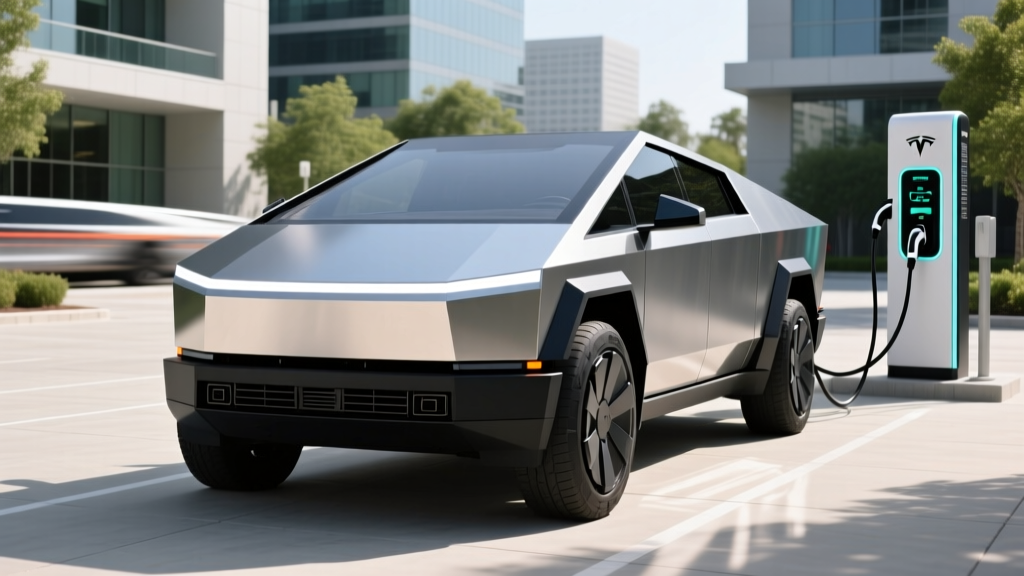
The Tesla Cybertruck enters 2026 with a clearer identity: a full-size electric pickup that prioritizes acceleration, tech integration, and stainless-steel drama over traditional truck utility. After a year of real-world ownership data, production refinements, and a stabilized trim lineup, the Cybertruck now presents a more predictable value proposition — though its polarizing design and compromises in cargo flexibility remain. This review covers the 2026 Tesla Cybertruck's EPA range, real-world efficiency, charging performance, pricing, and whether it earns a spot in your driveway over the Ford F-150 Lightning or Rivian R1T.
2026 Cybertruck Trims, Pricing, and Tax Credit Eligibility
Tesla streamlined the Cybertruck lineup for 2026 into three trims, all dual-motor or tri-motor AWD. The base rear-wheel-drive variant that was initially announced has been discontinued, leaving AWD as the standard drivetrain across the board.
| Trim | Drivetrain | Base MSRP | As-Tested (w/ common options) |
|---|---|---|---|
| Long Range AWD | Dual Motor AWD | $79,990 | $83,490 |
| Cyberbeast | Tri-Motor AWD | $99,990 | $103,490 |
| Cyberbeast w/ Foundation Series | Tri-Motor AWD | $119,990 | $119,990 |
All trims exceed the IRS §30D MSRP cap of $80,000 for pickup trucks. This means the Long Range AWD at $79,990 sits exactly at the threshold — and any factory-added options that push the sticker above $80,000 will disqualify it. Buyer income caps also apply: modified adjusted gross income (MAGI) must not exceed $150,000 (single), $225,000 (head of household), or $300,000 (joint). Additionally, battery component and critical mineral sourcing requirements must be met, which Tesla's supply chain has historically satisfied for North American-built vehicles. Always confirm eligibility with a tax professional before purchase, as rules are subject to annual updates.
EPA Range, Efficiency, and Real-World Expectations
The 2026 Cybertruck Long Range AWD carries an EPA-estimated range of 340 miles on its 123 kWh (usable) battery pack, while the tri-motor Cyberbeast drops to 320 miles due to the additional motor's weight and power draw. Efficiency ratings land at approximately 2.0–2.2 kWh/mile (roughly 56–61 MPGe combined), making the Cybertruck one of the less efficient EVs on the road — a consequence of its 6,800+ lb curb weight, angular aerodynamics, and massive contact-patch tires.
Real-World Range Callout
EPA Estimate: 340 miles (Long Range AWD) / 320 miles (Cyberbeast)
Real-World Highway (70 mph, mild weather): Expect 270–295 miles. The Cybertruck's brick-like drag coefficient (~0.34 Cd) and heavy weight penalize highway efficiency significantly more than city driving.
Cold Weather (below 32°F): Plan for 210–250 miles. The stainless-steel exoskeleton provides no insulation advantage, and the large battery mass requires substantial energy to warm. Preconditioning via scheduled departure helps but does not eliminate cold-weather losses of 25–35%.
Towing (5,000+ lb trailer): Range drops to approximately 150–180 miles. The Cybertruck's 11,000-lb max tow rating is impressive on paper, but towing range remains the Achilles' heel of every electric pickup.
The battery uses NMC (nickel manganese cobalt) chemistry, chosen for its higher energy density — necessary given the Cybertruck's mass. Tesla has not offered an LFP variant, as the weight-to-range tradeoff would be unfavorable in a vehicle this heavy.
Charging Performance: DC Fast and Home Level 2
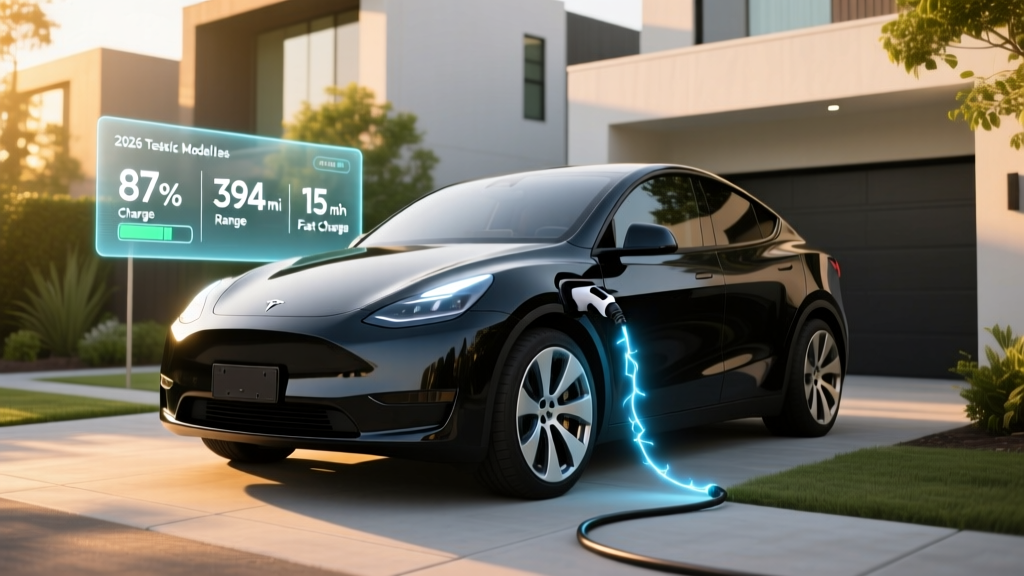
The Cybertruck supports up to 250 kW peak DC fast charging on Tesla's V3 Supercharger network and compatible CCS/NACS stations. However, as with all large-battery EVs, peak rate is not sustained rate.
| Charging Method | Max Power | Speed / Time | Notes |
|---|---|---|---|
| DC Fast Charge (NACS/CCS) | 250 kW peak | 10–80% in ~28 minutes | Sustains ~175 kW average from 10–60%; tapers sharply above 80% |
| Level 2 Home (48A / 11.5 kW) | 11.5 kW | ~37 mi/hr added; full charge in ~11 hours | Requires NACS Wall Connector on 60A circuit |
| Level 2 Home (80A / 19.2 kW) | 19.2 kW | ~52 mi/hr added; full charge in ~7 hours | Requires 100A circuit and panel capacity; significant install cost |
| Level 1 (120V / 12A) | 1.4 kW | ~4 mi/hr added | Emergency/trickle only; full charge takes 80+ hours |
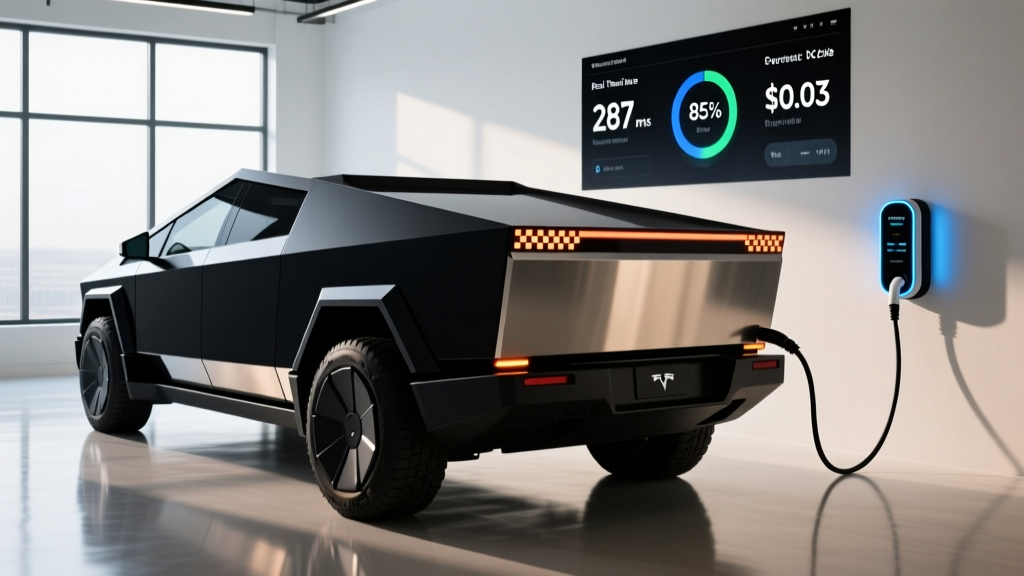
The 123 kWh battery means that even at a strong 11.5 kW Level 2 rate, you're looking at an overnight charge cycle. Owners who drive 100+ miles daily and want to recharge fully each night should consider the 80A Wall Connector — but confirm your electrical panel has headroom before committing. A panel upgrade from 100A to 200A service can add $1,500–$3,000 to your installation cost.
On the road, the Cybertruck's charge curve is typical for Tesla: aggressive ramp to peak, sustained output through the mid-SoC range, then a noticeable taper above 80%. For road trips, plan your Supercharger stops around the 15–80% window to minimize dwell time. On a 300-mile highway trip, expect two stops of roughly 20 minutes each.
Performance: Acceleration, Powertrain, and Capability
| Spec | Long Range AWD | Cyberbeast (Tri-Motor) |
|---|---|---|
| 0–60 mph | 4.1 seconds | 2.6 seconds |
| Horsepower | 600 hp | 845 hp |
| Drivetrain | Dual Motor AWD | Tri-Motor AWD (torque vectoring rear) |
| Top Speed | 112 mph | 130 mph |
| Max Towing | 11,000 lbs | 11,000 lbs |
| Payload Capacity | 2,500 lbs | 2,500 lbs |
The Cyberbeast's 2.6-second 0–60 time makes it one of the quickest production vehicles on the planet, let alone pickups. The tri-motor setup uses two rear motors with independent torque vectoring, which translates to remarkable cornering composure for a 6,800-lb truck. The Long Range dual-motor is hardly slow at 4.1 seconds and will satisfy nearly every driver while preserving range.
The adaptive air suspension provides up to 16 inches of ground clearance in Extract mode (useful for off-road obstacles) and drops 2 inches at highway speeds for efficiency. The steer-by-wire system — which replaces the mechanical steering column with electronic actuators — takes roughly 20 minutes of driving to feel natural, after which the variable-ratio rack makes low-speed maneuvers effortless and high-speed cruising stable. Some drivers love it; traditionalists may find the lack of road feedback disconcerting.
Interior, Cargo, and Daily Practicality
The Cybertruck seats five across a single bench-style front row (with a fold-down center armrest/console) and a three-across rear bench. Rear legroom measures 38.4 inches — adequate for adults but not class-leading versus the Rivian R1T's 40.1 inches or the F-150 Lightning's 43.5 inches.
The 6.5-foot bed (74.3 inches long) offers 67 cubic feet of cargo volume with the tonneau cover closed. The powered retractable hardcover is a standout feature: it seals the bed from weather and can support 300 lbs of distributed weight. However, the angled sail pillars and sloped bed walls limit the ability to carry standard 4x8 sheets of plywood flat — a frequent complaint from tradespeople and DIYers. A front trunk (frunk) provides an additional 7.1 cubic feet of lockable storage, useful for charging cables and groceries.
Interior materials are minimalist and durable: vegan leather seats, a flat dashboard dominated by an 18.5-inch touchscreen, and a secondary 9.4-inch rear touchscreen for passengers. Build quality has improved significantly from early 2024 deliveries, with tighter panel gaps and fewer squeaks. The absence of physical buttons means climate, mirror, and glovebox controls all route through the screen — a dealbreaker for some, invisible to others.
Driver Assistance, Tech, and Safety
The Cybertruck comes standard with Tesla's Autopilot suite (SAE Level 2), which includes Traffic-Aware Cruise Control, Autosteer lane centering, and automatic emergency braking. Full Self-Driving (Supervised) remains a $8,000 add-on or $99/month subscription and adds Navigate on Autopilot, Auto Lane Change, Autopark, and Smart Summon. FSD (Supervised) is still Level 2 — the driver must remain attentive and keep hands on the yoke at all times.
The Cybertruck's sensor suite includes eight cameras (no radar or ultrasonic sensors — Tesla uses Tesla Vision, a camera-only perception system). This approach has drawn criticism for reduced reliability in heavy rain, fog, and direct sun glare. In IIHS testing, the Cybertruck has not yet received a full evaluation as of early 2026, though NHTSA has awarded it a 5-star overall safety rating.
Unique tech features include the powered bed cover with integrated LED bed lighting, a built-in air compressor with onboard 120V and 240V outlets (PowerShare, up to 11.5 kW output for job-site tools or backup home power), and the Cybertruck's stainless-steel exoskeleton panels, which resist dents but show fingerprints aggressively — plan to keep microfiber cloths handy.
Warranty, Ownership Costs, and Longevity
| Component | Coverage |
|---|---|
| Basic Vehicle | 4 years / 50,000 miles |
| Battery & Drive Units | 8 years / 150,000 miles (min. 70% capacity retention) |
| Restraint System | 5 years / 60,000 miles |
| Corrosion Perforation | 12 years / unlimited miles |
The 8-year/150,000-mile battery warranty is competitive and matches or exceeds most rivals. The 70% capacity retention threshold means Tesla guarantees the battery will hold at least 86.1 kWh usable after 150,000 miles. Real-world degradation data from early 2024 Cybertruck owners suggests approximately 5–7% loss at 30,000 miles — within expected NMC degradation curves, though long-term data beyond 100,000 miles is still accumulating.
Insurance premiums for the Cybertruck run 20–40% higher than comparable F-150 Lightning trims, driven by the vehicle's repair costs (stainless-steel panel replacement is specialized), high performance, and Tesla's limited third-party parts ecosystem. Expect annual premiums of $2,800–$4,200 depending on your driving record and state.
Maintenance is minimal: no oil changes, no transmission fluid, cabin air filter replacement every 2 years, tire rotation every 6,250 miles, and brake fluid checks. The regenerative braking system extends pad life significantly — many Tesla owners report 80,000+ miles on original brake pads.
How Does the Cybertruck Compare to Key Competitors?
The 2026 Cybertruck competes in the full-size electric pickup segment against the Ford F-150 Lightning and the Rivian R1T. Each truck serves a different buyer:
- Ford F-150 Lightning: Best for traditional truck buyers who want familiar ergonomics, a usable 5.5-foot bed with a massive frunk (14.1 cu ft), and lower starting prices (~$55,000). Range tops out at 320 miles (Extended Range). Less exciting to drive, more practical to live with.
- Rivian R1T: Best for adventure-oriented buyers who value build quality, a quad-motor option with tank turns, and a 400+ mile Max Pack. Starting around $75,000, the R1T offers superior rear-seat comfort and a more refined interior. Smaller bed (54 inches) limits commercial use.
- Tesla Cybertruck: Best for tech-forward buyers who want head-turning design, best-in-class acceleration, Supercharger network access, and the PowerShare onboard power system. Compromises include polarizing aesthetics, limited bed utility for sheet goods, and camera-only driver assist limitations in adverse weather.
Pros, Cons, and Final Verdict
Pros
- Class-leading acceleration (2.6s Cyberbeast)
- 11.5 kW PowerShare onboard power
- Tesla Supercharger network reliability
- Stainless-steel body resists dents and corrosion
- Adaptive air suspension with 16" ground clearance
- Steer-by-wire makes parking a 220-inch truck easy
Cons
- Cannot fit 4x8 plywood flat in the bed
- Highway range drops significantly (real ~270–295 mi)
- Camera-only Tesla Vision struggles in heavy rain/fog
- No physical buttons — everything through the screen
- Insurance premiums 20–40% above segment average
- Stainless steel shows fingerprints and water spots
Frequently Asked Questions
What is the real-world range of the 2026 Tesla Cybertruck?
The Long Range AWD carries an EPA estimate of 340 miles, but real-world highway driving at 70 mph yields approximately 270–295 miles. Cold weather (below freezing) can drop range to 210–250 miles. If you tow, expect 150–180 miles with a 5,000+ lb trailer.
How fast does the Cybertruck charge at home and on the road?
On a DC fast charger, the Cybertruck peaks at 250 kW and charges from 10–80% in approximately 28 minutes. At home on a 48A Level 2 Wall Connector (11.5 kW), it adds about 37 miles per hour, requiring roughly 11 hours for a full charge. An 80A setup (19.2 kW) reduces that to about 7 hours but requires a 100A circuit.
Does the 2026 Cybertruck qualify for the federal EV tax credit?
Only the Long Range AWD at its base MSRP of $79,990 potentially qualifies — and only if no options push the sticker above the $80,000 truck cap. Buyer income limits ($150K single / $300K joint MAGI) and battery sourcing requirements also apply. Cyberbeast trims ($99,990+) are ineligible. Consult a tax professional and verify current IRS §30D rules before purchasing.
Is the Cybertruck worth buying over the F-150 Lightning or Rivian R1T?
It depends on your priorities. If you want maximum acceleration, Supercharger access, and onboard power for tools or backup electricity, the Cybertruck is unmatched. If you need a practical bed for construction materials, prefer physical controls, or want lower insurance costs, the F-150 Lightning is more pragmatic. If build quality, rear-seat comfort, and adventure capability matter most, the Rivian R1T is the stronger choice.
What is the Cybertruck's battery chemistry and will it last?
The Cybertruck uses NMC (nickel manganese cobalt) chemistry in its 123 kWh usable battery pack. NMC offers higher energy density than LFP, which is necessary for a vehicle this heavy. Tesla warranties the battery for 8 years/150,000 miles with a minimum 70% capacity retention guarantee. Early owner data suggests approximately 5–7% degradation at 30,000 miles.
How much does it cost to charge a Cybertruck?
At the national average residential electricity rate of ~$0.16/kWh, a full 123 kWh charge costs roughly $19.68, yielding about $0.06 per mile. Supercharger rates vary by location ($0.25–$0.45/kWh), making a full DC charge $31–$55. For comparison, fueling a gas F-150 at 18 MPG and $3.40/gallon costs about $0.19 per mile.