Quick Answer: Is the 2026 Subaru Solterra Worth Buying?
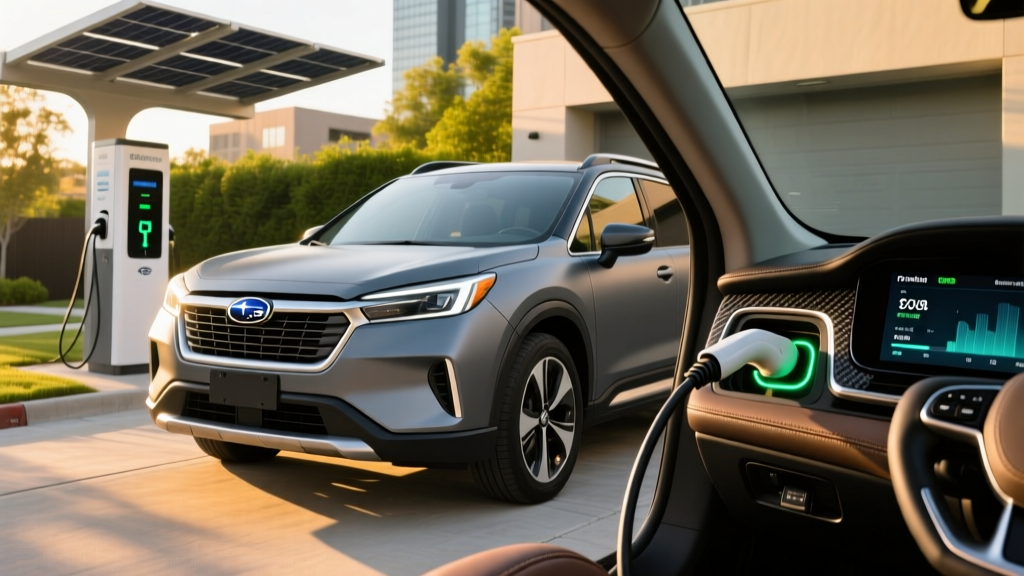
The 2026 Subaru Solterra is the only all-electric Subaru available in the U.S. It delivers an EPA-estimated 222–228 miles of range (depending on trim), standard all-wheel drive, and a starting MSRP around $38,495. It's a solid pick for buyers who want Subaru's signature AWD capability and practicality in an EV package — but its range and DC fast-charging speed trail competitors like the Hyundai Ioniq 5 and Kia EV6. If you need more than 250 miles of range or frequently take long road trips, consider alternatives. If you want a competent, no-nonsense electric crossover for daily commuting and light adventure, the Solterra fits the bill.
2026 Subaru Solterra: Specs at a Glance
Subaru co-developed the Solterra with Toyota (which sells the mechanically similar bZ4X). For 2026, Subaru has refined the package with minor software and efficiency updates, but the core hardware remains familiar. Here are the numbers that matter:
| Specification | 2026 Subaru Solterra |
|---|---|
| EPA Range | 222 mi (Touring) / 228 mi (Premium) |
| Battery Capacity (usable) | 71.4 kWh (lithium-ion, NMC chemistry) |
| Drivetrain | Dual-motor AWD, standard on all trims |
| Horsepower / Torque | 215 hp / 249 lb-ft |
| 0–60 mph | ~6.5 seconds |
| Max DC Fast Charge Rate | ~100 kW (peak) |
| 10–80% DC Fast Charge | ~35–40 minutes |
| Level 2 Charge Rate | ~7.2 kW (onboard charger) |
| Level 2 Full Charge Time | ~10 hours (0–100%) |
| MPGe (combined) | 104–107 MPGe |
| Efficiency | ~30–31 kWh/100 mi |
| Cargo Volume (behind rear seats) | ~23.8 cu ft |
| Ground Clearance | 8.3 inches |
| Towing Capacity | Not rated for towing |
| Base MSRP (Premium) | $38,495 |
| Top Trim MSRP (Touring) | $46,395 |
| Battery Warranty | 8 years / 100,000 miles |
| Federal Tax Credit (§30D) | Up to $7,500 (eligibility varies — see below) |
Sources: fueleconomy.gov, Subaru of America
Real-World Range: What to Actually Expect
EPA Sticker: 222–228 miles
Real-World Highway (70 mph, mild weather): ~185–200 miles
Cold Weather (below 32°F, mixed driving): ~155–175 miles
City/Commuting (regenerative braking active): ~210–225 miles
The Solterra's 71.4 kWh usable battery and dual-motor AWD system prioritize traction and durability over maximum efficiency. At roughly 30–31 kWh per 100 miles, it consumes more energy per mile than single-motor competitors like the Hyundai Ioniq 5 (which achieves around 27–28 kWh/100 mi in its AWD form). That translates to fewer miles per charge.
In real-world highway driving at sustained 70+ mph speeds, expect the Solterra to deliver around 185–200 miles before you need to stop. In cold weather — a genuine concern for Subaru's core buyer demographic in the Northeast, Mountain West, and Midwest — lithium-ion batteries lose efficiency and cabin heating draws significant power. Plan for 155–175 miles of usable range when temperatures drop below freezing.
The Solterra does include a heat pump on 2026 models, which helps mitigate cold-weather range loss compared to resistive heating systems. But physics is physics: a 71.4 kWh battery can only deliver so much energy, and heating a cabin in 15°F weather is an enormous load. If your daily round-trip commute exceeds 80 miles in a cold climate, you'll want reliable Level 2 home charging to start each morning with a full battery.
Charging Speed and Infrastructure
This is where the Solterra's biggest competitive weakness shows. Its peak DC fast-charge rate of approximately 100 kW means a 10–80% session takes roughly 35–40 minutes at a compatible charger. Compare that to the Hyundai Ioniq 5's 800V architecture, which peaks at 240 kW and achieves 10–80% in about 18 minutes.
| Charging Level | Power | Miles Added per Hour | Use Case |
|---|---|---|---|
| Level 1 (120V household) | ~1.2 kW | ~3–4 mi/hr | Emergency / overnight top-up |
| Level 2 (240V home/public) | ~7.2 kW | ~22–24 mi/hr | Daily home charging |
| DC Fast Charge | ~100 kW peak | ~130–150 mi in 30 min | Road trips |
For home Level 2 charging, the Solterra's 7.2 kW onboard charger means a full 0–100% charge takes roughly 10 hours on a 240V/32A circuit. Most owners will plug in overnight and wake up to a full battery every morning — this is the standard EV ownership rhythm and it works well if you have garage or driveway access with a 240V outlet or hardwired charger.
On the road, the Solterra uses the CCS1 connector standard. Subaru has not announced a transition to the NACS (Tesla-style) connector for the 2026 model year, though future model years may adopt it. For now, you'll rely on Electrify America, EVgo, ChargePoint, and other CCS-compatible networks. Tesla Supercharger access via adapter is available for some Subaru EV owners — check Subaru's latest guidance for compatibility details.
Charge-curve reality check: The Solterra's 100 kW peak is not sustained. Like all EVs, charge speed tapers significantly above 80% state of charge. If you're road-tripping and charging from 10–80%, expect the average sustained rate to be closer to 65–75 kW over the full session. Plan stops accordingly.
EV vs. Gas: Solterra Compared to the Subaru Outback and Forester
Many Solterra shoppers are cross-shopping Subaru's own gas-powered lineup. Here's how the numbers stack up against the 2026 Outback and Forester, two of Subaru's most popular models:
| Metric | 2026 Solterra (EV) | 2026 Outback (Gas AWD) | 2026 Forester (Gas AWD) |
|---|---|---|---|
| Base MSRP | $38,495 | $32,695 | $33,395 |
| After potential §30D credit | ~$30,995 | $32,695 | $33,395 |
| Fuel/Energy Cost per Mile | ~$0.045 (home charging) | ~$0.14 (gas at $3.50/gal, 29 MPG) | ~$0.13 (gas at $3.50/gal, 29 MPG) |
| Annual Fuel/Energy (12,000 mi) | ~$540 | ~$1,680 | ~$1,560 |
| EPA Range / Tank Range | 222–228 mi | ~465 mi (14.8 gal tank) | ~435 mi (14.5 gal tank) |
| 0–60 mph | ~6.5 sec | ~7.8 sec (turbo) | ~8.2 sec |
| AWD | Standard (dual motor) | Standard (symmetrical) | Standard (symmetrical) |
| Ground Clearance | 8.3 in | 8.7 in | 8.7 in |
| Towing | Not rated | 2,700–3,500 lb | 1,500 lb |
| Maintenance (annual avg) | ~$200–300 | ~$600–800 | ~$550–750 |
The Solterra costs roughly $5,800 more upfront than a base Outback before incentives, but the federal §30D tax credit can close that gap substantially if you qualify. On a per-mile basis, home-charged electricity costs about one-third what gasoline does, yielding roughly $1,100–$1,200 in annual fuel savings at 12,000 miles per year. Over five years, that's $5,500–$6,000 in energy savings alone — before factoring in reduced maintenance (no oil changes, fewer brake replacements due to regenerative braking, no transmission fluid).
However, the Outback wins on total range per tank (465 miles vs. 222) and towing capacity. If you regularly tow a small trailer or take long rural road trips far from DC fast chargers, the Outback remains the more practical Subaru. The Solterra is best suited to daily commuting, school runs, and weekend trips within a ~200-mile radius of home.
5-Year Ownership Cost Breakdown
| Cost Category | Solterra Premium ($38,495) | Outback Base ($32,695) |
|---|---|---|
| Purchase Price | $38,495 | $32,695 |
| Federal Tax Credit (§30D) | –$7,500 (if eligible) | $0 |
| Net Purchase | $30,995 | $32,695 |
| Home Charger Install (Level 2) | $800–$2,000 | $0 |
| Energy/Fuel (5 years, 60,000 mi) | $2,700 | $8,400 |
| Maintenance (5 years) | $1,250 | $3,500 |
| Insurance (5 years, avg) | $9,500 | $7,500 |
| Estimated Depreciation (5 years) | $14,000 | $11,000 |
| Total 5-Year Cost | ~$58,445–$59,645 | ~$63,095 |
Key takeaways from this breakdown:
- If you qualify for the full $7,500 federal tax credit, the Solterra's 5-year total cost of ownership is competitive with — or lower than — the Outback's, despite the higher sticker price.
- Insurance is typically higher for EVs due to repair costs and battery replacement risk. Expect Solterra premiums to run 15–25% more than a comparable gas Subaru. Get quotes before purchasing.
- Depreciation has been steeper for EVs than gas cars in recent years, though this is stabilizing. The Solterra's depreciation may be higher than the Outback's, which has historically held value well.
- Home charger installation is a one-time cost of $800–$2,000 depending on your electrical panel capacity and run distance. If your panel needs an upgrade to 200A, add $1,500–$3,000.
Federal Tax Credit Eligibility (§30D): Do You Qualify?
The Solterra may qualify for up to $7,500 under the federal Clean Vehicle Credit (IRS §30D), but eligibility depends on several factors that change periodically:
- MSRP Cap: SUVs (which includes the Solterra) must have an MSRP of $80,000 or less. All Solterra trims qualify.
- Buyer Income Cap: Modified adjusted gross income must not exceed $150,000 (single), $225,000 (head of household), or $300,000 (joint filers).
- Battery Component Sourcing: A percentage of battery components must be manufactured or assembled in North America. This threshold increases yearly. Check the latest fueleconomy.gov listing for the current Solterra eligibility status.
- Critical Minerals: A percentage of critical minerals in the battery must be sourced from the U.S. or a free-trade-agreement country. This threshold also increases annually.
- Point-of-Sale Transfer: As of 2024, you can transfer the credit to the dealer at purchase, reducing your out-of-pocket cost immediately rather than waiting to claim it on your tax return.
Important: Battery sourcing rules have disqualified several EVs in prior years, and eligibility can change mid-year. Always verify the Solterra's current status on fueleconomy.gov before finalizing a purchase, and consult a tax professional for your specific situation.
Common Misconceptions About the Solterra
| Myth | Fact |
|---|---|
| "The Solterra can tow like an Outback." | The 2026 Solterra is not rated for towing. If you need to pull a trailer, stick with a gas or hybrid Subaru. |
| "222 miles of range means I can drive 222 miles." | EPA range assumes mixed driving in moderate temperatures. Highway driving at 75 mph reduces range to ~185–200 miles. Cold weather reduces it further. |
| "It charges in 30 minutes." | A 10–80% DC fast charge takes ~35–40 minutes at a 100+ kW charger. Charging from 80–100% adds significant additional time due to taper. |
| "EVs don't need AWD — electric motors handle traction." | The Solterra's dual-motor AWD provides genuine all-weather traction, but it's not a replacement for winter tires in severe snow and ice. Budget for a set of dedicated winter tires. |
| "The battery will need replacing in 5 years." | Subaru warranties the battery for 8 years/100,000 miles against defects and excessive capacity loss (below 70% retention). Most EV batteries outlast their warranties with gradual, manageable degradation of 1–2% per year. |
| "I can charge on any Tesla Supercharger." | The Solterra uses CCS1. Tesla Supercharger access requires an adapter and depends on Tesla's network opening policies. Verify compatibility before relying on Superchargers. |
Decision Framework: Is the Solterra Right for You?
Choose the 2026 Subaru Solterra if:
- You have access to Level 2 home charging (garage, driveway, or workplace)
- Your daily driving is under 80 miles round-trip
- You want AWD for snow/rain but don't need to tow
- You qualify for the §30D federal tax credit (bringing effective price below $31,000)
- You value Subaru's safety reputation and EyeSight driver-assistance suite
- You mostly stay within a 200-mile radius of home
Look elsewhere if:
- You regularly drive more than 200 miles between charging stops
- You need towing capability (consider the Outback, Ford F-150 Lightning, or Rivian R1S)
- You lack access to home or workplace charging — public-only charging with a 222-mile range EV is frustrating and expensive
- You want the fastest DC charging available (Hyundai Ioniq 5, Kia EV6, or Tesla Model Y charge 2x faster)
- You need maximum cargo space (the Solterra's 23.8 cu ft is less than the Outback's 32.5 cu ft)
Frequently Asked Questions
Does the 2026 Subaru Solterra qualify for the $7,500 federal tax credit?
It may, depending on current battery-sourcing rules and your income. The Solterra's MSRP is well under the $80,000 SUV cap, but the critical-minerals and battery-component requirements change yearly. Verify current eligibility on fueleconomy.gov and consult a tax professional before relying on the credit.
How long does it take to charge the Solterra at home?
On a Level 2 (240V) home charger at 7.2 kW, a full 0–100% charge takes approximately 10 hours. Most owners plug in overnight and wake to a full battery. On a standard 120V household outlet (Level 1), a full charge would take roughly 60+ hours — Level 1 is only practical for occasional top-ups, not daily use.
Is the Solterra good in snow and winter conditions?
Yes — the dual-motor AWD system, 8.3 inches of ground clearance, and Subaru's traction-control tuning make it capable in snow. However, all-season tires are standard; for serious winter driving, invest in dedicated winter tires. Also plan for 25–35% range reduction in sub-freezing temperatures.
What's the difference between the Solterra and Toyota bZ4X?
They share the same e-TNGA platform, battery, and powertrain. The Solterra comes standard with AWD on all trims (the bZ4X offers FWD on its base trim), has slightly more ground clearance, and includes Subaru's X-MODE off-road traction system. Pricing and features differ slightly between the two.
Will Subaru release a larger or longer-range electric SUV?
Subaru has announced plans for additional EV models, including a larger three-row electric SUV expected later this decade. As of 2026, the Solterra remains Subaru's only all-electric vehicle available in the U.S. Any future models should be considered preliminary until official specs and pricing are released.
How does Solterra insurance cost compare to a gas Subaru?
Expect Solterra insurance premiums to run 15–25% higher than a comparable gas Subaru like the Outback, primarily due to higher repair costs and battery replacement risk. Average annual premiums range from $1,700–$2,100 depending on your location, driving record, and coverage level. Get quotes from multiple insurers before purchasing.