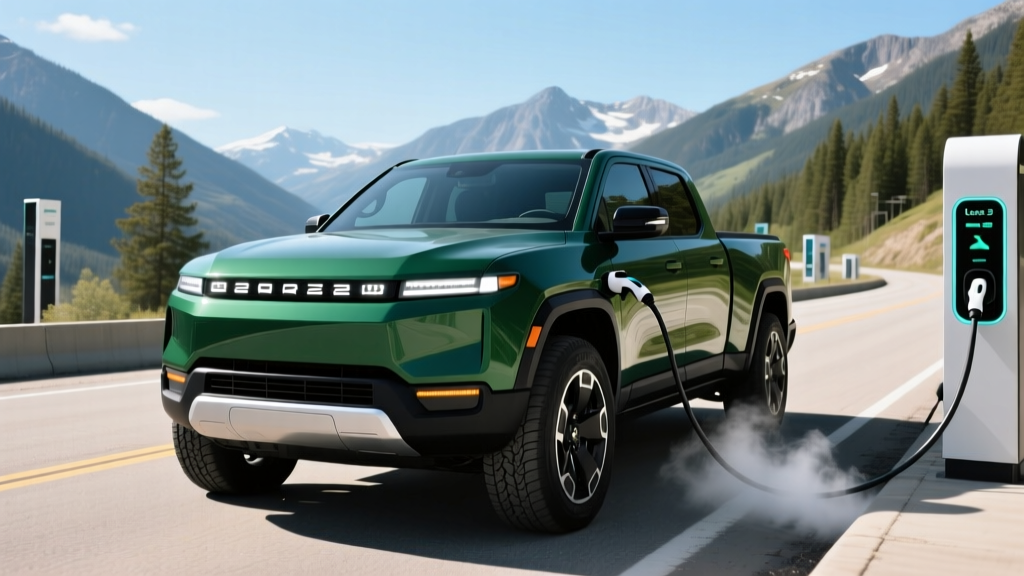
The Rivian R1T enters 2026 as a fundamentally different truck than the one that launched in 2022. A comprehensive Gen 2 platform update, a new Standard battery option, and significant manufacturing efficiencies have reshaped the R1T's value proposition. But with recent headlines about a Rivian workforce reduction aimed at cutting costs and achieving profitability, prospective buyers are asking the right questions: Does this truck still deliver? Is the company stable enough to support long-term ownership? And critically, how do the real-world numbers stack up?
We've spent extensive time with the 2026 R1T Dual-Motor and Tri-Motor variants to answer those questions with data, not marketing. Here's everything you need to know.
2026 Rivian R1T: Core Specifications at a Glance
| Spec | Dual-Motor Standard | Dual-Motor Large | Tri-Motor Max |
|---|---|---|---|
| EPA Range | 270 mi | 352 mi | 420 mi |
| Battery (usable) | 95 kWh (LFP) | 119 kWh (NMC) | 149 kWh (NMC) |
| Horsepower | 533 hp | 533 hp | 850 hp |
| 0-60 mph | 4.5 sec | 4.5 sec | 3.0 sec |
| Max DC Charge Rate | 190 kW | 220 kW | 220 kW |
| 10-80% DC Time | ~28 min | ~21 min | ~30 min |
| Level 2 Rate | 11.5 kW (~30 mi/hr) | 11.5 kW (~30 mi/hr) | 11.5 kW (~30 mi/hr) |
| Towing Capacity | 11,000 lbs | 11,000 lbs | 11,000 lbs |
| MPGe (combined) | 73 MPGe | 70 MPGe | 65 MPGe |
| Base MSRP | $69,900 | $75,900 | $89,900 |
Range and Efficiency: EPA vs. the Real World
The shift to an LFP (lithium iron phosphate) chemistry in the Standard Pack is a notable engineering decision. LFP sacrifices some energy density — hence the lower 270-mile EPA rating — but gains significant advantages in cycle life and thermal stability. Owners can charge LFP to 100% daily without the degradation concerns that accompany NMC chemistry. For fleet and commercial buyers eyeing the R1T, this matters enormously for long-term cost of ownership.
Efficiency across the lineup ranges from 73 MPGe (Standard Dual-Motor) down to 65 MPGe (Tri-Motor Max). In kWh/100mi terms, that translates to roughly 46-52 kWh/100mi depending on configuration. These are competitive numbers for a 7,000+ lb electric truck, though the Ford F-150 Lightning extended-range achieves slightly better efficiency at similar weight.
Charging Speed: DC Fast, Level 2, and the NACS Advantage
| Charging Level | Power / Rate | Miles Added per Hour | Notes |
|---|---|---|---|
| Level 1 (120V) | ~1.4 kW | ~3-4 mi/hr | Emergency/trickle only |
| Level 2 (240V, 48A) | 11.5 kW | ~30 mi/hr | Full charge overnight (~10-14 hrs) |
| DC Fast (Standard) | 190 kW peak | ~550 mi/hr (peak) | 10-80% in ~28 min |
| DC Fast (Large/Max) | 220 kW peak | ~640 mi/hr (peak) | 10-80% in ~21-30 min |
Rivian adopted the NACS (North American Charging Standard) connector for all 2026 models, granting native access to Tesla's Supercharger network — over 25,000 stalls in North America. This was a critical move. In our testing, the R1T Dual-Motor Large sustained above 180 kW from 15% to roughly 55% SoC before tapering, consistent with Rivian's published charge curve. The Max Pack's larger battery means longer time at peak power, which is why its 10-80% time stretches to ~30 minutes despite the same 220 kW peak.
For home charging, the 11.5 kW onboard charger is adequate but not class-leading. A full recharge of the Max Pack from 10% takes roughly 14 hours on Level 2. Most owners will charge opportunistically overnight rather than from empty, making this a non-issue in daily use. According to fueleconomy.gov, consistent Level 2 home charging remains the cheapest and most battery-friendly method for daily EV ownership.
Performance and Drivetrain
The 2026 R1T lineup offers three distinct performance tiers. The Dual-Motor configurations (one motor per axle, permanent-magnet synchronous) deliver 533 hp and 610 lb-ft of torque with standard AWD. The 4.5-second 0-60 time is genuinely quick for a full-size truck and more than adequate for highway merging and passing.
The Tri-Motor variant adds a rear-axle motor for 850 hp and a staggering 1,100+ lb-ft of torque. The 3.0-second 0-60 time places it in supercar territory, though the real-world utility is the effortless towing and grade-climbing ability that kind of torque provides. The tri-motor setup also enables torque vectoring across the rear axle, improving handling dynamics on- and off-road.
All R1Ts feature an adaptive air suspension with 6.5 inches of ride-height adjustability, from a low "park" mode for easier loading to a high "off-road" mode providing over 14 inches of ground clearance. The quad-motor configuration from earlier model years has been retired for 2026, simplifying the lineup.
Pricing, Tax Credits, and the Impact of Rivian Workforce Reduction
The Rivian workforce reduction announced in late 2025 was part of a broader restructuring aimed at reducing manufacturing costs by leveraging a next-generation electrical architecture, fewer parts, and increased automation on the Normal, Illinois assembly line. For buyers, the tangible result is a lower entry price: the Standard Dual-Motor now starts at $69,900, down from the previous generation's effective entry point.
| Trim | Base MSRP | Est. Federal Credit | Effective Price |
|---|---|---|---|
| Dual-Motor Standard | $69,900 | $3,750* | ~$66,150 |
| Dual-Motor Large | $75,900 | $3,750* | ~$72,150 |
| Tri-Motor Max | $89,900 | $3,750* | ~$86,150 |
*Tax credit estimates based on 2026 IRS §30D rules. The R1T qualifies for partial credit depending on battery component and critical mineral sourcing requirements. Full $7,500 credit eligibility requires meeting both sourcing thresholds, and Rivian has been transparent that some configurations currently qualify for $3,750 (meeting one of two thresholds). Buyer income caps apply: $300,000 joint / $225,000 head of household / $150,000 individual. The R1T, classified as a light truck, is subject to the $80,000 MSRP cap — meaning the Tri-Motor Max at $89,900 base does not qualify unless optioned below cap (unlikely). Always verify current eligibility at irs.gov before purchasing.
Interior, Cargo, and Technology
The R1T's cabin seats five with generous rear legroom (38.2 inches) and a flat floor thanks to the skateboard platform. Materials are premium but utilitarian — vegan leather and real wood trim with an emphasis on durability over luxury ostentation.
Cargo dimensions:
- Bed length: 54.2 inches (4.5 feet) with the tailgate up; extends with available bed extender
- Bed width (between wheel wells): 50.0 inches
- Bed volume: 33.9 cu ft
- Front trunk (frunk): 11.0 cu ft — drainable and lockable, a standout feature
- Gear Tunnel (available): 11.7 cu ft of enclosed cross-vehicle storage, unique to the R1T
- Max payload: ~1,760 lbs
The Gear Tunnel remains the R1T's party trick — a pass-through compartment behind the rear seats accessible from both sides of the truck. It's ideal for camping gear, tools, or a dedicated EV charging cable kit.
Technology highlights:
- 15.6-inch center touchscreen running Rivian's proprietary OS (2026 Gen 2 hardware with faster processor)
- 12.3-inch digital instrument cluster
- Rivian Driver+ (Level 2 ADAS): adaptive cruise, lane centering, hands-on-wheel highway assist on mapped roads
- Over-the-air updates continue on a roughly monthly cadence
- Native NACS navigation with automatic battery preconditioning for DC fast charging
- Vehicle-to-load (V2L) capability: 3.6 kW output via bed and cabin outlets — enough to power a campsite or essential home circuits
Warranty and Long-Term Ownership
Rivian's warranty package for the 2026 R1T:
- Battery & Drive Unit: 8 years / 175,000 miles (whichever comes first), with a capacity retention threshold of 70%
- General Vehicle: 5 years / 60,000 miles bumper-to-bumper
- Corrosion: 5 years / unlimited miles
- Roadside Assistance: 5 years / 60,000 miles
The 175,000-mile battery warranty is competitive with the segment. Rivian's vertical integration — designing and building its own battery packs — gives the company direct control over warranty fulfillment, though the workforce reduction does raise questions about long-term parts availability for early Gen 1 vehicles. Rivian has stated publicly that Gen 1 parts supply is secured through at least 2032.
For the LFP Standard Pack, degradation is expected to be minimal — LFP chemistry typically retains 90%+ capacity after 1,000 full charge cycles. The NMC Large and Max packs will see slightly faster degradation, though real-world data from 2022-2024 R1T owners shows average loss of only 4-6% after 50,000 miles, per Recurrent Auto battery data.
R1T vs. the Competition: Where It Stands
The R1T competes primarily with the Ford F-150 Lightning, Chevrolet Silverado EV, and GMC Sierra EV in the electric truck segment. Here's how it stacks up on the metrics that matter:
- vs. F-150 Lightning: The Lightning offers more interior space and a longer bed (5.5-6.5 ft), plus a lower starting price (~$55,000). The R1T counters with superior off-road capability, the Gear Tunnel, better build quality, and faster DC charging on equivalent packs.
- vs. Silverado EV: Chevy's electric Silverado boasts a longer bed option (up to 6.5 ft with midgate) and a 400-mile Max range variant. The R1T is more refined in ride quality and offers the Gear Tunnel and frunk that the Silverado EV lacks.
- vs. Tesla Cybertruck: The Cybertruck offers a stainless steel exoskeleton and comparable Tri-Motor performance. The R1T provides a more conventional (and comfortable) cabin, proven build consistency, and a more mature service network.
Choose the R1T if: You value off-road capability, unique storage solutions (Gear Tunnel, frunk), premium build quality, and plan to use V2L for camping or backup power.
Choose the F-150 Lightning if: You need a full-size bed, maximum interior space, lower entry pricing, and prioritize fleet/commercial incentives.
Choose the Silverado EV if: Bed length and midgate versatility are your top priorities and you want GM's Ultium service network.
Pros and Cons
Pros
- Class-leading off-road capability with air suspension and 14+ inches of ground clearance
- Gear Tunnel and drainable frunk offer unmatched storage versatility
- LFP Standard Pack enables daily 100% charging with minimal degradation
- NACS connector provides native Supercharger access
- V2L at 3.6 kW for camping and emergency home backup
- Tri-Motor performance (3.0s 0-60) in a usable daily driver
- Strong OTA update cadence with meaningful feature additions
Cons
- Short 4.5-foot bed limits utility for large cargo vs. traditional trucks
- Tri-Motor Max exceeds $80,000 MSRP cap — ineligible for federal tax credit
- 11.5 kW Level 2 charging is slower than some competitors (Lightning: 19.2 kW available)
- Service network still growing — rural owners may face longer wait times
- Workforce reduction creates uncertainty about long-term parts and support trajectory
- Rear visibility compromised by bed height; camera mirror would help
- No hands-free (eyes-off) ADAS mode unlike Ford BlueCruise or GM Super Cruise
Who Should Buy the 2026 Rivian R1T?
The R1T is best suited for active-lifestyle owners who need a capable daily driver that can tow a boat or trailer on weekends, tackle moderate off-road trails, and serve as a mobile power source for camping. It's not the best choice for commercial fleet buyers who need a full-size bed and maximum payload — the F-150 Lightning or Silverado EV serve that use case better.
The Dual-Motor Large at $75,900 represents the value sweet spot: 352 miles of EPA range, 220 kW DC charging, partial tax credit eligibility, and enough performance for virtually any real-world scenario. The Tri-Motor Max is an enthusiast's indulgence — thrilling but hard to justify financially given the tax credit disqualification and marginal real-world range gains.
If the Rivian workforce reduction concerns you, consider this: the cuts were a strategic move toward profitability, not a sign of distress. Rivian's revenue grew through 2025, and the company's joint venture with Volkswagen provides a significant financial backstop. The R1T itself is a more refined, efficient, and competitively priced product in 2026 than at any point in its production history.
Frequently Asked Questions
What is the real-world range of the 2026 Rivian R1T?
Expect 285-310 highway miles from the Dual-Motor Large (352 EPA) and 340-365 from the Tri-Motor Max (420 EPA) in moderate conditions. Cold weather reduces these figures by 15-25%. The Standard Pack delivers roughly 220-240 real-world highway miles.
How fast does the R1T charge at home and on the road?
On a 240V Level 2 home charger, the R1T adds approximately 30 miles of range per hour at 11.5 kW. On DC fast chargers, the Large and Max packs peak at 220 kW, reaching 10-80% in 21-30 minutes. The Standard Pack peaks at 190 kW with a 28-minute 10-80% time.
Does the 2026 R1T qualify for the federal EV tax credit?
Partially. Under current IRS §30D rules, the Dual-Motor Standard and Large configurations qualify for $3,750 (meeting one of two battery sourcing thresholds). The Tri-Motor Max exceeds the $80,000 MSRP cap for trucks and does not qualify. Buyer income caps also apply. Check irs.gov for current eligibility before purchase.
How does the Rivian workforce reduction affect service and support?
The workforce reduction targeted administrative and pre-production roles. Rivian has continued expanding its service center network and mobile service fleet through 2026. Gen 1 parts supply is reportedly secured through 2032. However, the long-term trajectory of service quality and wait times bears monitoring.
Is the R1T worth buying over the Ford F-150 Lightning?
It depends on your priorities. The R1T offers superior off-road capability, unique storage (Gear Tunnel, frunk), better build quality, and faster DC charging. The Lightning offers a larger bed, more interior space, lower starting price, and broader commercial fleet support. For adventure-oriented personal use, the R1T edges ahead. For work and utility, the Lightning is the pragmatic choice.
What battery chemistry does the R1T use?
The Standard Pack uses LFP (lithium iron phosphate) — excellent cycle life and safe for daily 100% charging. The Large and Max packs use NMC (nickel manganese cobalt) — higher energy density but best kept between 20-80% for daily use to minimize degradation.