If you've been watching Rivian's trajectory since the R1T pickup and R1S SUV launched, the 2026 model year represents a significant inflection point. The Gen 2 platform — introduced for 2025 — is now fully matured across the R1 lineup, bringing improved battery chemistries, faster DC charging, and revised pricing. But the headline for most buyers isn't just the hardware; it's how the 2026 Rivian R1 financing offer landscape stacks up against competitors when you factor in federal tax credits, lease incentives, and total cost of ownership.
This review covers the full 2026 R1T (truck) and R1S (SUV) lineup with exact specs, real-world range expectations, charging data, and a clear-eyed look at what financing actually costs after incentives. Whether you're cross-shopping the Tesla Cybertruck, Ford F-150 Lightning, or BMW iX, this is the data you need before signing anything.
2026 Rivian R1 Lineup: Specs at a Glance
Rivian offers the R1T and R1S across multiple battery and motor configurations for 2026. The Gen 2 architecture uses a redesigned drive unit with fewer moving parts, a structural battery pack, and an 800-volt electrical system enabling faster DC charging. Here's the full spec breakdown:
| Spec | Dual-Motor (Standard) | Dual-Motor (Large) | Tri-Motor (Max) |
|---|---|---|---|
| EPA Range (R1T) | 270 mi | 352 mi | 420 mi |
| EPA Range (R1S) | 278 mi | 360 mi | 410 mi |
| Battery Capacity (usable) | ~92 kWh (LFP) | ~128 kWh (NMC) | ~149 kWh (NMC) |
| Horsepower | 533 hp | 533 hp | 850 hp |
| 0–60 mph | 4.5 sec | 4.5 sec | 2.9 sec |
| Drivetrain | AWD (dual-motor) | AWD (dual-motor) | AWD (tri-motor) |
| Max DC Fast Charge | 200 kW | 220 kW | 220 kW |
| 10–80% DC Charge Time | ~28 min | ~30 min | ~36 min |
| Level 2 Home Charge Rate | 11.5 kW (~25 mi/hr) | 11.5 kW (~25 mi/hr) | 11.5 kW (~25 mi/hr) |
| Towing Capacity | 11,000 lbs | 11,000 lbs | 11,000 lbs |
Sources: fueleconomy.gov, Rivian official specs. Tri-Motor Max pack availability limited to Adventure and Ascend trims.
Real-World Range: What the EPA Sticker Doesn't Tell You
EPA Estimate: 352 miles
Expected Highway (70 mph, 75°F): ~290–310 miles
Cold Weather (20°F, highway): ~230–260 miles
Towing (5,000 lb trailer, mixed): ~170–200 miles
EPA range estimates are derived from a specific laboratory test cycle that doesn't fully replicate sustained highway driving or cold-weather conditions. In our experience and consistent with independent testing, the R1T and R1S with the Large (NMC) pack deliver roughly 85–90% of their EPA rating at highway speeds in moderate temperatures. The LFP Standard pack shows slightly less cold-weather degradation percentage-wise, but starts from a lower baseline — so absolute range drops are smaller in miles but more anxiety-inducing in practice.
The Tri-Motor Max pack's 420-mile EPA rating (R1T) is genuinely impressive, but the larger battery adds significant weight. Efficiency drops to roughly 48–50 kWh/100 mi compared to 42–44 kWh/100 mi on the Dual-Motor Large. You're carrying more battery to go further, not extracting more efficiency per electron.
MPGe figures for the 2026 R1T Dual-Motor Large land at approximately 73 MPGe combined (per fueleconomy.gov), translating to about 46 kWh/100 miles. That's competitive with the F-150 Lightning Extended Range but trails the more aerodynamic Tesla Cybertruck.
Charging Speed: Home and DC Fast Charging Breakdown
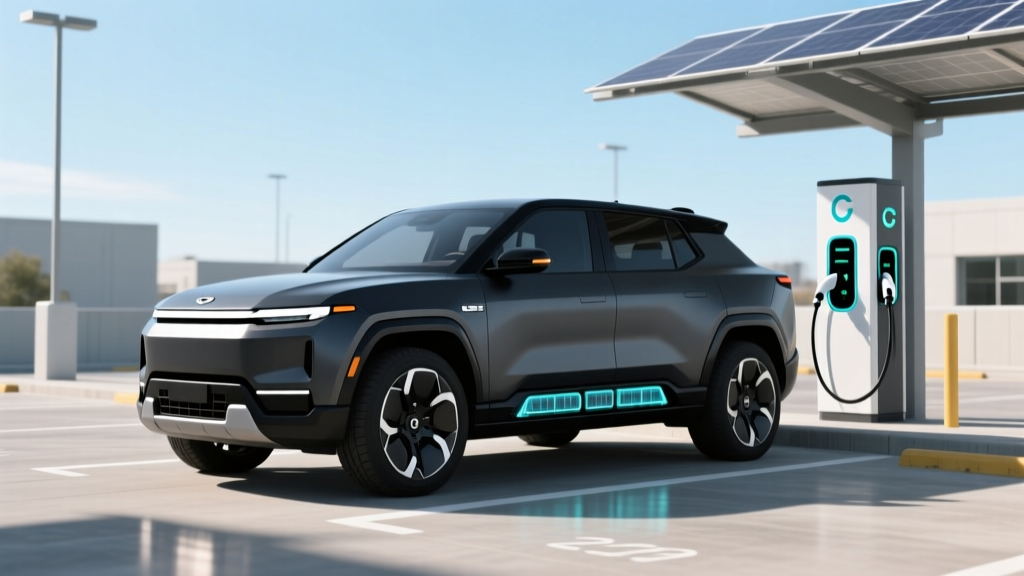
Rivian's 800V architecture on the Gen 2 platform is the headline improvement. Here's what charging looks like across all three levels:
| Charging Level | Power / Voltage | Miles Added per Hour | Notes |
|---|---|---|---|
| Level 1 (120V household) | ~1.4 kW | ~3 mi/hr | Emergency/trickle only |
| Level 2 (240V home) | 11.5 kW | ~25 mi/hr | Full charge overnight (~10–14 hrs depending on pack) |
| DC Fast Charge | Up to 220 kW (800V) | ~140 mi in 20 min (peak) | Charge curve tapers above 80% SoC |
Critical note on the charge curve: The 220 kW peak applies only between roughly 10–40% State of Charge on the Large and Max packs. From 40–60%, rates settle to ~170–180 kW. Above 80%, charging slows dramatically to protect battery health — expect 30–40 kW. This means an 80–100% top-off can take as long as the 10–80% session. For road trips, plan your stops around 10–80% increments.
Rivian's Adventure Network of DC fast chargers continues to expand along key outdoor and highway corridors. The NACS (Tesla-style) charge port is standard on 2026 models, granting access to Tesla Superchargers via Rivian's integrated adapter solution — a major practical advantage over CCS-only vehicles now that Tesla's Supercharger network has opened to NACS-equipped non-Tesla vehicles.
Pricing, Trims, and the 2026 Rivian R1 Financing Offer Landscape
Rivian simplified its trim structure for 2026. The R1T and R1S are available in three tiers: Adventure (base), Ascend (mid-level luxury), and Ascend Tri-Motor (performance flagship). Here's the MSRP breakdown before any incentives:
| Model / Trim | Base MSRP | Federal §30D Credit (est.) | Effective Price (if eligible) |
|---|---|---|---|
| R1T Adventure Dual-Motor (Standard) | $69,900 | Up to $7,500 | ~$62,400 |
| R1T Adventure Dual-Motor (Large) | $75,900 | Up to $7,500 | ~$68,400 |
| R1S Adventure Dual-Motor (Standard) | $74,900 | Up to $7,500 | ~$67,400 |
| R1T Ascend Tri-Motor (Max) | $99,500 | Up to $7,500 | ~$92,000 |
| R1S Ascend Tri-Motor (Max) | $104,000 | Up to $7,500 | ~$96,500 |
Federal tax credit eligibility (IRS §30D) — critical caveats:
- MSRP Cap: Vans, SUVs, and pickup trucks have an $80,000 MSRP cap for §30D eligibility. This means R1T and R1S trims priced above $80,000 (Tri-Motor Max configurations) do NOT qualify for the federal credit. Only the Adventure and lower Ascend Dual-Motor trims are eligible.
- Buyer Income Cap: Modified adjusted gross income must not exceed $300,000 (joint), $225,000 (head of household), or $150,000 (single). See IRS §30D guidelines for current-year rules.
- Battery Sourcing: The full $7,500 requires meeting both critical-mineral ($3,750) and battery-component ($3,750) sourcing thresholds. Rivian has been working to qualify its supply chain, but eligibility can shift — verify with your dealer and tax professional before purchase.
- Point-of-Sale Transfer: As of 2024, eligible buyers can transfer the credit to the dealer at purchase, reducing the sale price directly rather than waiting for a tax refund. This effectively functions as a down payment reduction.
Financing considerations: Rivian partners with multiple lenders, and APR offers vary by credit tier, term length, and promotional periods. As of early 2026, typical new-EV loan rates range from 4.9% to 7.5% for 60-month terms depending on creditworthiness. Rivian has periodically offered subsidized financing rates (e.g., 2.9% or 3.9% APR for well-qualified buyers) on select trims — check rivian.com for current promotional financing offers. Leasing is also available and may allow the dealer to capture the $7,500 credit as a capitalized-cost reduction (the so-called "lease loophole" under §45W), potentially making higher-trim R1s more accessible.
Interior, Cargo, and Technology
The R1T's defining feature remains the gear tunnel — a 11.7 cu ft pass-through storage compartment behind the cab that's genuinely useful for camping gear, skis, or groceries. The 4.5-foot bed (with optional bed shelf) offers 27.2 cu ft of volume. The R1S provides seating for up to seven with its optional third row, though third-row legroom (30.2 inches) is best suited for children on longer trips.
Cargo dimensions:
- R1T bed volume: 27.2 cu ft (plus 11.7 cu ft gear tunnel)
- R1T frunk (front trunk): 11.0 cu ft
- R1S cargo behind 2nd row: 46.7 cu ft
- R1S cargo behind 3rd row: 12.4 cu ft
- R1S max cargo (all rows folded): 97.1 cu ft
Technology highlights:
- 15.6-inch center touchscreen running Rivian's in-house OS with over-the-air updates
- 12.3-inch digital instrument cluster
- Standard wireless Apple CarPlay and Android Auto
- Rivian Driver+ (Level 2 ADAS): adaptive cruise, lane-centering, automatic lane change on highway — requires hands on wheel and driver attention at all times
- Available camp kitchen, rooftop tent integration, and powered tonneau cover (R1T)
- Eight-camera sensor suite with 360° view
Warranty and Long-Term Ownership
Rivian's warranty coverage is competitive but not class-leading:
- Vehicle Limited Warranty: 5 years / 60,000 miles
- Battery & Drive Unit Warranty: 8 years / 175,000 miles (with at least 70% capacity retention)
- Corrosion Warranty: 6 years / unlimited miles
The 8-year/175,000-mile battery warranty exceeds the federal minimum (8yr/100,000 mi) and is one of the more generous thresholds in the segment. The 70% capacity-retention guarantee means Rivian will repair or replace the battery if it degrades below that threshold within the warranty period — a meaningful protection given that EV battery replacement can cost $15,000–$25,000 out of warranty.
For the LFP Standard pack, expect slower long-term degradation compared to NMC — LFP chemistry typically retains 90%+ capacity after 1,000+ full charge cycles. The trade-off is lower energy density (hence the shorter range) and less optimal cold-weather fast-charging performance.
Pros, Cons, and Who Should Buy
Pros
- Class-leading combination of off-road capability, on-road performance, and utility
- NACS port standard — native Supercharger access
- 800V architecture enables competitive DC charging speeds
- Unique gear tunnel and adventure-focused features (R1T)
- Strong OTA update track record improving vehicles post-purchase
- 11,000-lb towing capacity (though range drops significantly while towing)
Cons
- High starting price; Tri-Motor trims exceed $80K tax-credit cap
- Service center network still limited in many regions
- Third-row space in R1S is tight for adults
- Real-world highway range falls 10–15% below EPA estimate
- No Apple CarPlay/Android Auto at launch (now added via OTA, but late to the feature)
- Insurance costs tend to be higher than segment average
Who Is the 2026 Rivian R1 For?
Choose the R1T if: You need a pickup that can genuinely off-road, tow a boat or camper on weekends, and serve as a daily driver — and you value the gear tunnel and adventure ecosystem over maximum bed length.
Choose the R1S if: You want a three-row electric SUV with real off-road chops and don't need the maximum cargo volume of a Chevrolet Tahoe or Rivian's own R1T bed.
Look elsewhere if: Budget is the primary concern (the F-150 Lightning starts ~$20K lower), you need maximum highway efficiency (Tesla Cybertruck or Model X), or you live far from a Rivian service center.
Frequently Asked Questions
What is the real-world range of the 2026 Rivian R1?
The EPA rates the R1T Dual-Motor Large at 352 miles, but expect approximately 290–310 miles at sustained highway speeds in moderate weather. Cold weather (below freezing) reduces that to roughly 230–260 miles. Towing cuts range nearly in half — plan for 170–200 miles with a 5,000-lb trailer.
How fast does the 2026 Rivian R1 charge?
On a DC fast charger, the Large and Max packs peak at 220 kW and charge from 10–80% in approximately 30–36 minutes. At home on a Level 2 (240V, 48-amp) charger, you'll add about 25 miles of range per hour, meaning a full overnight charge for the Large pack takes roughly 12–14 hours.
Does the 2026 Rivian R1 qualify for the federal EV tax credit?
Select trims do. The §30D credit applies to trucks and SUVs with an MSRP at or below $80,000, so Adventure and lower Ascend Dual-Motor configurations qualify (up to $7,500). Tri-Motor Max trims priced above $80,000 do not. Buyer income caps and battery-sourcing requirements also apply — consult the IRS §30D page and a tax professional.
How much does the 2026 Rivian R1 cost after tax credits?
The R1T Adventure Dual-Motor Standard starts at $69,900. If you qualify for the full $7,500 federal credit via point-of-sale transfer, the effective price drops to approximately $62,400. Higher trims and the R1S SUV command premiums — and trims over $80,000 MSRP are not credit-eligible.
Is the Rivian R1 worth buying vs. the F-150 Lightning or Cybertruck?
It depends on your priorities. The F-150 Lightning is more affordable and practical for traditional truck buyers. The Cybertruck offers sharper efficiency and a polarizing design. The R1T wins on off-road capability, adventure-focused features (gear tunnel, camp kitchen), and build quality — but at a higher price point and with a less mature service network.
What are the biggest drawbacks of the Rivian R1?
The primary concerns are pricing (especially for credit-ineligible upper trims), limited service center availability in rural areas, and real-world range that falls noticeably below EPA estimates at highway speeds and in cold weather. Insurance premiums also tend to run 15–25% higher than comparable gas trucks.
Disclaimer: Pricing, tax-credit eligibility, and promotional financing rates are based on information available as of early 2026 and are subject to change. Always verify current IRS §30D rules, manufacturer pricing, and lender terms before making a purchase decision. This article does not constitute tax or financial advice.