Quick Answer: Should You Wait for the 2026 Porsche Cayenne Electric SUV?
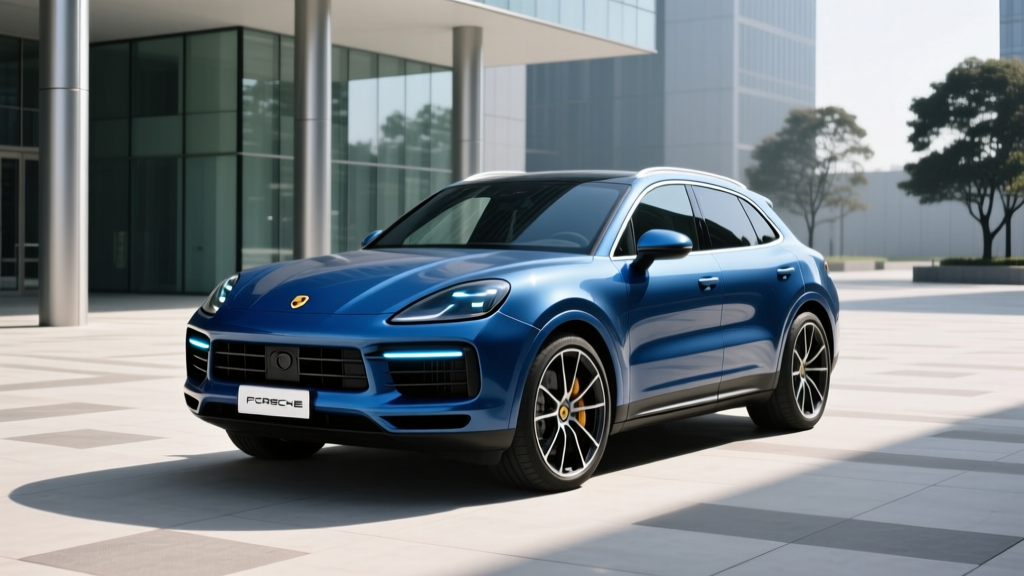
The 2026 Porsche Cayenne Electric SUV is Porsche's upcoming all-electric flagship crossover, built on the Premium Platform Electric (PPE) architecture shared with the Macan EV and Audi Q6 e-tron. Based on preliminary specifications and the Macan EV's proven 800-volt system, the electric Cayenne is expected to deliver an EPA-estimated 280–320 miles of range, peak DC fast charging near 270 kW (10–80% in approximately 21 minutes), and a starting MSRP around $89,000–$95,000 before options. Deliveries are anticipated in late 2025 or early 2026 as a MY2026 vehicle. It targets luxury SUV buyers who want Porsche performance without tailpipe emissions — but at a price point that exceeds the IRS §30D federal tax credit MSRP cap of $80,000 for SUVs, meaning most trims will not qualify for the $7,500 credit.
What We Know About the Electric Cayenne's Platform and Performance
Porsche confirmed the Cayenne EV will ride on the PPE platform, co-developed with Audi. This is the same architecture underpinning the Macan 4 Electric and Macan Turbo Electric, which means buyers can extrapolate a great deal from the smaller EV's real-world behavior.
| Attribute | Cayenne EV (Base Est.) | Cayenne EV Turbo Est. | Macan 4 Electric (Reference) |
|---|---|---|---|
| Battery (usable, kWh) | ~95–100 kWh (NMC) | ~95–100 kWh (NMC) | 95 kWh (NMC) |
| EPA Range (est.) | 300–320 mi | 270–290 mi | 308 mi (EPA) |
| Peak DC Fast Charge | ~270 kW | ~270 kW | 270 kW |
| 10–80% DC Charge Time | ~21 min | ~21 min | 21 min |
| Level 2 AC Charge Rate | 11 kW (22 kW optional) | 11 kW (22 kW optional) | 11 kW |
| 0–60 mph | ~5.0 sec | ~3.3 sec | 4.9 sec (Macan 4) |
| Horsepower | ~400 hp | ~630 hp | 402 hp |
| Drivetrain | Dual-motor AWD | Dual-motor AWD | Dual-motor AWD |
| Est. Base MSRP | $89,000–$95,000 | $130,000+ | $78,800 |
Important caveat: These are projected figures based on the PPE platform's known capabilities and the Macan EV's published specs. Porsche has not released final EPA certifications for the Cayenne EV as of early 2026. Actual numbers may shift before deliveries begin.
Real-World Range Expectations vs. EPA Sticker
If the base Cayenne EV achieves an EPA rating of ~310 miles, plan for approximately 250–270 miles in mixed highway driving at 70–75 mph. In cold weather (below 32°F), expect a further 15–25% reduction, bringing usable range to roughly 200–230 miles on winter road trips. The Macan EV has demonstrated strong real-world efficiency for its class, but the Cayenne's larger frontal area and greater weight will reduce efficiency proportionally. Porsche's standard heat pump should help mitigate cold-weather losses compared to competitors without one.
Charging Speed: The 800-Volt Advantage in Practice
The PPE platform's 800-volt architecture is the Cayenne EV's most practical ownership feature. Here's what that means in concrete terms versus a 400-volt competitor like the BMW iX:
| Charging Level | Cayenne EV (800V PPE) | Typical 400V Luxury EV | Miles Added per Hour |
|---|---|---|---|
| Level 1 (120V / 12A) | 1.4 kW | 1.4 kW | ~4–5 mi/hr |
| Level 2 (240V / 48A) | 11 kW | 11 kW | ~33–37 mi/hr |
| Level 2 (240V / 80A, optional) | 22 kW | Not typically available | ~66–74 mi/hr |
| DC Fast (Peak) | 270 kW | ~150–200 kW | ~700+ mi/hr (at peak) |
| DC Fast (10–80% time) | ~21 min | ~30–38 min | — |
Understanding the charge curve: The 270 kW peak is not sustained across the entire session. Like all lithium-ion batteries, the Cayenne EV will accept peak power only between roughly 10–40% State of Charge (SoC), then taper progressively. Expect an average rate of ~180–200 kW across the full 10–80% session. Above 80%, charging slows dramatically to protect battery health — a 80–100% top-off could add another 25–35 minutes. For road trips, the optimal strategy is to charge from 10% to 80% and resume driving.
NACS vs. CCS: Porsche has committed to adopting the Tesla NACS connector for its North American vehicles. The Cayenne EV should ship with a native NACS port, granting access to Tesla's Supercharger network (now the largest in the U.S.) without an adapter. This is a significant practical advantage over CCS-only luxury EVs in areas with limited Electrify America or EVgo coverage.
Electric Cayenne vs. Gas Cayenne: Real Cost Comparison
The current gas-powered Cayenne starts around $79,200 for the base model and $146,000+ for the Turbo E-Hybrid. Here's how the electric variant stacks up on total ownership costs over five years and 75,000 miles:
| Cost Category | Cayenne EV (Base, ~$92K) | Gas Cayenne (Base, ~$82K) | Cayenne E-Hybrid (PHEV) |
|---|---|---|---|
| Purchase Price (MSRP) | $92,000 | $82,000 | $93,000 |
| Federal Tax Credit (§30D) | $0 (exceeds $80K SUV cap) | $0 | $0 (exceeds cap) |
| Energy/Fuel Cost (5 yr) | $4,200–$5,500* | $11,500–$13,500** | $6,500–$8,500*** |
| Maintenance (5 yr) | $2,000–$3,000 | $5,000–$7,000 | $5,500–$7,500 |
| Insurance (5 yr avg) | $14,000–$17,000 | $11,000–$14,000 | $12,000–$15,000 |
| Est. Depreciation (5 yr) | $38,000–$44,000 | $35,000–$40,000 | $36,000–$42,000 |
| Total Est. 5-Yr Cost | $150,200–$178,500 | $144,500–$169,500 | $153,000–$186,000 |
*Assumes $0.14–$0.18/kWh blended home/public charging at 3.0 mi/kWh.
**Assumes $3.80–$4.20/gal premium at 17 MPG combined.
***Assumes 50% electric / 50% gas driving for the PHEV.
Key takeaway: The Cayenne EV saves roughly $6,000–$9,000 in fuel and maintenance over five years compared to the gas model, but the higher purchase price, steeper insurance premiums, and potentially faster depreciation (EVs have depreciated more aggressively than ICE luxury SUVs in 2024–2025) largely offset those savings. The total cost of ownership is roughly comparable — you're paying for the driving experience and environmental benefit, not financial advantage.
Tax Credit Reality: Why the Cayenne EV Likely Won't Qualify
Under current IRS §30D rules, the federal clean vehicle credit has strict MSRP caps: $80,000 for SUVs, vans, and pickups; $55,000 for sedans. With an expected starting price above $89,000 — and realistically $100,000+ after typical Porsche optioning — the Cayenne EV will exceed the cap on virtually every trim.
§30D Credit Requirements (2026 Tax Year)
- MSRP cap: ≤$80,000 for SUVs — Cayenne EV exceeds this ✗
- Buyer income cap: ≤$300,000 MFJ / $150,000 single — varies by buyer
- Battery sourcing: Critical minerals and battery components must meet escalating domestic-content thresholds
- Assembly: Final assembly must be in North America — Cayenne EV is assembled in Bratislava, Slovakia ✗
- Point-of-sale transfer: Eligible credits can be transferred to the dealer for an immediate price reduction — moot if vehicle doesn't qualify
The Cayenne EV fails on both the MSRP cap and North American assembly requirement. Consult a tax professional for your specific situation.
First-Time EV Buyer Considerations for a Luxury SUV
If the Cayenne EV is your first electric vehicle, several practical factors will shape your ownership experience more than the spec sheet:
Home Charging Access Is Essential at This Price Point
A vehicle in the $90,000+ range demands the convenience of daily home charging. Budget $1,200–$2,800 for a professionally installed Level 2 home charger (240V / 48A), assuming your electrical panel has sufficient capacity. Older homes with 100-amp panels may need a $2,000–$4,000 panel upgrade to 200 amps. At 11 kW, a full overnight charge (10–100%) takes approximately 9–10 hours — more than adequate for daily use.
If you cannot install home charging (apartment, street parking, HOA restrictions), owning any EV becomes substantially less convenient. Relying solely on public DC fast charging adds $0.30–$0.48/kWh in costs (roughly doubling your energy spend) and 20–40 minutes of waiting per session. For a luxury SUV buyer, this friction often becomes a dealbreaker within months.
Climate and Driving Pattern Effects
Cold-climate buyers (Upper Midwest, Northeast, Mountain states) should expect 15–25% range reduction in sustained sub-freezing temperatures. The Cayenne EV's heat pump will help, but physics dictates that battery chemistry slows in cold and cabin heating draws significant energy. A 310-mile EPA rating becomes roughly 230–260 miles in January in Minneapolis.
For frequent road-trippers covering 300+ miles in a single day, the 800V fast-charging capability is genuinely useful: two 20-minute charging stops can add 400+ miles of range. But plan routes around reliable DC fast-charging corridors — Electrify America, Tesla Superchargers (via NACS), and EVgo are your primary networks.
Common Misconceptions About the Electric Cayenne
| Myth | Fact |
|---|---|
| "It will qualify for the $7,500 tax credit." | Almost certainly not. It exceeds the $80,000 SUV MSRP cap and is assembled outside North America. |
| "270 kW charging means 270 kW sustained for the whole session." | Peak rate applies only at low SoC. Average rate across 10–80% is closer to 180–200 kW. |
| "The battery will need replacing in 5–7 years." | Porsche warranties its EV batteries for 8 years/100,000 miles with a 70% capacity retention threshold. Modern NMC batteries routinely exceed 150,000 miles before significant degradation. |
| "It's self-driving with Porsche InnoDrive." | Porsche InnoDrive is a Level 2 ADAS system (SAE classification). The driver must remain fully engaged with hands on the wheel and eyes on the road at all times. |
| "Electric means zero maintenance." | Tires wear 15–20% faster on heavy EVs. Cabin air filters, brake fluid, coolant, wipers, and suspension components still require service. Expect $400–$600/year in maintenance. |
| "The Cayenne EV is already available to order." | As of early 2026, Porsche has shown prototypes and confirmed the PPE platform. Final specs, pricing, and order banks are expected to open closer to the on-sale date. |
ADAS Clarification: Porsche InnoDrive Is Level 2, Not Autonomous
Porsche's InnoDrive system (adaptive cruise + lane centering + predictive speed adjustment) is classified as SAE Level 2 — a driver-assistance system, not a self-driving system. The driver is legally and operationally responsible for the vehicle at all times. This is the same classification as Tesla Autopilot, Ford BlueCruise, and GM Super Cruise. Only Waymo and Zoox robotaxi services currently operate at Level 4 (driverless in geofenced areas).
Decision Framework: Is the Electric Cayenne Right for You?
Choose the Cayenne EV If:
- You have reliable Level 2 home charging (garage or driveway with 240V access)
- You want a performance luxury SUV with 300+ mile range and sub-25-minute road-trip charging
- You drive in a region with good DC fast-charging infrastructure (NACS Superchargers or EA corridors)
- You value instant torque, one-pedal driving, and lower per-mile energy costs over traditional engine character
- Your budget accommodates a $95,000–$140,000 purchase without relying on federal tax incentives
Consider the Gas Cayenne or Cayenne E-Hybrid Instead If:
- You lack home charging access and cannot install a Level 2 charger
- You regularly tow more than 5,000 lbs (EV towing range loss of 40–50% is significant)
- You frequently drive in extreme cold (–20°F and below) in rural areas with sparse charging
- You want to minimize upfront cost — the gas Cayenne base starts ~$10,000 lower
- You prefer the flexibility of 5-minute refueling anywhere without route-planning around chargers
Frequently Asked Questions
When will the 2026 Porsche Cayenne Electric SUV go on sale?
Porsche has confirmed the Cayenne EV is in development on the PPE platform. Industry reports suggest an official reveal in 2025 with U.S. deliveries beginning in late 2025 or early 2026 as a model-year 2026 vehicle. Exact timing depends on production ramp-up at Porsche's facility.
Will the Cayenne EV have a frunk (front trunk)?
The PPE platform accommodates a front trunk, and the Macan EV includes a modest frunk (~2.9 cu ft). Expect the Cayenne EV to offer a similar or slightly larger frunk, supplementing its rear cargo area. Final cargo volume figures are not yet published.
What is the expected battery warranty?
Porsche provides an 8-year/100,000-mile battery warranty on its current EVs (Taycan and Macan Electric), guaranteeing a minimum of 70% capacity retention. The Cayenne EV should carry the same coverage. This is competitive with the industry standard set by federal mandate (8 years/100,000 miles minimum for emission-related components, which includes the traction battery).
How does the Cayenne EV compare to the Tesla Model X?
The Model X offers more range (EPA ~335 mi for Long Range), access to the full Supercharger network natively, and a lower starting price (~$80,000). However, the Cayenne EV is expected to surpass the Model X in interior material quality, ride refinement, and brand prestige. The Model X also qualifies for the §30D credit on certain trims that fall under the $80,000 SUV cap — though recent pricing has pushed it above that threshold as well.
Can I charge the Cayenne EV at Tesla Superchargers?
Yes. Porsche's adoption of the NACS connector means the Cayenne EV will have native access to Tesla's Supercharger network across North America without requiring an adapter. This is one of the strongest practical advantages of the NACS transition for non-Tesla EV buyers.
What will insurance cost compared to the gas Cayenne?
EV insurance premiums typically run 15–25% higher than equivalent gas vehicles due to higher repair costs (specialized high-voltage training, battery replacement risk). Expect annual premiums of $2,800–$3,400 for the Cayenne EV versus $2,200–$2,800 for the gas Cayenne, though rates vary significantly by state, driver profile, and insurer.