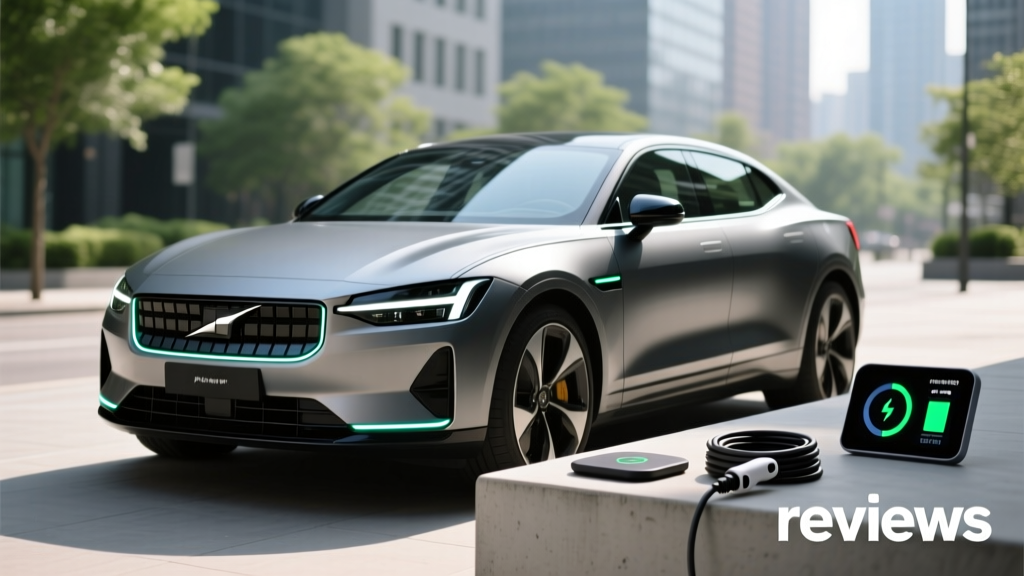
The Polestar 3 is the Swedish-Chinese brand's first luxury electric SUV, aimed squarely at the Porsche Cayenne EV, BMW iX, and Tesla Model X buyer who wants Scandinavian minimalism over tech-bro maximalism. Built on the same SEA-derived SPA2 platform as the Volvo EX90, the Polestar 3 pairs striking design with serious electric hardware. But at a premium price point, the numbers have to justify the badge. This review breaks down every spec that matters: real-world range, charging curves, battery chemistry, tax credit eligibility, and whether this SUV earns its place in your garage.
2026 Polestar 3 at a Glance: Key Specs
| Spec | Long Range Dual Motor | Long Range Dual Motor w/ Performance Pack |
|---|---|---|
| EPA Range | 315 miles | 279 miles |
| Battery (usable) | 107 kWh (111 kWh gross) | 107 kWh (111 kWh gross) |
| Chemistry | NMC (Nickel Manganese Cobalt) | NMC |
| Drivetrain | Dual-Motor AWD | Dual-Motor AWD |
| Horsepower | 489 hp | 517 hp |
| 0–60 mph | 4.7 sec | 4.4 sec |
| Max DC Fast Charge | 200 kW | 200 kW |
| 10–80% DC Time | ~30 min | ~30 min |
| Level 2 Home Charge | 11 kW (37 mi/hr) | 11 kW (37 mi/hr) |
| Efficiency | 87 MPGe (39 kWh/100mi) | 79 MPGe (43 kWh/100mi) |
| Cargo (rear seats up) | 17.1 cu ft | 17.1 cu ft |
| Cargo (rear seats folded) | 52.6 cu ft | 52.6 cu ft |
| Base MSRP | $67,900 | $73,900 |
| Warranty (Basic / Battery) | 4 yr / 50k mi • 8 yr / 100k mi | 4 yr / 50k mi • 8 yr / 100k mi |
Real-World Range vs. EPA Estimates
EPA Sticker: 315 miles (Long Range Dual Motor)
Real-World Expectation: ~265–285 miles on highway road trips at 70–75 mph; ~230–255 miles in sustained cold weather (below 32°F) with cabin heating. City driving with regen can match or slightly exceed the EPA figure.
The 107 kWh usable battery is among the largest in the luxury electric SUV segment, and the 315-mile EPA figure is competitive with the BMW iX xDrive50 (324 mi) and significantly ahead of the base Tesla Model X (311 mi with larger wheels). However, heavy SUVs with wide tires pay a real-world penalty at highway speeds. In independent testing, vehicles with similar battery sizes and aero profiles typically deliver 85–90% of their EPA range on flat interstate runs at 75 mph.
Cold weather hits NMC batteries harder than LFP in terms of temporary range loss. Expect 18–25% reduction in freezing temperatures without preconditioning. The Polestar 3's liquid thermal management system and available heat pump (standard on US models) help mitigate this, but preconditioning via the Polestar app before departure is essential for maximizing range in winter.
Charging Speed: DC Fast and Level 2 Home Charging
| Charging Level | Power | Speed / Time | Notes |
|---|---|---|---|
| DC Fast Charging (peak) | 200 kW | 10–80% in ~30 min | Charge curve tapers significantly above 80%; 80–100% can add 15+ min |
| DC Fast Charging (sustained avg.) | ~130–150 kW | ~200 mi added in 20 min | Realistic average across the 10–80% window |
| Level 2 (240V home/public) | 11 kW (48A) | ~37 mi/hr | Full charge in ~10 hours; requires 60A circuit |
| Level 1 (120V standard outlet) | ~1.4 kW | ~4 mi/hr | Emergency/trickle only; ~75 hours for full charge |
The 200 kW peak DC fast-charging rate puts the Polestar 3 in the middle of the luxury pack — behind the Hyundai Ioniq 5's 350 kW capability but adequate for road trips when paired with the 107 kWh battery. The key insight is the charge curve: like most NMC packs, the Polestar 3 holds strong through about 50–55% SoC before tapering. Plan your road-trip stops from 10% to 80% to keep charging times efficient.
The Polestar 3 uses the CCS1 connector on 2025 models, with Polestar confirming the transition to NACS (Tesla's North American Charging Standard) for 2026 and later model years, including Supercharger access via adapter for earlier vehicles. Verify your specific model year's connector with the dealer.
For home charging, the 11 kW onboard charger means you'll want a Level 2 wallbox on a dedicated 60-amp circuit to achieve the full 37 miles of range per hour of charging. Most owners will recover a day's driving (30–40 miles) in about an hour of plugged-in time overnight.
Performance and Driving Dynamics
With 489 hp (517 with the Performance Pack) and dual-motor all-wheel drive, the Polestar 3 is quick — 4.7 seconds to 60 mph in standard form, dropping to 4.4 seconds with the Performance Pack's software tune. Torque vectoring on the rear axle (available with the Performance Pack) improves cornering agility, and the air suspension (standard) delivers a compliant ride that switches to firm body control in Sport mode.
This is a grand-touring SUV, not a track weapon. The steering is precise but light, and the ~5,500-lb curb weight is noticeable during aggressive direction changes. Where the Polestar 3 excels is highway cruising: cabin isolation is superb, the air suspension soaks up imperfections, and the Bowers & Wilkins audio system (available) is among the best in any vehicle at this price.
Pricing, Trims, and Federal Tax Credit Eligibility
| Trim | Base MSRP | Est. As-Tested | §30D Credit Eligible? |
|---|---|---|---|
| Long Range Dual Motor | $67,900 | $72,000–$76,000 | See rules below |
| LR Dual Motor w/ Performance Pack | $73,900 | $78,000–$84,000 | See rules below |
The Polestar 3's pricing puts it firmly in luxury SUV territory. A well-equipped Long Range Dual Motor with the Pilot and Plus packages typically lands in the low-to-mid $70Ks before incentives.
Federal tax credit (IRS §30D): The Polestar 3's eligibility for the up-to-$7,500 federal EV tax credit depends on several factors that shift frequently under current IRS rules:
- MSRP Cap: SUVs must be under $80,000 MSRP. The base Long Range Dual Motor ($67,900) qualifies; the Performance Pack trim ($73,900) also qualifies, but loaded options packages can push the sticker above $80K — watch your build carefully.
- Buyer Income Cap: AGI must not exceed $300,000 (joint), $225,000 (head of household), or $150,000 (individual).
- Battery Sourcing: Critical minerals and battery components must meet escalating domestic-content and FEOC (Foreign Entity of Concern) thresholds. Because Polestar is owned by Geely (a Chinese company), battery sourcing compliance is model-year-specific. Confirm current-year eligibility on irs.gov or with your tax professional before relying on the credit.
- Point-of-Sale Transfer: If eligible, you can transfer the credit to the dealer at purchase for an immediate price reduction rather than claiming it on your tax return.
Interior, Tech, and Cargo Practicality
The Polestar 3's cabin is a study in Scandinavian restraint: clean lines, sustainable materials (bio-attributed MicroTech vinyl, wool blends, and recycled aluminum), and a portrait-oriented 14.5-inch center touchscreen running a Google Built-in infotainment system (Google Maps, Google Assistant, Play Store). The 9-inch driver display is compact and focused, supplemented by an available head-up display.
Driver Assistance: The Polestar 3 ships with Pilot Assist (SAE Level 2) including adaptive cruise, lane centering, and automated emergency braking. An available LiDAR module (from Luminar) enables advanced safety features and future over-the-air ADAS upgrades, though it does not enable hands-free or eyes-off driving. The driver must remain engaged at all times.
Cargo space: 17.1 cubic feet behind the second row is modest for the segment (the BMW iX offers 35.5 cu ft), but folding the rear seats opens 52.6 cu ft. There is no front trunk (frunk) — the space is occupied by HVAC and electronics hardware. Rear-seat legroom is 40.2 inches, adequate for adults on longer trips.
Pros
- 315-mile EPA range is class-competitive for a luxury AWD SUV
- Stunning Scandinavian design with premium sustainable materials
- Standard air suspension and heat pump
- Google Built-in infotainment is fast and intuitive
- LiDAR hardware for future ADAS upgrades
- Strong safety pedigree (Volvo/Polestar DNA)
Cons
- Cargo space (17.1 cu ft) trails key rivals significantly
- No frunk
- 200 kW peak DC charging is slower than 800V competitors
- Chinese parent company (Geely) may complicate tax credit eligibility
- Rear visibility is compromised by the sloping roofline
- Brand recognition and dealer network still limited in the US
Who Should Buy the Polestar 3?
Choose the Polestar 3 if: You want a luxury electric SUV that stands out from the Tesla-and-German ubiquity, value design and cabin quality over maximum cargo volume, and primarily drive in urban/suburban settings with occasional road trips. It's ideal for design-conscious commuters and couples who prioritize aesthetics and driving refinement.
Look elsewhere if: You need maximum cargo space (BMW iX, Rivian R1S), the fastest possible DC charging (Hyundai Ioniq 5, Kia EV9), or you want to guarantee full $7,500 tax credit eligibility without sourcing concerns (Ford Mustang Mach-E, Tesla Model Y). Families needing three rows should consider the Volvo EX90 or Kia EV9 instead.
2026 Polestar 3 FAQ
What is the real-world range of the Polestar 3?
The EPA rates the Long Range Dual Motor at 315 miles. Expect roughly 265–285 miles on highway road trips and 230–255 miles in sustained freezing weather. City driving with regenerative braking can match or slightly exceed the EPA sticker.
How fast does the Polestar 3 charge?
At a DC fast charger, it peaks at 200 kW and charges from 10–80% in approximately 30 minutes. At home on a Level 2 (240V/48A) charger, it adds about 37 miles of range per hour, fully charging overnight in about 10 hours.
Does the Polestar 3 qualify for the $7,500 federal EV tax credit?
It may, depending on your income, the specific trim's MSRP (must be under $80,000 for SUVs), and current battery-sourcing compliance under IRS §30D rules. Because Polestar is owned by China-based Geely, critical-mineral and FEOC sourcing requirements require careful verification. Check irs.gov for the latest qualified vehicle list.
How much does the Polestar 3 cost after incentives?
The Long Range Dual Motor starts at $67,900. If you qualify for the full $7,500 federal credit (via point-of-sale transfer), the effective price drops to approximately $60,400. State incentives vary — check your local programs. A Performance Pack model starts at $73,900, dropping to ~$66,400 with the credit.
Is the Polestar 3 worth buying vs. the BMW iX or Tesla Model X?
The Polestar 3 wins on design distinctiveness, interior material quality, and Scandinavian brand cachet. The BMW iX offers significantly more cargo room (35.5 cu ft) and a more established dealer network. The Tesla Model X offers falcon-wing doors, Supercharger access, and three-row seating but a dated interior. Your priority — style vs. space vs. charging infrastructure — determines the winner.
What connector does the 2026 Polestar 3 use?
Polestar is transitioning to NACS for the 2026 model year, enabling native Tesla Supercharger access. Earlier 2025 models use CCS1 and can access Superchargers via a Tesla-approved adapter. Confirm your vehicle's connector at purchase.