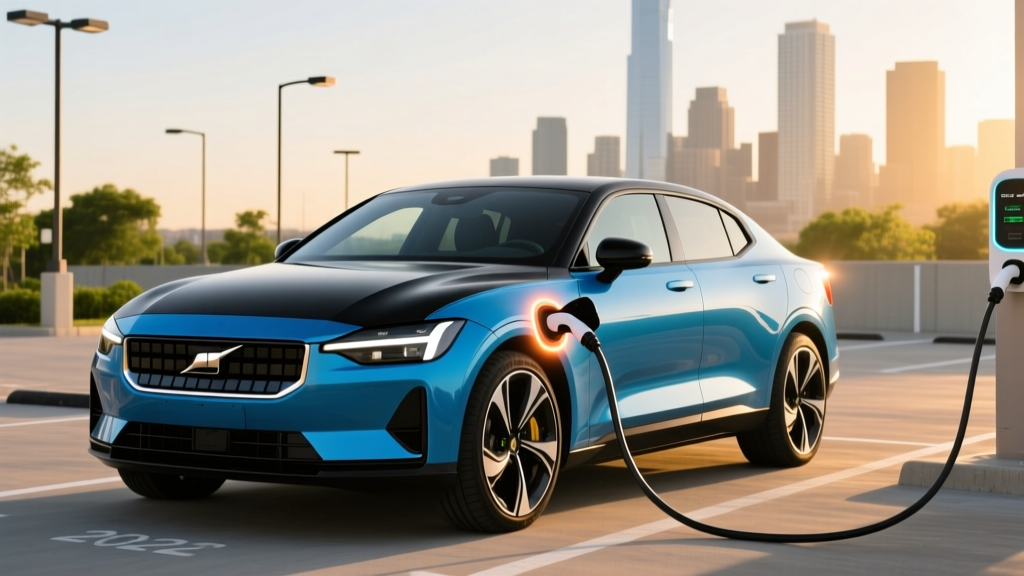
The Polestar 2 occupies a distinct niche in the premium electric sedan market: Scandinavian minimalism, Google-native infotainment, and a chassis tuned with genuine sporting intent. For 2026, Polestar has streamlined the lineup around its updated 82 kWh battery pack, delivering meaningful gains in both range and charging speed over earlier model years. If you're researching Polestar 2 specs to decide whether this EV fits your garage, this data-driven profile covers every number that matters — from real-world highway range to DC fast-charge taper curves, federal tax credit eligibility under current IRS §30D rules, and how it stacks up against the Tesla Model 3, BMW i4, and Hyundai Ioniq 6.
2026 Polestar 2 Spec Sheet at a Glance
| Specification | Single Motor (RWD) | Dual Motor (AWD) | Dual Motor w/ Performance Pack |
|---|---|---|---|
| EPA Range | 320 miles | 298 miles | 276 miles |
| Battery (usable) | 82 kWh, NMC (nickel manganese cobalt) | ||
| Horsepower | 299 hp | 421 hp | 476 hp |
| Torque | 361 lb-ft | 546 lb-ft | 546 lb-ft |
| 0-60 mph | 5.9 sec | 4.3 sec | 3.9 sec |
| Drivetrain | Rear-Wheel Drive | All-Wheel Drive | All-Wheel Drive |
| Max DC Fast Charge | 200 kW peak | ||
| 10-80% DC Charge Time | ~26 minutes | ||
| Level 2 AC Charge Rate | 11 kW onboard charger | ||
| EPA Efficiency (combined) | 110 MPGe (30 kWh/100mi) | 100 MPGe (34 kWh/100mi) | 92 MPGe (37 kWh/100mi) |
| Base MSRP | $49,900 | $54,900 | $59,400 |
| Battery Warranty | 8 years / 100,000 miles (70% capacity retention) | ||
EPA Range vs. Real-World Expectations
The EPA numbers tell only part of the story. The Long Range Single Motor's 320-mile rating is a strong result for the segment, but real-world conditions introduce variables every buyer should model before purchase.
Real-World Highway (70 mph, moderate climate): ~265-280 mi (Single Motor)
Real-World Cold Weather (below 32°F, highway): ~220-245 mi (Single Motor) — expect 20-30% reduction
City/Commuter Driving (with regen): ~300-330 mi (Single Motor) — can exceed EPA in stop-and-go
The 82 kWh NMC pack provides a gross capacity of approximately 86 kWh, with a ~4 kWh buffer to protect long-term battery health. NMC chemistry offers higher energy density than LFP, which helps keep pack weight manageable, but it does mean you should avoid routinely charging to 100% for daily use — Polestar recommends setting a daily charge limit of 80-90% and reserving 100% for road trips.
The Polestar 2's heat pump (standard on all 2026 trims) mitigates cold-weather range loss compared to EVs without active thermal management, but physics still wins in sub-freezing temperatures. On a 300-mile winter highway drive, plan for at least one charging stop.
Charging Speed: DC Fast Charge and Home Level 2
Charging infrastructure compatibility is where the 2026 Polestar 2 makes one of its most practical upgrades. Polestar has equipped the 2026 model year with a NACS (North American Charging Standard) port, granting native access to Tesla's Supercharger network — over 20,000 stalls across the U.S. — without an adapter.
| Charging Level | Power / Voltage | Miles Added per Hour | Notes |
|---|---|---|---|
| Level 1 (120V household) | ~1.4 kW | ~4-5 mi/hr | Emergency/trickle only; adds ~50 mi overnight |
| Level 2 (240V home, 48A circuit) | 11 kW | ~35-38 mi/hr | Full charge in ~8 hours; ideal for daily use |
| DC Fast Charge (peak) | 200 kW / 400V architecture | ~650+ mi/hr (at peak) | 10-80% in ~26 min; tapers significantly above 80% |
Understanding the charge curve: The 200 kW peak rate is achieved between roughly 10-40% State of Charge (SoC). From 40-60%, the rate holds around 150 kW. From 60-80%, it tapers to approximately 100-110 kW. Above 80%, charging slows dramatically to protect the NMC cells — expect 80-100% to take as long as 10-80%. This is normal behavior for NMC chemistry, but it means road-trip strategy should target 10-80% charges rather than full top-offs.
For home charging, the 11 kW onboard charger means a full 0-100% charge takes roughly 8 hours on a hardwired 48-amp Level 2 station (such as a ChargePoint Home Flex or Wallbox Pulsar Max). A typical EV driver who plugs in nightly will start each morning with a full battery, making the 320-mile EPA range more than sufficient for virtually any commute.
Performance, Handling, and Drivetrain
The 2026 Polestar 2 lineup offers three distinct performance personalities. The Single Motor's 299 hp and 5.9-second 0-60 time make it quick by any measure, and the rear-wheel-drive layout gives it a more engaging, tail-happy character than the previous front-wheel-drive configuration.
The Dual Motor steps up to 421 hp with all-wheel drive, dropping the 0-60 to 4.3 seconds. But the real enthusiast pick is the Dual Motor with the Performance Pack ($4,500 option), which bumps output to 476 hp, drops 0-60 to 3.9 seconds, and adds manually adjustable Öhlins dampers with 22-position settings, Brembo front brakes, and 20-inch forged alloy wheels. This is genuine sports-sedan hardware that no Model 3 Long Range offers.
Ride quality on the standard suspension is firm but compliant — clearly tuned on European roads. The Performance Pack's Öhlins setup is track-capable but noticeably stiffer; buyers who prioritize daily comfort should skip it.
Pricing, Trims, and Federal Tax Credit Eligibility
The 2026 Polestar 2 starts at $49,900 for the Long Range Single Motor, positioning it directly against the Tesla Model 3 Long Range AWD ($47,740) and the BMW i4 eDrive40 ($52,200). The Plus and Pilot packages bundle features like a panoramic glass roof, Harman Kardon audio, Pilot Assist adaptive cruise, and a 360-degree camera.
| Trim | Base MSRP | Est. As-Tested* | §30D Credit Eligible? |
|---|---|---|---|
| Long Range Single Motor | $49,900 | $52,400 (w/ Plus) | See eligibility notes below |
| Long Range Dual Motor | $54,900 | $58,400 (w/ Pilot) | See eligibility notes below |
| Dual Motor w/ Performance Pack | $59,400 | $63,000+ | See eligibility notes below |
*As-tested estimates include destination charge and common option packages.
Does the 2026 Polestar 2 Qualify for the $7,500 Federal Tax Credit?
This is where Polestar 2 buyers need to pay close attention. Under current IRS §30D rules, eligibility for the full $7,500 clean vehicle credit depends on several intersecting requirements:
- MSRP Cap: Sedans must have an MSRP at or below $55,000. The Single Motor ($49,900) qualifies. The Dual Motor ($54,900) qualifies. The Performance Pack variant ($59,400+) exceeds the cap and is ineligible.
- Buyer Income Limits: Modified AGI must not exceed $150,000 (single), $225,000 (head of household), or $300,000 (joint filing).
- Battery Component Sourcing: A percentage of battery components must be manufactured or assembled in North America, and critical minerals must be sourced from the U.S. or free-trade-agreement partners. These thresholds increase annually — consult the IRS qualified vehicles list for the current month's eligible VINs.
- Point-of-Sale Transfer: The credit can be transferred to the dealer at purchase, reducing your out-of-pocket cost immediately rather than waiting for tax filing.
The Polestar 2 is manufactured in Luqiao, China (by Geely, Polestar's parent company). This is a significant factor: depending on current critical-mineral and battery-component sourcing thresholds, the Polestar 2's eligibility for the full $7,500 credit may be limited to $3,750 or may not qualify at all in certain months. Always verify your specific VIN on the IRS qualified vehicle list before signing a purchase agreement, and consult a tax professional for your personal situation.
Interior, Cargo, and Technology
The Polestar 2's interior is one of its strongest selling points — and its biggest differentiator from Tesla. Materials are premium: vegan WeaveTech upholstery is standard, with available Nappa leather (sourced fromBridge of Weir in Scotland). The minimalist dashboard centers on an 11.2-inch portrait touchscreen running Android Automotive OS with Google Maps, Google Assistant, and the Google Play Store natively integrated.
Cargo and passenger dimensions:
- Rear cargo (behind rear seats): 14.4 cu ft (liftback design provides wide opening)
- Cargo (rear seats folded): 38.7 cu ft
- Front trunk (frunk): 1.4 cu ft — enough for charging cables and a small bag
- Front legroom: 42.2 inches
- Rear legroom: 34.0 inches — adequate for adults but tighter than a Model 3 or Ioniq 6
- Headroom (front/rear): 39.4 / 36.8 inches
The liftback-style trunk is genuinely practical — the full rear glass lifts, creating a hatchback-like opening far more useful than a traditional sedan's trunk slot. However, the 34-inch rear legroom is the Polestar 2's most significant packaging weakness. Tall rear passengers will find it snug on longer trips.
Driver assistance: Polestar's Pilot Assist is a SAE Level 2 system providing adaptive cruise control with lane centering. It is competent on highways but requires the driver to maintain steering-wheel contact and situational awareness at all times. It is not autonomous driving — do not confuse it with Level 4 robotaxi services like Waymo.
How the Polestar 2 Stacks Up Against Key Competitors
| Spec | 2026 Polestar 2 (Single Motor) | 2026 Tesla Model 3 LR AWD | 2026 BMW i4 eDrive40 | 2026 Hyundai Ioniq 6 SE LR |
|---|---|---|---|---|
| EPA Range | 320 mi | 363 mi | 307 mi | 361 mi |
| Battery | 82 kWh NMC | 79 kWh NMC | 83.9 kWh NMC | 77.4 kWh NMC |
| Max DC Charge | 200 kW | 250 kW | 205 kW | 240 kW |
| 0-60 mph | 5.9 sec | 4.2 sec | 5.5 sec | 5.1 sec |
| Base MSRP | $49,900 | $47,740 | $52,200 | $42,600 |
| Charging Port | NACS | NACS | CCS (NACS adapter avail.) | CCS (NACS adapter avail.) |
| Rear Legroom | 34.0 in | 35.2 in | 34.7 in | 35.0 in |
The Polestar 2 gives up some range and charging speed to the Model 3 and Ioniq 6. Where it wins is build quality, interior materials, chassis dynamics (especially with the Performance Pack), and design distinctiveness. It also offers the best liftback cargo utility in this comparison. Buyers who prioritize driving engagement and interior ambiance over maximum range-per-dollar will find the Polestar 2 compelling.
Pros and Cons: The Honest Verdict
- Premium interior with genuinely upscale materials — a clear step above Tesla
- NACS port provides native Supercharger access
- Liftback design offers superior cargo flexibility vs. traditional sedans
- Performance Pack Öhlins suspension is enthusiast-grade hardware
- Google Automotive OS is intuitive, fast, and well-integrated
- Standard heat pump improves cold-weather efficiency
- Rear legroom (34 in) is the tightest in the segment
- 200 kW peak DC charge rate trails Tesla (250 kW) and Hyundai (240 kW)
- China-built — §30D tax credit eligibility is uncertain/limited
- 10-80% charge time (~26 min) is average, not class-leading
- No front trunk of meaningful size — frunk is 1.4 cu ft
- Brand awareness and dealer/service network remain limited vs. legacy OEMs
Who Should Buy the 2026 Polestar 2?
- You want a premium electric sedan that doesn't look or feel like every other EV on the road
- Driving dynamics and chassis quality matter to you (especially with the Performance Pack)
- Your daily commute is under 120 miles round-trip (making the 320-mi range very comfortable)
- You value liftback cargo flexibility for gear, groceries, or travel bags
- You prefer Google-native infotainment over Tesla's proprietary interface
- You regularly carry tall rear-seat passengers (Ioniq 6 or Model 3 offer more legroom)
- Maximum range-per-dollar is your top priority (Ioniq 6 SE offers 361 mi for $42,600)
- Fastest possible road-trip charging is critical (Tesla's 250 kW and Supercharger routing are still best-in-class)
- Federal tax credit eligibility is make-or-break for your budget — verify VIN eligibility before committing
Frequently Asked Questions
What is the real-world range of the 2026 Polestar 2?
The EPA rates the Single Motor at 320 miles. In real-world highway driving at 70 mph, expect approximately 265-280 miles. In cold weather (below freezing), plan for 220-245 miles. City driving with regenerative braking can push range to 300-330 miles or slightly beyond the EPA estimate.
How fast does the Polestar 2 charge at home and on the road?
On a 240V Level 2 home charger, the 11 kW onboard charger delivers roughly 35-38 miles of range per hour, fully charging the 82 kWh battery in about 8 hours. On DC fast charging, the 200 kW peak rate delivers a 10-80% charge in approximately 26 minutes, though the rate tapers significantly above 80% SoC.
Does the Polestar 2 qualify for the $7,500 federal EV tax credit?
Possibly, but it's not guaranteed. The Single Motor ($49,900) and Dual Motor ($54,900) fall under the $55,000 sedan MSRP cap. However, because the Polestar 2 is manufactured in China, battery-component and critical-mineral sourcing requirements under §30D may limit the credit to $3,750 or eliminate eligibility entirely depending on the month. Always check the IRS qualified vehicle list for your specific VIN before purchase.
Is the Polestar 2 worth buying over the Tesla Model 3?
It depends on your priorities. The Model 3 Long Range AWD offers more range (363 mi), faster charging (250 kW), more rear legroom, and a lower base price ($47,740). The Polestar 2 counters with superior interior materials, a more engaging chassis (especially with the Performance Pack), a practical liftback trunk, and design that doesn't blend into every parking lot. If range-per-dollar and charging speed are paramount, choose Tesla. If build quality, driving dynamics, and individuality matter more, the Polestar 2 is the stronger pick.
What is the battery warranty on the 2026 Polestar 2?
Polestar covers the high-voltage battery for 8 years or 100,000 miles (whichever comes first), guaranteeing at least 70% of original capacity retention. The basic vehicle warranty is 4 years / 50,000 miles. Polestar also includes 4 years of complimentary scheduled maintenance and roadside assistance.
What charging connector does the 2026 Polestar 2 use?
The 2026 Polestar 2 comes equipped with a NACS (North American Charging Standard / Tesla-style) connector, providing native access to the Tesla Supercharger network without an adapter. For legacy CCS stations, a NACS-to-CCS adapter may be required — check with your Polestar dealer for included adapter availability.