The 2026 Nissan Leaf Production Shortage, Explained
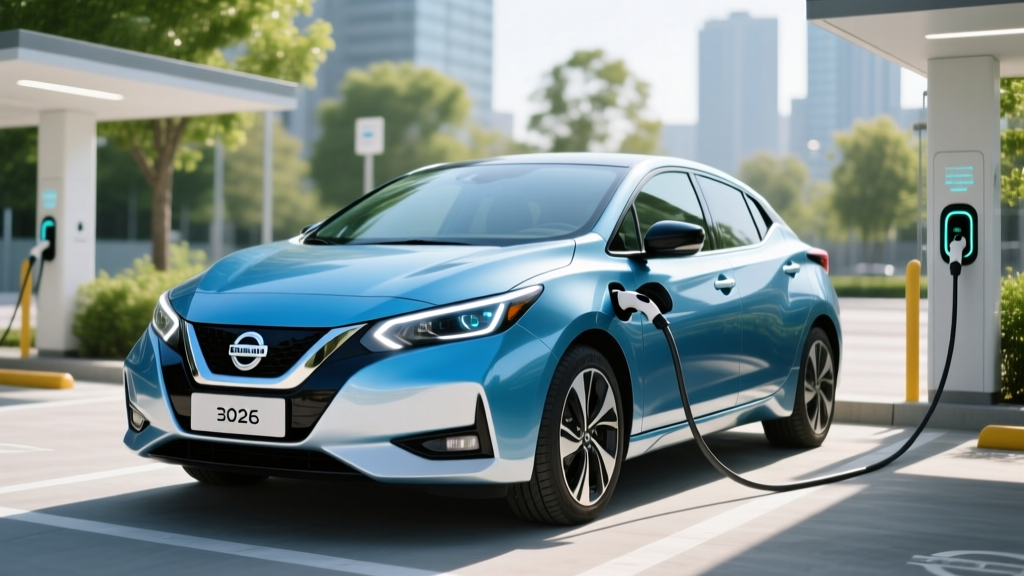
If you've been searching for a 2026 Nissan Leaf, you may have noticed sparse dealer inventory and longer-than-expected wait times. A combination of supply-chain constraints on battery cells and Nissan's strategic pivot toward its next-generation EV platform has created a genuine 2026 Nissan Leaf EV production shortage. Dealerships that once stocked dozens of Leafs are receiving single-digit allocations per month, and some regions have waitlists stretching 8–12 weeks.
This shortage doesn't mean the Leaf is a bad buy — far from it. The 2026 model carries over the proven formula from the 2025 refresh: a usable 60 kWh battery pack, up to 212 miles of EPA range, and a starting price that undercuts most competitors. But the production crunch means buyers need to act strategically, understand what's actually available, and know whether the Leaf still makes sense against rivals that are easier to find.
Here's everything you need to decide — specs, real-world range, charging reality, tax-credit math, and an honest assessment of whether to hunt down a Leaf or pivot to an alternative.
2026 Nissan Leaf Specifications at a Glance
| Specification | Leaf S | Leaf SV Plus |
|---|---|---|
| EPA Range | 149 miles | 212 miles |
| Battery (usable) | 40 kWh, LMO/NMC | 60 kWh, LMO/NMC |
| Motor Output | 110 kW (147 hp) | 160 kW (214 hp) |
| 0–60 mph | ~7.9 sec | ~6.5 sec |
| Drivetrain | FWD | FWD |
| Max DC Fast Charge | ~50 kW (CHAdeMO) | ~100 kW (CHAdeMO) |
| Level 2 Charge Rate | 6.6 kW onboard | 6.6 kW onboard |
| EPA Efficiency | 111 MPGe (30 kWh/100mi) | 109 MPGe (31 kWh/100mi) |
| Cargo Volume | 23.6 cu ft / 30.0 cu ft (rear seats folded) | 23.6 cu ft / 30.0 cu ft |
| Base MSRP | $29,135 | $37,135 |
| Battery Warranty | 8 yr / 100,000 mi | 8 yr / 100,000 mi |
Source: fueleconomy.gov and Nissan USA specifications. Prices include destination charge.
Real-World Range: What the EPA Sticker Doesn't Tell You
EPA Estimated: 212 miles
Real-World Highway (70 mph, mild weather): ~175–190 miles
Real-World City/Mixed Commuting: ~195–210 miles
Cold Weather (below 32°F, highway): ~140–160 miles
The Leaf lacks active battery thermal management (liquid cooling), which amplifies cold-weather range loss and limits sustained fast-charging speeds in extreme temperatures.
The 212-mile EPA figure for the SV Plus is achievable in moderate temperatures with mixed city/highway driving and liberal use of regenerative braking. Nissan's e-Pedal one-pedal driving mode maximizes energy recapture in stop-and-go traffic, which is where the Leaf actually outperforms its EPA estimate.
However, highway driving at 70+ mph exposes the Leaf's aerodynamic limitations and lack of a heat pump (resistive cabin heating draws significant battery power in winter). On a 35°F day with highway speeds, expect to lose 25–35% of rated range. This is more pronounced than competitors like the Hyundai Kona Electric or Chevrolet Equinox EV, which use active thermal management systems to better regulate battery temperature.
For the base Leaf S with its 40 kWh pack and 149-mile EPA rating, real-world highway range drops to roughly 120–130 miles in mild conditions and can fall below 100 miles in winter. This trim is strictly a city commuter vehicle.
Charging Speed: The Leaf's Biggest Competitive Weakness
| Charging Level | Leaf S (40 kWh) | Leaf SV Plus (60 kWh) |
|---|---|---|
| Level 1 (120V, 12A) | ~1.4 kW / ~4 mi/hr | ~1.4 kW / ~3 mi/hr |
| Level 2 (240V, 6.6 kW) | ~6.6 kW / ~18 mi/hr | ~6.6 kW / ~17 mi/hr |
| DC Fast (CHAdeMO) | Peak ~50 kW / 10–80% in ~55 min | Peak ~100 kW / 10–80% in ~40 min |
| Connector | CHAdeMO + J1772 | CHAdeMO + J1772 |
Here's where the 2026 Leaf faces its toughest reality check. Nissan continues to use the CHAdeMO DC fast-charging standard — a connector that is rapidly disappearing from public charging networks in North America. Electrify America, Tesla Superchargers (open to non-Tesla EVs), and most new installations use CCS1 or NACS. CHAdeMO stations are becoming harder to find, particularly outside major metro areas.
The SV Plus peaks at roughly 100 kW on a CHAdeMO station, but sustained speeds are lower. The passive air-cooled battery heats up during fast charging, causing the car to throttle charge speed — a phenomenon known as "CHAdeMOgate" or "Rapidgate" among Leaf owners. On a hot day or after consecutive fast charges, expect peak speeds to drop to 40–60 kW, extending the 10–80% session to 50–60 minutes.
For home Level 2 charging, the 6.6 kW onboard charger is adequate. A full charge from empty takes roughly 9 hours for the SV Plus — plug in at night, wake up full. Most owners installing a 240V Level 2 home charger (typically $500–$1,500 for equipment plus $800–$2,000 for electrician installation, depending on panel capacity) will rarely need public DC fast charging for daily use.
If road trips are part of your routine, the CHAdeMO connector and passive thermal management are genuine dealbreakers compared to CCS/NACS-equipped competitors with liquid-cooled batteries that sustain 150–250 kW charging.
Pricing, Trims, and Federal Tax Credit Eligibility
| Trim | Base MSRP | As-Tested (typical options) | §30D Credit Eligibility |
|---|---|---|---|
| Leaf S | $29,135 | $30,500–$31,500 | Up to $7,500 (if sourcing requirements met) |
| Leaf SV Plus | $37,135 | $38,500–$40,500 | Up to $7,500 (if sourcing requirements met) |
Both Leaf trims fall well under the IRS §30D MSRP cap of $55,000 for passenger vehicles, so price is not a disqualifier. However, the full $7,500 federal tax credit depends on two sourcing requirements that change periodically:
- Battery components: A percentage of battery components must be manufactured or assembled in North America (threshold increases annually through 2029).
- Critical minerals: A percentage of critical minerals must be sourced from the U.S. or free-trade-agreement countries (threshold also increases annually).
- Buyer income caps: Modified AGI cannot exceed $150,000 (single), $225,000 (head of household), or $300,000 (joint).
Nissan manufactures the Leaf in Smyrna, Tennessee, and sources its battery cells from Envision AESC (also Tennessee-based). This domestic production has historically positioned the Leaf favorably for §30D eligibility. However, critical-mineral sourcing rules tightened significantly for 2026, and the exact credit amount — $0, $3,750, or the full $7,500 — depends on the specific battery batch and current IRS guidance. Always verify eligibility at the point of sale and consult a tax professional before relying on the credit.
If eligible for the full $7,500, the Leaf S drops to an effective ~$21,635 — making it one of the cheapest new EVs in America. The SV Plus falls to ~$29,635, still undercutting most 200+ mile EVs on the market. The credit can now be transferred to the dealer at point of sale, reducing your out-of-pocket cost immediately rather than waiting for a tax refund.
Performance, Interior, and Technology
The SV Plus's 214-horsepower front-mounted motor delivers adequate acceleration. The 0–60 mph time of approximately 6.5 seconds feels brisk in daily driving, and instant electric torque makes the Leaf responsive off the line. The base S trim's 147 hp is less exciting but perfectly sufficient for city commuting. Both trims are front-wheel drive only — no AWD option exists.
Ride quality is comfortable and compliant, tuned for commuting rather than sporty driving. The low center of gravity from the floor-mounted battery reduces body roll compared to similarly sized gas hatchbacks, but the Leaf is not a performance vehicle. Steering is light and numb — acceptable for a commuter, disappointing on a back road.
Interior and cargo: The cabin is functional but dated compared to 2026 competitors. Cloth seats are standard on the S; the SV Plus adds heated front seats and a leather-wrapped steering wheel. Rear legroom is 33.5 inches — adequate for adults on short trips but tight for long journeys. Cargo volume is 23.6 cubic feet behind the rear seats, expanding to 30.0 cu ft with the 60/40 split rear seats folded. There is no front trunk (frunk).
Infotainment: An 8-inch touchscreen with wireless Apple CarPlay and Android Auto is standard on the SV Plus (wired connection on the S). The interface is straightforward but lacks the resolution and responsiveness of systems from Hyundai, Kia, or Tesla. A 6-speaker audio system is standard; the SV Plus can be optioned with a Bose premium system.
Driver assistance: Nissan's ProPILOT Assist is standard on the SV Plus and optional on the S. It includes adaptive cruise control with stop-and-go, lane centering, and automatic emergency braking. This is an SAE Level 2 driver-assist system — it does not drive the car autonomously. You must keep your hands on the wheel and eyes on the road at all times. It performs competently on highways but is less refined than GM's Super Cruise or Ford's BlueCruise on mapped roads.
Production Shortage Impact: Availability and Wait Times
The 2026 Nissan Leaf EV production shortage has real consequences for buyers:
- Limited trim selection: Most allocations are going to the higher-margin SV Plus. Base S trims are scarce, and finding one in a specific color or with desired options is difficult.
- Regional disparities: California, Oregon, and Washington dealers receive priority allocations due to state EV mandates. Buyers in the Southeast and Mountain West may face 10–14 week waits.
- Dealer markups: Some dealers are adding market-adjustment fees of $1,500–$3,500 above MSRP, eroding the Leaf's price advantage. Insist on MSRP pricing or shop across multiple dealerships.
- Fleet and lease prioritization: Nissan is directing a significant share of production toward fleet buyers and lease deals, further reducing retail inventory.
If you're set on a Leaf, place an order with a dealer now and get a written commitment on price (including any markups or fees) and estimated delivery date. Don't pay a deposit without a price lock — production shortages create an environment where dealers may attempt to renegotiate at delivery.
Leaf vs. Key Competitors: Is It Still Worth It?
| Spec | Nissan Leaf SV Plus | Hyundai Kona Electric | Chevrolet Equinox EV 2LT |
|---|---|---|---|
| EPA Range | 212 mi | 261 mi | 319 mi |
| Battery | 60 kWh (passive cooling) | 64.8 kWh (liquid cooled) | 85 kWh (liquid cooled) |
| Max DC Fast Charge | ~100 kW (CHAdeMO) | ~100 kW (CCS/NACS) | ~150 kW (CCS/NACS) |
| 10–80% Time | ~40 min (throttles) | ~43 min (sustained) | ~30 min |
| 0–60 mph | ~6.5 sec | ~6.8 sec | ~7.9 sec |
| Base MSRP | $37,135 | $34,100 | $34,900 |
| Connector | CHAdeMO | CCS1/NACS | CCS1/NACS |
| Thermal Mgmt | Passive (air) | Active (liquid) | Active (liquid) |
The numbers paint a clear picture. The Leaf's 212-mile range was competitive in 2022 but is now outclassed. The Kona Electric offers 261 miles for less money, with a modern connector and liquid-cooled battery. The Equinox EV delivers 319 miles at a similar price point, though it's larger and heavier.
The Leaf's advantages are its domestic manufacturing (stronger §30D credit eligibility), proven reliability record (the Leaf has been in production since 2011 with extensive long-term durability data), and the lowest entry price if you can find the S trim at MSRP with the full tax credit.
Buy the Leaf if: You're a city commuter with reliable home charging, you find one at or below MSRP, you qualify for the full §30D credit, and you rarely take road trips over 150 miles.
Choose a competitor if: You need 250+ miles of range, you take regular road trips, you live in an area with few CHAdeMO chargers, or you want sustained fast-charging speeds in hot/cold weather.
Pros and Cons
- Lowest effective price among new EVs (with full tax credit)
- Strong domestic manufacturing / §30D eligibility
- Proven long-term reliability (15+ years of Leaf data)
- Comfortable ride, good cargo space for a hatchback
- e-Pedal one-pedal driving is well-calibrated
- 8-year/100,000-mile battery warranty
- CHAdeMO connector is a dying standard in North America
- Passive battery cooling causes charge throttling (Rapidgate)
- 212-mile range trails 2026 competitors by 50–100+ miles
- No liquid thermal management = worse cold-weather performance
- Production shortage limits availability and invites markups
- Dated interior and infotainment vs. rivals
- No heat pump for efficient winter cabin heating
Frequently Asked Questions
What is the real-world range of the 2026 Nissan Leaf?
The SV Plus (212 miles EPA) delivers approximately 175–190 miles on the highway in mild weather and 195–210 miles in city/mixed driving. In cold weather below 32°F, expect 140–160 miles on the highway due to the lack of a heat pump and passive battery thermal management. The base S trim (149 miles EPA) is best treated as a 100–120 mile real-world vehicle for commuting only.
How fast does the 2026 Leaf charge at home and on the road?
At home on a 240V Level 2 charger (6.6 kW), the SV Plus gains roughly 17 miles of range per hour and charges fully in about 9 hours. On DC fast charging via CHAdeMO, the SV Plus peaks at ~100 kW but throttles as the passive-cooled battery heats up — a 10–80% session typically takes 40–60 minutes depending on ambient temperature. This is significantly slower than liquid-cooled competitors that sustain 150+ kW.
How much does the 2026 Leaf cost after federal tax credits?
The Leaf S starts at $29,135 and the SV Plus at $37,135. If you qualify for the full $7,500 §30D credit (subject to income caps, battery-sourcing rules, and MSRP limits — all currently favorable for the Leaf), the effective prices drop to roughly $21,635 and $29,635 respectively. The credit can be applied at the point of sale. Confirm eligibility with your dealer and a tax professional before purchase.
Does the 2026 Nissan Leaf qualify for the federal EV tax credit?
The Leaf is assembled in Smyrna, Tennessee, with Tennessee-sourced battery cells, which historically positions it well for §30D eligibility. Both trims are under the $55,000 MSRP cap. However, the exact credit amount ($0, $3,750, or $7,500) depends on 2026 critical-mineral and battery-component sourcing thresholds. Check IRS guidance and verify with the dealer at point of sale, as eligibility can change with regulatory updates.
Is the 2026 Leaf worth buying vs. the Kona Electric or Equinox EV?
It depends on your use case. The Leaf wins on lowest effective price (if you get the full credit and avoid dealer markups) and proven reliability. But the Kona Electric offers 261 miles of range, CCS/NACS charging, and liquid cooling for less MSRP — making it the better all-around EV commuter. The Equinox EV delivers 319 miles for similar money and is better suited for road trips. If you can wait out the production shortage and your commute is under 80 miles round-trip with home charging, the Leaf S at ~$21,635 after credit is still an exceptional value. For anything beyond that, competitors are the stronger choice.
Why is there a 2026 Nissan Leaf production shortage?
Multiple factors are converging: constrained supply of battery cells from Envision AESC, Nissan's strategic reallocation of Smyrna plant capacity toward upcoming next-generation EV models, and higher-than-expected demand for the Leaf at its price point. Nissan has not announced a timeline for production normalization, and industry analysts expect tight supply through at least mid-2026.
Should I wait for the next-generation Leaf or buy the 2026 model?
Nissan has confirmed a next-generation Leaf is in development, expected to ride the CMF-EV platform (shared with the Ariya) with CCS/NACS charging, liquid-cooled batteries, and 250+ miles of range. However, no firm U.S. launch date or pricing has been announced — it may not arrive before 2028. If you need an EV now and can find a 2026 Leaf at a fair price, it remains a solid commuter. If you can wait and want modern charging infrastructure, the next-gen Leaf or a current competitor may serve you better.