Quick Answer: What's Coming and Should You Wait?
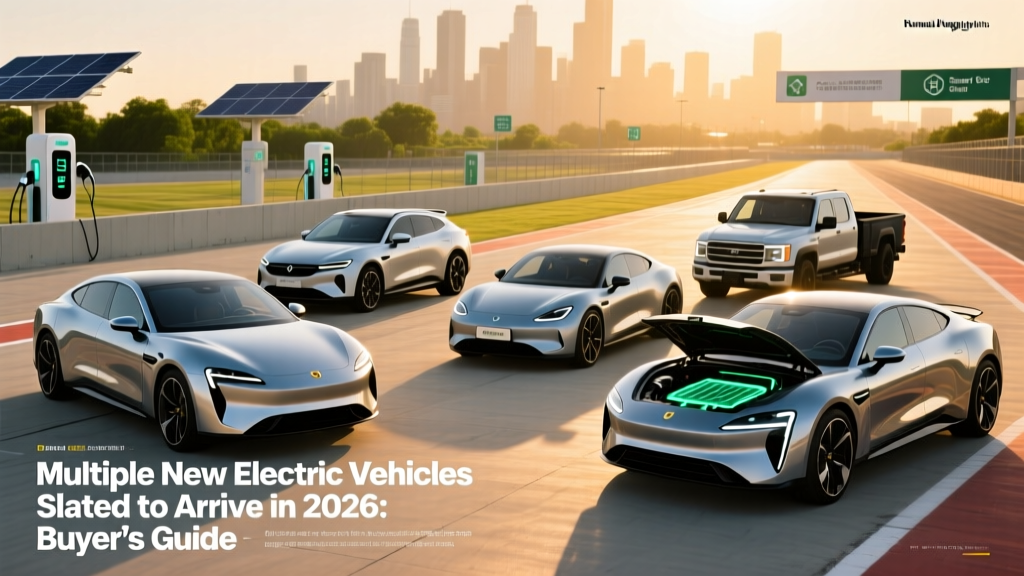
As of early 2026, multiple new electric vehicles are slated to arrive in 2026 across nearly every segment — from sub-$30,000 compact crossovers to full-size electric pickups. The standout newcomers include the next-generation Chevrolet Bolt EV (with NACS native charging and LFP battery options), the Hyundai Ioniq 7 three-row SUV, the Tesla Model Y Juniper refresh, the Ram 1500 REV, and expanded trims of the Rivian R2. If you need a car today, current models like the Hyundai Ioniq 5, Tesla Model 3, and Chevy Equinox EV already offer 300+ miles of EPA range and DC fast charging under 25 minutes (10–80%). If you can wait 6–9 months, the 2026 crop brings improved battery chemistry, faster sustained charge rates, and broader §30D tax credit eligibility thanks to updated battery sourcing rules. Your decision should hinge on whether the incoming model fills a gap current EVs don't — like affordable three-row seating or native NACS on a non-Tesla platform.
The 2026 EV Landscape: What's Actually New
The 2026 model year represents a genuine inflection point for EV buyers in the United States. Automakers are finally delivering on platforms announced years ago, and the shift to the North American Charging Standard (NACS) connector — now adopted by Ford, GM, Hyundai, Rivian, Volvo, and others — means non-Tesla EVs gain access to the Supercharger network with a native plug, no adapter required.
Here's a snapshot of the most consequential 2026 arrivals and their preliminary specifications:
| Model | Segment | EPA Range (est.) | Battery (kWh) | Peak DC Charge (kW) | 10–80% (min) | Starting MSRP (est.) |
|---|---|---|---|---|---|---|
| Chevrolet Bolt EV (next-gen) | Subcompact Crossover | ~260 mi | ~65 (LFP) | ~150 | ~25 | ~$28,000 |
| Hyundai Ioniq 7 | 3-Row Midsize SUV | ~320 mi | ~100 (NMC) | ~240 | ~20 | ~$52,000 |
| Tesla Model Y (Juniper) | Compact Crossover | ~335 mi | ~78 (NMC) | ~250 | ~18 | ~$44,000 |
| Ram 1500 REV | Full-Size Pickup | ~350 mi (large pack) | ~168 (NMC) | ~230 | ~24 | ~$58,000 |
| Rivian R2 (Standard) | Compact Crossover | ~300 mi | ~75 (LFP) | ~190 | ~22 | ~$45,000 |
Note: Specifications above are based on manufacturer announcements and preliminary filings as of early 2026. Final EPA-certified figures may differ. Always verify at fueleconomy.gov before purchasing.
The critical shift this year is the proliferation of LFP (lithium iron phosphate) batteries in affordable models. LFP trades some energy density for dramatically longer cycle life, lower cost, and reduced fire risk. The next-gen Bolt and Rivian R2 Standard are expected to use LFP, which means owners can charge to 100% daily without the degradation concerns that apply to NMC chemistries. If you plan to keep your EV for 10+ years, LFP is a meaningful advantage.
2026 EVs vs. Gas and Hybrid: The Real Cost Comparison
The most common question from buyers eyeing the 2026 EV lineup: does it actually save money compared to a gas car or hybrid? The answer depends on your mileage, electricity rate, and how long you keep the vehicle. Let's run the numbers for a realistic scenario — 15,000 miles per year, 5-year ownership, national average electricity at $0.16/kWh, and gas at $3.40/gallon.
| Cost Category | 2026 EV (e.g., Ioniq 7, ~300 mi range) | Gas SUV (e.g., 28 MPG combined) | Hybrid SUV (e.g., 42 MPG combined) |
|---|---|---|---|
| Purchase Price (MSRP) | $52,000 | $38,000 | $42,000 |
| Federal Tax Credit (§30D) | −$3,750 to −$7,500* | $0 | $0–$3,750† |
| Fuel/Energy (5 years) | $3,600 (home charging) | $9,107 | $6,071 |
| Maintenance (5 years) | $1,200 | $3,500 | $3,200 |
| Insurance (5 years, avg) | $9,500 | $7,500 | $7,800 |
| Estimated Depreciation | ~$22,000 | ~$16,000 | ~$17,500 |
| Total 5-Year Cost | ~$38,550–$42,050 | ~$58,107 | ~$55,321 |
*§30D credit eligibility depends on MSRP caps ($55,000 cars / $80,000 SUVs/trucks), buyer income limits ($150K single / $300K joint), and battery critical-mineral sourcing requirements per IRS guidelines. Many 2026 EVs qualify for $3,750 (partial sourcing compliance); some qualify for the full $7,500. Verify at point of sale.
†PHEVs may qualify for up to $3,750 under §30D if battery capacity exceeds 7 kWh and sourcing rules are met.
The key takeaway: EVs win on fuel and maintenance but lose on depreciation and insurance. The breakeven point typically arrives around year 4–5 for high-mileage drivers (15K+ mi/yr) who charge primarily at home. If you rely exclusively on DC fast charging at $0.35–$0.50/kWh, your fuel cost jumps to $5,400–$7,700 over five years — erasing much of the advantage.
Real-World Ownership: What the Spec Sheet Doesn't Tell You
Manufacturer range and charging claims assume ideal conditions. Here's what 2026 EV buyers actually need to plan for.
Range in Practice
EPA range estimates are tested on mixed city/highway cycles at moderate temperatures. Real-world results vary significantly:
- Highway driving at 75 mph: Expect 85–90% of EPA range. A 320-mile EPA rating delivers ~270–290 miles at sustained highway speed.
- Cold weather (below 32°F): Range drops 20–35% depending on cabin heating demand. EVs with heat pumps (standard on the Ioniq 7, expected on the Juniper Model Y) lose closer to 15–20%.
- Cold + highway combined: Plan for 65–75% of EPA range. A 320-mile EV may deliver only 210–240 miles on a winter road trip.
Charging Reality
The "peak 240 kW" figure on a spec sheet is just that — a peak, sustained for a narrow state-of-charge window (typically 10–30% SoC). The charge curve tapers significantly above 80%, which is why 10–80% times are the meaningful metric. On a 2026 Hyundai Ioniq 7 with a ~100 kWh NMC battery:
- 10–50%: ~8 minutes (sustained 200–240 kW)
- 50–80%: ~12 additional minutes (tapers from 150 kW to ~80 kW)
- 80–100%: ~25 additional minutes (drops below 30 kW)
- Total 10–80%: ~20 minutes at a functioning 250+ kW station
Preconditioning the battery — warming it to optimal temperature before arriving at a charger — is essential for hitting these speeds. Most 2026 models do this automatically when you navigate to a DC fast charger. If your EV doesn't precondition (some older platforms don't), expect charge rates 30–50% below peak in cold weather.
Home Charging Access
Home charging remains the backbone of convenient EV ownership, but not every buyer has access. Here's the honest breakdown:
- Single-family home with garage/driveway: A Level 2 (240V, 40–48 amp) home charger costs $500–$800 for equipment and $800–$2,500 for electrician installation, depending on panel capacity and run length. If your panel is 100A and near capacity, a panel upgrade to 200A adds $1,500–$3,000.
- Townhouse/HOA: You'll need HOA approval and possibly shared-infrastructure upgrades. Budget $2,000–$5,000 total.
- Apartment/condo without dedicated parking: Public charging will be your primary source. Budget $150–$250/month for DC fast charging if you drive 15K mi/yr. This is the single biggest ownership friction point — evaluate honestly before buying.
Federal Tax Credits in 2026: What You Actually Qualify For
The §30D clean vehicle credit remains available in 2026, but eligibility has narrowed due to updated battery sourcing and critical mineral requirements that took effect in 2024–2025. Here's the current framework:
- MSRP cap: ≤$55,000 for sedans/wagons; ≤$80,000 for SUVs, vans, and pickups
- Buyer income cap: ≤$150,000 (single), ≤$225,000 (head of household), ≤$300,000 (joint) modified AGI
- Battery sourcing: $3,750 requires ≥60% critical minerals from US/FTA partners; additional $3,750 requires ≥60% battery components manufactured/assembled in North America
- Point-of-sale transfer: You can transfer the credit to the dealer at purchase, reducing your out-of-pocket cost immediately (even if you have no tax liability)
- FEOC restriction: Vehicles with battery components from a "foreign entity of concern" (primarily Chinese suppliers) are disqualified entirely
For 2026, the vehicles most likely to qualify for the full $7,500 include the Chevrolet Bolt EV (LFP with compliant sourcing expected), select Tesla Model Y trims, and the Ford F-150 Lightning. The Hyundai Ioniq 7 and Rivian R2 are expected to qualify for $3,750 (partial component compliance). Always confirm with the dealer and cross-reference the DOE/FuelEconomy credit tracker before signing.
Common EV Misconceptions — Fact-Checked for 2026
| Myth | Fact (with data) |
|---|---|
| "EV batteries need replacing every 5 years" | Modern NMC batteries retain 85–92% capacity at 100,000 miles (Recurrent data). LFP batteries show even slower degradation. Federal law mandates 8-year/100,000-mile battery warranties; most manufacturers warrant to 70% capacity retention. |
| "Charging takes too long for road trips" | A 2026 EV with 200+ kW DC fast charging adds ~180–220 miles in 15 minutes. Combined with a rest/food stop, this matches typical gas-trip break patterns for 300+ mile drives. |
| "EVs are worse in winter" | Range loss is real (20–35%), but EVs start instantly in cold, heat the cabin using battery energy (no idling waste), and preheat while plugged in. AWD EVs with winter tires outperform most gas AWD vehicles in snow due to instant torque and low center of gravity. |
| "The power grid can't handle EVs" | Most 2026 EVs support scheduled/managed charging, drawing power during off-peak hours (10 PM–6 AM). A single Level 2 charger draws ~7–11 kW — comparable to an electric oven or central AC unit. |
| "EVs cost more to insure" | Generally true: EV insurance premiums run 15–25% higher than comparable gas vehicles due to repair complexity and parts cost. Budget an extra $300–$600/year. Shop quotes from EV-friendly insurers (Geico, Progressive, State Farm) before purchasing. |
Decision Framework: Which 2026 EV Path Is Right for You?
If-Then: Your 2026 EV Decision
IF you have home Level 2 charging AND drive 200+ miles/day:
→ Prioritize 300+ mile EPA range and 200+ kW DC fast charging. The Hyundai Ioniq 7 or Tesla Model Y Juniper are strong fits. Budget $52K–$55K before credits.
IF you have home Level 2 charging AND drive under 100 miles/day:
→ You don't need maximum range. A next-gen Chevrolet Bolt EV (~260 mi, ~$28K) or base Rivian R2 (~300 mi, ~$45K) covers your needs with lower upfront cost. Charge overnight and rarely visit a public charger.
IF you lack home charging AND rely on public infrastructure:
→ Prioritize NACS-native vehicles for Supercharger access (the most reliable US network). The 2026 Model Y, Ford Mustang Mach-E (with NACS), and Rivian R2 are top picks. Budget $150–$250/month for public charging. Seriously consider a PHEV instead if DC chargers are scarce in your area.
IF you live in a cold climate (frequent sub-32°F winters):
→ Choose an EV with a heat pump (reduces range loss to ~15–20% vs. 30–35% with resistive heating). The Ioniq 7 and Tesla platforms include heat pumps standard. Add heated seats/steering wheel (uses far less energy than cabin air heating) and plan for 70–80% of EPA range in winter.
IF you need to tow or haul:
→ The Ram 1500 REV (~350 mi with large pack, ~$58K) is the leading 2026 electric pickup. Expect 40–50% range reduction when towing at max capacity — this is physics, not a defect. If you tow frequently over long distances, a diesel or PHEV may still be more practical.
IF you're cross-shopping a PHEV:
→ A plug-in hybrid like the Toyota RAV4 Prime (42 mi electric-only, 38 MPG gas) makes sense if you lack reliable home charging, regularly drive 400+ miles without stopping, or live in a charging desert. You get electric commuting with gas road-trip flexibility — at the cost of maintaining two powertrains.
What First-Time EV Buyers Must Know Before Signing
If 2026 is your first EV purchase, these five points will save you money and frustration:
- Install your Level 2 charger before the car arrives. A licensed electrician needs 2–6 weeks lead time in many markets. Get a quote early. If your panel needs upgrading, start now — utility permits can add weeks.
- Understand kW vs. kWh. kWh is your battery capacity (like gallons in a tank). kW is charge speed (like gallons-per-minute at the pump). A 78 kWh battery charged at 11 kW (Level 2) takes ~7 hours from empty. The same battery at 200 kW (DC fast) reaches 80% in ~20 minutes.
- Download charging apps before your first road trip. PlugShare, A Better Routeplanner, and your vehicle's native navigation all serve different purposes. PlugShare shows real user reliability ratings for individual stations — essential for avoiding broken chargers.
- Don't charge to 100% daily on NMC batteries. Set your daily charge limit to 80–90%. Reserve 100% for road trips. LFP batteries (Bolt EV, R2 Standard) can be charged to 100% daily without degradation concerns — this is one of their key advantages.
- Test-drive in conditions that match your commute. A 15-minute suburban loop won't reveal highway efficiency, cold-weather behavior, or DC fast-charging quirks. Ask the dealer for an extended test that includes highway driving and, if possible, a stop at a DC fast charger.
Frequently Asked Questions
Are 2026 EVs significantly better than 2024–2025 models?
Incrementally, yes. The biggest improvements are NACS connector adoption (native Supercharger access), wider LFP battery availability (longer lifespan, daily 100% charging), and faster sustained DC charge rates (200–250 kW peak on mainstream models vs. 150–180 kW two years ago). If you're choosing between a discounted 2025 and a full-price 2026, the 2025 may offer better value — but verify its connector type and charging speed.
Should I wait for solid-state batteries?
Not for a 2026 purchase. Solid-state batteries remain in limited production (Toyota's bZ4X successor may feature a small solid-state variant in Japan) and won't reach mainstream US-market vehicles in volume until 2028–2030 at the earliest. Current NMC and LFP chemistries are mature, well-warrantied, and sufficient for 95% of use cases.
How do I verify if a specific 2026 EV qualifies for the tax credit?
Check the FuelEconomy.gov credit tracker, which the DOE updates as manufacturers certify compliance. At the dealership, the point-of-sale transfer process requires you to attest to your income eligibility and the dealer must confirm the vehicle's VIN is registered as credit-eligible. Do not rely on marketing materials alone — sourcing rules change quarterly.
What happens if my EV battery degrades past the warranty threshold?
Federal law requires manufacturers to warranty EV batteries for 8 years/100,000 miles (10 years/150,000 miles in CARB states like California, New York, and Massachusetts). The typical warranty threshold is 70% capacity retention. If your battery drops below that within the warranty period, the manufacturer must repair or replace it at no cost. Out-of-warranty replacement for a 2026-era 75–100 kWh pack currently runs $8,000–$16,000 depending on chemistry and labor — but this cost has been declining ~8–10% annually.
Can I use a Tesla Supercharger with a non-Tesla 2026 EV?
Yes, if your vehicle has a native NACS connector (standard on 2026 Ford, GM, Hyundai, Rivian, Volvo, and Tesla vehicles). If your EV has a CCS1 connector, you'll need a NACS-to-CCS adapter — most automakers provide or sell one. Tesla has opened over 15,000 Supercharger stalls to NACS-equipped non-Tesla vehicles as of early 2026, with more locations adding NACS cables monthly.