The Ford Mustang Mach-E has matured from an EV-curious crossover into one of the most well-rounded electric SUVs on the market. For the 2026 model year, Ford has refined the formula with updated battery chemistry options, a standard NACS charge port, and a more competitive starting price. But with the Hyundai Ioniq 5, Tesla Model Y, and Chevrolet Blazer EV all pushing hard in this segment, the Mach-E needs to deliver on more than just the Mustang badge. Here's everything you need to know about the 2026 Mustang Mach-E — exact range figures, charging speeds, pricing, and the real-world ownership details that spec sheets leave out.
2026 Mustang Mach-E Quick Specs at a Glance
| Spec | Select RWD | Premium AWD (Ext. Range) | GT |
|---|---|---|---|
| EPA Range | 250 mi | 320 mi | 280 mi |
| Battery (usable) | 75.7 kWh (LFP) | 91 kWh (NMC) | 91 kWh (NMC) |
| Horsepower | 290 hp | 365 hp | 480 hp |
| 0-60 mph | 5.8 sec | 4.8 sec | 3.5 sec |
| Drivetrain | RWD (single motor) | AWD (dual motor) | AWD (dual motor) |
| Max DC Fast Charge | 150 kW | 150 kW | 150 kW |
| 10-80% DC Time | ~33 min | ~36 min | ~36 min |
| Level 2 Home Charge | 10.5 kW (~30 mi/hr) | 10.5 kW (~30 mi/hr) | 10.5 kW (~30 mi/hr) |
| MPGe (combined) | 105 MPGe | 98 MPGe | 91 MPGe |
| Base MSRP | $36,495 | $46,995 | $55,995 |
| Battery/Powertrain Warranty | 8 years / 100,000 miles | ||
Real-World Range: What the EPA Sticker Doesn't Tell You
The headline number is 320 miles of EPA-estimated range on the Premium AWD Extended Range model, sourced from a 91 kWh usable NMC (nickel manganese cobalt) battery pack. The base Select RWD trim uses a 75.7 kWh LFP (lithium iron phosphate) pack rated for 250 miles. The GT, despite sharing the 91 kWh pack, sacrifices range for performance at 280 miles EPA.
EPA 320 mi (Premium AWD Ext. Range): Expect 270-290 mi in mixed real-world driving. At sustained 75 mph highway speeds, plan for roughly 255-270 mi before needing a charge. In freezing temperatures (below 32°F), range can drop 20-30%, putting realistic winter highway range closer to 210-230 mi. The LFP-equipped Select model's 250 EPA miles translate to roughly 200-220 mi highway and as low as 170 mi in deep cold.
The Mach-E does include a heat pump across all 2026 trims, which mitigates some cold-weather loss compared to earlier model years that relied on resistive heating. Still, physics is physics — any EV will lose significant range in sub-freezing conditions, and buyers in northern climates should spec the Extended Range battery or plan charging stops accordingly.
Efficiency varies meaningfully across trims. The Select RWD achieves 105 MPGe combined (roughly 32 kWh/100 mi), while the GT drops to 91 MPGe (37 kWh/100 mi). If you're optimizing for commute cost, the RWD trim is the clear winner; if you want the dual-motor security and performance, budget for roughly 15% higher electricity costs per mile.
Charging Speeds: DC Fast Charging and Home Setup
For 2026, Ford has equipped the Mach-E with a native NACS (North American Charging Standard) port, eliminating the need for an adapter at Tesla Superchargers. This is a significant practical improvement — Tesla's Supercharger network remains the most reliable DC fast-charging infrastructure in the U.S., with over 20,000 stalls nationwide.
| Charging Level | Power / Rate | Miles Added | Best For |
|---|---|---|---|
| Level 1 (120V household) | ~1.4 kW | ~3-4 mi/hr | Emergency top-ups, PHEV-style overnight |
| Level 2 (240V home, 48A) | 10.5 kW | ~30 mi/hr | Daily overnight charging — full charge in ~9 hrs |
| DC Fast Charge (peak) | 150 kW peak | ~130 mi in 15 min | Road trips, quick top-ups |
The 150 kW peak DC fast-charge rate is the Mach-E's most debated spec. Competitors like the Hyundai Ioniq 5 (up to 240 kW on 800V architecture) and the Tesla Model Y (up to 250 kW) can charge faster at compatible stations. In practice, the Mach-E sustains roughly 130-145 kW up to about 50% state of charge, then tapers progressively. A 10-80% charge takes approximately 33-36 minutes depending on battery temperature and starting SoC.
Charging curve reality: That 150 kW peak figure is not sustained across the session. Expect the average charging rate from 10-80% to be closer to 95-105 kW. Preconditioning the battery (automatic when you navigate to a DC charger via the infotainment system) is essential — without it, cold-soaked batteries can peak below 80 kW, adding 10-15 minutes to your stop.
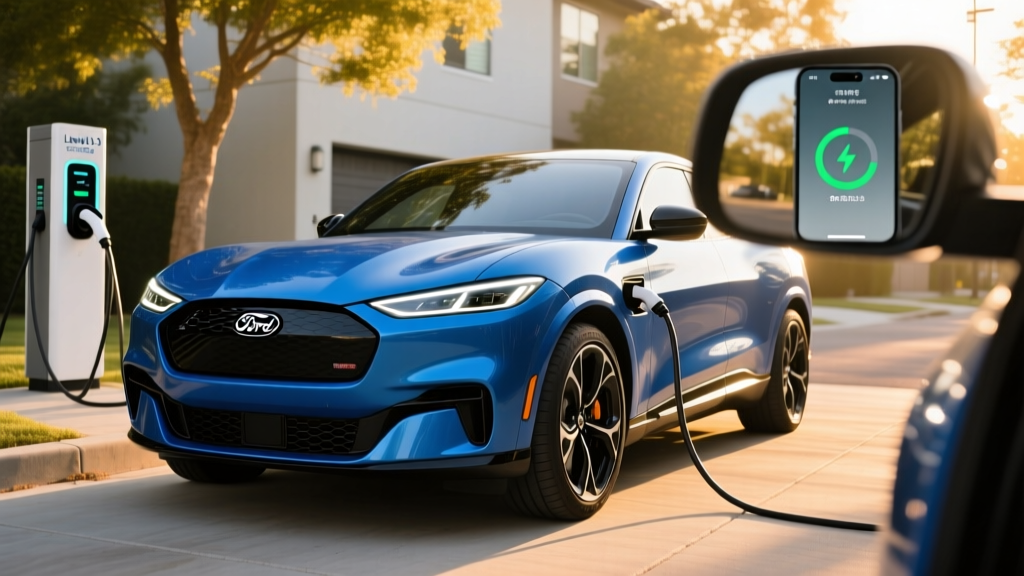
At home on a Level 2 charger, the 10.5 kW onboard charger adds roughly 30 miles of range per hour, meaning a full overnight charge (8-10 hours) easily replenishes even the Extended Range pack. Ford's Mobile Power Cord is included and handles both 120V and 240V outlets, though a dedicated hardwired Level 2 station (like a ChargePoint Home Flex or Ford Connected Charge Station) is recommended for daily use. A typical 240V/48A home installation runs $800-$2,000 depending on your panel capacity and run length — confirm with a licensed electrician whether your home's 200A service can support the circuit.
Performance, Driving Dynamics, and Efficiency
The Mach-E lineup spans a wide performance envelope. The base Select RWD delivers 290 hp from a single rear motor — adequate for daily commuting and highway merging with a 5.8-second 0-60 mph time. The Premium AWD bumps output to 365 hp with dual motors and a 4.8-second sprint, providing confident passing power and all-weather traction.
The GT is the performance flagship: 480 hp, 3.5 seconds to 60 mph, and a MagneRide adaptive suspension that keeps the body flat through corners. It's genuinely quick — faster than a base Porsche Macan and within spitting distance of a Tesla Model Y Performance. The trade-off is efficiency: 91 MPGe combined versus the Select's 105 MPGe, plus a 40-mile range penalty.
Driving dynamics are a genuine strength. Ford's chassis tuning gives the Mach-E a composed, European-feeling ride — firm enough to be engaging on back roads but compliant over highway expansion joints. The steering is heavier than most EV competitors, which some drivers appreciate for feedback and others find effortful in parking lots. Regenerative braking offers multiple modes including a true one-pedal driving setting that can bring the car to a complete stop without touching the brake pedal.
Interior, Cargo Space, and Technology
The Mach-E's interior is dominated by a 15.5-inch vertically oriented touchscreen running Ford's SYNC 4A infotainment system. The interface is responsive, supports wireless Apple CarPlay and Android Auto, and integrates over-the-air updates that can add features post-purchase. A 10.2-inch digital instrument cluster sits behind the steering wheel, displaying speed, range, and driver-assist information.
Cargo and passenger dimensions:
- Rear cargo volume: 29.7 cu ft (behind second row) / 59.7 cu ft (rear seats folded)
- Front trunk (frunk): 4.7 cu ft — enough for a charging cable bag or small grocery run
- Front legroom: 43.3 inches
- Rear legroom: 38.9 inches
- Ground clearance: 5.7 inches
The rear seat accommodates adults comfortably on shorter trips, though taller passengers may find the sloping roofline limits headroom compared to the boxier Hyundai Ioniq 5 or Kia EV6. The 29.7 cu ft cargo area is competitive with the segment but falls short of the Tesla Model Y's 30.2 cu ft (and the Model Y's deeper under-floor storage).
The available BlueCruise hands-free driving system operates on over 130,000 miles of pre-mapped divided highways across the U.S. and Canada. It's a SAE Level 2 system — despite the "hands-free" branding, the driver monitoring camera requires your eyes to remain on the road, and you must be prepared to take over immediately. BlueCruise is not autonomous driving; it's a highly capable highway assist that reduces fatigue on long trips but does not navigate city streets, construction zones, or inclement weather independently.
Pricing, Trims, and Federal Tax Credit Eligibility
The 2026 Mustang Mach-E lineup starts at $36,495 for the Select RWD and climbs to $55,995 for the GT. Here's how the trims break down with estimated pricing after the federal tax credit:
| Trim | Base MSRP | Est. §30D Credit | Effective Price | Key Equipment |
|---|---|---|---|---|
| Select RWD | $36,495 | Up to $7,500* | ~$28,995* | LFP battery, 250 mi range, SYNC 4A, 19" wheels |
| Premium RWD (Ext. Range) | $43,995 | Up to $7,500* | ~$36,495* | 91 kWh NMC, 320 mi range, panoramic roof, 20" wheels |
| Premium AWD (Ext. Range) | $46,995 | Up to $7,500* | ~$39,495* | Dual motor, 320 mi range, BlueCruise capable |
| GT | $55,995 | Up to $7,500* | ~$48,495* | 480 hp, MagneRide, GT performance seats, 20" wheels |
Federal tax credit eligibility (§30D) — critical caveats: The up-to-$7,500 federal EV tax credit is not guaranteed for every buyer. Under current IRS rules, you must meet all of the following:
- MSRP cap: SUVs must have an MSRP at or below $80,000 — all Mach-E trims qualify.
- Buyer income cap: Modified AGI must not exceed $150,000 (single), $225,000 (head of household), or $300,000 (joint filers).
- Battery sourcing: The credit splits into two halves ($3,750 each) — one for critical minerals and one for battery component assembly. Sourcing requirements tighten annually. Verify the specific 2026 Mach-E battery supply chain status on fueleconomy.gov before purchase.
- Point-of-sale transfer: The credit can be transferred to the dealer at purchase, reducing your out-of-pocket price immediately — but you must still meet income requirements at tax filing time or repay the credit.
Always consult a tax professional before relying on credit eligibility. Battery sourcing rules change annually and can shift mid-year based on trade agreements and manufacturer supply chain updates.
Pros and Cons: The Honest Assessment
Pros
- Native NACS port in 2026 — direct Tesla Supercharger access without adapters
- Competitive real-world efficiency, especially on RWD trims (105 MPGe)
- Strong chassis dynamics — genuinely engaging to drive for a crossover
- LFP battery option on Select trim offers longer cycle life and 100% SoC daily charging tolerance
- Heat pump standard across all trims for improved cold-weather efficiency
- BlueCruise is one of the best highway driver-assist systems available
- All trims fall under the $80,000 MSRP cap for federal tax credit eligibility
Cons
- 150 kW peak DC charging is slower than Ioniq 5 (240 kW) and Model Y (250 kW)
- Rear headroom is tight for tall passengers due to sloping roofline
- GT trim's efficiency penalty (91 MPGe) makes it expensive to run at high mileage
- Frunk is small (4.7 cu ft) compared to some competitors
- No 800V architecture — limits future charging-speed upgrade potential
- Base Select range (250 mi EPA) is modest for road-trip-heavy buyers
Who Should Buy the 2026 Mustang Mach-E?
Choose the Mach-E Select RWD if: You commute 30-60 miles daily, have home Level 2 charging, want to maximize efficiency (105 MPGe), and the LFP battery's long cycle life and daily 100% charging tolerance fit your routine. At ~$29k after the credit, it's one of the best-value EVs available.
Choose the Mach-E Premium AWD Extended Range if: You need all-weather traction, regularly drive 200+ miles between charges, and want the full tech suite including BlueCruise. The 320-mile EPA range provides genuine road-trip viability with one planned DC stop on most 400-mile journeys.
Choose the Mach-E GT if: Performance is a priority and you accept the range/efficiency trade-off. The 3.5-second 0-60 time and MagneRide suspension deliver sports-sedan acceleration in a practical crossover package — but plan to charge more often.
Look elsewhere if: Maximum DC charging speed is critical for your road-trip routine (consider the Ioniq 5's 240 kW capability), you need maximum cargo and rear-seat space (the Model Y wins here), or you want the longest possible range without stopping (the Lucid Air or Chevy Silverado EV offer 400+ miles, albeit at higher prices).
2026 Mustang Mach-E vs. Key Competitors
| Spec | Mustang Mach-E (Premium AWD ER) | Hyundai Ioniq 5 (Long Range AWD) | Tesla Model Y (Long Range AWD) |
|---|---|---|---|
| EPA Range | 320 mi | 290 mi | 320 mi |
| Battery | 91 kWh (NMC) | 77.4 kWh (NMC) | ~78 kWh (NMC) |
| Peak DC Charge | 150 kW | 240 kW (800V) | 250 kW |
| 10-80% DC Time | ~36 min | ~18 min | ~22 min |
| 0-60 mph | 4.8 sec | 5.1 sec | 4.8 sec |
| Cargo (rear) | 29.7 cu ft | 27.2 cu ft | 30.2 cu ft |
| Base MSRP (comparable trim) | $46,995 | $49,500 | $48,990 |
| Charging Network | NACS (Supercharger + open networks) | NACS (Supercharger + open networks) | Supercharger (native) |
The Ioniq 5's 800V architecture gives it a decisive charging-speed advantage — 18 minutes 10-80% versus the Mach-E's 36 minutes matters on road trips with multiple DC stops. The Model Y's Supercharger-native ecosystem and marginally larger cargo area keep it competitive, but the Mach-E counters with better ride quality, a more traditional interior layout that some buyers prefer, and a lower starting MSRP on base trims.
Frequently Asked Questions
What is the real-world range of the 2026 Mustang Mach-E?
The EPA rates the Extended Range AWD at 320 miles, but real-world mixed driving typically yields 270-290 miles. Sustained highway driving at 75 mph drops that to roughly 255-270 miles. In freezing temperatures, expect a 20-30% reduction — plan for 210-230 miles in winter highway conditions. The base LFP model's 250 EPA miles translates to roughly 200-220 real-world miles.
How fast does the 2026 Mach-E charge at home and on the road?
At home on a 240V Level 2 charger, the Mach-E charges at 10.5 kW, adding about 30 miles of range per hour — a full overnight charge takes 8-10 hours. On DC fast chargers, it peaks at 150 kW and charges from 10-80% in approximately 33-36 minutes. This is slower than the Ioniq 5 (18 min) and Model Y (22 min) but adequate for most road-trip patterns with planned meal or rest stops.
Does the 2026 Mustang Mach-E qualify for the $7,500 federal EV tax credit?
It may. All Mach-E trims fall under the $80,000 MSRP cap for SUVs. However, buyer income limits ($150K single / $300K joint), battery critical-mineral sourcing requirements, and battery component assembly rules all affect eligibility. The credit can be transferred to the dealer at point of sale. Check fueleconomy.gov for the latest sourcing compliance status and consult a tax professional to confirm your personal eligibility under IRS §30D rules.
Is the 2026 Mach-E worth buying over the Tesla Model Y or Hyundai Ioniq 5?
It depends on your priorities. If maximum DC charging speed matters for frequent road trips, the Ioniq 5's 800V architecture is the clear winner. If you want the most proven Supercharger-native ecosystem and maximum cargo space, the Model Y holds an edge. The Mach-E wins on ride quality, driving engagement, and base-trim value — the Select RWD at ~$29k after the credit is one of the most affordable well-equipped EV crossovers available. For buyers who prioritize driving dynamics and a traditional cockpit layout over charging speed, the Mach-E is an excellent choice.
What are the biggest pros and cons of the 2026 Mach-E?
The biggest pros: native NACS port for direct Supercharger access, strong driving dynamics, competitive efficiency on RWD trims, an LFP battery option with long cycle life, and aggressive pricing on base trims. The biggest cons: 150 kW DC charging lags key competitors, rear headroom is tight for tall passengers, the GT's efficiency penalty is steep, and the frunk is small at 4.7 cu ft.
What is the battery warranty on the 2026 Mustang Mach-E?
Ford covers the high-voltage battery and electric powertrain components for 8 years or 100,000 miles, whichever comes first. The warranty covers defects and excessive capacity loss — Ford defines excessive as dropping below 70% of original capacity during the warranty period. This is in line with industry standards (Hyundai offers 10/100,000; Tesla offers 8/120,000 on the Model Y).
Sources: EPA fueleconomy.gov, Ford Motor Company, IRS §30D Clean Vehicle Credits