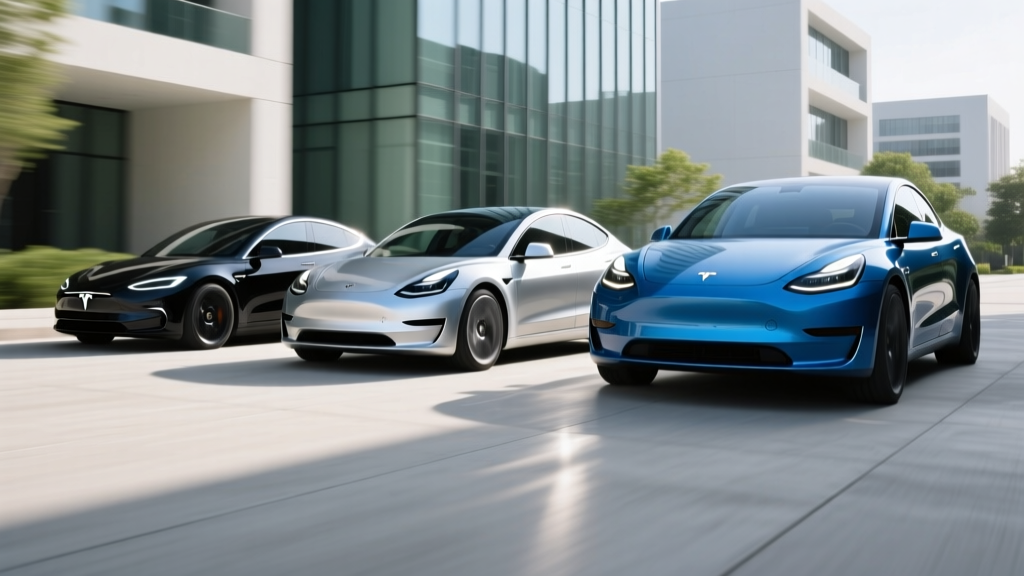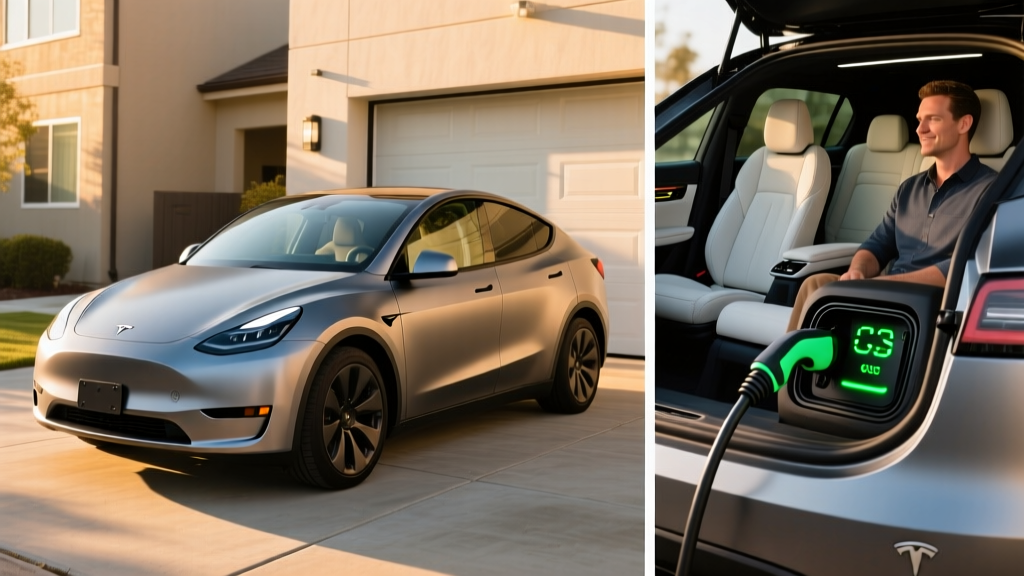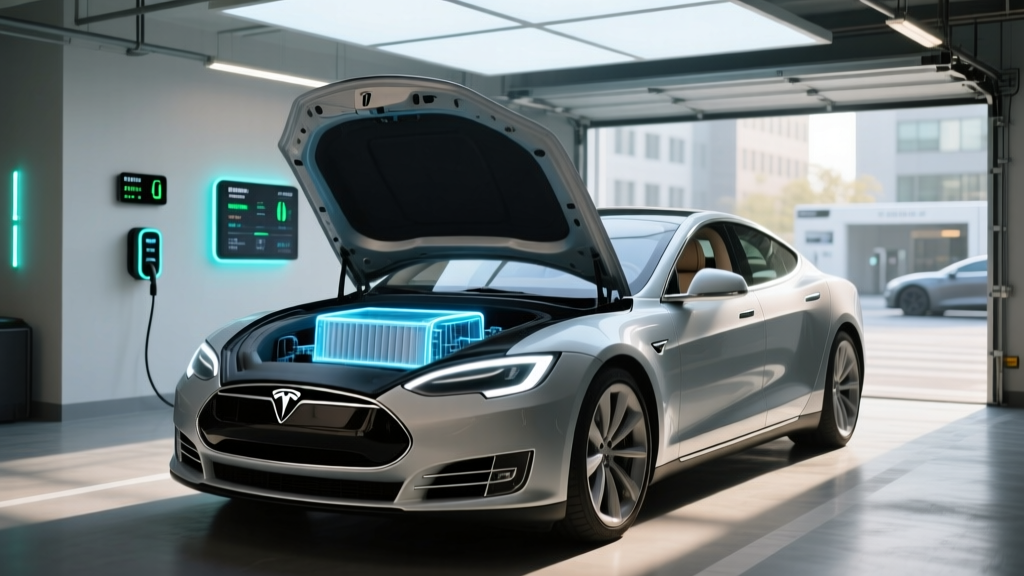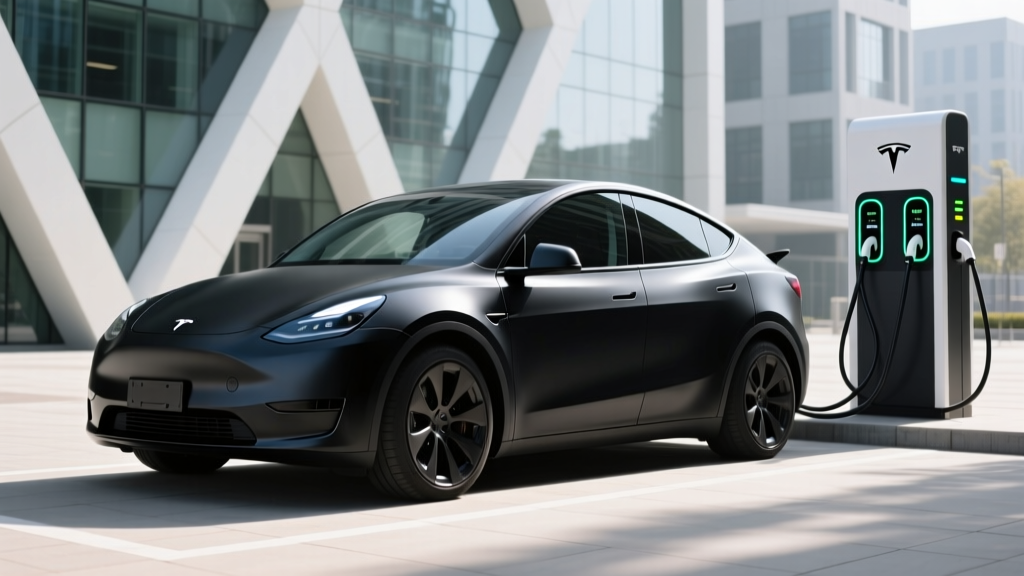
The Tesla Model Y has been the best-selling electric vehicle in the world for several years running, and the heavily refreshed Juniper generation that debuted for the 2025 model year carries forward into 2026 with meaningful refinements. For buyers searching specifically for a 2026 Model Y black — whether in Solid Black or the newer Deep Blue Metallic that reads nearly black in low light — you're looking at the most popular color pairing on one of the most popular EVs on the road. But popularity doesn't automatically mean it's the right purchase for you. This review breaks down the exact numbers that matter: real-world range, charging speeds, pricing after federal tax credits, and how the 2026 Model Y stacks up against the Hyundai Ioniq 5, Ford Mustang Mach-E, and Chevrolet Equinox EV.
2026 Model Y Lineup: Trims, Pricing, and the Black Paint Question
Tesla simplified the Model Y lineup for 2026, continuing the Juniper-era structure with three core configurations. Solid Black paint remains a $0 no-cost option (it was previously a $1,500 upcharge before Tesla restructured paint pricing in late 2024), making the 2026 Model Y black one of the most accessible configurations in the lineup. Here's the current pricing breakdown:
| Trim | Drivetrain | Base MSRP | Est. After §30D Credit* |
|---|---|---|---|
| Long Range RWD | Rear-Wheel Drive | $44,990 | $37,490 |
| Long Range AWD | Dual Motor AWD | $47,990 | $40,490 |
| Performance | Dual Motor AWD | $52,490 | $44,990 |
*§30D federal tax credit eligibility requires meeting income caps ($150K single / $300K joint), MSRP caps ($55K for SUVs), and battery sourcing requirements. Confirm eligibility at IRS.gov before purchasing. Point-of-sale transfer is available through participating dealers.
The Solid Black paint option pairs with either the standard black interior (no cost) or the white or cream premium interiors ($1,000 each). Black-on-black is the most-ordered combination Tesla reports, which has implications for resale value and delivery wait times — expect a 2-4 week build queue for black exteriors in most U.S. regions, versus 1-2 weeks for less popular colors like Quicksilver or Ultra Red.
Range, Battery, and Efficiency: EPA Numbers vs. Reality
The 2026 Model Y Long Range AWD — the volume seller and the configuration most buyers land on — carries an EPA-estimated range of 320 miles on its 78.1 kWh (usable) battery pack. The Long Range RWD variant edges slightly higher at an EPA-estimated 335 miles thanks to reduced drivetrain losses, while the Performance trim drops to 285 miles on its stickier 21-inch wheels and sport-tuned suspension.
The 2026 Model Y Long Range uses an NMC (nickel manganese cobalt) lithium-ion battery pack manufactured primarily by Panasonic at the Gigafactory Nevada facility. Tesla has not shifted the Long Range to LFP chemistry — that remains reserved for the base RWD model in markets where it's offered. The NMC pack provides higher energy density, which is why the Long Range achieves its 320+ mile figure in a relatively compact battery.
| Trim | Battery (Usable kWh) | Chemistry | EPA Range | MPGe (City/Hwy/Combined) | kWh/100 mi |
|---|---|---|---|---|---|
| Long Range RWD | 78.1 | NMC | 335 mi | 130 / 112 / 122 | 28 |
| Long Range AWD | 78.1 | NMC | 320 mi | 127 / 108 / 118 | 29 |
| Performance | 78.1 | NMC | 285 mi | 115 / 98 / 107 | 32 |
Charging Speed: DC Fast Charging and Home Level 2
Charging remains one of the Model Y's strongest competitive advantages, primarily because of Tesla's Supercharger network — now the largest and most reliable DC fast-charging network in North America. The 2026 Model Y supports a peak DC fast-charge rate of 250 kW on V3 Superchargers and compatible CCS/NACS stations.
| Charging Method | Max Power | Speed / Time |
|---|---|---|
| DC Fast Charge (V3 Supercharger / NACS) | 250 kW peak | 10–80% in ~23 minutes; adds up to 200 mi in 15 min |
| DC Fast Charge (V4 Supercharger) | 250 kW (vehicle-limited) | Same as V3 — Model Y does not support 800V architecture |
| Level 2 Home (Tesla Wall Connector, 48A) | 11.5 kW | ~44 miles of range per hour; full charge in ~8 hours |
| Level 2 Home (32A mobile connector, 240V) | 7.7 kW | ~30 miles of range per hour; full charge in ~11 hours |
| Level 1 (120V standard outlet) | 1.4 kW | ~4 miles per hour — emergency/trickle only |
A critical note on the charge curve: the 250 kW peak only holds between approximately 10-30% state of charge. From 30-60%, the rate tapers to roughly 150-170 kW, and above 80%, it drops significantly to 40-60 kW to protect battery longevity. This is why Tesla (and every other manufacturer) quotes 10-80% times rather than 0-100%. If you arrive at a Supercharger at 5% SoC and charge to 80%, you'll spend roughly 23 minutes. Charging from 80-100% adds another 35-40 minutes — plan accordingly on road trips and charge to 80% unless you need the full battery for your next leg.
For home charging, the Tesla Wall Connector ($420) is the recommended Level 2 solution. It delivers up to 11.5 kW on a 60-amp circuit (48 amps continuous), which adds about 44 miles of range per hour of charging. Most Model Y owners who drive 30-40 miles daily will recover their daily usage in under an hour of overnight charging. Installation costs for a Wall Connector typically range from $800 to $2,500 depending on whether your electrical panel needs an upgrade — consult a licensed electrician for a site-specific quote.
Performance: 0-60 Times, Horsepower, and Drivetrain
The Juniper refresh brought modest but meaningful powertrain improvements to the 2026 Model Y. Here's the performance breakdown:
| Trim | Drivetrain | Horsepower | Torque (lb-ft) | 0-60 mph | Top Speed |
|---|---|---|---|---|---|
| Long Range RWD | Single Motor RWD | 346 hp | 346 | 5.5 sec | 125 mph |
| Long Range AWD | Dual Motor AWD | 384 hp | 376 | 4.8 sec | 125 mph |
| Performance | Dual Motor AWD | 510 hp | 487 | 3.5 sec | 155 mph |
The Long Range AWD is the sweet spot for most buyers. Its 4.8-second 0-60 time is quicker than nearly every gasoline compact SUV on the market, and the dual-motor all-wheel-drive system provides confident traction in rain and light snow. The Performance trim's 3.5-second sprint is genuinely sports-car territory, but the trade-off is 35 fewer miles of EPA range and a firmer ride that some passengers find fatiguing on long trips.
The Juniper generation also introduced a revised suspension tuning with frequency-selective dampers, which noticeably improves ride quality over pre-2025 Model Ys. Road noise has been reduced through additional acoustic insulation and redesigned door seals — a common complaint on earlier models that Tesla has largely addressed.
Interior, Cargo, and Technology
The 2026 Model Y's interior received its most significant overhaul with the Juniper refresh. The minimalist cabin now features a 15.4-inch center touchscreen, an 8-inch rear passenger display, ventilated front seats (previously heated-only), ambient lighting strips along the dashboard and doors, and a power-folding second row accessible from the cargo area.
Cargo space remains one of the Model Y's strongest practical advantages:
- Behind second row: 30.2 cubic feet
- Second row folded: 72.1 cubic feet
- Front trunk (frunk): 4.1 cubic feet
- Rear legroom: 40.5 inches
- Front headroom: 40.8 inches
These cargo figures exceed the Ford Mustang Mach-E (29.7 / 59.7 cu ft) and the Hyundai Ioniq 5 (27.2 / 59.3 cu ft), making the Model Y the segment leader for practicality. The 4.1-cubic-foot frunk is useful for charging cables, a small bag, or groceries you want to keep separate from the main cargo area.
On the technology front, the Model Y runs Tesla's latest software with over-the-air updates, native navigation with real-time Supercharger routing, a built-in dashcam and Sentry Mode surveillance system, and access to Tesla's app ecosystem including phone-as-key, remote preconditioning, and scheduled charging. The infotainment system remains one of the fastest and most responsive in the industry, though it lacks Apple CarPlay and Android Auto — a deliberate Tesla choice that frustrates some buyers who prefer phone-mirrored interfaces.
Driver Assistance: Autopilot and FSD Supervised
Every 2026 Model Y comes standard with Tesla's Basic Autopilot, which includes adaptive cruise control, lane-keeping assist, and automatic emergency braking. The optional Full Self-Driving (Supervised) package — currently priced at $8,000 as a one-time purchase or $99/month — adds automatic lane changes, navigation-guided on/off-ramp handling, traffic light and stop sign recognition, and enhanced summon features.
FSD Supervised has improved significantly through 2025-2026 neural-network updates, particularly in urban environments, but it still requires active driver supervision. It handles highway driving competently and can manage many surface-street scenarios, but construction zones, complex intersections, and adverse weather still demand immediate driver takeover. We recommend trying the $99/month subscription for a month before committing to the $8,000 purchase.
Warranty, Ownership Costs, and Tax Credit Eligibility
Tesla's warranty coverage for the 2026 Model Y is competitive with the EV segment:
- Basic vehicle warranty: 4 years / 50,000 miles
- Battery & drive unit warranty: 8 years / 120,000 miles (Long Range & Performance)
- Battery capacity retention: Minimum 70% over the warranty period
The 8-year/120,000-mile battery warranty is strong and reflects Tesla's confidence in its NMC pack longevity. Independent data from NHTSA and owner surveys suggest that Model Y batteries typically retain 90-93% capacity at 100,000 miles, well above the warranty threshold. Full battery replacement, should it ever be needed out of warranty, currently costs approximately $12,000-$16,000 at Tesla service centers, though prices have been declining as battery manufacturing scales.
- Buyer income cap: AGI ≤ $150,000 (single) / $225,000 (head of household) / $300,000 (joint)
- MSRP cap: ≤ $80,000 for SUVs/vans/pickups (all Model Y trims qualify)
- Battery sourcing: Critical minerals and battery components must meet escalating domestic-content thresholds — Tesla's U.S. battery manufacturing currently satisfies these requirements, but verify at fueleconomy.gov at time of purchase
- Point-of-sale transfer: Available — reduces your purchase price directly rather than waiting for a tax refund
2026 Model Y vs. Key Competitors
| Spec | Tesla Model Y LR AWD | Hyundai Ioniq 5 Limited AWD | Ford Mustang Mach-E Premium AWD |
|---|---|---|---|
| EPA Range | 320 mi | 290 mi | 300 mi |
| Battery (usable kWh) | 78.1 | 84.0 | 91.0 |
| Peak DC Charge | 250 kW | 350 kW (800V) | 150 kW |
| 10-80% Time | ~23 min | ~18 min | ~38 min |
| 0-60 mph | 4.8 sec | 5.1 sec | 5.5 sec |
| Cargo (behind 2nd row) | 30.2 cu ft | 27.2 cu ft | 29.7 cu ft |
| Starting MSRP | $47,990 | $52,600 | $48,995 |
| Charging Network | Supercharger (native) | CCS/NACS adapter needed | CCS/NACS adapter needed |
The Model Y's advantages are clear: best-in-class cargo space, the longest EPA range in its price bracket, native Supercharger access without adapters, and the lowest starting price of the three when comparing AWD configurations. The Ioniq 5 fights back with faster peak charging (350 kW on 800V architecture) and a more conventional interior with physical buttons for climate controls. The Mach-E offers a sportier driving feel and a more traditional dealership purchase experience, but its slower charging and shorter range are notable disadvantages for road-trip-heavy buyers.
Pros
- Class-leading 320-mile EPA range (AWD)
- Native Supercharger network — no adapters, most reliable public charging
- 30.2 cu ft cargo space beats every competitor
- 250 kW DC fast charging; 10-80% in ~23 min
- Strong §30D tax credit eligibility with point-of-sale transfer
- OTA updates continuously add features
- Lowest starting MSRP in the AWD midsize EV SUV segment
Cons
- No Apple CarPlay or Android Auto
- All controls funneled through touchscreen — no physical climate knobs
- FSD Supervised still requires constant driver attention ($8K option)
- Service center wait times can be long in some markets
- 250 kW peak charge rate trails Ioniq 5's 350 kW (800V)
- Solid Black paint shows swirl marks and scratches easily
- No spare tire — tire repair kit only
Who Should Buy the 2026 Model Y in Black?
Choose the Model Y if: You prioritize maximum range, cargo practicality, and access to the most reliable public charging network. It's the strongest default choice for families, daily commuters driving 30-60 miles round-trip, and road-trip-heavy drivers who benefit from Supercharger density. The black exterior is ideal if you want the highest resale-demand color and don't mind more frequent washing (black shows dust, water spots, and swirl marks more than lighter colors).
Look elsewhere if: You require Apple CarPlay, prefer physical buttons for climate and audio controls, want the absolute fastest DC charging speeds (Ioniq 5/Porsche Macan EV with 800V), or need a traditional dealership service experience. The Mach-E or Ioniq 5 may also suit buyers who prefer a more distinctive exterior design — the Model Y's ubiquity is either a comfort or a drawback depending on your taste.
Frequently Asked Questions
What is the real-world range of the 2026 Model Y?
The EPA rates the Long Range AWD at 320 miles. In real-world highway driving at 70-75 mph, expect 270-290 miles. In cold weather below 35°F, expect 230-260 miles without preconditioning. City driving with regenerative braking can exceed the EPA estimate, reaching 330+ miles.
How fast does the 2026 Model Y charge?
On a V3 Supercharger or compatible 250 kW DC fast charger, the Model Y charges from 10-80% in approximately 23 minutes, adding up to 200 miles of range in 15 minutes. At home on a 48-amp Level 2 Tesla Wall Connector (11.5 kW), it adds about 44 miles per hour, fully charging overnight in roughly 8 hours.
How much does the 2026 Model Y cost after tax credits?
The Long Range AWD starts at $47,990 MSRP. With the full $7,500 §30D federal tax credit (applied at point of sale), the effective price drops to approximately $40,490 — before destination fees, state incentives, and optional upgrades. Eligibility depends on buyer income, battery sourcing compliance, and MSRP caps. Always verify at IRS.gov.
Does the 2026 Model Y qualify for the federal EV tax credit?
Yes, all 2026 Model Y trims currently qualify for up to $7,500 under §30D, provided the buyer meets income thresholds and the battery sourcing requirements are satisfied at time of purchase. Tesla's U.S.-manufactured battery packs currently meet the critical-mineral and component requirements. The credit can be transferred to the dealer at point of sale as an immediate purchase-price reduction.
Is the 2026 Model Y worth buying over the Ioniq 5 or Mach-E?
For most buyers, yes — the Model Y's combination of 320-mile range, 30.2 cu ft cargo space, native Supercharger access, and lower starting price makes it the most well-rounded option. The Ioniq 5 is the better pick if you value faster 350 kW charging and a more conventional interior. The Mach-E suits drivers who prefer a sportier driving dynamic and traditional dealership service. Test-drive all three before deciding.
Is Solid Black paint worth it on the Model Y?
Solid Black is a no-cost option and the most popular Model Y color, which supports strong resale value. However, black paint shows scratches, swirl marks, water spots, and dust more readily than lighter colors. We strongly recommend applying a ceramic coating or paint protection film (PPF) within the first month of ownership — budget $1,500-$3,000 for a quality PPF installation on the full front end.