Quick Answer: Should You Buy the 2026 Mercedes-Benz GLC Electric?
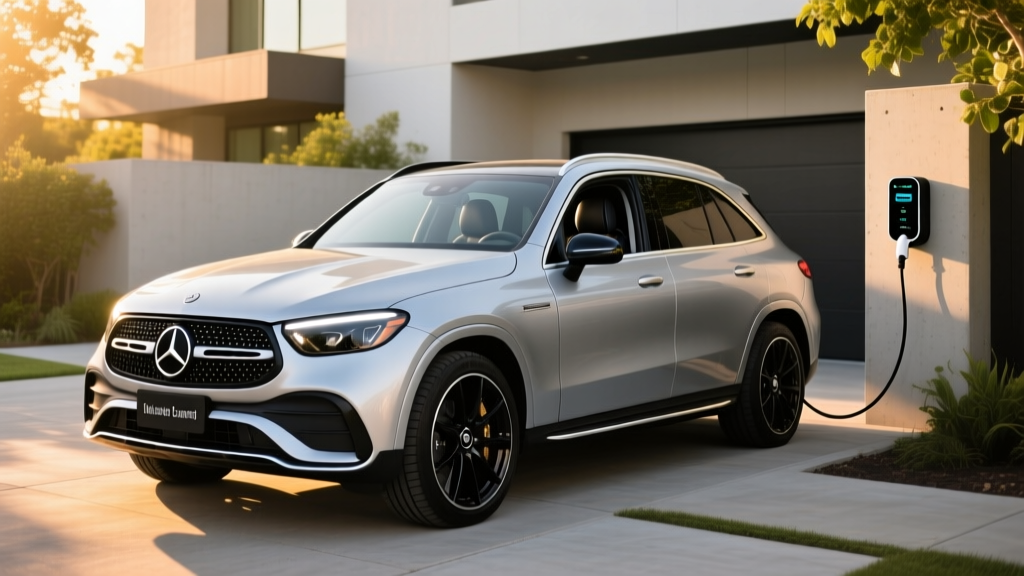
The 2026 Mercedes-Benz GLC Electric (badged internally as the GLC EQ) is Mercedes' first dedicated-EV compact luxury SUV built on the new MMA (Mercedes Modular Architecture) platform. It targets an EPA-estimated 310 miles of range on the rear-wheel-drive model, an 85 kWh usable NMC battery, and DC fast charging that peaks at 200 kW (10–80% in roughly 25 minutes). Starting MSRP is approximately $58,900 before incentives. It qualifies for the full $7,500 federal tax credit (§30D) for eligible buyers, bringing the effective starting price near $51,400. If you want a compact luxury EV SUV with genuine 300-mile highway capability and don't need third-row seating, it's a strong pick. If you lack home charging access or frequently drive in sub-20°F climates, read the real-world caveats below before committing.
What Is the 2026 Mercedes-Benz GLC Electric?
The 2026 GLC Electric replaces the stopgap EQB-based approach with a ground-up EV using Mercedes' MMA platform — the same architecture underpinning the CLA electric sedan. Unlike the older EQ lineup's "EQ" sub-brand naming, Mercedes has consolidated naming in 2025–2026, so this model wears GLC badging with an "Electric" designation rather than an EQC or EQGLC badge.
Two powertrain configurations are offered at launch:
- GLC 300e (RWD): Single rear motor, 268 hp, 0–60 mph in 6.4 seconds, EPA-est. 310 miles range
- GLC 400e 4MATIC (AWD): Dual motor, 402 hp, 0–60 mph in 4.6 seconds, EPA-est. 285 miles range
Both use an 85 kWh usable NMC (nickel-manganese-cobalt) battery pack with liquid thermal management and a standard heat pump — critical for cold-climate efficiency. The GLC 300e achieves approximately 3.1 mi/kWh (114 MPGe combined), while the AWD 400e returns roughly 2.8 mi/kWh (103 MPGe combined).
| Spec | GLC 300e (RWD) | GLC 400e 4MATIC (AWD) |
|---|---|---|
| Base MSRP | $58,900 | $64,500 |
| EPA Range | 310 mi | 285 mi |
| Battery (usable) | 85 kWh, NMC | 85 kWh, NMC |
| Horsepower | 268 hp | 402 hp |
| 0–60 mph | 6.4 sec | 4.6 sec |
| Peak DC Fast Charge | 200 kW | 200 kW |
| 10–80% DC Time | ~25 min | ~25 min |
| Level 2 (240V) Rate | 11 kW | 11 kW |
| Efficiency (combined) | 114 MPGe | 103 MPGe |
| Cargo Volume (rear seats up) | 23.1 cu ft | 23.1 cu ft |
| Battery Warranty | 8 yr / 100,000 mi | 8 yr / 100,000 mi |
Real-World Range: What the EPA Sticker Doesn't Tell You
EPA sticker: 310 miles (GLC 300e) / 285 miles (GLC 400e 4MATIC)
Real-world expectation:
- Highway (70–75 mph, mild weather): ~260–280 miles (300e), ~240–255 miles (400e)
- City/suburban mixed driving: ~290–310 miles (300e) — EVs are most efficient at lower speeds with regen braking
- Cold weather (below 30°F, cabin heat): ~220–250 miles (300e), ~200–225 miles (400e) — expect 20–25% reduction even with the standard heat pump
- Towing (max rated 3,500 lbs): ~170–190 miles — towing crushes EV range; plan charging stops accordingly
The MMA platform's 800-volt electrical architecture helps sustain charge rates longer into the session, but physics still applies: the charge curve tapers significantly above 80% SoC. Mercedes publishes the 10–80% time at ~25 minutes; a full 10–100% session will take closer to 42–45 minutes. If you're road-tripping, plan your stops around 80% and move on — the last 20% adds 20+ minutes for only ~60 miles of range.
Charging at Home and on the Road
The GLC Electric uses a NACS (Tesla-style) connector as standard — Mercedes transitioned its entire North American lineup to NACS for the 2025 model year onward. This means native access to Tesla Supercharger stalls (over 25,000 in North America) without an adapter, alongside Electrify America, EVgo, and other networks that have adopted NACS.
| Level | Power | Miles Added per Hour | Typical Use Case |
|---|---|---|---|
| Level 1 (120V) | ~1.4 kW | ~4 mi/hr | Overnight top-up, emergencies only |
| Level 2 (240V, 48A) | 11 kW | ~34 mi/hr | Home/work daily charging — full charge in ~8 hr |
| DC Fast Charge | Up to 200 kW peak | ~650 mi/hr (peak rate) | Road trips; 10–80% in ~25 min |
Home charging reality: Most GLC Electric buyers will want a Level 2 home charger. A 48-amp hardwired unit (like a ChargePoint Home Flex or Wallbox Pulsar Plus) on a 60-amp circuit delivers the full 11 kW. Budget $500–$800 for the charger hardware and $800–$2,000 for electrician installation depending on panel proximity and local permit costs. If your home has a 100-amp electrical panel, a panel upgrade to 200 amps may be required — that adds $1,500–$3,000. Always get a licensed electrician's assessment before purchasing.
Public charging cost: At Electrify America's current rates (~$0.48/kWh average in major metros), a 10–80% session on the GLC 300e (roughly 60 kWh added) costs about $29 and takes ~25 minutes. That's roughly equivalent to $4.50 per gallon of gas in energy cost — not always cheaper than fueling a comparable gas GLC at the pump.
EV vs. Gas: 2026 GLC Electric vs. GLC 300 4MATIC
The gas-powered 2026 GLC 300 4MATIC starts around $49,500 and gets an EPA-estimated 25 MPG combined. Here's how five-year costs compare for a buyer driving 12,000 miles/year:
| Cost Category | GLC 300e (Electric, RWD) | GLC 300 4MATIC (Gas) |
|---|---|---|
| Base MSRP | $58,900 | $49,500 |
| Federal Tax Credit (§30D) | −$7,500* | $0 |
| Effective Purchase Price | $51,400 | $49,500 |
| Energy/Fuel (5 yr, 60K mi) | $5,100† | $9,600‡ |
| Maintenance (5 yr) | $1,800 | $3,500 |
| Insurance (5 yr est.) | $12,500 | $10,500 |
| Estimated Depreciation (5 yr) | $22,000 | $19,000 |
| Total 5-Year Cost | $92,800 | $92,100 |
*§30D credit eligibility requires buyer income ≤$150K single / $300K joint, MSRP ≤$80K for SUVs, and compliant battery sourcing. Verify at IRS.gov. Credit may be applied as a point-of-sale reduction.
†Assumes 70% home charging at $0.14/kWh, 30% DC fast charging at $0.45/kWh, 3.1 mi/kWh efficiency.
‡Assumes $3.50/gal average, 25 MPG combined.
The takeaway: the GLC Electric achieves near cost-parity with the gas GLC over five years despite a higher sticker price, primarily through fuel and maintenance savings. The breakeven point shifts favorably if you have access to cheap home electricity (under $0.12/kWh) or if gas prices rise above $4.00/gal in your area.
Federal Tax Credit and Incentive Eligibility for 2026
The 2026 GLC Electric is positioned to qualify for the full $7,500 §30D federal tax credit, but eligibility is buyer-specific. Here's the checklist:
- MSRP cap: Vehicle MSRP must not exceed $80,000 (SUV classification). The GLC 300e at $58,900 and 400e at $64,500 both qualify.
- Buyer income cap: Modified AGI must not exceed $150,000 (single), $225,000 (head of household), or $300,000 (married filing jointly).
- Battery sourcing: At least 80% of critical minerals and 100% of battery components must be sourced from the U.S. or FTA partners. Mercedes has confirmed MMA-platform vehicles meet 2026 sourcing thresholds, but verify the specific VIN on fueleconomy.gov before purchase.
- Point-of-sale transfer: You can elect to transfer the credit to the dealer at purchase, reducing your out-of-pocket cost by $7,500 immediately — even if you have zero tax liability.
- Lifetime limit: One new clean vehicle credit per taxpayer per year. The vehicle must be for personal use, primarily in the U.S.
State incentives vary: California's CVRP, Colorado's $5,000 credit, and New York's Drive Clean Rebate may stack on top. Check your state's energy office or AFDC state incentive database for current programs.
Common Misconceptions — Myth vs. Fact
| Myth | Fact |
|---|---|
| "The battery will need replacing in 5 years and cost $20,000." | Mercedes warranties the battery for 8 years/100,000 miles at ≥70% capacity retention. Industry data from Recurrent Auto shows NMC packs with active thermal management lose roughly 8–12% capacity over 100K miles. Full replacement (rare) runs $12,000–$16,000, not $20K+. |
| "I can't road-trip an EV — charging takes too long." | A 25-minute 10–80% stop every ~250 miles is comparable to a gas stop plus a rest break. NACS access to Tesla Superchargers means reliable, well-maintained stations every 150–200 miles on most U.S. interstates. |
| "EVs are worse in cold weather." | Range drops 20–25% in sub-30°F weather — real, but manageable. The GLC Electric's standard heat pump cuts cold-weather energy waste by ~30% compared to resistive heating. Preconditioning the battery while plugged in further mitigates loss. |
| "Insurance will be impossibly expensive." | EV insurance premiums run 15–25% higher than comparable gas vehicles on average. For the GLC Electric, expect ~$2,400–$2,800/year depending on location and driving record — higher than the gas GLC but not prohibitive. Shop multiple carriers; GEICO and Progressive have narrowed the EV premium gap. |
| "I need a special electrical upgrade for every EV." | Most homes with a 200-amp panel and a garage or driveway within 50 feet of the panel can support a Level 2 charger for $1,000–$1,500 installed. Only older homes with 100-amp service typically need a panel upgrade. |
Who Should Buy the 2026 GLC Electric — Decision Framework
Choose the GLC Electric if:
- You have Level 2 home charging (or can install it) and drive under 250 miles on most days
- You want a compact luxury SUV with 300+ mile range and don't need a third row
- You qualify for the §30D tax credit (income and sourcing requirements met)
- You value instant torque, quiet operation, and reduced maintenance over the lowest possible purchase price
- You road-trip 2–4 times per year and are comfortable planning 25-minute charge stops
Consider the gas GLC 300 or a PHEV alternative if:
- You live in an apartment or condo without charging access and public infrastructure is sparse in your area
- You regularly drive 350+ miles in a single day (towing, remote areas) and cannot tolerate charging stops
- Your budget is firm under $45,000 and you don't qualify for the federal credit
- You live in an extreme cold climate (frequent sub-0°F) where range loss compounds with winter driving demands
What First-Time EV Buyers Should Know Before Ordering
1. Preconditioning matters. The GLC Electric's navigation system will precondition the battery when you route to a DC fast charger — warming or cooling it to optimal temperature for maximum charge speed. If you arrive at a charger without preconditioning (especially in cold weather), your peak charge rate may drop from 200 kW to 80–100 kW, doubling your stop time. Always use the built-in nav for charge-stop routing.
2. Charge to 80% daily, 100% for road trips. NMC batteries last longest when kept between 20–80% SoC for daily use. The MBUX system lets you set a daily charge limit. Charge to 100% only when you'll use the full range within a day or two.
3. Regen braking replaces most brake wear. The GLC Electric's one-pedal driving mode (max regen) recovers energy on deceleration and largely eliminates routine brake pad wear. Expect brake pads to last 100,000+ miles in normal driving.
4. Over-the-air updates change the car. Mercedes' MBUX.OS receives OTA updates that can add features, improve efficiency, and refine ADAS behavior post-purchase. Your car may genuinely improve over time — but also expect occasional software glitches that require dealer attention.
5. Dealer experience varies. Mercedes has invested heavily in EV training for its dealer network, but service departments in rural markets may lack high-voltage certification. Before buying, confirm your nearest dealer has EV-certified technicians.
Frequently Asked Questions
Does the 2026 GLC Electric qualify for the $7,500 federal tax credit?
Yes, based on current §30D rules. The MSRP is under the $80,000 SUV cap, and Mercedes has confirmed compliant battery sourcing for MMA-platform vehicles. However, buyer income limits apply ($150K single / $300K joint), and you should verify the specific VIN on fueleconomy.gov before signing. The credit can be applied as a point-of-sale discount at the dealer.
What is the real-world highway range of the GLC 300e?
The EPA rates it at 310 miles, but sustained 70–75 mph highway driving in mild weather yields approximately 260–280 miles. In cold weather (below 30°F), expect 220–250 miles. This is sufficient for most interstates with Supercharger spacing, but plan conservatively if driving through charging-desert stretches in the rural Mountain West.
How long does it take to charge at home overnight?
With an 11 kW Level 2 home charger, a depleted battery (10% SoC) reaches 100% in roughly 8 hours. Most owners plug in at 30–40% SoC after a day of driving and wake up fully charged in 5–6 hours. A standard 120V outlet adds only ~4 miles per hour — adequate for PHEVs but impractical as a primary charging method for a full EV.
Is the GLC Electric all-wheel drive?
The GLC 300e is rear-wheel drive. The GLC 400e 4MATIC has dual-motor all-wheel drive with 402 hp and a 4.6-second 0–60 time, at the cost of 25 miles of range and ~$5,600 in additional MSRP. If you live in a snow-belt state, the 4MATIC is worth the premium.
What does the battery warranty cover?
Mercedes covers the high-voltage battery for 8 years or 100,000 miles against defects and capacity loss below 70% of original capacity. If the battery degrades below that threshold within the warranty period, Mercedes will repair or replace it at no cost. This aligns with industry standards (BMW, Audi, and Tesla offer similar terms).
Can I use Tesla Superchargers with the GLC Electric?
Yes. The 2026 GLC Electric comes with a native NACS charge port, meaning it plugs directly into Tesla Supercharger V3 and V4 stalls without any adapter. Access is managed through the Mercedes me app or Tesla's app, depending on the network's authentication protocol.