Quick Verdict: Luxury EV SUV With Real-World Trade-Offs
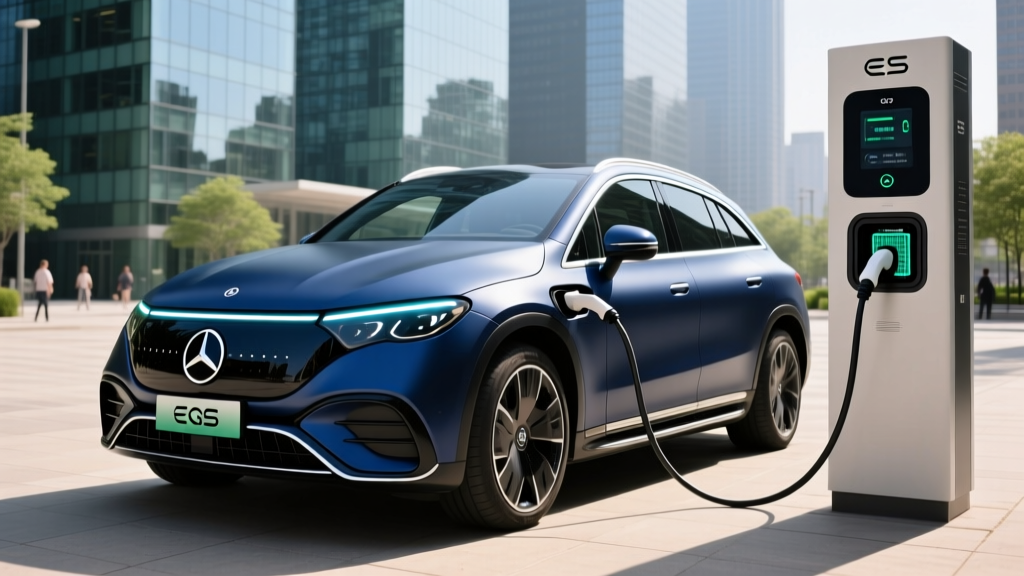
The 2026 Mercedes-Benz EQS SUV occupies a narrow lane in the electric luxury market: it's the most spacious three-row electric SUV from a legacy German automaker, and it delivers the range, ride refinement, and cabin isolation that buyers spending north of $90,000 expect. But its 200 kW peak DC charging speed and $88,550 starting price place it behind newer rivals in two critical metrics that matter to EV buyers — how fast you can add miles on a road trip, and how much federal tax relief you can claim.
This is a vehicle engineered for people who already have home charging dialed in and who prioritize highway comfort over stoplight performance. If that's you, the EQS SUV delivers. If you're cross-shopping against the Tesla Model X, Rivian R1S, or BMW iX, read on — the details below will sharpen your decision.
Range, Battery, and Efficiency: 305 Miles EPA, Fewer in Practice
The 2026 EQS SUV lineup uses a 108.4 kWh usable lithium-ion battery pack (NMC chemistry — nickel-manganese-cobalt) across all trims. Mercedes has not adopted LFP for this flagship model, prioritizing energy density and cold-weather performance over the cost savings and cycle-life advantages of lithium iron phosphate.
| Trim | Drivetrain | EPA Range | MPGe (City/Hwy/Comb) | kWh/100 mi |
|---|---|---|---|---|
| EQS 450+ | RWD | 305 mi | 97 / 84 / 91 | 37 |
| EQS 450 4MATIC | AWD | 285 mi | 90 / 79 / 85 | 40 |
| EQS 580 4MATIC | AWD | 285 mi | 89 / 78 / 84 | 40 |
The EPA's 305-mile figure for the RWD 450+ assumes a blended driving cycle. In sustained 75-mph highway driving — the scenario that matters for road trips — expect approximately 250–270 miles before needing to stop. In sub-freezing temperatures (below 32°F / 0°C), NMC packs typically lose 20–30% of usable range, bringing real-world winter highway range down to roughly 200–220 miles. The EQS SUV does include a standard heat pump, which helps mitigate cabin-heating energy draw in cold weather, but battery chemistry physics still apply.
Efficiency at 37 kWh/100 mi for the 450+ is respectable for a 5,800-pound three-row SUV, though the Hyundai Ioniq 9 and Tesla Model X achieve slightly better figures thanks to lower weight and more aggressive aero profiles. According to fueleconomy.gov, the combined MPGe figures place the EQS SUV mid-pack among luxury electric SUVs.
Charging Speed: 200 kW Peak, 31 Minutes 10–80%
Charging is where the EQS SUV shows its engineering vintage. The 2026 model retains a 200 kW peak DC fast-charge rate — unchanged from its 2023 launch spec. On a 350 kW Electrify America or Tesla Supercharger V4 station, you'll see peak speeds around 195–200 kW at low state of charge, tapering significantly above 60% SoC.
| Charging Level | Power / Rate | Time or Miles Added |
|---|---|---|
| Level 1 (120V household) | ~1.4 kW | ~3–4 miles per hour |
| Level 2 (240V home / public) | 9.6 kW (40A) | ~24 miles per hour; 0–100% in ~11.5 hrs |
| DC Fast Charge (peak) | 200 kW | 10–80% in ~31 minutes |
The 10–80% time of 31 minutes is the key figure for road-trip planning. That's roughly 10–12 minutes slower than an 800V-architecture rival like the Hyundai Ioniq 9 or Kia EV9, which can pull 10–80% in 18–20 minutes on comparable infrastructure. For most owners who charge at home overnight, this is a minor concern. For frequent long-distance travelers, it's a meaningful gap.
The EQS SUV uses a CCS1 connector in North America. Mercedes-Benz has confirmed NACS (Tesla-style) adapter compatibility for Supercharger access, and future model-year vehicles may ship with a native NACS port. For 2026, plan on carrying the adapter.
The 200 kW peak is sustained only between approximately 10–40% SoC. Above 60%, the rate drops to roughly 100 kW, and above 80% it falls below 50 kW. This taper is normal for NMC chemistry without 800V architecture, but it means the last 20% of a DC session takes disproportionately long. Plan to charge to 80% and go.
Performance and Drivetrain: Effortless, Not Exciting
| Trim | Motor Config | Horsepower | Torque (lb-ft) | 0–60 mph |
|---|---|---|---|---|
| EQS 450+ | Single motor (RWD) | 355 hp | 419 | 6.5 sec |
| EQS 450 4MATIC | Dual motor (AWD) | 355 hp | 590 | 5.8 sec |
| EQS 580 4MATIC | Dual motor (AWD) | 536 hp | 633 | 4.3 sec |
The 580 4MATIC's 4.3-second 0–60 time is quick by any measure, but the EQS SUV doesn't chase the visceral punch of a Tesla Model X Plaid (2.5 sec) or even a Rivian R1S tri-motor. Mercedes has tuned this platform for effortlessness — seamless torque delivery, near-silent acceleration, and an air suspension that irons out pavement imperfections. The rear-axle steering system (standard on 580, optional on 450 trims) shrinks the turning circle to 36 feet, a genuine benefit in parking structures.
Towing capacity is rated at 3,500 pounds for AWD trims — enough for a small boat trailer or lightweight camper, but significantly less than the Rivian R1S (7,700 lb) or even the Tesla Model X (5,000 lb).
Interior, Cargo, and Technology
The EQS SUV's cabin is its strongest selling point. The available 56-inch Hyperscreen (standard on 580, optional on 450) spans the full dashboard width and integrates a 17.7-inch central OLED display with separate passenger and driver screens. MBUX infotainment remains one of the most capable — if complex — systems on the market, with wireless Apple CarPlay and Android Auto, over-the-air updates, and natural-language voice control.
Cargo volume:
- Behind third row: 14.4 cu ft
- Behind second row (third row folded): 43.7 cu ft
- Behind front seats (both rows folded): 74.2 cu ft
Passenger space:
- Front headroom: 40.4 in / legroom: 40.7 in
- Second-row headroom: 39.2 in / legroom: 38.6 in
- Third-row headroom: 37.8 in / legroom: 28.7 in
That third row is best suited for children or occasional use — the 28.7 inches of legroom is tight for adults on anything beyond short trips. Compared to the Rivian R1S (34.2 in third-row legroom) or the Kia EV9 (32.0 in), the EQS SUV's third row is the smallest in the segment.
Driver assistance: The EQS SUV includes Mercedes-Benz's Driver Assistance Package with adaptive cruise control, lane-keeping assist, and automatic lane changes. This is an SAE Level 2 system — the driver must remain engaged with hands on or near the wheel at all times. It is not self-driving. The optional DRIVE PILOT system (where available) is certified for SAE Level 3 operation at speeds up to 40 mph in heavy highway traffic under specific conditions, but its availability in the U.S. remains limited to select states.
Pricing, Trims, and Federal Tax Credit Eligibility
| Trim | Base MSRP | Typical As-Tested | §30D Credit Eligible? |
|---|---|---|---|
| EQS 450+ (RWD) | $88,550 | $95,000–$105,000 | No — exceeds MSRP cap |
| EQS 450 4MATIC (AWD) | $91,550 | $98,000–$110,000 | No — exceeds MSRP cap |
| EQS 580 4MATIC (AWD) | $108,550 | $115,000–$130,000 | No — exceeds MSRP cap |
Federal tax credit reality: Under current IRS §30D rules, new clean vehicle credits are capped at an MSRP of $80,000 for SUVs. Every 2026 EQS SUV trim exceeds this threshold, making none of them eligible for the up-to-$7,500 federal tax credit. Additionally, buyers must meet adjusted gross income limits ($300,000 joint / $150,000 single) and the vehicle must satisfy battery-component and critical-mineral sourcing requirements — but the MSRP cap alone disqualifies the EQS SUV regardless of buyer income.
- Vehicle MSRP must not exceed $80,000 (SUVs, vans, pickups) or $55,000 (sedans)
- Buyer AGI must not exceed $300K (joint) / $225K (head of household) / $150K (single)
- Battery components must meet U.S./FTA-country manufacturing thresholds
- Critical minerals must meet U.S./FTA-country sourcing thresholds
- Credit can be transferred to the dealer at point of sale as a price reduction
If the tax credit is a priority in your purchase decision, you'll need to look elsewhere in the segment — or consider a certified pre-owned EQS SUV, which may qualify for the separate up-to-$4,000 used EV credit (30% of sale price, capped at $4,000, with lower income limits of $150K joint / $75K single).
Warranty and Ownership Costs
Mercedes-Benz provides the following coverage for the 2026 EQS SUV:
- New vehicle limited warranty: 4 years / 50,000 miles
- Battery warranty: 8 years / 100,000 miles (capacity retention threshold: 70% of original capacity)
- Powertrain warranty: 6 years / 70,000 miles
- Roadside assistance: 4 years / 50,000 miles
The 70% battery capacity retention threshold is standard for the industry and matches Tesla, BMW, and Audi. Real-world degradation data from Recurrent Auto suggests that modern NMC packs with active thermal management (like the EQS SUV's liquid-cooled system) typically retain 85–90% capacity after 100,000 miles under normal use patterns.
Insurance: Expect annual premiums in the $3,200–$4,500 range depending on state, driving record, and trim. The EQS SUV's high repair costs (aluminum body panels, sensor-dense bumpers) place it in a higher insurance tier than mainstream EVs.
Pros and Cons
- Class-leading cabin quietness and ride refinement
- 305-mile EPA range (450+) is competitive for three-row electric SUVs
- Hyperscreen is visually stunning and feature-rich
- Rear-axle steering dramatically improves maneuverability
- Air suspension standard across all trims
- Strong highway comfort for long-distance driving
- 200 kW peak DC charging is slower than 800V rivals (31 min vs ~18 min 10–80%)
- Third-row legroom is the tightest in the segment
- No federal §30D tax credit — all trims exceed $80K MSRP cap
- High starting price ($88,550) with rapid option escalation
- MBUX learning curve; some functions buried in menus
- Towing limited to 3,500 lb — well behind Rivian R1S
Who Should Buy the 2026 EQS SUV?
- You prioritize ride comfort and cabin isolation above all else in an electric SUV
- You have reliable home Level 2 charging and rarely need DC fast charging
- You value brand prestige and dealership experience
- Your third-row use is occasional and for children
- You want the Hyperscreen and latest MBUX technology
- You need the fastest possible road-trip charging (consider Hyundai Ioniq 9, Kia EV9, or any 800V platform)
- You regularly carry adults in the third row (Rivian R1S offers more space)
- Federal tax credit eligibility is a purchase requirement
- You need towing capacity above 3,500 pounds
- Performance and acceleration thrill matter more than comfort (Tesla Model X)
Frequently Asked Questions
What is the real-world range of the 2026 Mercedes-Benz EQS SUV?
The EPA rates the RWD 450+ at 305 miles and the AWD trims at 285 miles. In real-world highway driving at 70–75 mph, expect 250–270 miles (450+) or 230–250 miles (AWD). In freezing temperatures, subtract 20–30%, yielding roughly 200–220 miles for the 450+ in winter conditions.
How fast does the EQS SUV charge at home and on DC fast chargers?
On a Level 2 home charger (240V, 40A, 9.6 kW), the EQS SUV adds about 24 miles per hour and charges from 0–100% in approximately 11.5 hours. On a DC fast charger, it peaks at 200 kW and charges from 10–80% in about 31 minutes. The charge curve tapers significantly above 60% SoC, so plan to charge to 80% and move on.
Does the 2026 EQS SUV qualify for the federal EV tax credit?
No. Under current IRS §30D rules, new SUVs must have an MSRP at or below $80,000 to qualify. The least expensive EQS SUV trim starts at $88,550, disqualifying the entire lineup regardless of buyer income or battery sourcing. A used EQS SUV may qualify for the separate up-to-$4,000 used EV credit, subject to lower income limits.
Is the EQS SUV worth buying versus the Tesla Model X or Rivian R1S?
It depends on your priorities. The EQS SUV wins on cabin quietness, ride quality, and luxury materials. The Model X wins on performance (2.5-sec Plaid), Supercharger network access, and third-row space. The R1S wins on towing (7,700 lb), third-row room, off-road capability, and adventure versatility. If comfort and prestige top your list, the EQS SUV earns its price. If utility or performance do, look to the alternatives.
What is the battery warranty on the EQS SUV?
Mercedes-Benz covers the high-voltage battery for 8 years or 100,000 miles, whichever comes first. The warranty guarantees the battery will retain at least 70% of its original usable capacity. If degradation exceeds this threshold within the warranty period, Mercedes will repair or replace the battery to bring it back within spec.
Can the EQS SUV use Tesla Superchargers?
Yes, via a CCS-to-NACS adapter. Mercedes-Benz has confirmed compatibility with the Tesla Supercharger network for CCS-equipped vehicles using approved adapters. Native NACS ports may appear on future model years.