Quick Verdict: Should You Buy a Lucid Air in 2026?
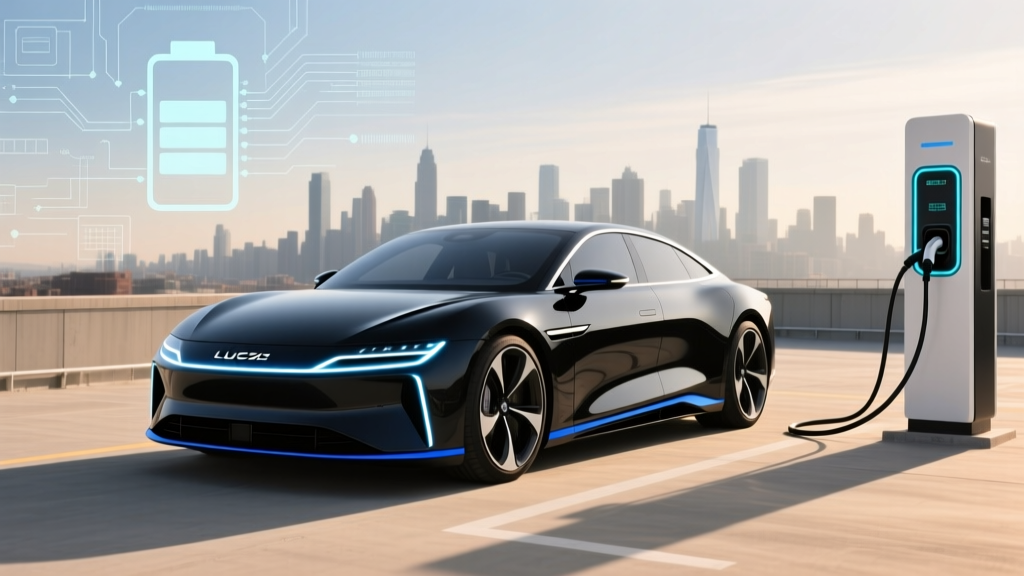
The Lucid Air remains one of the most efficient and longest-range electric sedans on the market, but the company's trajectory raises fair questions for prospective buyers. Search interest around Lucid layoffs 2026 reflects ongoing concern about Lucid's production volume, financial stability, and long-term service network — even as the Air itself continues to deliver class-leading specs. If you can stomach the brand risk and have reliable service-center access in your metro area, the Air's blend of 500+ mile range, sub-3-second acceleration, and luxury packaging is genuinely hard to match. If you need a robust dealer network, guaranteed resale value, or rock-solid long-term parts availability, competitors like the Tesla Model S, Mercedes EQS, or BMW i7 may offer more peace of mind.
| Spec | Air Pure | Air Touring | Air Grand Touring | Air Sapphire |
|---|---|---|---|---|
| EPA Range | 419 mi | 425 mi | 516 mi | 427 mi |
| Battery (usable) | 88 kWh (NMC) | 112 kWh (NMC) | 112 kWh (NMC) | 118 kWh (NMC) |
| Drivetrain | RWD (single motor) | AWD (dual motor) | AWD (dual motor) | AWD (tri-motor) |
| Horsepower | 430 hp | 620 hp | 819 hp | 1,234 hp |
| 0-60 mph | 5.0 sec | 3.4 sec | 3.0 sec | 1.89 sec |
| MPGe (combined) | 146 MPGe | 134 MPGe | 131 MPGe | 110 MPGe |
| Efficiency | 23 kWh/100mi | 25 kWh/100mi | 26 kWh/100mi | 31 kWh/100mi |
| Base MSRP | $69,900 | $87,400 | $125,600 | $249,000 |
| §30D Tax Credit Eligible? | No (MSRP > $55K sedan cap) | No | No | No |
Range & Efficiency: The Air's Strongest Card
Lucid's engineering team, many of whom came from Tesla's early powertrain group, designed the Air around a singular obsession: minimizing energy consumption per mile. The result is a sedan that outperforms nearly every competitor on EPA range without needing a 150+ kWh battery pack that adds punishing weight.
The Grand Touring's 516-mile EPA rating remains the highest of any production EV sold in the U.S. as of the 2026 model year. The base Pure RWD at 419 miles still out-ranges most luxury EV sedans, including the Mercedes EQS 450+ (390 mi) and BMW i7 eDrive50 (318 mi).
EPA estimates are measured under controlled conditions. In real-world highway driving at 70-75 mph, expect the Grand Touring to deliver approximately 430-460 miles on a full charge in moderate temperatures (60-80°F). In cold weather (below 32°F), lithium-ion chemistry and cabin heating demands reduce range by roughly 20-30%, bringing the Grand Touring to an estimated 350-400 miles. The Pure RWD, with its lighter single-motor layout, holds up slightly better in cold conditions proportionally. City and suburban driving with frequent regenerative braking opportunities will return results much closer to the EPA sticker — and in some cases, owners report exceeding EPA figures in stop-and-go traffic thanks to the Air's excellent regen system.
Efficiency is where Lucid truly separates from the pack. The Air Pure achieves 23 kWh per 100 miles — meaning it uses less electrical energy to travel the same distance than almost any other luxury sedan on the market. For context, the Tesla Model S Long Range sits at roughly 28 kWh/100mi, and the Mercedes EQS at approximately 31 kWh/100mi. Lower consumption translates directly to cheaper charging costs and longer real-world range from a smaller, lighter battery.
Charging Speed: DC Fast Charging & Home Level 2
The Air supports a 900-volt electrical architecture — the same voltage class used by the Hyundai Ioniq 5 and Porsche Taycan — which enables faster charging with less current and less heat generation. On a compatible 350-kW DC fast charger (such as Electrify America's latest stalls), the Air Grand Touring can peak at approximately 300 kW under ideal battery preconditioning conditions.
| Charging Level | Power / Rate | Estimated Speed | Notes |
|---|---|---|---|
| Level 1 (120V household) | ~1.4 kW | ~4-5 mi/hr | Emergency/trickle only |
| Level 2 (240V, 48A home) | 11.5 kW | ~38-42 mi/hr | Full charge in ~11-13 hrs (GT battery) |
| Level 2 (240V, 80A home) | 19.2 kW | ~64-70 mi/hr | Full charge in ~7-8 hrs (GT battery); requires 100A circuit |
| DC Fast Charge (peak) | Up to ~300 kW | 10-80% in ~20 min (GT) | Peak rate requires battery preconditioning & 350-kW stall |
| DC Fast Charge (sustained) | ~150-200 kW avg | ~200 mi in 15 min | Charge curve tapers above 80% SoC |
A critical nuance: peak charge rate is not sustained charge rate. The Air's charge curve holds strong through roughly 60% state of charge, then tapers progressively. Charging from 80% to 100% on DC fast charging is painfully slow — plan to charge to 80% on road trips and top off the remaining 20% at your destination on Level 2. This is standard behavior for all lithium-ion EVs, not a Lucid-specific limitation.
For home charging, the Air's onboard charger supports up to 19.2 kW on Level 2 when connected to a hardwired 80-amp circuit. Most residential installations use a 48-amp circuit (60-amp breaker), delivering 11.5 kW — enough to replenish roughly 300+ miles overnight. A licensed electrician should verify your panel capacity before committing to an 80-amp installation; many 200-amp home panels cannot support this without an upgrade costing $1,500-$3,000.
The Air uses the CCS1 connector standard. As of 2026, Lucid has not adopted the Tesla NACS port natively. Owners can use a NACS-to-CCS adapter to access Tesla Supercharger V3 stalls (which peak at 250 kW), expanding the available fast-charging network significantly. This adapter situation may evolve as Lucid's product roadmap updates.
Performance: From Efficient Cruiser to Hypercar Killer
The Air lineup spans an enormous performance range. The base Pure's 430-horsepower single rear motor delivers brisk, effortless acceleration — 0-60 mph in 5.0 seconds is quicker than most V6 luxury sedans and more than adequate for daily driving and highway merging.
The Grand Touring's dual-motor AWD system produces 819 horsepower and reaches 60 mph in 3.0 seconds flat. That places it firmly in supercar territory, yet the car achieves this while maintaining its 516-mile EPA range — a trade-off most performance EVs cannot make.
The Sapphire trim is Lucid's halo: a tri-motor, 1,234-horsepower monster that hits 60 mph in 1.89 seconds, rivaling the Rimac Nevera and pinning occupants into their seats with relentless, silent torque. It is also a $249,000 vehicle aimed at a vanishingly small buyer pool.
Across all trims, the Air's low center of gravity (battery pack mounted in the floor) and well-tuned adaptive air suspension provide composed handling. The ride quality leans slightly firm in Sport mode but absorbs highway imperfections well in Comfort. Steering feel is precise but somewhat numb — a common trade-off in EV sedans with electric power steering racks optimized for low-effort city driving.
Interior, Cargo & Technology
The Air's cabin is genuinely spacious. Rear legroom measures 36.6 inches — competitive with long-wheelbase luxury sedans — and the glass canopy roof (standard on Touring and above) creates an airy, open feeling that makes the interior feel larger than its dimensions suggest.
Cargo capacity is a practical strong point: 32.1 cubic feet of combined trunk and frunk space. The trunk alone offers 22.1 cu ft, and the front trunk (frunk) adds 10.0 cu ft — enough for a week's worth of groceries or a pair of carry-on bags. This significantly outpaces the Tesla Model S (28 cu ft combined) and the Mercedes EQS (22 cu ft trunk only, no frunk).
The infotainment system centers on a 34-inch curved glass cockpit display spanning the dashboard. It is visually striking and generally responsive, though some owners report occasional software lag and a learning curve compared to Tesla's minimalist interface. Wireless Apple CarPlay and Android Auto are standard. The DreamDrive Pro ADAS suite uses lidar, radar, and cameras to provide adaptive cruise control, lane centering, and automatic emergency braking.
Lucid's DreamDrive Pro is an SAE Level 2 driver-assistance system. This means it can simultaneously manage steering and speed under certain conditions, but the driver must remain fully attentive and keep hands on the wheel. It is not a Level 4 autonomous system and should not be confused with robotaxi services like Waymo. Always keep your eyes on the road.
Pricing, Trims & Federal Tax Credit Eligibility
The 2026 Lucid Air lineup starts at $69,900 for the Pure RWD and climbs to $249,000 for the Sapphire. Destination charges and options can push real transaction prices several thousand dollars higher.
| Trim | Base MSRP | §30D Federal Credit | Effective Price | Why / Why Not |
|---|---|---|---|---|
| Air Pure | $69,900 | $0 | $69,900 | Sedan MSRP cap is $55,000 under §30D |
| Air Touring | $87,400 | $0 | $87,400 | Exceeds $55K sedan cap |
| Air Grand Touring | $125,600 | $0 | $125,600 | Exceeds $55K sedan cap |
| Air Sapphire | $249,000 | $0 | $249,000 | Exceeds $55K sedan cap |
Under current IRS §30D rules, the federal clean vehicle credit provides up to $7,500 for qualifying new EVs. However, the Air does not qualify for any portion of this credit. The primary reason: the IRS imposes a manufacturer's suggested retail price cap of $55,000 for sedans (vans, SUVs, and trucks have an $80,000 cap). Even the base Air Pure at $69,900 exceeds this threshold. Additionally, §30D imposes buyer income limits ($150,000 single / $300,000 joint modified AGI) and battery critical-mineral sourcing requirements that further restrict eligibility across the broader EV market. Always verify current-year rules on irs.gov and consult a tax professional before making a purchase decision based on credit assumptions.
Some state and local incentives may still apply — for example, certain utility companies offer rebates for home charger installation, and states like California, Colorado, and Massachusetts have their own EV purchase incentives. Check your state's energy office and local utility for specifics.
What the Lucid Layoffs Mean for Buyers in 2026
Lucid has undergone multiple rounds of workforce reductions since late 2023, with continued restructuring extending into 2025 and 2026. The Lucid layoffs 2026 search trend reflects buyer and investor concern about several interconnected issues:
- Production volume: Lucid's Casa Grande, Arizona factory has capacity far exceeding current demand. Low production volumes increase per-unit costs and limit economies of scale.
- Service network: Lucid operates a relatively small number of service centers compared to Tesla or legacy luxury brands. In some metro areas, owners face long wait times for repairs or rely on mobile service Rangers.
- Parts availability: Lower-volume production can mean longer lead times for replacement parts, particularly body panels and specialized components.
- Resale value uncertainty: Brand longevity concerns depress used-market values. Early Lucid Air models have experienced steeper depreciation than comparable Tesla or Porsche EVs.
- Future model pipeline: The Lucid Gravity SUV and mid-size platform are critical to the company's growth. Workforce reductions can signal delays in these programs.
Lucid has secured significant investment from Saudi Arabia's Public Investment Fund (PIF), which holds a majority stake. This backing provides a financial lifeline that many EV startups lack, but it does not eliminate execution risk or guarantee a robust ownership experience for U.S. buyers.
Warranty & Long-Term Ownership
Lucid provides an 8-year / 100,000-mile battery and powertrain warranty, with a capacity retention threshold of 70% — meaning the battery must retain at least 70% of its original usable capacity during the warranty period. If degradation exceeds 30%, Lucid is obligated to repair or replace the pack. This is competitive with industry standards (Tesla offers 8 yr/120,000 mi at 70% for Model S; Hyundai offers 10 yr/100,000 mi at 70%).
The basic vehicle warranty covers 4 years / 50,000 miles. Roadside assistance is included for the same 4-year/50,000-mile period.
The Air's battery uses NMC (nickel manganese cobalt) chemistry across all trims. NMC offers higher energy density than LFP (lithium iron phosphate), enabling the Air's exceptional range in a relatively compact pack. However, NMC batteries are more sensitive to sustained 100% state of charge and high-temperature storage. For daily driving, Lucid recommends charging to 80-90% and reserving 100% charges for road trips. Following this practice can significantly extend long-term battery health.
Battery replacement costs out of warranty are substantial — estimated at $20,000-$30,000+ depending on the pack size and labor. This is a consideration for second-hand buyers or those planning to keep the vehicle well past the 100,000-mile mark.
Pros, Cons & Who Should Buy the Lucid Air
- Class-leading EPA range (up to 516 mi on Grand Touring)
- No federal §30D tax credit (all trims exceed $55K sedan cap)
- Limited service center network; potential wait times for repairs
- Brand uncertainty tied to ongoing Lucid layoffs and low production
- Steep depreciation compared to Tesla and legacy luxury brands
- CCS connector requires adapter for Tesla Supercharger access
- Infotainment learning curve; some software refinement needed
Buy the Air if: You prioritize maximum range and efficiency above all else, live in a metro area with a Lucid service center, plan to charge primarily at home with Level 2, and want a luxury sedan that stands apart from the Tesla-dominated market.
Look elsewhere if: You need guaranteed long-term service infrastructure, want to maximize tax-credit savings, plan to sell within 3-4 years (depreciation risk), or live in a region without nearby Lucid support. The Tesla Model S, BMW i7, or Mercedes EQS may be safer bets for risk-averse buyers.
Frequently Asked Questions
What is the real-world range of the 2026 Lucid Air?
The EPA rates the Grand Touring at 516 miles and the Pure at 419 miles. In real-world highway driving at 70+ mph, expect roughly 430-460 miles from the Grand Touring and 340-370 from the Pure. Cold weather (below freezing) reduces range by 20-30% due to battery chemistry limitations and cabin heating demands. City driving with regenerative braking often returns results close to or even exceeding the EPA sticker.
How fast does the Lucid Air charge at home and on the road?
On a 350-kW DC fast charger, the Air can peak at approximately 300 kW, achieving a 10-80% charge in about 20 minutes for the Grand Touring (sustained average is lower due to charge-curve taper above 80%). At home on a 48-amp Level 2 charger (240V), the Air adds roughly 38-42 miles per hour of charging, replenishing a full battery overnight in about 11-13 hours. An 80-amp hardwired installation can deliver up to 19.2 kW and 64-70 miles per hour.
Does the Lucid Air qualify for the federal EV tax credit?
No. Under current IRS §30D rules, the federal clean vehicle credit caps eligible sedans at an MSRP of $55,000. Even the base Air Pure at $69,900 exceeds this limit, making no trim eligible for the up-to-$7,500 credit. Additional §30D requirements around buyer income (AGI caps) and battery critical-mineral sourcing further restrict credit availability across the EV market. Check irs.gov for the latest rules.
Is the Lucid Air worth buying despite the company's layoffs?
The Air itself is an excellent vehicle with objectively superior range and efficiency. The risk lies in ownership infrastructure: limited service centers, potential parts delays, and uncertain resale value driven by the company's financial trajectory. If you have a Lucid service center nearby, can absorb the depreciation risk, and value the Air's unique capabilities, it can be a rewarding ownership experience. If brand stability and service convenience are priorities, consider the Tesla Model S, BMW i7, or Mercedes EQS instead.
What is the biggest drawback of the Lucid Air?
The most practical drawback is the combination of no federal tax credit eligibility, a thin service network, and brand uncertainty tied to Lucid's ongoing restructuring and layoffs. The car itself has minor critiques — the infotainment system has a learning curve, steering feel could be more communicative, and CCS owners need an adapter for Tesla Supercharger access — but these are manageable. The ownership-ecosystem risk is the harder variable to mitigate.
How does the Lucid Air compare to the Tesla Model S?
The Air Grand Touring offers more EPA range (516 vs ~402 mi), more cargo space (32 vs 28 cu ft), and better efficiency (26 vs ~28 kWh/100mi). The Model S counters with a vastly larger service network, Supercharger access without adapters, stronger resale value (though still challenged), and a more mature software ecosystem. The Model S Plaid is slightly quicker to 60 mph (1.99 sec) than the Grand Touring (3.0 sec) but trails the Sapphire (1.89 sec). Your choice depends on whether you value the Air's range and luxury or Tesla's infrastructure and ecosystem.
Sources: EPA range and efficiency data via fueleconomy.gov; Lucid Motors official specifications; IRS §30D clean vehicle credit rules at irs.gov.