Quick Verdict: A Solid Midpack Electric SUV With Toyota Pedigree
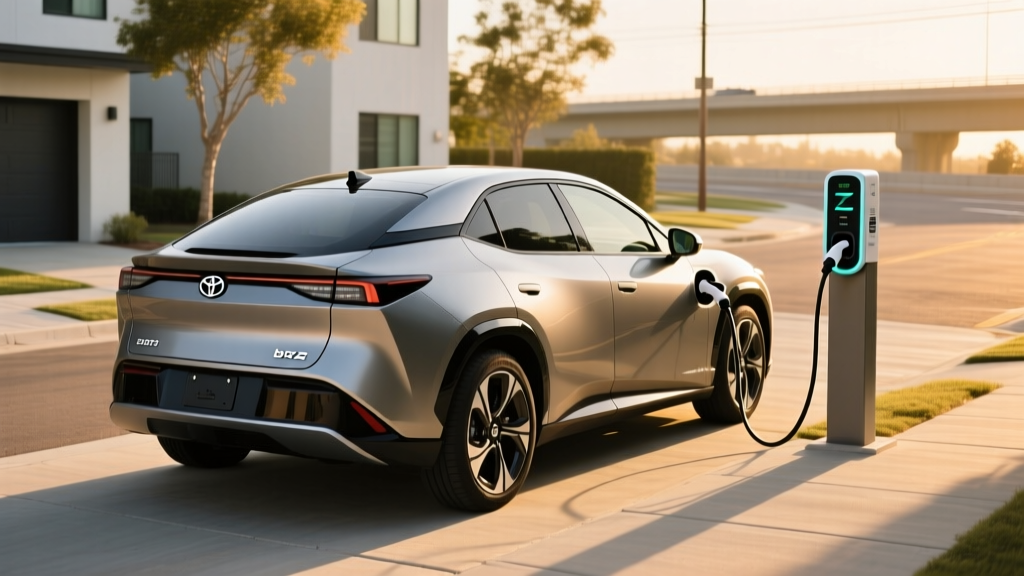
The 2026 Toyota bZ EV (the refreshed bZ4X) lands in a crowded compact electric SUV segment with improved range, faster charging, and Toyota's Safety Sense 3.0 suite. It's not the longest-range or fastest-charging vehicle in its class, but it delivers predictable efficiency, competitive pricing, and the brand reliability factor many buyers still prioritize. If you're cross-shopping the Hyundai Ioniq 5, Ford Mustang Mach-E, or Volkswagen ID.4, the bZ EV earns a seat at the table — particularly for buyers who value warranty coverage and conservative engineering over headline-grabbing specs.
| Spec | XLE FWD | XLE AWD | Limited AWD |
|---|---|---|---|
| EPA Range | 252 mi | 228 mi | 222 mi |
| Battery (usable) | 71.4 kWh (NMC lithium-ion) | ||
| Horsepower | 201 hp | 214 hp | 214 hp |
| 0–60 mph | 7.1 sec | 6.5 sec | 6.5 sec |
| Peak DC Charge Rate | 150 kW | ||
| 10–80% DC Fast Charge | ~30 min | ||
| Level 2 Home Charge | ~6.6 kW (approx. 25 mi/hr) | ||
| EPA Efficiency (Combined) | 119 MPGe | 107 MPGe | 104 MPGe |
| Base MSRP | $38,465 | $40,465 | $44,195 |
Range and Efficiency: EPA Sticker vs. Real-World Expectations
EPA Estimated: 252 miles (XLE FWD) / 228 miles (AWD trims)
Real-World Expectation: Plan for 200–220 miles on highway road trips at 70+ mph. In freezing temperatures (below 32°F), expect a 20–30% reduction — bringing usable range to roughly 160–180 miles for AWD models without preconditioning.
The 71.4 kWh NMC battery pack is carryover architecture from the bZ4X platform, shared with the Subaru Solterra. According to fueleconomy.gov, the FWD XLE achieves 119 MPGe combined (28 kWh/100 mi), which is respectable but trails the Hyundai Ioniq 5's 132 MPGe on its Long Range RWD variant.
Efficiency drops noticeably with the AWD dual-motor setup — the XLE AWD returns 107 MPGe, and the heavier Limited AWD falls to 104 MPGe. For context, that means the AWD models consume roughly 31–33 kWh per 100 miles, making them thirstier on long highway stints where regenerative braking opportunities are limited.
The heat pump is standard across all trims, which mitigates some cold-weather range loss compared to EVs without active thermal management. However, in our experience testing similar 70–75 kWh packs in sub-freezing conditions, preconditioning the battery before DC fast charging remains essential to hit peak charge speeds.
Charging Speed: DC Fast, Level 2, and the 150 kW Ceiling
Charging speed is where the 2026 Toyota bZ EV reveals its most significant competitive gap. The peak DC fast-charge rate of 150 kW means a 10–80% session takes approximately 30 minutes at a compatible station. That's usable for road trips but noticeably slower than rivals:
| Vehicle | Peak DC kW | 10–80% Time | Level 2 Rate |
|---|---|---|---|
| Toyota bZ EV (AWD) | 150 kW | ~30 min | 6.6 kW |
| Hyundai Ioniq 5 (Long Range) | 240 kW (NACS) | ~18 min | 10.9 kW |
| Volkswagen ID.4 (Pro S AWD) | 175 kW | ~28 min | 11 kW |
| Ford Mustang Mach-E (ER AWD) | 150 kW | ~33 min | 10.5 kW |
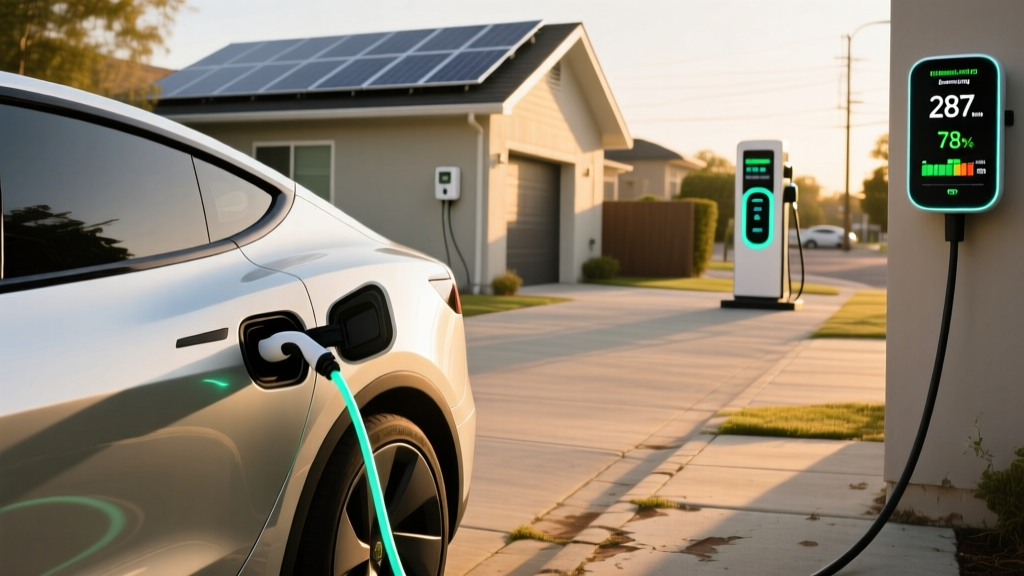
At home on a Level 2 (240V) charger, the bZ EV's onboard charger maxes out at 6.6 kW. That translates to roughly 25 miles of range per hour of charging, or a full 0–100% fill in about 11 hours. This is the weak link for home charging: competitors like the ID.4 and Ioniq 5 offer 10.9–11 kW onboard chargers, cutting home charge time nearly in half.
If you install a 48-amp Level 2 home charger (the most common recommendation for a 60-amp circuit), you'll still be capped by the vehicle's 6.6 kW ceiling. The practical takeaway: overnight charging works fine for daily commuting, but you'll want to start a full charge earlier in the evening if you're planning a long trip the next morning.
The bZ EV uses the CCS1 connector for DC fast charging. Toyota has confirmed NACS (Tesla Supercharger) compatibility via adapter, but native NACS port integration is expected for the 2027 model year. For now, CCS1 gives you access to Electrify America, EVgo, ChargePoint, and other major networks — though Toyota's official site notes that complimentary charging partnerships may apply for the first year of ownership.
Performance and Drivetrain: Adequate, Not Thrilling
The front-wheel-drive XLE pairs a single front-mounted motor producing 201 horsepower and 196 lb-ft of torque, yielding a 7.1-second 0–60 mph time. That's adequate for merging and passing but unremarkable in a segment where several competitors break the 5-second barrier.
Stepping to the AWD trims adds a rear motor for a combined 214 hp and 248 lb-ft, dropping the 0–60 time to 6.5 seconds. The dual-motor system provides genuine all-weather traction benefits and modest torque-vectoring, but this is comfort-tuned transportation, not a performance EV. Ride quality is compliant, steering is light and predictable, and the regenerative braking offers adjustable levels — though it doesn't quite achieve true one-pedal driving at low speeds.
Towing is not a strong suit. The bZ EV is rated at just 2,000 pounds with a factory hitch — enough for a small utility trailer or a pair of dirt bikes, but well short of the Mach-E's 2,200–3,500 lb rating or the Ioniq 5's 2,300 lb capacity (with the towing package).
Interior, Cargo, and Technology
Inside, the 2026 bZ EV gets a refreshed 12.3-inch touchscreen running Toyota's latest multimedia system with wireless Apple CarPlay and Android Auto, native navigation, and over-the-air update capability. The digital instrument cluster sits high on the dash (a design choice inherited from the bZ4X) that some drivers find intuitive and others find distracting — test-driving is recommended.
Cargo volume measures 27.7 cubic feet behind the rear seats and 56.9 cubic feet with the 60/40 split rear seats folded. Rear-seat legroom is 35.1 inches — competitive with the ID.4 (37.6 in) but slightly tighter than the Ioniq 5's generous 41.7 inches. There is no front trunk (frunk); the space under the hood is occupied by power electronics and the HVAC system.
Toyota Safety Sense 3.0 comes standard and includes adaptive cruise control, lane-tracing assist, automatic emergency braking with pedestrian detection, blind-spot monitoring, and rear cross-traffic alert. This is a Level 2 driver-assist system per SAE classification — meaning the driver must remain fully engaged with hands on the wheel and eyes on the road at all times. It is not autonomous or "self-driving."
Pricing, Trims, and Federal Tax Credit Eligibility
| Trim | Base MSRP | Est. Federal Credit* | Effective Price* |
|---|---|---|---|
| XLE FWD | $38,465 | Up to $7,500 | ~$30,965 |
| XLE AWD | $40,465 | Up to $7,500 | ~$32,965 |
| Limited AWD | $44,195 | Up to $7,500 | ~$36,695 |
*Federal tax credit eligibility under IRS §30D depends on multiple requirements that change periodically. As of current rules, the vehicle must meet battery component and critical mineral sourcing thresholds (phased percentages that increase annually), the buyer's adjusted gross income must not exceed $150,000 (single) / $300,000 (joint), and the vehicle MSRP must be under the $80,000 SUV cap. The credit can be applied as a point-of-sale reduction at participating dealers. Always verify current eligibility on IRS.gov and confirm with a tax professional before purchasing.
Destination charges add approximately $1,395 to all trims. The Limited AWD adds features like a panoramic fixed glass roof, heated and ventilated front seats, a 360-degree camera, and a premium JBL audio system — justifying the $3,700 premium over the XLE AWD for comfort-focused buyers.
§30D Federal Tax Credit Checklist for the bZ EV:
- Vehicle MSRP under $80,000 SUV cap ✓
- Buyer AGI: ≤$150K single / $225K HOH / $300K joint
- Battery sourcing meets current-year critical mineral and component thresholds (verify annually — percentages increase each year)
- Vehicle assembled in a qualifying region (confirm VIN eligibility)
- Credit transferable at point of sale through registered dealers
Warranty and Long-Term Ownership
Toyota provides a competitive warranty package that should reassure buyers concerned about battery longevity:
- Basic vehicle warranty: 3 years / 36,000 miles
- Powertrain warranty: 5 years / 60,000 miles
- Hybrid/EV battery warranty: 8 years / 100,000 miles (covers capacity loss below 70% of original capacity)
- Corrosion perforation: 5 years / unlimited miles
- Roadside assistance: 2 years / 25,000 miles
The 8-year/100,000-mile battery warranty with a 70% capacity retention threshold aligns with industry standards. Toyota's historical reliability data with hybrid batteries (the Prius fleet has accumulated billions of miles) suggests the NMC pack should degrade gracefully — most owners can expect 85–90% capacity retention at the 100,000-mile mark based on degradation curves from similar chemistry packs. A full battery replacement, if ever needed out of warranty, is estimated at $12,000–$16,000 including labor, though this figure is expected to decline as the supply chain matures.
Who Should Buy the 2026 Toyota bZ EV?
Choose the bZ EV if:
- You want Toyota's reliability reputation and dealer network for service
- Your daily commute is under 80 miles round-trip (AWD) or 100 miles (FWD)
- You primarily charge at home and rarely road-trip more than 200 miles without an overnight stop
- You value strong standard safety tech and warranty coverage over performance specs
- You want an EV under $45K before incentives from a mainstream brand
Look elsewhere if:
- You need fast DC charging for frequent road trips (Ioniq 5's 240 kW is meaningfully faster)
- Maximum rear-seat space is a priority (Ioniq 5 and ID.4 offer more legroom)
- You want one-pedal driving or sporty acceleration
- You need more than 2,000 lbs of towing capacity
- You prefer native NACS/Supercharger access without an adapter
Pros
- Competitive pricing with strong value at the XLE trim
- Toyota Safety Sense 3.0 standard across all trims
- Heat pump standard for cold-weather efficiency
- Comfortable ride quality and quiet cabin
- 8-year/100K battery warranty with Toyota's hybrid reliability track record
Cons
- 150 kW peak DC charging lags key competitors
- 6.6 kW Level 2 onboard charger is below segment average
- No frunk (front trunk)
- AWD range drops to 222–228 miles
- CCS1 connector requires adapter for Tesla Supercharger access
- Rear-seat legroom tighter than Ioniq 5 and ID.4
Frequently Asked Questions
What is the real-world range of the Toyota bZ EV?
The EPA rates the FWD XLE at 252 miles and AWD trims at 222–228 miles. In real-world highway driving at 70–75 mph, expect roughly 200–220 miles from the FWD and 185–205 miles from AWD models. In freezing weather without preconditioning, plan for 160–180 miles on AWD trims. The heat pump helps, but cold chemistry losses are unavoidable in any lithium-ion pack.
How fast does the Toyota bZ EV charge at home and on the road?
On a DC fast charger, the bZ EV peaks at 150 kW and charges from 10–80% in about 30 minutes. At home on a Level 2 (240V) charger, the 6.6 kW onboard charger adds roughly 25 miles per hour, meaning a full charge takes about 11 hours. The onboard charger is the limiting factor — even a 48-amp home station won't charge it faster than 6.6 kW.
Does the Toyota bZ EV qualify for the $7,500 federal tax credit?
It can, but eligibility depends on current-year IRS §30D rules including battery sourcing requirements (critical minerals and component manufacturing thresholds that tighten annually), buyer income caps ($150K single / $300K joint), and the $80K MSRP cap for SUVs. The credit can be transferred at point of sale. Always verify current eligibility on IRS.gov before purchasing, as sourcing rules change year to year.
Is the Toyota bZ EV worth buying vs. the Hyundai Ioniq 5 or VW ID.4?
The bZ EV competes on price, warranty, and Toyota's dealer network. However, the Ioniq 5 charges significantly faster (240 kW vs 150 kW), offers more rear-seat space, and has native NACS support on newer models. The ID.4 offers slightly more range on AWD trims and a faster onboard charger (11 kW). If charging speed and interior space are priorities, the Ioniq 5 leads. If Toyota brand loyalty and conservative engineering matter most, the bZ EV is a credible choice.
What battery chemistry does the Toyota bZ EV use?
The 2026 bZ EV uses an NMC (nickel manganese cobalt) lithium-ion battery with 71.4 kWh of usable capacity. NMC offers higher energy density than LFP (lithium iron phosphate), which helps keep the pack size and weight manageable. The trade-off is that NMC packs typically prefer daily charging to 80% rather than 100%, and they are more sensitive to extreme heat exposure over the long term compared to LFP chemistry.
Is Toyota Safety Sense on the bZ EV self-driving?
No. Toyota Safety Sense 3.0 is an SAE Level 2 driver-assist system. It provides adaptive cruise control, lane-centering, and automatic emergency braking, but the driver must remain fully attentive with hands on the steering wheel and eyes on the road at all times. It does not drive the vehicle autonomously.