The Verdict: Efficiency King With Caveats
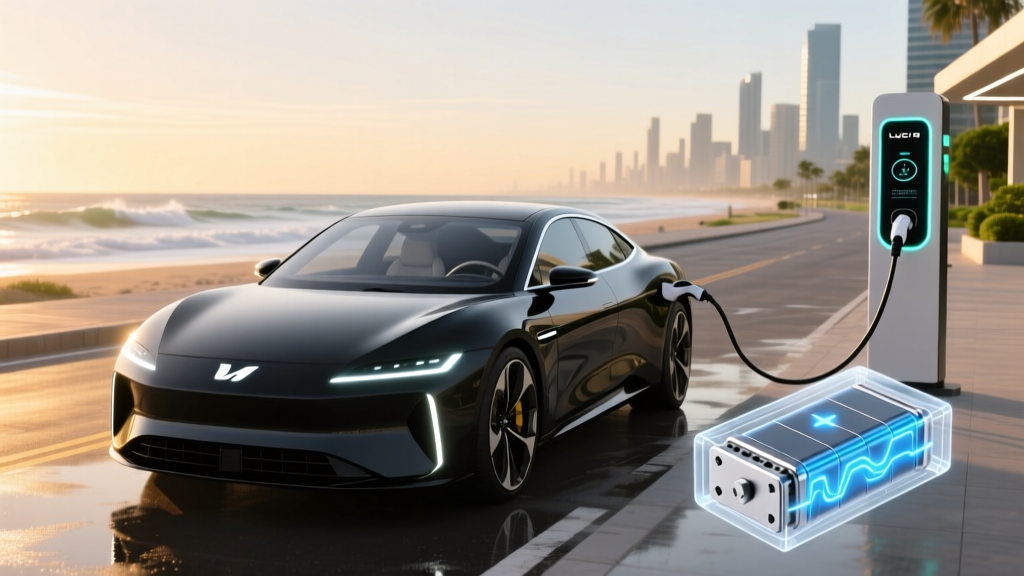
The 2026 Lucid Air Grand Touring remains the benchmark for electric sedan efficiency and long-distance range. With an EPA-estimated 516 miles from its 112 kWh usable battery pack, it outdistances every production EV on the market. But the Grand Touring's story isn't just about range — it's about how Lucid's in-house powertrain engineering delivers that range through genuine efficiency rather than simply packing in more cells.
At a base MSRP of $127,400 (including destination), the Grand Touring sits firmly in luxury territory, competing against the Tesla Model S Long Range, Mercedes-Benz EQS 450+, and BMW i7 eDrive50. It's an EV for buyers who prioritize highway cruising comfort, class-leading range, and minimalist tech luxury — but who can accept a still-maturing service network and limited charging ecosystem partnerships.
| Spec | Value |
|---|---|
| EPA Range | 516 miles |
| Battery (usable) | 112 kWh, NMC lithium-ion |
| Drivetrain | Dual-motor AWD |
| Horsepower | 819 hp |
| 0-60 mph | 3.0 seconds |
| Peak DC Fast Charge | 300 kW |
| 10-80% DC Charge Time | ~20 minutes |
| Level 2 Home Charge Rate | 19.2 kW (~82 mi/hr) |
| EPA Efficiency | 131 MPGe combined / 26 kWh/100 mi |
| Cargo Volume | 32 cu ft (trunk + frunk combined) |
| Base MSRP | $127,400 |
| Battery/Powertrain Warranty | 8 years / 100,000 miles |
Real-World Range: What the EPA Sticker Doesn't Tell You
Lucid's EPA-rated 516 miles is not a fantasy number — it's genuinely achievable under the right conditions. The Air Grand Touring's efficiency of approximately 4.6 miles per kWh is exceptional for a 5,200-pound luxury sedan. For context, the Tesla Model S Long Range achieves roughly 4.0 mi/kWh, and the Mercedes EQS 450+ lands around 3.6 mi/kWh.
- City/suburban mixed driving (65°F): 470–510 miles — regenerative braking recovers energy in stop-and-go traffic
- Highway cruising (70 mph, 75°F): 400–440 miles — aerodynamic drag dominates at sustained speed
- Cold weather (30°F, highway): 320–370 miles — expect 25–35% range loss due to battery heating demand and cabin HVAC load
- Cold weather, city driving (30°F): 360–400 miles — heat pump helps, but cabin and battery conditioning still consume significant energy
The Grand Touring comes equipped with a heat pump as standard, which mitigates cold-weather losses compared to resistive heating systems. In our experience, preconditioning the battery while plugged in before a cold-weather departure recovers an additional 15–20 miles of range by warming the pack using grid power rather than battery energy.
For most owners, the practical takeaway is that 400+ miles is reliably achievable in moderate conditions, and even in winter highway driving, you'll rarely need to stop more than once on a 500-mile trip. That's a fundamentally different road-trip experience than most EVs offer.
Charging Speed and Infrastructure Reality
The Air Grand Touring's 900-volt electrical architecture enables peak DC fast-charging rates of up to 300 kW at compatible chargers. In practice, the charge curve tells a more nuanced story than the peak number alone.
| Charging Level | Power / Rate | Miles Added per Hour | Notes |
|---|---|---|---|
| Level 1 (120V household) | ~1.4 kW | ~6 mi/hr | Emergency/trickle only |
| Level 2 (240V, 48A) | 11.5 kW | ~50 mi/hr | Standard home charger |
| Level 2 (240V, 80A) | 19.2 kW | ~82 mi/hr | Lucid Connected Home charger; requires 100A circuit |
| DC Fast Charge (150 kW station) | ~150 kW sustained | ~550 mi/hr | Common Electrify America / EVgo rate |
| DC Fast Charge (350 kW station) | Peak 300 kW, tapering above 60% SoC | Up to ~1,100 mi/hr at peak | 10-80% in ~20 min; slows significantly above 80% |
On a 350 kW-capable Electrify America or Ionity station, the Grand Touring will sustain roughly 250–300 kW from 10% to about 55% state of charge (SoC), then taper progressively. The 10–80% charge takes approximately 20 minutes. Above 80%, charge speed drops sharply — a characteristic of NMC chemistry protecting cell longevity. If you're road-tripping, plan to charge to 80% and move on rather than waiting for a full top-off.
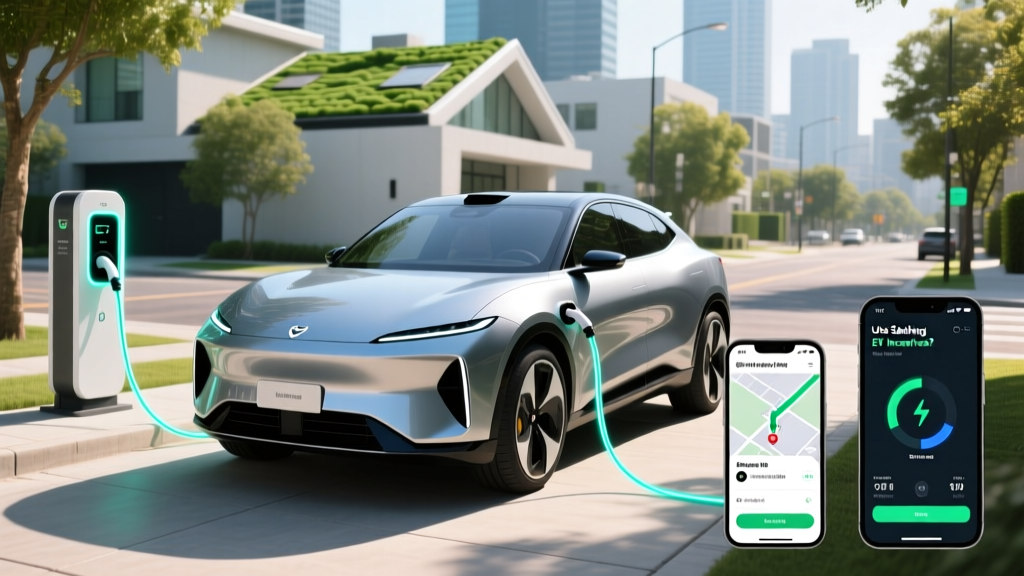
At home, the Lucid Connected Home charger (sold separately, ~$1,200 for hardware) supports 19.2 kW / 80 amps when paired with a dedicated 100-amp circuit. This adds roughly 82 miles of range per hour, meaning a full overnight charge from 20% to 100% takes about 9–10 hours. Most owners will find a 48-amp / 11.5 kW setup (requiring a 60A circuit) perfectly adequate, adding ~50 miles per hour and covering daily needs with margin.
Charging connector: The 2026 Air Grand Touring ships with a CCS1 connector. Lucid provides a NACS adapter for access to Tesla's Supercharger network, which had expanded CCS compatibility significantly by 2026. Verify adapter availability at purchase — some early-build 2026 models may ship without one if supply is constrained.
Performance and Driving Dynamics
The Grand Touring's dual-motor all-wheel-drive powertrain produces 819 horsepower, launching the sedan from 0–60 mph in 3.0 seconds flat. That's supercar territory in a four-door luxury sedan weighing over 5,200 pounds.
On the road, the acceleration is effortlessly linear — the hallmark of a well-tuned EV powertrain. Lucid's in-house developed motors (one permanent-magnet on each axle) deliver torque with minimal lag. The steering is precise but light, tuned more for highway comfort than canyon carving. The adaptive air suspension absorbs road imperfections effectively, and the cabin remains whisper-quiet even at 80 mph.
Three drive modes — Smooth, Swift, and Sprint — adjust throttle mapping, suspension firmness, and regenerative braking intensity. Most daily driving is best served by Smooth mode, which provides strong one-pedal driving capability through aggressive regen. Sprint mode unlocks the full 819 hp but also firms up the ride noticeably.
For a car this quick, the Grand Touring is remarkably docile in traffic. It never feels twitchy or over-eager, which is exactly what a luxury GT buyer wants. If you're seeking track-focused dynamics, the Air Sapphire (1,234 hp, $250,500) exists for that purpose — but the Grand Touring is the rational choice for 95% of buyers.
Interior, Tech, and Daily Livability
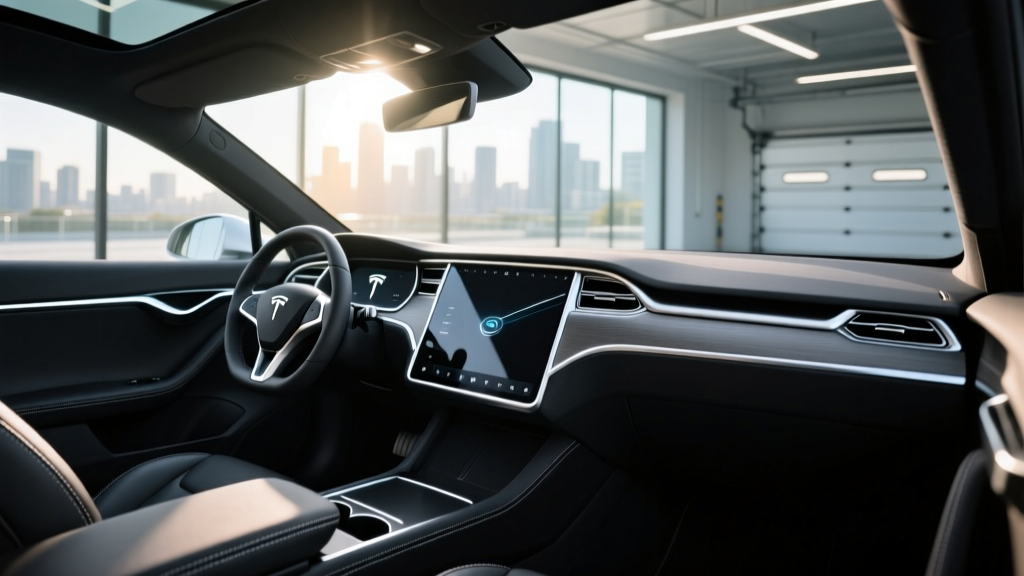
The Air's cabin follows a minimalist-luxury philosophy. A 34-inch curved glass cockpit display spans the driver's instrument cluster and central infotainment area, supplemented by a lower retractable touchscreen for climate and vehicle controls. The interface runs Lucid's proprietary OS — responsive and visually clean, though it lacks the app ecosystem breadth of Tesla's or the Android Automotive integration found in Polestar and Volvo.
Passenger space is generous. Rear legroom measures 37.6 inches — competitive with the BMW 7 Series and superior to the Tesla Model S. The flat floor (no transmission tunnel) makes the middle rear seat genuinely usable for adults on shorter trips. Headroom is excellent front and rear thanks to the glass canopy roof, though that same roof offers no physical shade, which can make the cabin feel warm on sunny days even with UV-tinted glass.
Cargo capacity totals 32 cubic feet: 22 cu ft in the trunk and 10 cu ft in the front trunk (frunk). The trunk opening is wide and the load floor is flat, making it practical for luggage on long road trips. The frunk is useful for charging cables and smaller items but doesn't offer the depth of a Rivian or F-150 Lightning frunk.
Driver assistance: The Grand Touring comes with Lucid's DreamDrive Pro suite, featuring 32 sensors including LiDAR. This is an SAE Level 2 system — it provides adaptive cruise control, lane-centering, and automatic lane changes on highways, but the driver must remain attentive with hands on the wheel at all times. It is not self-driving. DreamDrive Pro is competent and smooth in highway use, though it doesn't yet match the assertiveness of Tesla's FSD Supervised or GM's Super Cruise in hands-free zones.
Pricing, Trims, and Tax Credit Eligibility
The 2026 Lucid Air lineup positions the Grand Touring in the upper tier:
| Trim | Base MSRP | Drivetrain | EPA Range | §30D Credit Eligible? |
|---|---|---|---|---|
| Air Pure | $71,400 | RWD | 419 mi | Yes (meets MSRP cap for sedans: $55,000 — no, exceeds cap) |
| Air Touring | $89,400 | AWD | 425 mi | No (exceeds $55,000 sedan MSRP cap) |
| Air Grand Touring | $127,400 | AWD | 516 mi | No (exceeds $55,000 sedan MSRP cap) |
| Air Sapphire | $250,500 | AWD (tri-motor) | 427 mi | No (exceeds $55,000 sedan MSRP cap) |
The 2026 Lucid Air Grand Touring does not qualify for the federal §30D clean vehicle tax credit. Under current IRS rules, new passenger cars (sedans, wagons, hatchbacks) must have an MSRP at or below $55,000 to be eligible. At $127,400, the Grand Touring far exceeds this threshold. SUVs, vans, and trucks face a higher $80,000 cap, but the Air is classified as a sedan.
- Vehicle MSRP must be ≤ $55,000 for sedans (≤ $80,000 for SUVs/trucks/vans)
- Buyer adjusted gross income must not exceed: $150,000 (single), $225,000 (head of household), $300,000 (joint)
- Battery components must meet escalating domestic-content thresholds
- Critical minerals must meet sourcing requirements (FEOC restrictions apply)
- Credit can be transferred to dealer at point of sale for an upfront price reduction
- Full rules at irs.gov — consult a tax professional for personal eligibility
Even without the federal credit, some buyers may qualify for state-level incentives. California's CVRP rebate, Colorado's state tax credit, and various utility-company charging rebates can reduce effective cost — but these vary by jurisdiction and change frequently. Check your state's energy office and local utility for current programs.
As-tested pricing: Our test Grand Touring, equipped with the Surreal Stealth appearance package ($3,500), 21-inch Dream wheels ($2,500), and Lucid's premium interior package in Santa Monica ($4,000), came to $137,400 before destination. Add the $1,500 destination charge for a total of $138,900.
Efficiency and Operating Costs
The Grand Touring's EPA-rated 131 MPGe combined (26 kWh per 100 miles) is remarkable for a vehicle of this size and power. To put that in perspective:
- Tesla Model S Long Range: 124 MPGe / 27 kWh/100 mi
- Mercedes-Benz EQS 450+: 97 MPGe / 35 kWh/100 mi
- BMW i7 eDrive50: 86 MPGe / 39 kWh/100 mi
At the U.S. average residential electricity rate of roughly $0.17/kWh (per EIA data), charging the Grand Touring at home costs approximately $4.42 per 100 miles. Over 12,000 annual miles, that's roughly $530 in electricity — compared to approximately $1,600 in gasoline for a comparable 25 MPG luxury sedan at $3.35/gallon. The fuel savings alone offset roughly $1,070 per year.
DC fast-charging costs more: Electrify America and similar networks typically charge $0.35–$0.55/kWh depending on location and time of day. At $0.45/kWh average, road-trip charging runs about $11.70 per 100 miles — still cheaper than premium gasoline in a comparable sedan, but the gap narrows considerably.
Warranty, Ownership, and Service Considerations
Lucid backs the Air Grand Touring with:
- Basic vehicle warranty: 4 years / 50,000 miles
- Battery and powertrain warranty: 8 years / 100,000 miles, covering defects and capacity loss below 70% of original capacity
- Roadside assistance: 4 years / 50,000 miles
The battery warranty's 70% capacity retention threshold is industry-standard, matching Tesla and most legacy automakers. Lucid's NMC pack uses a sophisticated liquid thermal management system that should support long-term longevity, though large-sample degradation data for 2024–2026 Air models is still accumulating.
The more pressing ownership concern is Lucid's service network. As of early 2026, Lucid operates roughly 30 service centers and mobile service hubs across the U.S. — concentrated in California, Texas, Florida, New York, and a handful of other metro areas. If you live outside these regions, warranty service may require shipping the vehicle to the nearest center or waiting for mobile technician availability. This is a genuine limitation compared to BMW, Mercedes, or Tesla's service footprints.
Insurance costs for the Grand Touring run 20–35% higher than a comparable ICE luxury sedan, according to industry averages. Expect annual premiums in the $3,200–$4,800 range depending on location, driving record, and coverage levels. Get quotes before purchase — luxury EV insurance remains a significant ownership cost.
Pros, Cons, and Who Should Buy
- Best-in-class 516-mile EPA range — genuinely usable for 400+ mile single-charge road trips
- Outstanding efficiency (131 MPGe) reduces charging frequency and electricity cost
- 300 kW peak DC charging; 10–80% in ~20 minutes at capable stations
- 819 hp dual-motor AWD with refined, effortless acceleration
- Spacious rear seat (37.6" legroom) and 32 cu ft total cargo
- Quiet, comfortable ride quality with adaptive air suspension
- Heat pump standard for improved cold-weather efficiency
- $127,400 base price; no federal §30D tax credit eligibility (MSRP cap)
- Limited service center network (~30 U.S. locations)
- CCS connector with NACS adapter (not native NACS) — adapter dependency
- Infotainment lacks third-party app ecosystem and Android Automotive
- Glass canopy roof has no physical sunshade — cabin heat on sunny days
- DreamDrive Pro ADAS is competent but not class-leading vs. Super Cruise or FSD
- Insurance premiums 20–35% above comparable ICE luxury sedans
- Choose the Air Grand Touring if: You regularly drive 300+ miles between charging stops, prioritize efficiency and range above all else, live near a Lucid service center, and value understated luxury over badge prestige.
- Choose the Tesla Model S Long Range if: You want access to the Supercharger network natively, need more advanced (if imperfect) driver-assist features, and prefer a larger service and charging footprint — accepting slightly lower range and efficiency.
- Choose the Mercedes EQS 450+ if: Dealership service access, brand cachet, and interior opulence matter more than range or efficiency. The EQS offers a more traditional luxury experience but sacrifices ~120 miles of range.
- Choose the BMW i7 if: You want a full-size luxury flagship with conventional dealership service and don't mind lower range (318 mi EPA) in exchange for traditional luxury sedan proportions and a massive service network.
Frequently Asked Questions
What is the real-world range of the 2026 Lucid Air Grand Touring?
In moderate temperatures with mixed driving, expect 440–500 miles. Sustained highway driving at 70+ mph drops this to roughly 400–440 miles. In freezing weather with highway driving, plan for 320–370 miles. The EPA 516-mile rating is achievable in ideal city/suburban conditions but should not be your trip-planning baseline.
How fast does the Grand Touring charge at home and on the road?
At home on a 48-amp Level 2 charger, it adds about 50 miles per hour (full overnight charge). On a 350 kW-capable DC fast charger, it peaks at 300 kW and charges from 10–80% in approximately 20 minutes. On a 150 kW charger, expect 10–80% in roughly 35–40 minutes. The 900V architecture gives it a charging-speed advantage over 400V competitors.
Does the 2026 Lucid Air Grand Touring qualify for the federal EV tax credit?
No. Under IRS §30D rules, new sedans must have an MSRP at or below $55,000 to qualify. The Grand Touring's $127,400 base price far exceeds this cap. State-level incentives and utility rebates may still apply depending on your location. Consult IRS guidance and a tax professional for details.
Is the Lucid Air Grand Touring worth it versus the Tesla Model S?
It depends on priorities. The Air offers 116 more miles of EPA range, better efficiency, a quieter cabin, and a more spacious rear seat. The Model S offers native Supercharger access, a more mature service network, more aggressive driver-assist features (FSD Supervised), and a lower starting price ($84,990 for Long Range). If range and comfort are paramount, the Lucid wins. If charging convenience and ecosystem matter more, Tesla remains the pragmatic choice.
What battery chemistry does the Grand Touring use?
The Air Grand Touring uses an NMC (nickel-manganese-cobalt) lithium-ion battery pack with 112 kWh of usable capacity. NMC offers higher energy density than LFP (lithium iron phosphate), which is how Lucid achieves 516 miles without an excessively heavy pack. The trade-off is that NMC cells prefer not to sit at 100% SoC for extended periods — Lucid recommends daily charging to 80–90% and reserving 100% charges for road trips.
How does the Air Grand Touring handle cold weather?
The standard heat pump and battery preconditioning system help, but expect 25–35% range loss in sustained sub-freezing temperatures. Preconditioning while plugged in mitigates this. DC fast-charging speeds also decrease in cold weather unless the battery is preconditioned — use the in-car navigation to route to a charger and the car will warm the pack automatically before arrival.
Can I use Tesla Superchargers with the Lucid Air?
Yes, via the included NACS adapter. As of 2026, Tesla has opened a significant portion of its Supercharger network to CCS-equipped vehicles through adapters. However, not every Supercharger stall has been retrofitted with the Magic Dock CCS connector, and adapter compatibility can vary. Plan routes using the Lucid app or A Better Routeplanner to confirm charger availability.
Sources: EPA fuel economy data via fueleconomy.gov, Lucid Motors official specifications, IRS §30D clean vehicle credit guidance at irs.gov. Pricing and specifications reflect 2026 model year as published by the manufacturer; verify with your dealer before purchase. Tax credit eligibility depends on individual circumstances — consult a qualified tax advisor.