Quick Verdict: Is the 2026 Lexus RZ Electric SUV Worth It?
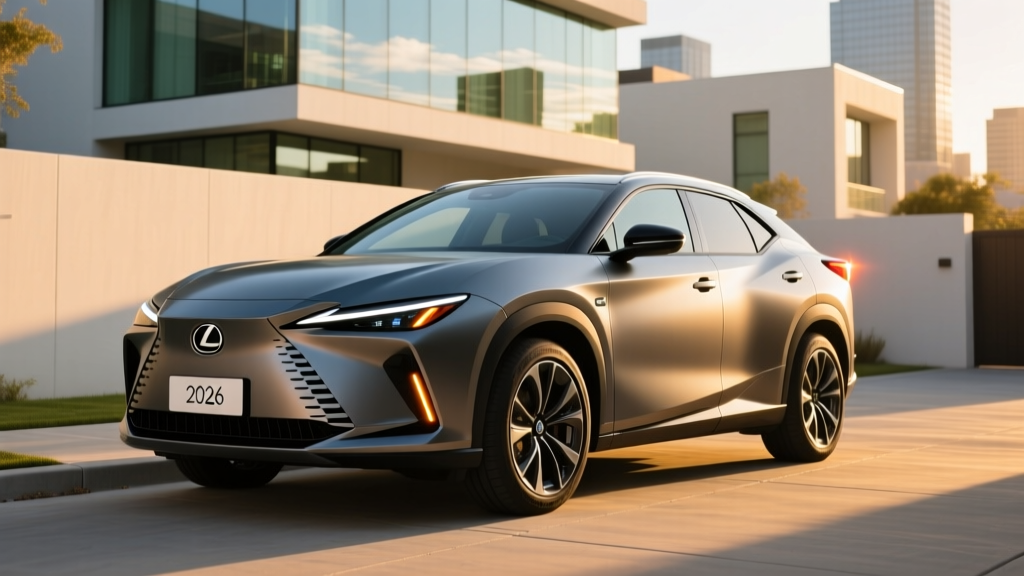
The 2026 Lexus RZ 450e is a luxury electric SUV that prioritizes ride comfort, cabin quietness, and build quality over maximum range or aggressive performance. With an EPA-estimated 220 miles of range (AWD, 20-inch wheels) and a starting MSRP around $54,000, it competes directly with the Genesis Electrified GV70 and Audi Q4 e-tron. It is best suited for buyers who have access to Level 2 home charging, drive fewer than 50 miles daily, and value Lexus dealership service and reliability over leading-edge EV tech. If you need 300+ miles of range or frequent DC fast charging on road trips, competitors like the Hyundai Ioniq 5 or Tesla Model Y serve you better.
2026 Lexus RZ Range, Battery, and Efficiency: The Exact Numbers
The 2026 Lexus RZ 450e carries a 72.8 kWh lithium-ion battery pack (usable capacity approximately 67 kWh) using NMC (nickel-manganese-cobalt) chemistry. This is the same platform shared with the Toyota bZ4X and Subaru Solterra, though Lexus tunes it for a more refined driving experience.
| Specification | RZ 450e (FWD, 18") | RZ 450e (AWD, 20") | RZ 300e (FWD) |
|---|---|---|---|
| EPA Range | ~266 miles | ~220 miles | ~266 miles |
| Battery (usable) | ~67 kWh | ~67 kWh | ~67 kWh |
| Combined MPGe | ~115 MPGe | ~102 MPGe | ~115 MPGe |
| Efficiency | ~29 kWh/100mi | ~33 kWh/100mi | ~29 kWh/100mi |
| Horsepower | 201 hp | 308 hp | 201 hp |
| 0-60 mph | ~7.4 sec | ~5.0 sec | ~7.4 sec |
| DC Fast Charge Peak | 150 kW | 150 kW | 150 kW |
| 10-80% DC Time | ~30 min | ~30 min | ~30 min |
| Level 2 (240V) Rate | 7.2 kW | 7.2 kW | 7.2 kW |
Real-World Range vs. EPA Sticker
The EPA range figure assumes a mix of city and highway driving at moderate temperatures. In real-world ownership:
- Highway-heavy trips (70+ mph): Expect 185-200 miles from the AWD 20-inch model. EVs lose efficiency at high speeds because there is no multi-gear transmission to optimize the motor.
- Cold weather (below 32°F): Range drops 20-30%, bringing the AWD model to roughly 155-175 miles. The RZ uses a heat pump for cabin heating, which mitigates some loss compared to resistive heaters, but battery chemistry still suffers in the cold.
- Mild-weather city commuting: You may slightly exceed the EPA estimate, reaching 230-240 miles in the AWD model thanks to regenerative braking in stop-and-go traffic.
Bottom line: treat 190 miles as your practical maximum for the AWD model before needing to plan a charge stop. Source: fueleconomy.gov
Charging the RZ: What You Need to Know Before You Buy
Charging speed is where the 2026 Lexus RZ reveals a notable limitation compared to rivals. Its peak DC fast-charging rate of 150 kW is modest in a segment where the Hyundai Ioniq 5 peaks at 240 kW and the Tesla Model Y at 250 kW. This matters primarily on road trips — your daily home charging won't be affected.
| Charging Level | Power (kW) | Miles Added per Hour | Typical Use Case |
|---|---|---|---|
| Level 1 (120V outlet) | ~1.2 kW | ~4 miles/hr | Emergency/overnight trickle |
| Level 2 (240V home) | 7.2 kW | ~25 miles/hr | Daily home charging |
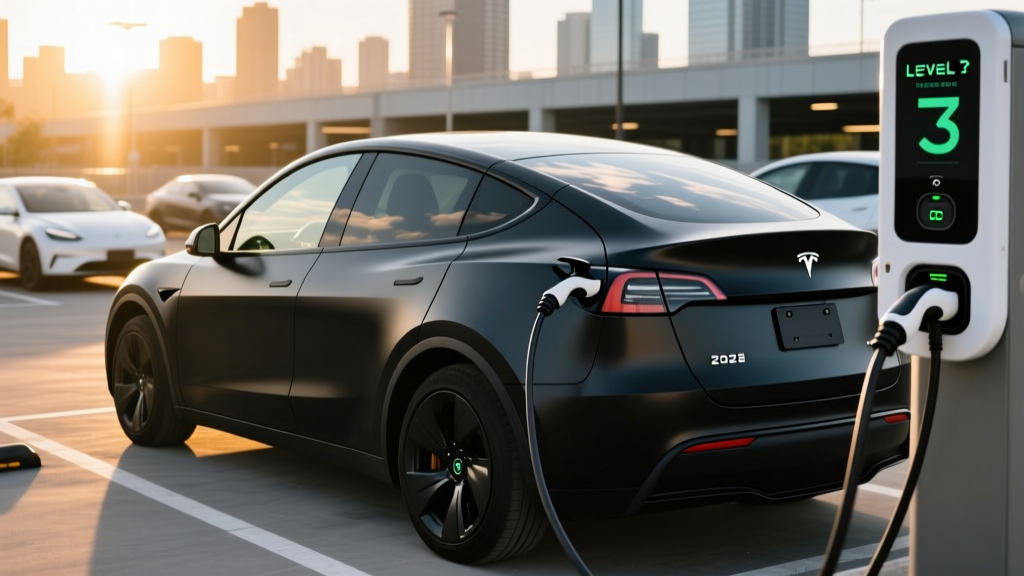
| DC Fast (public) | Up to 150 kW | ~500 miles/hr (peak) | Road trips |
Understanding kW vs. kWh: kW (kilowatts) is the rate of power delivery — think of it as the speed of water flowing through a hose. kWh (kilowatt-hours) is the total energy stored in the battery — the size of the bucket. The RZ's battery holds ~67 kWh of energy and can accept power at up to 150 kW.
Charge curve reality: The RZ will not sustain 150 kW for the entire session. Like all EVs, it charges fastest between roughly 10-50% State of Charge, then tapers significantly above 80% to protect battery health. A 10-80% session takes approximately 30 minutes; going from 80-100% can add another 25-30 minutes. This is normal EV behavior, not a defect.
The RZ uses the J1772 connector for Level 1/2 AC charging and CCS1 for DC fast charging in the US market. Lexus has not announced a transition to the NACS (Tesla) connector for the 2026 model year on this platform, so you will need a CCS adapter to access Tesla Superchargers where available.
Cost Breakdown: Buying, Charging, and Owning the 2026 Lexus RZ
Here is a realistic five-year cost picture for the 2026 RZ 450e Premium (AWD) versus a comparably equipped Lexus NX 350 (gas) and Lexus NX 450h+ (PHEV). All figures assume 12,000 miles/year and national average electricity ($0.16/kWh) and gasoline ($3.50/gallon) prices.
| Cost Factor (5-Year) | RZ 450e (EV) | NX 350 (Gas) | NX 450h+ (PHEV) |
|---|---|---|---|
| Base MSRP (approx.) | $58,000 | $44,500 | $58,000 |
| Federal Tax Credit (§30D) | $0-7,500* | $0 | $0-7,500* |
| Fuel/Energy Cost | $3,600 | $9,200 | $5,800 |
| Maintenance | $1,800 | $3,800 | $3,200 |
| Insurance (est.) | $12,500 | $9,800 | $11,000 |
| Estimated Depreciation | $22,000 | $18,000 | $20,000 |
| 5-Year Total Cost | ~$77,900 - $70,400 | ~$67,300 | ~$75,000 - $67,500 |
*Federal §30D tax credit eligibility depends on battery critical-mineral sourcing, buyer income caps ($150K single/$300K joint), and the vehicle's MSRP falling under $80,000 for SUVs. Credit availability for the RZ varies by production batch and sourcing. Check IRS.gov and confirm with your tax professional before relying on this credit. Point-of-sale transfer is available if eligible.
Key takeaways from the cost data:
- Energy savings are real: Charging at home costs roughly $0.05/mile versus $0.15/mile for gasoline. Over 60,000 miles, that's a $5,600 savings.
- Maintenance is genuinely lower: No oil changes, no transmission fluid, no spark plugs, and regenerative braking extends pad life. Expect to replace cabin air filters, wipers, tires, and brake fluid — that's it.
- Insurance is higher: EVs typically cost 15-25% more to insure due to higher repair costs and parts pricing. Get quotes before purchasing.
- Depreciation is the wildcard: EV depreciation has been volatile. Lexus brand strength helps, but the rapidly evolving EV market means resale values are less predictable than established gas models.
EV vs. Gas vs. Hybrid: Which Lexus SUV Fits Your Life?
| Factor | RZ 450e (EV) | NX 350 (Gas) | NX 450h+ (PHEV) |
|---|---|---|---|
| Daily Commute Fit | Excellent (<50 mi) | Good | Excellent (37 mi electric) |
| Road-Trip Convenience | Requires planning | Fill and go | Best of both worlds |
| Home Charging Needed? | Strongly recommended | No | Recommended for EV benefit |
| Cold-Weather Impact | 20-30% range loss | Minimal | Moderate (EV range drops) |
| Driving Feel | Smooth, silent, instant torque | Traditional, turbo lag | Smooth in EV mode |
| Tailpipe Emissions | None | Standard | Low in EV mode |
The RZ makes the most sense if your daily driving is predictable and under 100 miles round-trip, you have a garage or driveway where a Level 2 charger can be installed, and road trips are infrequent (or you don't mind 30-minute charge stops every 180 miles).
The NX 450h+ plug-in hybrid is the pragmatic middle ground: 37 miles of electric-only range covers most commutes, the gas engine eliminates range anxiety, and you still reduce fuel consumption significantly. It's the right choice if you lack reliable home charging or regularly drive in extreme cold or remote areas.
First-Time EV Buyer: What the Dealership Won't Tell You
| Common Misconception | Reality |
|---|---|
| "I'll charge it at public stations — no home charger needed." | Public DC charging costs $0.35-$0.50/kWh (2-3x home rates), and reliability varies. Daily public charging is expensive and time-consuming. Home Level 2 is the foundation of practical EV ownership. |
| "The battery will need replacing in 5 years." | Lexus warrants the RZ battery for 8 years/100,000 miles (10 years/150,000 miles in California-emission states) against dropping below 70% capacity. Modern NMC batteries routinely last 150,000+ miles with manageable degradation. |
| "220 miles of range isn't enough." | The average American drives 37 miles per day (FHWA data). Even with a 30% cold-weather penalty, 220 miles covers 95% of daily driving. You need more range only if you road-trip frequently. |
| "Level 2 home charging requires a full panel upgrade." | Most homes with a 200-amp panel can support a 48-amp Level 2 charger (7.2 kW) on a 60-amp circuit without an upgrade. A licensed electrician should assess your panel, but the typical install runs $500-$1,500 if no upgrade is needed. |
| "The RZ charges as fast as other EVs at public stations." | At 150 kW peak, the RZ is 30-40% slower than an Ioniq 5 or Model Y. A 10-80% charge takes ~30 minutes versus ~18 minutes for the fastest competitors. This matters only on road trips. |
Home charging installation reality: Budget $800-$2,000 for a professional Level 2 installation (charger hardware plus electrician labor and permit). If your home has an older 100-amp electrical panel, a panel upgrade to 200 amps can add $1,500-$3,500. This is the single biggest surprise cost for first-time EV buyers — get an electrician's assessment before committing to the car.
Decision Framework: Should You Buy the 2026 Lexus RZ?
Buy the RZ 450e If:
- You have a garage or dedicated parking spot where a Level 2 charger can be installed.
- Your daily driving is under 80 miles round-trip, even in cold weather.
- You value cabin quietness, ride comfort, and Lexus dealer service over cutting-edge EV tech or maximum range.
- You take road trips fewer than 4-5 times per year and can tolerate 30-minute charge stops.
- You qualify for the federal §30D tax credit (check current sourcing and income rules) or your state offers additional EV incentives.
Skip the RZ and Consider Alternatives If:
- You live in an apartment or lack access to reliable home or workplace charging.
- You regularly drive 200+ miles in a single day or take frequent long road trips. → Consider: Tesla Model Y, Hyundai Ioniq 5 (faster charging, longer range).
- You live in a very cold climate and need maximum usable range in winter. → Consider: Lexus NX 450h+ PHEV (no range anxiety, still efficient).
- You want the most range per dollar in a luxury EV. → Consider: Genesis Electrified GV70 (similar luxury, slightly better range) or BMW iX (300+ miles, higher price).
- You want access to Tesla Supercharger network without an adapter. → Wait for NACS-equipped models or consider a Tesla directly.
Battery Warranty, Longevity, and Replacement Costs
Lexus covers the RZ's high-voltage battery with an 8-year/100,000-mile warranty (extended to 10 years/150,000 miles in California and states adopting California emissions standards). The warranty guarantees the battery will retain at least 70% of its original capacity. If degradation exceeds this threshold within the warranty period, Lexus will repair or replace the battery at no cost.
Based on data from the broader Toyota/Lexus hybrid and EV fleet, expect approximately 8-12% degradation over the first 100,000 miles under normal use. This means a 220-mile-range RZ might offer roughly 195-200 miles of range at the 100,000-mile mark — still very usable for daily driving.
Out-of-warranty battery replacement is the scenario that worries most buyers. Current estimates for a replacement pack in the RZ platform range from $12,000-$18,000 including labor, though prices are expected to decline as battery manufacturing scales and third-party repair options mature. This is a real cost, but statistically, most owners will sell or trade the vehicle before reaching the point of needing a full battery replacement.
Frequently Asked Questions
Does the 2026 Lexus RZ qualify for the $7,500 federal tax credit?
It may, but eligibility is not guaranteed. Under IRS §30D rules, the vehicle must meet critical-mineral and battery-component sourcing thresholds that change annually. Additionally, your modified adjusted gross income must fall below $150,000 (single) or $300,000 (joint), and the SUV's MSRP must not exceed $80,000. The credit can be transferred to the dealer at point of sale as a down-payment reduction. Verify current eligibility on fueleconomy.gov and with your tax advisor before purchase.
Can I charge the Lexus RZ at Tesla Superchargers?
The 2026 RZ uses the CCS1 connector. Tesla has begun opening some Supercharger stalls to non-Tesla EVs via the Magic Dock (built-in CCS adapter), and aftermarket CCS-to-NACS adapters are available. However, access is not universal, and charging speeds may be limited by adapter compatibility. Plan accordingly if Supercharger access is important to you.
How much does it cost to charge the RZ at home?
At the national average residential electricity rate of ~$0.16/kWh, fully recharging the RZ's ~67 kWh usable battery from empty costs approximately $10.72. In practice, most owners charge partially each night, spending $3-$7 daily. Over a year at 12,000 miles, home charging costs roughly $700-$800 — compared to $2,000+ for gasoline in the NX 350.
Is the RZ 450e or RZ 300e the better buy?
The RZ 300e (FWD, single motor) offers nearly identical range (~266 miles) at a lower price and slightly better efficiency. You sacrifice 107 horsepower and all-wheel drive. If you live in a mild climate, rarely drive on slippery surfaces, and don't need the 5.0-second 0-60 time, the 300e is the value pick. The 450e AWD is worth the premium for snow-belt residents and those who want confident highway merging power.
What is the Lexus Safety System+ on the RZ, and is it self-driving?
Lexus Safety System+ 3.0 includes adaptive cruise control, lane-centering assist, pre-collision braking, and blind-spot monitoring. This is an SAE Level 2 driver-assistance system — you must keep your hands on the wheel and eyes on the road at all times. It is not autonomous or self-driving. It reduces fatigue on long highway stretches but does not replace an attentive driver.