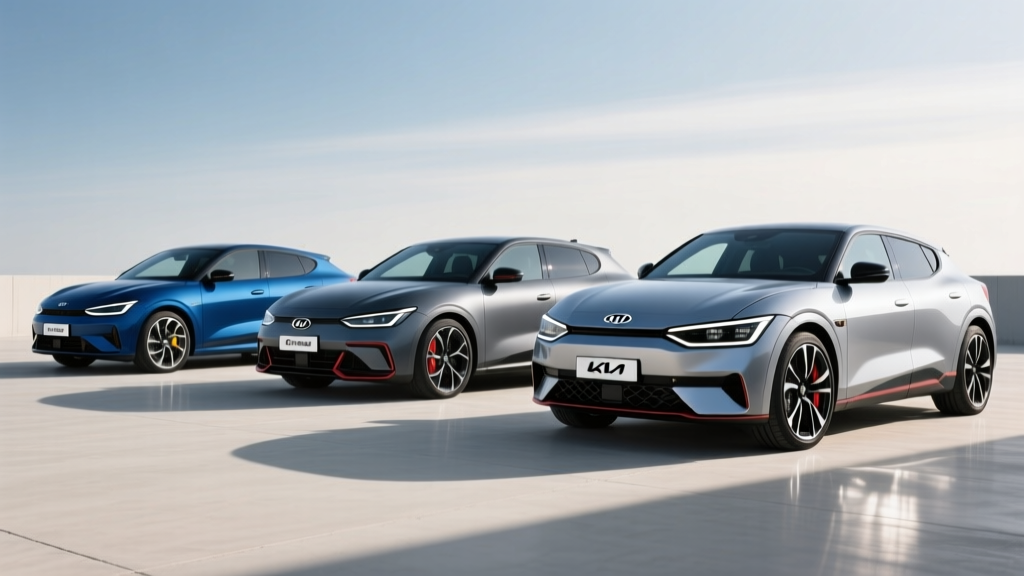
The Kia EV6 has carved out a distinct space in the midsize electric crossover segment by pairing 800-volt architecture with a design that refuses to look like every other two-box EV on the road. For 2026, Kia has streamlined the lineup while keeping the core strengths intact: blistering DC fast-charging speeds, competitive range, and a cabin that punches above its price class. But with four distinct trim levels spanning from $42,900 to over $61,000, the differences in drivetrain, battery size, and feature content are significant enough to change the ownership calculus entirely.
This guide breaks down every 2026 Kia EV6 trim level with exact specifications, real-world range expectations, charging performance, and tax credit eligibility so you can match the right configuration to your driving needs and budget.
2026 Kia EV6 Trim Lineup at a Glance
| Spec | Light (Std Range) | Wind (RWD) | GT-Line (AWD) | GT |
|---|---|---|---|---|
| Base MSRP | $42,900 | $48,700 | $54,500 | $61,600 |
| Drivetrain | RWD | RWD | Dual-Motor AWD | Dual-Motor AWD |
| Horsepower | 167 hp | 225 hp | 320 hp | 576 hp |
| 0-60 mph | 7.3 sec | 6.2 sec | 4.5 sec | 3.4 sec |
| Battery (usable) | 58.0 kWh | 77.4 kWh | 77.4 kWh | 77.4 kWh |
| Chemistry | NMC | NMC | NMC | NMC |
| EPA Range | 232 mi | 310 mi | 282 mi | 206 mi |
| MPGe (combined) | 117 MPGe | 134 MPGe | 106 MPGe | 85 MPGe |
| Max DC Charge | 180 kW | 240 kW | 240 kW | 240 kW |
| 10-80% DC Time | ~18 min | ~18 min | ~18 min | ~18 min |
| Level 2 Rate | 10.9 kW | 10.9 kW | 10.9 kW | 10.9 kW |
All trims share Kia's E-GMP platform with its 800-volt electrical architecture — the hardware that enables the EV6 to accept DC fast charging at rates most competitors in this price bracket simply cannot match. The NMC (nickel manganese cobalt) battery chemistry across the lineup prioritizes energy density, which is how Kia packs 77.4 kWh of usable capacity into the Long Range variants without making the pack prohibitively heavy.
Real-World Range: What the EPA Numbers Don't Tell You
- Light (232 mi EPA): Expect ~195-210 mi highway at 70 mph; ~165-185 mi in freezing weather with cabin heat.
- Wind RWD (310 mi EPA): Expect ~260-280 mi highway at 70 mph; ~220-245 mi in sub-30°F conditions.
- GT-Line AWD (282 mi EPA): Expect ~240-260 mi highway at 70 mph; ~200-220 mi in freezing weather.
- GT (206 mi EPA): Expect ~175-190 mi highway at 70 mph; ~150-165 mi in cold weather with aggressive driving.
The EV6 Wind with rear-wheel drive and the Long Range battery is the efficiency champion of the lineup at 134 MPGe combined (roughly 25 kWh/100 mi). That translates to genuine 260+ mile highway road-trip capability in moderate temperatures. The standard-range Light trim, by contrast, is strictly a commuter and urban errand vehicle — 232 miles of EPA range shrinks quickly on the interstate, and the smaller 58 kWh battery means more frequent charging stops on longer journeys.
Cold weather is the great equalizer. The EV6 does offer a heat pump on Long Range trims (Wind and above), which mitigates some of the winter range penalty by scavenging waste heat from the powertrain rather than relying solely on resistive cabin heating. The Light trim's lack of a heat pump means you should budget for 25-30% range loss in sustained freezing temperatures, not the 15-20% you'll see on better-equipped trims.
Charging Performance: Where the 800V Architecture Pays Off
| Charging Level | Power | Light (58 kWh) | Long Range (77.4 kWh) |
|---|---|---|---|
| Level 1 (120V household) | ~1.4 kW | ~3 mi/hr | ~4 mi/hr |
| Level 2 (240V home) | 10.9 kW | ~27 mi/hr / 5.5 hr full | ~36 mi/hr / 7.3 hr full |
| DC Fast (peak) | 180-240 kW | ~18 min (10-80%) | ~18 min (10-80%) |
| DC Fast (350 kW station) | Up to 240 kW | Sustains ~150 kW avg | Sustains ~180 kW avg to 55% |
The 800-volt architecture is the EV6's single biggest technical advantage over rivals like the Volkswagen ID.4 and Subaru Solterra, which are limited to 400V systems and peak charging rates in the 125-150 kW range. At a 350 kW DC fast charger — the kind now common along major interstate corridors from Electrify America and EVgo — the Long Range EV6 can pull a peak 240 kW. That peak doesn't last the entire session, of course. The charge curve tapers noticeably after 55% state of charge, and drops more sharply above 80%, which is why Kia's 10-80% time of roughly 18 minutes is the figure that matters for road trips.
One practical note: to actually hit 240 kW, you need a charger capable of delivering it. Many "fast" chargers at retail locations max out at 50-150 kW. Plan your road-trip stops around 350 kW-capable stations to capture the EV6's full charging advantage. The onboard preconditioning system will warm the battery automatically when you navigate to a DC fast charger via the built-in navigation, which is essential for hitting peak charge rates in cool or cold weather.
For home charging, the 10.9 kW onboard charger is competitive. On a 48-amp Level 2 circuit (the most common home installation), a full charge of the 77.4 kWh battery takes roughly 7 to 7.5 hours — easily accomplished overnight. A standard 240V/40A circuit (like a dryer outlet) will deliver about 8.6 kW, extending that to roughly 9 hours, which still works for most overnight routines.
Trim-by-Trim Breakdown: What You Get at Each Price Point
EV6 Light — $42,900
The entry point gets you the standard-range 58 kWh battery, single rear motor (167 hp), and a solid baseline of features: 12.3-inch dual displays, wireless Apple CarPlay and Android Auto, heated front seats, smart cruise control with stop-and-go, highway driving assist (SAE Level 2), and Kia's full suite of forward collision avoidance. The Light is a compelling daily commuter if your round trip stays under 150 miles and you charge at home. The trade-off is clear: less range, less power, no heat pump, and no panoramic sunroof option.
EV6 Wind — $48,700
The volume seller and the trim we recommend for most buyers. The Wind upgrades to the 77.4 kWh Long Range battery, a more potent 225 hp rear motor, and adds the heat pump, a power liftgate, a panoramic sunroof, ventilated front seats, and a heated steering wheel. At 310 miles EPA, the Wind RWD can genuinely serve as a one-car household for families who take 2-3 road trips a year. The $5,800 premium over the Light buys an additional 78 miles of range, 58 more horsepower, and meaningful comfort upgrades.
EV6 GT-Line — $54,500
The GT-Line adds dual-motor all-wheel drive (320 hp combined), sport-tuned suspension, unique exterior styling with a more aggressive front fascia, a flat-bottom steering wheel, and augmented reality head-up display. Range drops to 282 miles due to the second motor and added weight, but the 4.5-second 0-60 time makes this a genuinely quick crossover. The GT-Line is the right call if you need AWD for snow-belt winters and want the EV6's sportiest appearance without the GT's performance-tax on range and price.
EV6 GT — $61,600
The performance flagship: 576 hp, 3.4-second 0-60, an electronic limited-slip differential, larger brakes, and a dedicated GT drive mode. The 77.4 kWh battery is the same, but aggressive powertrain tuning and stickier tires drop EPA range to 206 miles and efficiency to 85 MPGe. The GT is a thrilling driver's car that happens to be an EV, but it demands compromise. You will charge more often, your tires will wear faster, and your insurance premiums will reflect the performance bracket. Buy this if driving engagement is non-negotiable and you have reliable home charging.
Federal Tax Credit and True Pricing
The federal EV tax credit provides up to $7,500, but eligibility depends on several requirements that change periodically. As of the 2026 tax year, key constraints include:
- MSRP Cap: SUVs/crossovers must be under $80,000 — all EV6 trims qualify.
- Buyer Income Cap: AGI must not exceed $150,000 (single) / $300,000 (joint).
- Battery Sourcing: Critical minerals and battery components must meet phased-in domestic/free-trade sourcing thresholds. As of 2026, these requirements are stringent, and the EV6's Korean-manufactured battery cells have historically limited full credit eligibility.
- Point-of-Sale Transfer: Eligible buyers can transfer the credit to the dealer at purchase for an upfront price reduction.
Always verify current eligibility on IRS.gov before purchasing, as battery sourcing compliance can shift mid-year.
| Trim | Base MSRP | As-Tested (typical) | With Max $7,500 Credit | Credit Eligibility |
|---|---|---|---|---|
| Light | $42,900 | $43,800 | $36,300 | Verify sourcing compliance |
| Wind | $48,700 | $50,200 | $42,700 | Verify sourcing compliance |
| GT-Line | $54,500 | $56,800 | $49,300 | Verify sourcing compliance |
| GT | $61,600 | $63,100 | $55,600 | Verify sourcing compliance |
The EV6's federal tax credit situation requires careful attention. Because Kia manufactures the EV6's battery cells in South Korea (through SK On), the critical minerals and battery component sourcing requirements under §30D have historically prevented the EV6 from qualifying for the full $7,500 credit in all configurations. Some model years have qualified for a partial credit ($3,750) when critical-mineral thresholds are met but battery-component thresholds are not. This is a moving target — check the fueleconomy.gov tax credit tracker for the specific VIN-level eligibility of the exact vehicle you're considering.
If the federal credit is unavailable or only partially available, check your state's incentive programs separately. States like California, Colorado, and Massachusetts offer additional rebates that stack independently of federal rules.
Cargo, Passenger Space, and Daily Livability
The EV6's crossover profile yields practical interior volume, though it doesn't lead the segment in every measurement:
- Cargo (rear seats up): 24.4 cu ft
- Cargo (rear seats folded): 50.2 cu ft
- Front trunk (frunk): 0.7 cu ft (essentially a charging cable bin — not meaningful storage)
- Rear legroom: 39.4 inches
- Front headroom: 39.8 inches (without sunroof); ~39.0 with panoramic roof
Compared to the Hyundai Ioniq 5 (its E-GMP platform sibling), the EV6 sacrifices about 3 cubic feet of cargo volume behind the rear seats in exchange for its lower, sleeker roofline. Rear legroom is generous — adults over six feet will be comfortable on longer trips. The nearly flat floor (a benefit of the dedicated EV platform) makes the middle rear seat more usable than in most crossovers with a transmission tunnel hump.
The frunk is a disappointment. At under one cubic foot, it's only useful for stowing the mobile charging cable. If you're coming from a Tesla Model Y with its deep front trunk, this will feel like a miss.
Technology, Driver Assistance, and Safety
Every 2026 EV6 comes with Kia's Highway Driving Assist 2 (HDA2), which combines adaptive cruise control, lane centering, and automatic lane changes when you activate the turn signal. This is an SAE Level 2 system — you must keep your hands on the wheel and eyes on the road at all times. It is not autonomous driving, and it does not navigate complex urban environments or construction zones independently.
HDA2 and the EV6's full ADAS suite are designed for highway and divided-road use. The system will disengage in construction zones, faded lane markings, and heavy rain or snow. The driver is legally and physically responsible for the vehicle at all times. Hands-off detection uses a torque-sensing steering wheel, which requires periodic input — it is not a capacitive or camera-based attention system.
The dual 12.3-inch curved displays run Kia's latest infotainment software with native navigation, over-the-air updates, and a digital key feature that lets you use your smartphone as the vehicle key. Higher trims add a head-up display with augmented reality navigation overlays (GT-Line and GT), a 14-speaker Meridian audio system, and remote smart parking assist, which can move the vehicle in and out of tight spaces while you stand outside.
Safety ratings are strong: the EV6 earned a 2024 IIHS Top Safety Pick+ designation (the highest rating) and a 5-star overall NHTSA rating. Check current IIHS ratings for the latest test results, as the institute periodically updates its criteria.
How the EV6 Compares to Key Rivals
Choose the EV6 Wind if:
- DC fast-charging speed is a priority (240 kW vs. 150-175 kW for most rivals)
- You want 310 miles of range under $50,000
- You prefer a sportier, lower-slung design
- You value Kia's 10-year/100,000-mile powertrain warranty
Look at competitors if:
- Hyundai Ioniq 5: You want more cargo space and a boxier, more practical interior
- Tesla Model Y: You need Supercharger network access (until NACS adapters are standard) and maximum cargo volume
- Ford Mustang Mach-E: You want a lower starting price and BlueCruise hands-off highway driving
- VW ID.4: You prioritize a softer ride and more traditional crossover styling
The EV6's closest rival is the Hyundai Ioniq 5, which shares the E-GMP platform and powertrain but wraps it in a more upright, retro-styled body with roughly 3 more cubic feet of cargo space. The Ioniq 5 charges at the same 240 kW peak, so the EV6 holds no charging advantage over its sibling — the choice comes down to design preference and interior packaging. Against the Tesla Model Y, the EV6 offers a more refined ride quality and interior materials but trails on cargo volume and charging network convenience (though the industry-wide shift to NACS connectors is closing this gap through adapter availability).
Warranty and Long-Term Ownership
Kia's warranty coverage remains one of the strongest in the EV segment:
- Basic bumper-to-bumper: 5 years / 60,000 miles
- Powertrain: 10 years / 100,000 miles
- Battery capacity retention: 10 years / 100,000 miles (guaranteed to retain at least 70% of original capacity under normal use)
- Roadside assistance: 5 years / 60,000 miles
The 70% capacity retention threshold over 10 years is industry-standard, though some competitors like Tesla guarantee 70% over 8 years/120,000 miles. Real-world degradation data from early 2022-2023 EV6 owners suggests the NMC packs lose roughly 5-8% capacity in the first 50,000 miles before the curve flattens — consistent with modern NMC chemistry managed by an active liquid thermal system. The 800V architecture's thermal management is robust, which bodes well for long-term battery health even with regular DC fast charging.
Who Should Buy the 2026 Kia EV6?
Best for: Commuters and small families who want a fast-charging, stylish EV crossover with real road-trip capability and don't need maximum cargo volume. The Wind RWD at $48,700 is the sweet spot — 310 miles of range, excellent efficiency, and enough features to feel premium without crossing $50K before incentives.
Skip it if: You regularly haul large cargo (look at the Ioniq 5 or Model Y), you need a third row (Kia EV9), you live in a region with minimal DC fast-charging infrastructure and need the longest possible range between charges, or you require guaranteed full federal tax credit eligibility at the point of sale.
Frequently Asked Questions
What is the real-world range of the 2026 Kia EV6?
The Wind RWD achieves 310 miles EPA and delivers roughly 260-280 miles on the highway in moderate temperatures. The AWD GT-Line returns about 240-260 miles highway. In sustained freezing weather, expect a 15-25% reduction depending on trim and whether the heat pump is equipped. The standard-range Light trim is best kept to routes under 180 real-world miles.
How fast does the EV6 charge at home and on the road?
On a 350 kW DC fast charger, the Long Range EV6 peaks at 240 kW and charges from 10-80% in approximately 18 minutes. At home on a 240V Level 2 charger (48 amps), the 77.4 kWh battery charges fully in about 7.3 hours. The standard-range 58 kWh battery charges in about 5.5 hours on the same Level 2 circuit.
Does the 2026 Kia EV6 qualify for the $7,500 federal tax credit?
All EV6 trims fall under the $80,000 MSRP cap for SUVs, but full credit eligibility depends on battery component and critical mineral sourcing requirements under IRS §30D. Because the EV6's battery cells are manufactured in South Korea, eligibility has varied by model year and may be partial ($3,750) or unavailable. Verify at IRS.gov and confirm with your dealer before purchase. Buyer income caps also apply ($150K single / $300K joint).
Is the Kia EV6 worth buying over the Hyundai Ioniq 5?
They share the same platform, battery, and charging hardware. Choose the EV6 if you prefer its sportier design, slightly firmer ride tuning, and marginally lower starting price on some trims. Choose the Ioniq 5 if cargo volume, rear headroom, and a more upright seating position matter more. Both are excellent — the decision is aesthetic and ergonomic, not technical.
What are the biggest pros and cons of the EV6?
- 240 kW peak DC charging — among the fastest in its class
- 310-mile EPA range on Wind RWD
- 10-year/100,000-mile battery and powertrain warranty
- Standard HDA2 and comprehensive ADAS suite
- Striking design that stands out in a crowded segment
- V2L (vehicle-to-load) capability for powering devices
- Tiny frunk (0.7 cu ft) — essentially useless for storage
- Federal tax credit eligibility uncertain due to battery sourcing
- GT trim's 206-mile range is poor for the price
- Less cargo space than Ioniq 5 and Model Y
- Rear visibility compromised by sloping roofline and thick C-pillars
- Torque-sensing steering wheel for hands-on detection feels dated vs. capacitive systems
Can the EV6 tow?
The AWD trims (GT-Line and GT) are rated for up to 2,700 pounds of towing capacity when properly equipped with the factory tow hitch. The RWD trims are rated for 1,650 pounds. This is sufficient for a small utility trailer or a pair of dirt bikes but not for a boat or camper. Towing will reduce range by 30-50% depending on trailer weight and aerodynamics.