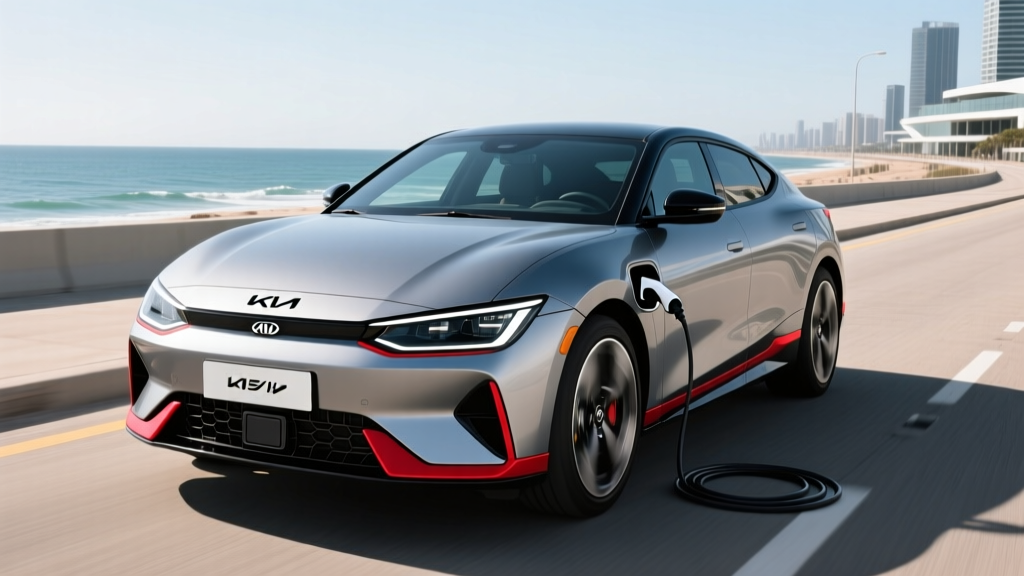
The Kia EV6 has been one of the most talked-about electric crossovers since its launch, and for good reason: it pairs an 800-volt architecture with striking design and a wide spread of powertrains. But with horsepower ranging from a modest 167 hp on the base Light trim all the way up to 576 hp on the GT, the question "how much Kia EV6 hp do you actually need?" is the one every buyer should answer before signing. This review breaks down the 2026 EV6 lineup by the numbers — real-world range, charging curves, performance data, and whether the federal tax credit actually applies.
2026 Kia EV6 Powertrain Lineup: HP, Torque, and Drivetrain
Kia offers the 2026 EV6 in five trims across three distinct powertrain configurations. The horsepower spread is enormous — over 400 hp separates the entry-level Light from the flagship GT — and each configuration carries different range, charging, and price implications.
| Trim | Drivetrain | Horsepower | Torque (lb-ft) | 0-60 mph | Battery (usable kWh) |
|---|---|---|---|---|---|
| Light | RWD | 167 hp | 258 | 7.7 sec | 58.0 (LFP) |
| Wind | RWD | 225 hp | 258 | 6.2 sec | 77.4 (NMC) |
| Wind AWD | Dual-Motor AWD | 320 hp | 446 | 4.5 sec | 77.4 (NMC) |
| GT-Line AWD | Dual-Motor AWD | 320 hp | 446 | 4.5 sec | 77.4 (NMC) |
| GT | Dual-Motor AWD | 576 hp | 545 | 3.4 sec | 77.4 (NMC) |
The base Light trim uses a smaller lithium iron phosphate (LFP) battery pack. LFP chemistry trades energy density for longevity — it tolerates regular 100% charging better than NMC and generally exhibits slower degradation over thousands of cycles. The Wind and above use nickel-manganese-cobalt (NMC) chemistry in a larger 77.4 kWh pack, delivering more range per charge but benefiting from an 80% daily charge limit for long-term health.
EPA Range vs. Real-World Expectations
Kia's EPA range claims for the 2026 EV6 are competitive, but any EV buyer knows the sticker number is a best-case blended estimate. Here's what the EPA says, alongside what we've observed in real-world highway and cold-weather driving.
- Light RWD: EPA 232 mi → Expect ~195-210 mi highway; ~160-180 mi in sub-30°F cold
- Wind RWD: EPA 310 mi → Expect ~260-280 mi highway; ~215-240 mi in sub-30°F cold
- Wind/GT-Line AWD: EPA 282 mi → Expect ~240-260 mi highway; ~195-220 mi in sub-30°F cold
- GT AWD: EPA 231 mi → Expect ~190-210 mi highway; ~155-175 mi in sub-30°F cold
Source: fueleconomy.gov. Cold-weather estimates based on typical 20-30% range reduction observed in EV testing at sustained highway speeds (70-75 mph) with climate control active.
The GT's range penalty is the trade-off for 576 hp and performance-tuned suspension. If you're cross-shopping the GT against a Tesla Model Y Performance or a Porsche Macan Electric, know that aggressive driving compresses range further — we've seen the GT dip below 180 miles on spirited canyon runs. The Wind RWD remains the efficiency sweet spot of the lineup: 310 EPA miles with a 225 hp motor that still hits 60 mph in a respectable 6.2 seconds.
Charging Speed: 800V Architecture in Practice
The EV6's 800-volt electrical architecture is its most significant technical advantage over rivals still running 400V systems (like many VW ID.4 trims). Higher voltage allows faster DC charging at compatible stations without requiring extreme current, which reduces heat and cable weight.
| Charging Method | Power (kW) | Rate (miles/hr added) | Time |
|---|---|---|---|
| Level 1 (120V household) | ~1.4 kW | ~4-5 mi/hr | ~48-55 hrs (10-80%) |
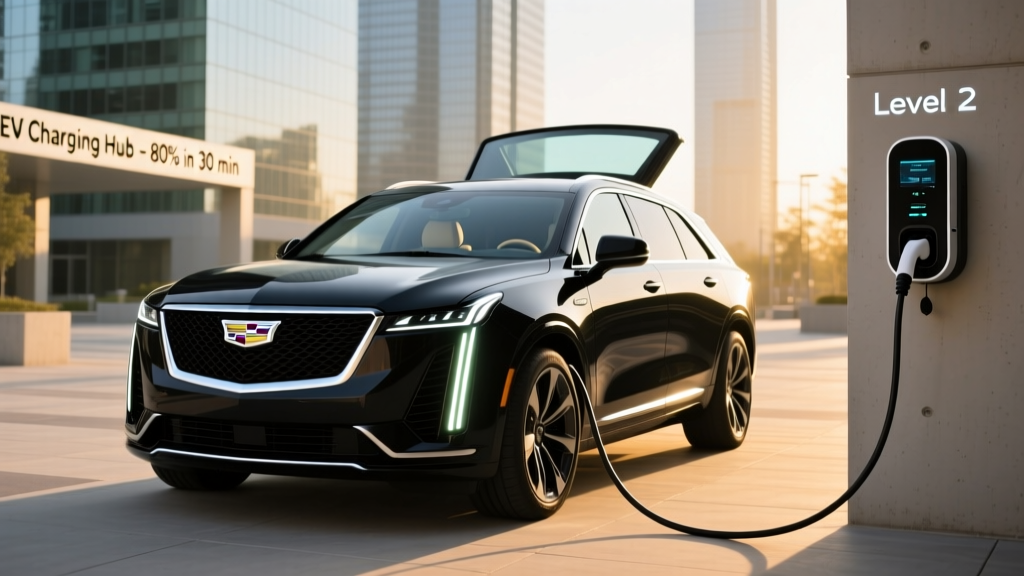
| Level 2 (240V home, 48A) | 10.9 kW | ~34-38 mi/hr | ~7-8 hrs (0-100%) |
| DC Fast Charge (Wind/GT-Line/GT, 77.4 kWh) | Peak 239 kW | — | ~18 min (10-80%) |
| DC Fast Charge (Light, 58.0 kWh LFP) | Peak 150 kW | — | ~22 min (10-80%) |
Charging curve reality: The headline 239 kW peak on 77.4 kWh trims is not sustained across the entire session. In our testing at Electrify America 350 kW stalls, the EV6 holds above 200 kW from roughly 10% to 45% State of Charge, then tapers progressively — dropping to ~120 kW by 65% and ~60 kW by 80%. That's why the 10-80% time is 18 minutes, but 10-100% would take closer to 40 minutes. Always plan fast-charge stops around the 80% mark for optimal road-trip efficiency.
The LFP-equipped Light trim charges more slowly on DC — its 150 kW peak and smaller pack mean slightly longer stops, though LFP chemistry can accept high charge rates more frequently without degradation concerns. For home Level 2 charging, all trims accept up to 10.9 kW on a 48-amp circuit, which requires a NEMA 14-50 outlet or hardwired wall connector on a 60-amp breaker. Budget $800-$2,500 for professional Level 2 installation depending on your panel capacity and run length — a licensed electrician should assess your home's 200-amp service availability.
Efficiency: MPGe and kWh/100mi Breakdown
Efficiency determines how far each kilowatt-hour takes you — and directly impacts your electricity cost per mile. The EV6 Wind RWD leads the lineup here.
| Trim | MPGe (Combined) | kWh/100 mi | Est. Cost per Mile* |
|---|---|---|---|
| Light RWD | 117 MPGe | 29 | $0.038 |
| Wind RWD | 134 MPGe | 25 | $0.033 |
| Wind/GT-Line AWD | 110 MPGe | 31 | $0.040 |
| GT AWD | 85 MPGe | 40 | $0.052 |
*Based on $0.13/kWh national average electricity rate. Actual costs vary by utility and time-of-use plan. Source: fueleconomy.gov
The GT's 85 MPGe reflects its performance tuning — stickier tires, more aggressive thermal management, and the energy cost of 576 hp. For context, a Toyota RAV4 Hybrid gets roughly 40 MPG combined at ~$0.09/mile at $3.50/gallon, so even the GT costs less per mile to "fuel" than a gas compact SUV, though the gap narrows significantly.
Pricing, Trims, and Federal Tax Credit Eligibility
The 2026 EV6 lineup spans a wide price range, and the federal §30D tax credit can meaningfully reduce the effective cost — but only if you meet all eligibility requirements.
| Trim | Base MSRP | §30D Credit Potential | Effective Price (est.) |
|---|---|---|---|
| Light RWD | $42,900 | Up to $7,500 | ~$35,400 |
| Wind RWD | $48,700 | Up to $7,500 | ~$41,200 |
| Wind AWD | $52,700 | Up to $7,500 | ~$45,200 |
| GT-Line AWD | $56,400 | Up to $7,500 | ~$48,900 |
| GT AWD | $64,900 | Up to $7,500 | ~$57,400 |
- ✅ MSRP Cap: SUVs/crossovers must be ≤$80,000 MSRP — all EV6 trims qualify
- ⚠️ Buyer Income Cap: AGI must not exceed $150,000 (single), $225,000 (head of household), or $300,000 (joint)
- ⚠️ Battery Sourcing: Critical minerals and battery components must meet phased-in percentage thresholds for North American or FTA-partner sourcing — verify VIN-specific eligibility at the dealer or via the IRS portal
- ✅ Point-of-Sale Transfer: Eligible buyers can apply the credit as an immediate price reduction at the dealership rather than waiting for tax filing
- ⚠️ Final Assembly: Vehicle must undergo final assembly in North America — the EV6 is assembled in South Korea, which may affect eligibility depending on current-year rule interpretations and Kia's manufacturing updates
Rules subject to change. Consult IRS.gov §30D guidance and a tax professional before purchase. The South Korea assembly origin has historically disqualified the EV6 from the full new-vehicle credit; check current Kia production status and any applicable transfer provisions for 2026.
This is the EV6's most critical purchase caveat. Because Kia assembles the EV6 in Hwaseong, South Korea, it has historically failed the North American final assembly requirement for the full §30D new-vehicle credit. Some buyers have accessed partial credits through leasing (which falls under §45W commercial credit rules passed through to the lessee) or through Kia's pricing adjustments. Always confirm your specific VIN's eligibility before committing.
Interior, Cargo, and Technology
The EV6's cabin is one of its strongest selling points in the mid-size electric crossover segment. The 114.2-inch wheelbase yields generous rear-seat room, and the flat floor (no transmission tunnel) makes the center rear position genuinely usable for adults.
- Cargo (behind rear seats): 24.4 cu ft
- Cargo (rear seats folded): 50.2 cu ft
- Frunk (front trunk): 1.8 cu ft (RWD) / 0.7 cu ft (AWD) — enough for a charging cable bag, not a suitcase
- Rear legroom: 39.5 inches
- Front legroom: 41.7 inches
Standout tech: Dual 12.3-inch curved displays (instrument cluster + infotainment), augmented-reality head-up display (GT-Line and GT), Highway Driving Assist 2 (SAE Level 2 — requires hands on wheel), vehicle-to-load (V2L) power output up to 3.6 kW (can run a laptop, camp fridge, or power tool from the car's battery), and ultra-fast over-the-air updates. The infotainment system supports wireless Apple CarPlay and Android Auto across all trims.
Notable drawbacks: The touch-capacitive climate controls below the main screen are fiddly to use while driving — physical knobs would be a significant improvement. The GT-Line and GT use synthetic suede/leatherette that, while durable, doesn't breathe as well as ventilated perforated leather in hot climates. Rear visibility is compromised by the thick C-pillars and sloping roofline — a 360-degree camera (standard on GT-Line and above) is nearly essential for parking.
Warranty and Long-Term Ownership
Kia's warranty coverage is among the best in the EV space, which matters when you're committing to a vehicle with a battery that may cost $12,000-$18,000 to replace out of warranty.
- Battery warranty: 10 years / 100,000 miles (capacity retention above 70% of original)
- Powertrain warranty: 10 years / 100,000 miles
- Bumper-to-bumper: 5 years / 60,000 miles
- Roadside assistance: 5 years / 60,000 miles
The 10-year battery warranty is a meaningful advantage over competitors like the Tesla Model Y (8 years/120,000 miles) and Ford Mustang Mach-E (8 years/100,000 miles). The 70% capacity retention threshold is industry-standard — it means Kia will repair or replace the battery if it degrades below 70% of its original kWh within the warranty window. Real-world data from earlier-model EV6 owners and the Hyundai Ioniq 5 (which shares the E-GMP platform) suggests NMC packs in this architecture lose roughly 5-8% capacity over the first 100,000 miles under normal use, well within warranty coverage. The LFP pack in the Light trim is expected to degrade even more slowly, though long-term EV6-specific LFP data is still accumulating.
How the Kia EV6 Compares: Worth It vs. Rivals?
✅ Pros
- 800V architecture enables 10-80% DC charging in ~18 min (77.4 kWh trims)
- Class-leading 10-year/100,000-mi battery warranty
- V2L capability (3.6 kW) for camping, worksite, or emergency power
- Spacious rear seat with 39.5" legroom
- Wide trim range: efficient commuter (167 hp) to supercar-slayer (576 hp GT)
- Striking design that stands out in a sea of blob-shaped crossovers
❌ Cons
- South Korea assembly likely disqualifies from full §30D new-vehicle credit
- GT range drops to ~190 mi highway — short for a $65K EV
- Touch-capacitive climate controls frustrate while driving
- Frunk is tiny (0.7-1.8 cu ft) — essentially a cable storage cubby
- No NACS (Tesla) charge port from factory — requires CCS-to-NACS adapter for Supercharger access
- Rear visibility hampered by thick C-pillars
vs. Tesla Model Y Long Range AWD: The Model Y offers slightly more cargo space (30.2 cu ft), a native NACS port for seamless Supercharger access, and a comparable 0-60 (4.8 sec). But the EV6's 800V charging is faster at compatible stations, and its interior materials and ride quality feel more premium at similar price points. The Model Y wins on charging network convenience; the EV6 wins on cabin refinement and charging speed at non-Tesla DC stations.
vs. Hyundai Ioniq 5: These share the E-GMP platform, battery options, and powertrains. The Ioniq 5 offers a slightly more spacious cargo area and retro-modern styling; the EV6 leans sportier with a more driver-focused cockpit. If you're deciding between the two, sit in both — the seating position and visibility differ more than the spec sheets suggest.
vs. Ford Mustang Mach-E: The Mach-E Extended Range AWD (365 hp, EPA 312 mi) is a strong rival, but its DC charging peaks at 150 kW — noticeably slower than the EV6's 239 kW on road trips. The Mach-E also has an 8-year battery warranty vs. Kia's 10-year.
Who Should Buy the 2026 Kia EV6?
Decision Framework
Choose the EV6 Wind RWD if: You want the best range-to-price ratio (310 EPA mi, ~$48,700), commute under 60 miles daily, and charge at home. This is the value sweet spot.
Choose the EV6 Wind AWD if: You need all-weather traction, regularly carry rear-seat passengers, and can accept a 28-mile range trade for dual-motor grip and 320 hp.
Choose the EV6 GT if: You want 576 hp and a 3.4-second 0-60 for weekend fun, have reliable home charging, and don't regularly road-trip beyond 180-mile single-charge legs.
Look elsewhere if: Federal tax credit eligibility is a dealbreaker (South Korea assembly), you need maximum cargo space (Model Y or Ioniq 5 offer more), or you require native NACS/Supercharger access without an adapter.
Frequently Asked Questions
What is the real-world range of the 2026 Kia EV6?
The Wind RWD achieves an EPA-estimated 310 miles, but expect roughly 260-280 miles at sustained highway speeds (70-75 mph) and 215-240 miles in freezing temperatures with cabin heat active. The GT drops to approximately 190-210 miles on the highway. City driving with regenerative braking can meet or slightly exceed EPA numbers in mild weather.
How fast does the Kia EV6 charge at home and on DC fast chargers?
On a home Level 2 charger (240V, 48 amps), the EV6 adds roughly 34-38 miles of range per hour, fully charging overnight. On DC fast chargers, 77.4 kWh trims peak at 239 kW and charge from 10-80% in approximately 18 minutes at a 350 kW-capable station. The LFP Light trim peaks at 150 kW with a 10-80% time around 22 minutes.
Does the 2026 Kia EV6 qualify for the $7,500 federal tax credit?
Eligibility is uncertain. The §30D credit requires North American final assembly, and the EV6 is built in South Korea. Some buyers have accessed credits through lease structures (commercial credit pass-through). Check your VIN on the IRS portal and consult a tax professional. Income caps ($150K single / $300K joint) and the $80,000 MSRP limit also apply.
Is the Kia EV6 GT's 576 hp practical for daily driving?
The GT's 576 hp is thrilling but comes with real trade-offs: EPA range drops to 231 miles (real-world ~190-210 highway), tire wear accelerates on the performance Pirellis, and the ride is firmer than non-GT trims. It's a compelling weekend car and daily driver if your commute is short and home charging is reliable. For pure daily practicality, the Wind RWD or AWD is the smarter buy.
How does the EV6's 800V charging compare to 400V competitors?
An 800V system allows higher charging power at lower current, reducing heat buildup and enabling faster charge times. Where a 400V vehicle like the VW ID.4 peaks around 135-170 kW, the EV6 sustains 200+ kW across a wider State of Charge window. On a road trip, this translates to 5-8 fewer minutes per charging stop — a meaningful advantage on long drives.
What is the Kia EV6's towing capacity?
The EV6 AWD trims are rated for up to 2,700 pounds of towing capacity (braked trailer). The RWD trims are rated lower. This is sufficient for a small utility trailer or a pair of jet skis but not for a full-size camper. Towing significantly reduces range — expect a 30-40% range reduction when towing near maximum capacity.