Quick Verdict: The 2026 Ioniq 5 SEL Is the Value Sweet Spot
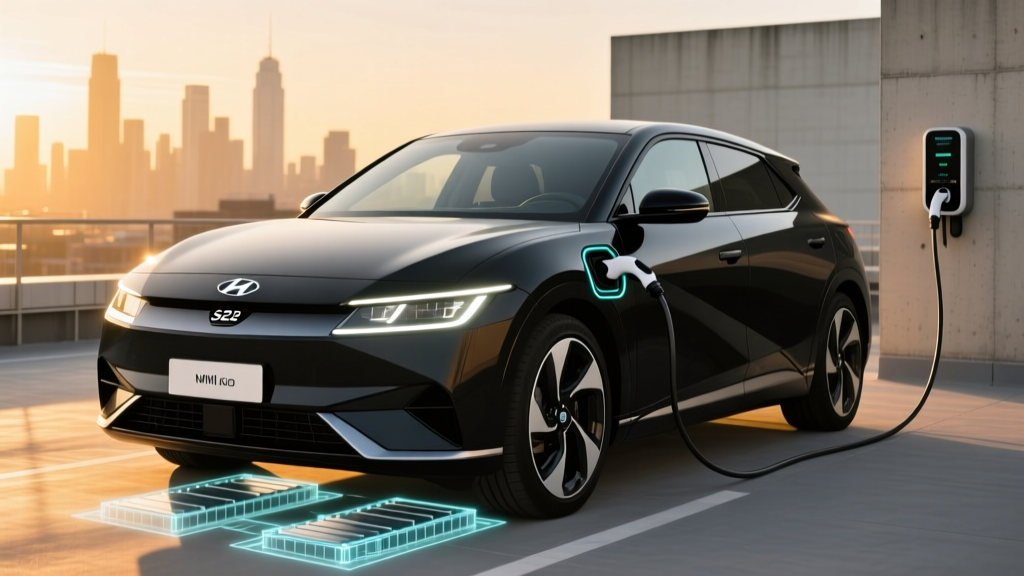
The 2026 Hyundai Ioniq 5 SEL sits at the intersection of practical range, ultra-fast charging, and federal tax credit eligibility — three things that matter most to real buyers. With an EPA-estimated 318 miles of range on the Long Range RWD model and an 800-volt architecture that peaks at 240 kW on DC fast chargers, this mid-range trim delivers what the premium N model and base SE trim cannot: balanced value without compromise. The SEL adds features the SE lacks — heated ventilated front seats, a power liftgate, and Hyundai's Digital Key 2 — while staying under the $55,000 SUV MSRP cap for the full §30D federal tax credit.
But spec sheets don't tell the whole story. Below, we break down what the 2026 Ioniq 5 SEL actually delivers in cold weather, on highway road trips, and at public chargers — plus whether the math works after incentives.
Range and Efficiency: EPA Sticker vs. Real-World Miles
The 2026 Ioniq 5 SEL is available with a 77.4 kWh usable battery pack (84.0 kWh gross) using NMC (nickel-manganese-cobalt) chemistry. Hyundai offers both RWD and AWD drivetrains on the SEL trim, and the range difference is meaningful:
| Configuration | EPA Range | MPGe (City/Hwy/Combined) | kWh/100 mi |
|---|---|---|---|
| SEL Long Range RWD | 318 mi | 134 / 112 / 123 MPGe | 27 |
| SEL Long Range AWD | 288 mi | 118 / 98 / 108 MPGe | 31 |
Efficiency on the RWD model at 27 kWh/100 miles is competitive with the Tesla Model Y Long Range (28 kWh/100 mi) and slightly better than the Ford Mustang Mach-E Extended Range RWD (30 kWh/100 mi), per fueleconomy.gov. If you mostly commute at lower speeds, you'll see range closer to the EPA number; sustained highway driving above 70 mph is where all EVs lose efficiency to aerodynamic drag.
Charging Speed: 800-Volt Architecture Pays Off
The Ioniq 5's headline advantage remains its 800-volt electrical architecture — shared with the Porsche Taycan and Kia EV6 — which enables faster DC charging than the 400-volt systems in most competitors at this price point. Here's what that looks like in practice:
| Charging Level | Power / Rate | Speed (Miles Added) | Notes |
|---|---|---|---|
| Level 1 (120V household) | 1.4 kW | ~4 mi/hr | Emergency/trickle only; ~80 hrs for full charge |
| Level 2 (240V home, 48A) | 10.9 kW | ~36 mi/hr | Full charge in ~7.5 hours; ideal overnight |
| DC Fast Charge (peak) | 240 kW (350 kW station) | ~200 mi in 15 min | 10–80% in approximately 18 minutes |
| DC Fast Charge (50 kW station) | 50 kW | ~30 mi/hr | 10–80% in ~85 minutes; avoid if possible |
A few real-world caveats on charging: the 240 kW peak is only achievable at a 350 kW-capable station (Electrify America, select EVgo stations) with the battery preconditioned — meaning the car has warmed the pack via navigation-routed preconditioning. Without preconditioning, or in cold weather, expect peak rates closer to 170–190 kW initially. The charge curve also tapers significantly above 80% state of charge; the 80–100% top-off can take nearly as long as 10–80%. For road trips, plan your stops around 10–80% increments and you'll minimize time plugged in.
At home on a 48-amp Level 2 charger (the practical standard for EV owners), the Ioniq 5 SEL adds roughly 36 miles of range per hour of charging. A full 0–100% charge takes approximately 7.5 hours — easily handled overnight. Home charger installation typically costs $800–$2,000 depending on your panel capacity and run length; consult a licensed electrician to determine whether your home's 200-amp panel can support a dedicated 60-amp circuit.
Performance and Drivetrain: Quick Enough, Composed Always
| Spec | SEL RWD | SEL AWD |
|---|---|---|
| Horsepower | 168 kW (225 hp) | 239 kW (320 hp) |
| Torque | 258 lb-ft | 446 lb-ft |
| 0–60 mph | ~7.0 seconds | ~4.5 seconds |
| Drivetrain | Rear-Wheel Drive | Dual-Motor AWD |
| Towing Capacity | 1,650 lbs (with tow hitch) | 1,650 lbs |
The RWD model's 225 hp is adequate for commuting and merging, but the AWD's 320 hp and 4.5-second 0–60 time make it genuinely quick. Both versions share the same low center of gravity thanks to the under-floor battery pack, and the Ioniq 5's ride quality strikes a firm-but-composed balance. Road noise is moderate — improved from the initial 2022 model year but still noticeable on coarse pavement at highway speeds. Regenerative braking offers four levels adjustable via steering-wheel paddles, including a full one-pedal driving mode (i-Pedal) that brings the car to a complete stop without touching the brake pedal.
Interior Space, Cargo, and Daily Livability
The Ioniq 5's flat floor and stretched 118.1-inch wheelbase create interior volume that punches above its mid-size class:
- Front legroom: 41.7 inches
- Rear legroom: 39.4 inches — enough for adult passengers comfortably
- Cargo behind rear seats: 27.2 cu ft
- Cargo with rear seats folded: 59.3 cu ft
- Front trunk (frunk): 0.85 cu ft (RWD) — enough for charging cables and small bags, not groceries
The SEL trim's flat-load floor and power liftgate make loading straightforward. The rear seats recline and slide fore/aft, which is uncommon in this segment and lets you prioritize legroom or cargo as needed. One drawback: there is no under-floor storage compartment in the cargo area, and the frunk on AWD models is smaller still due to the front motor.
Technology, Driver Assists, and Standout Features
The 2026 Ioniq 5 SEL comes equipped with dual 12.3-inch displays (instrument cluster and infotainment), wireless Apple CarPlay and Android Auto, and Hyundai's Bluelink connected services. Key tech highlights on the SEL trim include:
- Hyundai SmartSense suite: Forward collision-avoidance assist with pedestrian/cyclist detection, blind-spot collision-avoidance, rear cross-traffic collision-avoidance, lane-keeping assist, and navigation-based smart cruise control with stop-and-go.
- Highway Driving Assist 2 (HDA-2): Combines adaptive cruise control with lane-centering on divided highways. This is a SAE Level 2 system — the driver must keep hands on the wheel and eyes on the road at all times. It is not self-driving.
- Digital Key 2: Use your smartphone as a key via NFC and UWB; share virtual keys with family members.
- Vehicle-to-Load (V2L): The Ioniq 5 can supply up to 3.6 kW of AC power from its traction battery through an interior outlet or exterior adapter — enough to run a laptop, small appliances, or power tools at a campsite. This is a differentiating feature vs. the Model Y.
- Heat pump and battery preconditioning: Standard across all trims, improving cold-weather range and enabling fast DC charging.
Notable drawbacks: the Ioniq 5 still uses capacitive-touch climate controls rather than physical buttons, which draws criticism for usability while driving. The infotainment system, while functional, lacks the polish and responsiveness of Tesla's interface. And the standard audio system is merely adequate; the upgraded Bose system is reserved for the Limited trim.
Pricing, Trim Levels, and Federal Tax Credit Eligibility
| Trim | Base MSRP | Est. As-Tested (with options/destination) |
|---|---|---|
| SE Standard Range RWD | ~$42,600 | ~$44,000 |
| SE Long Range RWD | ~$46,100 | ~$47,500 |
| SEL Long Range RWD | ~$48,600 | ~$50,000 |
| SEL Long Range AWD | ~$52,100 | ~$53,500 |
| Limited AWD | ~$57,350 | ~$58,500 |
| N (Performance) | ~$67,500 | ~$68,500 |
The SEL Long Range RWD at approximately $48,600 before destination charges lands comfortably under the IRS §30D MSRP cap of $80,000 for SUVs and pickup trucks (and $55,000 for sedans — though the Ioniq 5 is classified as an SUV by the EPA). The SEL AWD at ~$52,100 also clears this threshold. The Limited AWD and N trims may approach or exceed limits depending on final MSRP and any mid-year adjustments.
- Vehicle MSRP must be ≤ $80,000 (SUVs/pickups) or ≤ $55,000 (sedans) — Ioniq 5 SEL qualifies as an SUV ✓
- Buyer adjusted gross income must not exceed $300,000 (joint), $225,000 (head of household), or $150,000 (single) — per IRS §30D guidelines
- Vehicle must meet critical minerals and battery component sourcing requirements (phase-in thresholds increase annually through 2030)
- Credit can be transferred to the dealer at point of sale for an immediate price reduction, or claimed on your federal tax return
- The Ioniq 5 is assembled in Ellabell, Georgia (Hyundai's Metaplant America), supporting domestic content compliance
Warranty Coverage and Battery Longevity
Hyundai backs the 2026 Ioniq 5 with one of the strongest warranty packages in the EV segment:
- New vehicle limited warranty: 5 years / 60,000 miles
- Powertrain warranty: 10 years / 100,000 miles
- EV battery warranty: 10 years / 100,000 miles (covers capacity loss below 70% of original)
- Complimentary maintenance: 3 years / 36,000 miles (oil changes don't apply, but covers tire rotation, multi-point inspections)
- Roadside assistance: 5 years / unlimited miles
The 70% capacity retention threshold over 10 years is standard for the industry. Real-world data from early 2022–2023 Ioniq 5 owners suggests NMC pack degradation is tracking well — most high-mileage drivers report 3–5% loss over the first 50,000 miles, which is consistent with NMC chemistry expectations. The 800V system's advanced thermal management (liquid cooling with active heating and cooling) contributes to long-term battery health by keeping cells in their optimal temperature range during charging and driving.
Pros, Cons, and Who Should Buy the 2026 Ioniq 5 SEL
Pros
- 800V architecture delivers 10–80% DC charge in ~18 minutes
- Competitive 318-mile EPA range (RWD)
- V2L capability — unique in this class
- Spacious rear seat and flat floor for a mid-size crossover
- 10-year/100,000-mile battery warranty
- Federal tax credit eligible (with caveats)
- Standard heat pump and battery preconditioning
Cons
- Capacitive-touch climate controls frustrate while driving
- Small frunk (0.85 cu ft on RWD)
- Infotainment responsiveness lags behind Tesla and Rivian
- AWD model's 288-mile range trails Model Y Long Range AWD
- No front trunk storage on AWD models
- Road noise still present at highway speeds
- HDA-2 is competent but not class-leading vs. Super Cruise
- Choose the SEL RWD if: You commute 30–60 miles daily, have home Level 2 charging, prioritize range and efficiency over acceleration, and want to stay under $50K before credits.
- Choose the SEL AWD if: You live in a region with snow/ice, frequently carry passengers or cargo, and the 30-mile range trade-off is acceptable for the added traction and 4.5-second 0–60.
- Look elsewhere if: You need a third row (Kia EV9), you want the longest possible range (Lucid Air, Tesla Model S), or you demand hands-off highway driving (GM Super Cruise vehicles).
Competitor Comparison: Ioniq 5 SEL vs. the Alternatives
| Spec | 2026 Ioniq 5 SEL RWD | 2026 Tesla Model Y LR RWD | 2026 Mach-E ER RWD |
|---|---|---|---|
| EPA Range | 318 mi | 320 mi | 310 mi |
| Battery (usable) | 77.4 kWh (NMC) | ~75 kWh (LFP/NMC) | 91 kWh (NMC) |
| Peak DC Charge | 240 kW | 250 kW | 150 kW |
| 10–80% Time | ~18 min | ~22 min | ~38 min |
| 0–60 mph | 7.0 sec | 6.6 sec | 6.1 sec |
| Base MSRP | ~$48,600 | ~$46,630 | ~$48,995 |
| V2L / Frunk | Yes / Small | No / Medium | No / Large |
| Supercharger Access | NACS adapter available | Native | Adapter available |
The Ioniq 5 SEL's main advantage over the Model Y is its faster DC charging curve (the Model Y peaks at 250 kW but tapers earlier), V2L capability, and a more traditional crossover interior that some buyers prefer. The Mach-E offers a larger frunk and a slightly sportier drive but charges significantly slower on DC. Tesla's Supercharger network advantage is narrowing as Hyundai provides NACS adapters for Ioniq 5 owners, enabling access to V3 and V4 Supercharger stalls.
Frequently Asked Questions
What is the real-world range of the 2026 Ioniq 5 SEL?
The EPA rates the SEL Long Range RWD at 318 miles and the AWD at 288 miles. In real-world highway driving at 70–75 mph, expect 265–285 miles (RWD) and 240–260 miles (AWD). In freezing temperatures, plan for a 20–30% reduction — roughly 200–230 miles for the RWD. The heat pump helps but cannot eliminate cold-weather losses entirely.
How fast does the Ioniq 5 SEL charge at home and on the road?
At home on a 48-amp Level 2 charger (240V), the Ioniq 5 charges at 10.9 kW, adding roughly 36 miles of range per hour and reaching a full charge in about 7.5 hours. On a 350 kW DC fast charger with preconditioning, it peaks at 240 kW and charges from 10–80% in approximately 18 minutes. On a 50 kW DC charger, expect 10–80% in roughly 85 minutes.
Does the 2026 Ioniq 5 SEL qualify for the $7,500 federal EV tax credit?
The Ioniq 5 SEL qualifies for up to $7,500 under IRS §30D, provided the buyer meets income limits ($150K single / $300K joint) and the vehicle meets that year's critical minerals and battery component sourcing thresholds. The credit can be transferred to the dealer at point of sale for an instant price reduction. Always verify current-year eligibility at fueleconomy.gov and consult a tax professional — sourcing requirements tighten annually.
Is the 2026 Ioniq 5 SEL worth buying over the Tesla Model Y?
If you value ultra-fast DC charging, V2L capability, a more spacious rear seat, and a conventional crossover layout, the Ioniq 5 SEL is an excellent alternative to the Model Y. If you prioritize Supercharger network access (without an adapter), the lowest cost of entry, or over-the-air software updates that feel more seamless, the Model Y still has advantages. Both are strong choices; test-drive both before deciding.
What's the biggest drawback of the Ioniq 5 SEL?
The capacitive-touch climate controls and the small frunk are the most common owner complaints. The infotainment system is functional but not as intuitive as Tesla's or Rivian's. And while HDA-2 is competent, it doesn't match the hands-off convenience of GM's Super Cruise on mapped highways.
Can the Ioniq 5 use Tesla Superchargers?
Yes. Hyundai offers a NACS (North American Charging Standard) adapter that allows Ioniq 5 owners to charge at Tesla V3 and V4 Supercharger stalls. The adapter typically costs around $200–$300 and is a worthwhile purchase for road-trippers who want access to the most reliable DC fast-charging network in North America.