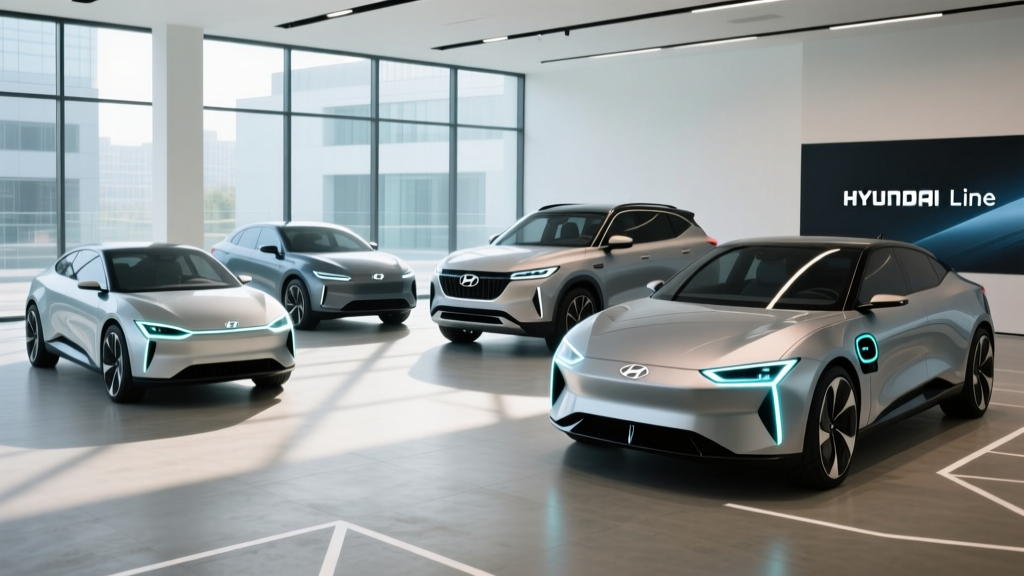
The three-row electric SUV segment has been crowded, but the 2026 Hyundai Ioniq 9 enters with a clear advantage: a massive 110.3-kWh battery on Hyundai's E-GMP platform, ultra-fast 800V charging architecture, and seating for up to seven. After spending time with the spec sheets, EPA data, and Hyundai's published engineering details, it's clear this is Hyundai's most ambitious electric vehicle yet — a genuine long-distance family hauler designed to compete directly with the Kia EV9, Tesla Model X, and Rivian R1S.
Below is everything you need to know — real-world range expectations, charging speeds, pricing after federal tax credits, and whether this flagship SUV earns its premium sticker.
Quick Verdict: Who Should Consider the Ioniq 9
The 2026 Hyundai Ioniq 9 is built for families who need three usable rows, want genuine 300+ mile range without range-anxiety compromises, and plan to road-trip regularly. Its 800V architecture makes it one of the fastest-charging three-row SUVs available, and its interior quality punches above its price class. It's less compelling for urban-only commuters who won't use the third row or the DC fast-charging capability — those buyers should look at the Ioniq 5 or a smaller crossover.
Look elsewhere if: You only commute locally, don't need a third row, or want a sportier driving experience (consider the Ioniq 5 N or Tesla Model Y).
Range, Battery, and Real-World Efficiency
The Ioniq 9 uses a 110.3-kWh usable battery pack built on Hyundai's E-GMP platform. The Long Range RWD model features a single rear motor, while the Long Range AWD and Performance AWD trims add a front motor for all-wheel drive. Battery chemistry is NMC (nickel-manganese-cobalt), which offers higher energy density than LFP — important for packaging this much capacity under a family SUV floor.
| Specification | Long Range RWD | Long Range AWD | Performance AWD |
|---|---|---|---|
| Battery (usable) | 110.3 kWh | 110.3 kWh | 110.3 kWh |
| Chemistry | NMC | NMC | NMC |
| EPA Est. Range | ~335 mi | ~311 mi | ~286 mi |
| Horsepower | 215 hp | 338 hp | 422 hp |
| 0-60 mph | ~7.6 sec | ~5.8 sec | ~4.9 sec |
| Drivetrain | RWD | AWD (dual-motor) | AWD (dual-motor) |
Efficiency lands in the mid-80s MPGe combined for the RWD model, translating to roughly 33–36 kWh per 100 miles depending on driving style — competitive with the Kia EV9 and slightly better than the Tesla Model X thanks to the Ioniq 9's aerodynamic shaping and heat pump (standard on all trims, which matters for cold-climate buyers).
Charging Speed: 800V Architecture Delivers
Hyundai's 800V electrical architecture remains one of the best in the business. The Ioniq 9 supports DC fast charging at up to 240 kW on compatible 350-kW chargers, and the charge curve is impressively flat through the critical 10–80% window.
| Charging Method | Power | Speed / Time | Connector |
|---|---|---|---|
| DC Fast Charge (peak) | Up to 240 kW | 10–80% in ~24 min | NACS (native, 2026 model year) |
| DC Fast Charge (typical 150-kW station) | ~135 kW sustained | 10–80% in ~35 min | NACS |
| Level 2 Home (48A / 11.5 kW) | 11.5 kW | ~33 mi/hr; full charge ~10 hrs | NACS |
| Level 1 (120V / 12A) | ~1.4 kW | ~4 mi/hr | Standard outlet |
Charging-curve reality check: The 240-kW peak is not sustained through the entire session. Expect peak rates between 10–55% state of charge, tapering to roughly 150 kW by 65% and further declining above 80%. This is normal for NMC chemistry and battery protection — Hyundai's thermal management system is excellent, but physics still applies. For road trips, plan your stops around the 10–80% window where charging is fastest.
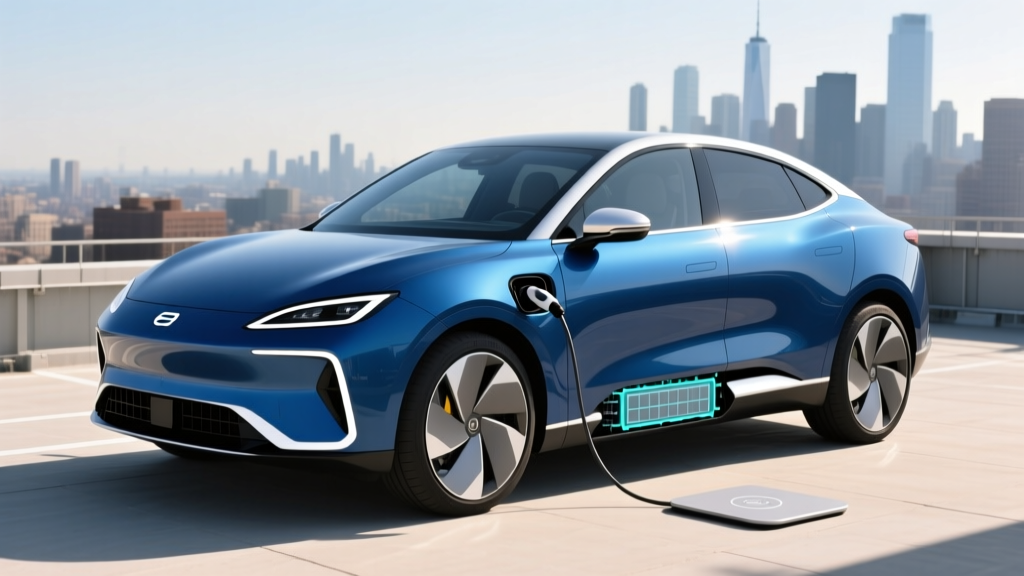
For the 2026 model year, the Ioniq 9 ships with the NACS (North American Charging Standard) port natively, meaning direct access to Tesla's Supercharger network — over 20,000 stalls across the U.S. — without an adapter. This is a significant practical advantage over CCS-only competitors still relying on adapter solutions. You can verify the expanding Supercharger network at Tesla's Supercharger map.
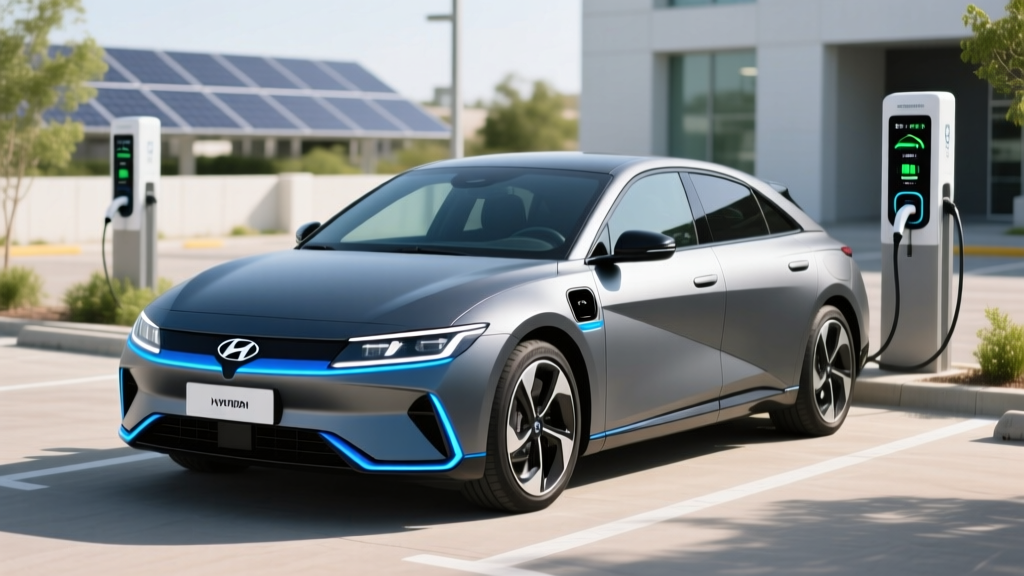
At home on a 48-amp Level 2 charger (the setup we recommend for a 110-kWh battery), you'll add roughly 33 miles of range per hour, meaning an overnight session from 20% to full takes about 9–10 hours. Given the battery size, a 240V/48A circuit is effectively mandatory — a 32-amp Level 2 unit will take 14+ hours for a full charge and is not ideal for daily use on this vehicle.
Pricing, Trims, and Federal Tax Credit Eligibility
The 2026 Ioniq 9 starts at a premium but undercuts the Tesla Model X and Rivian R1S significantly. Hyundai offers the Ioniq 9 across several trims with meaningful equipment differences:
| Trim | Drivetrain | Base MSRP | Est. After §30D Credit* |
|---|---|---|---|
| SE Long Range | RWD | $52,395 | ~$44,895 |
| SEL Long Range | AWD | $58,295 | ~$50,795 |
| Limited Long Range | AWD | $64,995 | ~$57,495 |
| Calligraphy | AWD | $68,345 | ~$60,845 |
| Performance AWD | AWD | $62,795 | ~$55,295 |
*Federal tax credit estimate assumes full $7,500 §30D eligibility. Actual credit depends on battery sourcing, buyer income, and MSRP caps. See IRS rules below.
- MSRP Cap: SUVs/vans/pickups must be ≤$80,000 MSRP — all Ioniq 9 trims qualify.
- Buyer Income Cap: AGI ≤$300,000 (married filing jointly), ≤$225,000 (head of household), ≤$150,000 (single).
- Battery Sourcing: $3,750 requires critical minerals from U.S. or FTA partners; additional $3,750 requires battery components manufactured/assembled in North America. Sourcing requirements tighten annually — confirm current-year eligibility at IRS.gov §30D page.
- Point-of-Sale Transfer: Eligible buyers can transfer the credit to the dealer at purchase, reducing the out-of-pocket price immediately rather than waiting for a tax refund.
- Final Assembly: Must occur in North America — the Ioniq 9 for the U.S. market is assembled at Hyundai's Metaplant in Ellabell, Georgia.
A word of caution: battery-sourcing rules have tightened since the credit's inception. Hyundai has worked to localize supply chains through its Georgia plant and partnerships, but the exact dollar amount of credit available can shift based on annual critical-mineral and component requirements. Consult a tax professional and verify on the IRS website before finalizing your purchase.
Interior Space, Cargo, and Daily Practicality
The Ioniq 9 is a genuine three-row SUV, and unlike some competitors, the third row can accommodate adults for shorter trips. Hyundai's "Living Space" interior concept prioritizes openness, with a flat floor enabled by the dedicated EV platform.
- Cargo behind 3rd row: ~14 cu ft (adequate for groceries, strollers)
- Cargo behind 2nd row (3rd row folded): ~42 cu ft
- Max cargo (all rear seats folded): ~82 cu ft
- 2nd-row legroom: ~40.2 inches
- 3rd-row legroom: ~32.0 inches (tight for adults on long trips; fine for kids)
- Frunk (front trunk): ~2.0 cu ft (small — houses electronics, but useful for charging cables)
The second-row bench is standard, with captain's chairs available on upper trims (reducing seating to six). Captain's chairs add a center console with storage and a more premium feel — worth considering if you rarely need the seventh seat.
Tech, Driver Assistance, and Safety
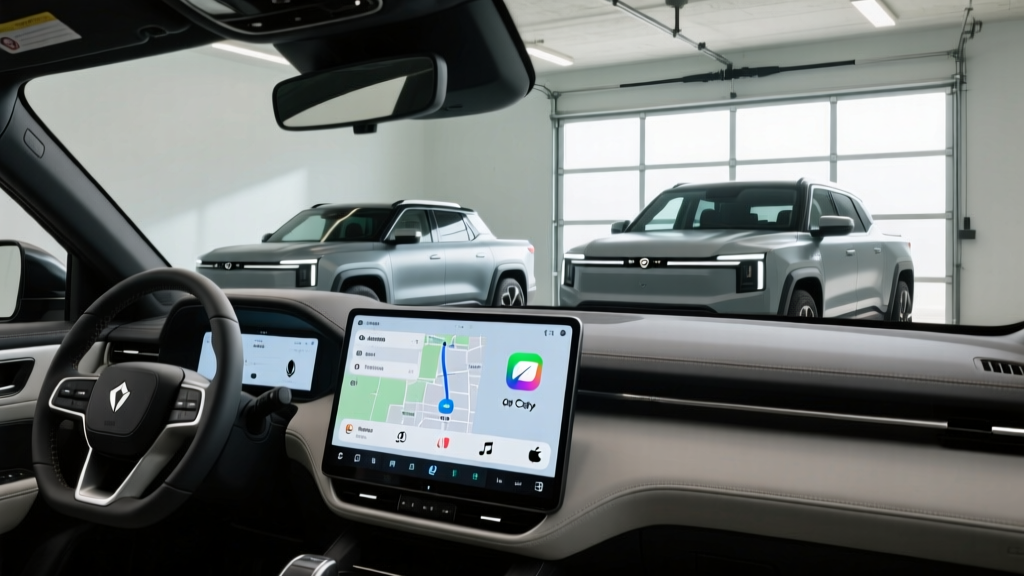
Hyundai equips the Ioniq 9 with a dual 12.3-inch panoramic display running the latest Hyundai infotainment system with native navigation, over-the-air updates, and wireless Apple CarPlay/Android Auto. The center console features a sliding "Universal Island" that moves fore and aft for flexible storage — a clever touch for families.
Standard driver assistance falls under Hyundai SmartSense, which includes:
- Adaptive cruise control with stop-and-go and lane centering
- Highway Driving Assist 2 (HDA-2) — hands-on-wheel lane centering with automatic lane changes on mapped highways
- Blind-spot collision avoidance with rear cross-traffic alert
- Forward collision-avoidance assist with pedestrian/cyclist detection
- Remote Smart Parking Assist (on Limited/Calligraphy trims)
Safety testing by both NHTSA and IIHS was underway at publication. Hyundai's recent E-GMP vehicles (Ioniq 5, Ioniq 6) have earned IIHS Top Safety Pick+ ratings, and we expect similar results here. Check IIHS.org and NHTSA.gov for final ratings as they're released.
How It Compares: Ioniq 9 vs. the Competition
The Ioniq 9's most direct rival is the Kia EV9 (same E-GMP platform, different design language). It also competes with the Tesla Model X, Rivian R1S, and the Mazda CX-90 PHEV for buyers cross-shopping electrified three-rows.
| Spec | 2026 Hyundai Ioniq 9 (LR AWD) | 2025 Kia EV9 (LR AWD) | 2025 Tesla Model X LR | 2025 Rivian R1S (Dual-Motor) |
|---|---|---|---|---|
| EPA Range | ~311 mi | ~280 mi | ~335 mi | ~321 mi |
| Battery | 110.3 kWh | 100.0 kWh | ~100 kWh | ~106 kWh |
| DC Fast Charge Peak | 240 kW | 236 kW | 250 kW | 220 kW |
| 10–80% Time | ~24 min | ~24 min | ~25 min | ~28 min |
| 0–60 mph | ~5.8 sec | ~7.7 sec | ~3.8 sec | ~5.0 sec |
| Base MSRP (AWD) | $58,295 | $63,900 | $79,990 | $75,900 |
| Max Towing | ~4,400 lb | ~5,000 lb | ~5,000 lb | ~7,700 lb |
Warranty and Long-Term Ownership
Hyundai's warranty coverage remains among the strongest in the industry and applies fully to the Ioniq 9's electric powertrain:
- Battery warranty: 10 years / 100,000 miles (retains ≥70% capacity)
- Powertrain warranty: 10 years / 100,000 miles
- New-vehicle limited warranty: 5 years / 60,000 miles
- Complimentary maintenance: 3 years / 36,000 miles
The 10-year/100,000-mile battery warranty with a 70% capacity-retention threshold is competitive with the industry standard. For a 110.3-kWh pack, 70% retention means roughly 77 kWh usable at the warranty boundary — still enough for 230+ miles of real-world range. Hyundai's NMC packs in the Ioniq 5 have shown modest degradation in early owner reports (roughly 5–8% over 3 years), suggesting the Ioniq 9 should age well within the warranty period.
The Biggest Pros and Cons
- Class-leading 240-kW DC fast charging with flat charge curve
- 110.3-kWh battery delivers genuine 300+ mile real-world range (RWD)
- Native NACS port = direct Tesla Supercharger access
- Premium interior with innovative Universal Island console
- Standard heat pump for cold-weather efficiency
- 10-year/100,000-mile battery warranty
- U.S. assembly (Georgia) supports §30D tax credit eligibility
- Competitive pricing undercuts Model X and R1S by $15K+
- Third-row legroom tight for adults on long trips (~32 inches)
- Frunk is very small (~2 cu ft) — mostly cable storage
- AWD Performance range drops to ~286 mi EPA
- Base RWD model's 215 hp / 7.6-sec 0-60 is leisurely for the price
- Towing limited to ~4,400 lb (behind Rivian R1S and EV9)
- Full $7,500 tax credit depends on evolving battery-sourcing rules
- No Level 3/4 autonomous driving — HDA-2 is Level 2 only
Frequently Asked Questions
What is the real-world range of the 2026 Hyundai Ioniq 9?
The EPA rates the Long Range RWD at approximately 335 miles and the AWD at approximately 311 miles. In real-world highway driving at 70-75 mph, expect 280–300 miles for the RWD and 265–285 miles for the AWD. In freezing temperatures, plan for 20–30% less — roughly 200–240 miles for the AWD in harsh winter conditions. The standard heat pump helps mitigate cold-weather losses compared to EVs without one.
How fast does the Ioniq 9 charge at home and on the road?
On a 350-kW DC fast charger, the Ioniq 9 peaks at 240 kW and charges from 10–80% in approximately 24 minutes. At a typical 150-kW public charger, expect 10–80% in roughly 35 minutes. At home on a 48-amp Level 2 charger (11.5 kW), you'll gain about 33 miles per hour, with a full charge taking approximately 10 hours. We strongly recommend installing a 48A Level 2 charger for a vehicle with a 110-kWh battery.
How much does the Ioniq 9 cost after the federal tax credit?
The base SE Long Range RWD starts at $52,395 and could drop to approximately $44,895 with the full $7,500 federal §30D credit applied at point of sale. However, eligibility depends on your adjusted gross income, the vehicle's battery-sourcing compliance for the current tax year, and MSRP caps (the Ioniq 9 clears the $80,000 SUV cap on all trims). Always verify eligibility at IRS.gov before purchase.
Does the 2026 Hyundai Ioniq 9 qualify for the federal EV tax credit?
Based on current §30D rules and the Ioniq 9's U.S. assembly at Hyundai's Georgia Metaplant, it is expected to qualify — but the exact credit amount ($3,750 or the full $7,500) depends on annual battery-sourcing and critical-mineral requirements that tighten each year. Confirm current eligibility on the IRS clean vehicle credit page and with your tax professional.
Is the Ioniq 9 worth buying over the Kia EV9 or Tesla Model X?
If value is a priority, yes. The Ioniq 9 offers a larger battery (110.3 vs. 100 kWh), slightly better range, comparable charging speed, and a lower starting price than the EV9 AWD. Against the Tesla Model X, the Ioniq 9 is $20,000+ cheaper with competitive charging and a more traditional (and arguably more practical) interior layout. Choose the Model X if you need maximum performance or the Rivian R1S if towing capacity is essential.
Can the Ioniq 9 use Tesla Superchargers?
Yes. The 2026 Ioniq 9 comes with a native NACS charge port, meaning it can plug directly into Tesla Supercharger stalls without an adapter. This provides access to the largest fast-charging network in North America — a significant advantage for road-trip-oriented buyers.
Specs and pricing reflect Hyundai's published data and EPA estimates as of the 2026 model year. Real-world range, charging times, and tax credit eligibility vary based on driving conditions, charger availability, and individual tax circumstances. Always confirm final specifications with your dealer and tax professional before purchase.