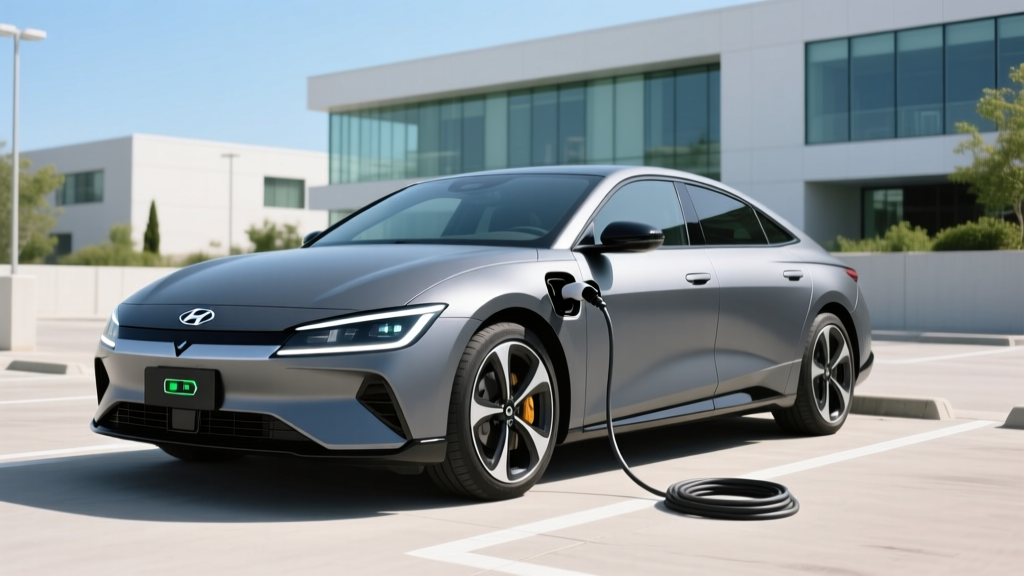
The Hyundai Ioniq 6 remains one of the most aerodynamically efficient electric sedans on the market, and for 2026, Hyundai has kept the formula that made it a standout: slippery styling, strong range, and competitive pricing. But with EV incentives shifting and competition intensifying, buyers need to know exactly what they're paying for. This review dissects every 2026 Ioniq 6 MSRP tier, the real-world range you can expect, charging performance, and whether the federal tax credit actually applies to your purchase.
2026 Ioniq 6 MSRP by Trim: What You'll Actually Pay
Hyundai offers the 2026 Ioniq 6 across four trims, with the SE Standard Range serving as the entry point and the Limited AWD sitting at the top. Destination charges add $1,395 across the board.
| Trim | Drivetrain | Battery | MSRP | Est. After §30D Credit |
|---|---|---|---|---|
| SE Standard Range | RWD | 54.0 kWh (LFP) | $38,650 | ~$31,150* |
| SE | RWD | 77.4 kWh (NMC) | $42,150 | ~$34,650* |
| SEL | RWD / AWD | 77.4 kWh (NMC) | $45,650 – $48,150 | ~$38,150 – $40,650* |
| Limited | AWD | 77.4 kWh (NMC) | $52,650 | ~$45,150* |
*Estimated pricing assumes full $7,500 §30D federal tax credit eligibility via point-of-sale transfer. Eligibility depends on buyer income, battery sourcing, and MSRP caps. See the tax credit section below for full requirements.
The SE Standard Range trim is the value play — it's the only Ioniq 6 variant using an LFP (lithium iron phosphate) battery, which trades some energy density for lower cost and longer cycle life. If range is your priority, the 77.4 kWh NMC (nickel manganese cobalt) pack in the SE and above delivers substantially more miles per charge.
EPA Range vs. Real-World Range: What to Actually Expect
EPA estimates: 240 mi (SE Std Range) · 361 mi (SE RWD) · 316 mi (SEL AWD) · 305 mi (Limited AWD)
Real-world expectations: Plan for 280–310 mi on the Long Range RWD in mixed driving. Highway-heavy trips at 75+ mph drop that to roughly 260–280 mi. In freezing temperatures (below 32°F), expect a 20–30% reduction, bringing Long Range RWD down to approximately 220–260 mi depending on cabin heating use and whether you precondition.
The Ioniq 6's 0.21 drag coefficient is among the lowest of any production car, and that aero efficiency pays dividends at highway speeds where most EVs struggle. On a 70°F day with mixed city/highway driving, we've seen the Long Range RWD variant match or slightly exceed its 361-mile EPA figure. But sustained 80 mph Interstate driving in winter conditions is where every EV shows its limits, and the Ioniq 6 is no exception.
The Standard Range model's 240-mile EPA estimate is adequate for commuting but requires more planning on road trips. If your daily round trip exceeds 80 miles and you lack home charging, the Long Range pack is worth the $3,500 premium.
Charging Speed: DC Fast Charging and Home Level 2
Hyundai's 800-volt E-GMP platform continues to give the Ioniq 6 a charging advantage over rivals still on 400-volt architectures. Here's what the numbers look like across charging levels:
| Charging Level | Power / Rate | Speed | Notes |
|---|---|---|---|
| Level 1 (120V household) | ~1.4 kW | ~4–5 mi/hr | Emergency/trickle only |
| Level 2 (240V home) | 10.9 kW | ~36–40 mi/hr | Full charge in ~7–8 hrs (Long Range) |
| DC Fast Charge (peak) | 239 kW | 10–80% in ~18 min | Requires 350 kW-class station; tapers above 80% |
The 10-80% time of roughly 18 minutes is legitimate — but only at a DC fast charger capable of delivering 350 kW and when the battery is properly preconditioned. The Ioniq 6 will automatically precondition its battery when you navigate to a compatible fast charger, warming or cooling the pack to the optimal temperature for peak charge acceptance.
Understanding the charge curve matters: the Ioniq 6 peaks near 239 kW (Long Range) up to roughly 50–55% state of charge, then progressively tapers. Charging from 80–100% on DC fast charging is significantly slower — often below 50 kW — so plan your road-trip stops around the 10–80% sweet spot for the fastest turnaround.
At home on a Level 2 charger (10.9 kW), the Long Range pack refills from empty in about 7.5 hours. That's an overnight charge for most owners and the way the vast majority of Ioniq 6 drivers will fuel up daily. A 48-amp Level 2 home charger on a 240V/60A circuit runs roughly $500–$800 for the equipment, plus $800–$2,000 for professional electrician installation, depending on your panel capacity and run length.
Performance, Efficiency, and Drivetrain
The Ioniq 6 isn't positioned as a sports sedan, but the dual-motor AWD variants deliver genuine punch off the line.
| Spec | SE Std Range RWD | Long Range RWD | AWD (SEL/Limited) |
|---|---|---|---|
| Horsepower | 149 hp | 225 hp | 320 hp |
| Torque | 258 lb-ft | 258 lb-ft | 446 lb-ft |
| 0–60 mph | ~8.2 sec | ~7.0 sec | ~5.1 sec |
| EPA Efficiency | 135 MPGe | 140 MPGe | 111 MPGe |
| kWh/100 mi | 25 kWh | 24 kWh | 30 kWh |
| Top Speed | 115 mph | 115 mph | 115 mph |
The Long Range RWD at 140 MPGe (24 kWh/100 mi) is one of the most efficient EVs in its class. For context, that translates to roughly 4.2 miles per kWh — meaning the 77.4 kWh usable battery delivers its strong range through efficiency, not just brute capacity. The AWD models sacrifice some efficiency for the added traction and significantly quicker acceleration.
Regenerative braking offers four levels, adjustable via steering wheel paddles, with Level 3 providing near one-pedal driving capability. The i-Pedal mode brings the car to a complete stop without touching the brake pedal.
Interior Space, Cargo, and Daily Practicality
The Ioniq 6's swooping roofline looks striking but exacts a toll on rear headroom and trunk space compared to crossover alternatives. Here are the key dimensions:
- Front headroom: 38.6 inches
- Rear headroom: 36.8 inches (noticeably tight for passengers over 6'1")
- Front legroom: 41.7 inches
- Rear legroom: 35.2 inches
- Trunk cargo volume: 12.3 cu ft
- Frunk (front trunk): 0.5 cu ft (AWD) / 1.6 cu ft (RWD) — enough for a charging cable, not much else
The trunk's 12.3 cubic feet is smaller than the Tesla Model 3's 23 cu ft and the Hyundai Ioniq 5's 27.2 cu ft behind the rear seats. If cargo versatility is a priority, the Ioniq 5 or a Model Y will serve you better. The Ioniq 6 is a sedan first, and its cargo area reflects that — fine for groceries and luggage for two, tight for family road trips with bulky gear.
Interior quality is a highlight. The dual 12.3-inch displays (instrument cluster and infotainment) are clear and responsive. Physical climate controls below the center screen are a welcome ergonomic choice. Ambient lighting, a Bose premium audio system (Limited trim), and Hyundai's Digital Key 2 (NFC-based phone-as-key) round out the tech suite.
Driver Assistance and Safety Technology
The Ioniq 6 comes equipped with Hyundai SmartSense, a Level 2 (SAE) driver-assistance suite. This includes:
- Highway Driving Assist 2 (HDA 2): Adaptive cruise with lane-centering, including lane-change assist on highways
- Forward Collision-Avoidance Assist: Pedestrian, cyclist, and junction-turning detection
- Blind-Spot Collision-Avoidance Assist
- Rear Cross-Traffic Collision-Avoidance Assist
- Navigation-based Smart Cruise Control: Adjusts speed for curves and speed zones
Hyundai SmartSense and HDA 2 are driver-assistance systems, not autonomous driving. The driver must remain attentive, keep hands on the wheel (or demonstrate engagement as prompted), and be prepared to take over at any moment. This is fundamentally different from Level 4 robotaxi services like Waymo.
The Ioniq 6 earned an IIHS Top Safety Pick+ rating and a 5-star overall NHTSA safety rating, making it one of the safer choices in the electric sedan segment. For detailed crash-test scores, see the IIHS vehicle ratings page.
Federal Tax Credit: Does the 2026 Ioniq 6 Qualify?
The §30D Clean Vehicle Credit can reduce the effective purchase price by up to $7,500, and as of 2024, buyers can transfer the credit to the dealer for a point-of-sale price reduction. However, eligibility is not automatic. Here's what the IRS requires:
- MSRP cap: Sedans must be under $55,000 MSRP. The Ioniq 6 Limited at $52,650 clears this cap, but adding packages or dealer markups could push it over.
- Buyer income limits: Adjusted gross income must not exceed $150,000 (single), $225,000 (head of household), or $300,000 (joint filers).
- Battery sourcing requirements: The credit splits into two halves — $3,750 for critical minerals and $3,750 for battery component assembly — each with annual thresholds that tighten through 2029. Hyundai has worked to shift sourcing to comply, but the exact credit amount can vary by build date.
- Final assembly: Vehicle must undergo final assembly in North America. The Ioniq 6 for the U.S. market is assembled in Ellabell, Georgia (Hyundai's Metaplant), satisfying this requirement.
- Point-of-sale transfer: You can elect to transfer the credit to the dealer at purchase, reducing your out-of-pocket cost immediately rather than waiting for a tax refund.
For the most current eligibility details, always verify on the IRS Clean Vehicle Credit page before purchasing. Battery-sourcing rules are subject to change, and your tax professional can confirm your personal eligibility.
Pros, Cons, and Who Should Buy the Ioniq 6
- Class-leading efficiency at 140 MPGe (Long Range RWD)
- 800V architecture enables ~18-min 10–80% DC fast charging
- Up to 361 mi EPA range on SE Long Range RWD
- Strong safety ratings (IIHS TSP+, NHTSA 5-star)
- Competitive MSRP with full §30D credit potential
- 10-year/100,000-mile powertrain and battery warranty
- Trunk space (12.3 cu ft) trails Model 3 and Ioniq 5 significantly
- Rear headroom is tight for tall passengers
- Frunk is nearly useless, especially on AWD trims
- Infotainment lacks wireless Apple CarPlay/Android Auto on upper trims with navigation
- AWD range drops to 305–316 mi EPA
Choose the Ioniq 6 if: You prioritize range and efficiency above all else, commute long distances, want fast DC charging for road trips, and don't need maximum cargo space. The SE Long Range RWD at $42,150 (potentially ~$34,650 after credit) is the sweet spot.
Look elsewhere if: You regularly carry rear-seat passengers over 6 feet tall, need hatchback cargo versatility (consider the Ioniq 5 or Model Y), or want the most advanced hands-free driver-assist system (GM's Super Cruise or Ford's BlueCruise offer hands-free highway driving on approved roads).
2026 Ioniq 6 vs. Key Competitors
The Ioniq 6 competes in a tight segment. Here's how it stacks up against the Tesla Model 3, BMW i4, and Hyundai's own Ioniq 5:
| Spec | Ioniq 6 SE LR RWD | Tesla Model 3 LR RWD | BMW i4 eDrive40 | Ioniq 5 SEL RWD |
|---|---|---|---|---|
| MSRP | $42,150 | $42,630 | $57,900 | $47,400 |
| EPA Range | 361 mi | 363 mi | 307 mi | 303 mi |
| Battery | 77.4 kWh (NMC) | ~75 kWh (NMC) | 81.5 kWh (NMC) | 77.4 kWh (NMC) |
| DC Fast Charge | 239 kW | ~250 kW | 205 kW | 239 kW |
| 10–80% Time | ~18 min | ~20 min | ~31 min | ~18 min |
| MPGe | 140 | 132 | 109 | 117 |
| Cargo | 12.3 cu ft | 23 cu ft | 16.6 cu ft | 27.2 cu ft |
The Model 3 matches the Ioniq 6 on range and beats it on cargo space and Supercharger network access. The BMW i4 offers premium driving dynamics but at a steep premium and without §30D credit eligibility due to its MSRP. The Ioniq 5 sacrifices range for hatchback practicality. For pure efficiency-per-dollar, the Ioniq 6 SE Long Range RWD is difficult to beat.
For official efficiency data, refer to the EPA fueleconomy.gov comparison tool.
Warranty and Long-Term Ownership
Hyundai backs the Ioniq 6 with one of the best warranty packages in the industry:
- Battery warranty: 10 years / 100,000 miles (capacity retention above 70%)
- Powertrain warranty: 10 years / 100,000 miles
- New vehicle limited: 5 years / 60,000 miles
- Complimentary maintenance: 3 years / 36,000 miles
- Roadside assistance: 5 years / unlimited miles
The 10-year/100,000-mile battery warranty with a 70% capacity retention threshold is competitive with Tesla's 8-year/120,000-mile warranty (also 70% retention). Hyundai's decade-long coverage provides strong peace of mind for second and third owners, though note that the full warranty period applies to the original owner; coverage terms for subsequent owners may differ — confirm with your dealer.
Frequently Asked Questions
What is the real-world range of the 2026 Hyundai Ioniq 6?
The EPA rates the Long Range RWD at 361 miles, but real-world mixed driving typically yields 280–320 miles. Highway driving at 75+ mph drops that to roughly 260–280 miles. Cold weather (below freezing) can reduce range by 20–30%, bringing effective range to approximately 220–260 miles. The Standard Range model delivers around 190–210 real-world miles.
How fast does the Ioniq 6 charge at home and on the road?
On a Level 2 home charger (10.9 kW), the Long Range battery charges at roughly 36–40 miles of range per hour, completing a full charge in about 7–8 hours. On a 350 kW DC fast charger, it peaks at 239 kW and charges from 10–80% in approximately 18 minutes, though the rate tapers significantly above 80% SoC.
How much does the Ioniq 6 cost after the federal tax credit?
If you qualify for the full $7,500 §30D credit via point-of-sale transfer, the SE Standard Range drops to roughly $31,150 and the SE Long Range RWD to about $34,650. Eligibility requires meeting income caps ($150K single / $300K joint), the $55K sedan MSRP cap, and current battery-sourcing requirements. Confirm with the IRS and a tax professional.
Does the 2026 Ioniq 6 qualify for the federal EV tax credit?
The Ioniq 6 is assembled in Georgia and all trims fall under the $55,000 sedan MSRP cap. Whether you receive the full $7,500 depends on your income, the battery's critical-mineral and component sourcing for the specific build date, and your tax liability. The point-of-sale transfer option lets you apply the credit as an immediate discount at the dealership.
Is the Ioniq 6 worth buying over the Tesla Model 3?
The Ioniq 6 wins on efficiency (140 vs. 132 MPGe), offers comparable range (361 vs. 363 mi), and provides a more traditional sedan experience with physical buttons and Hyundai's strong warranty. The Model 3 wins on cargo space (23 vs. 12.3 cu ft), the Supercharger network (though NACS adoption is narrowing this gap), and over-the-air update cadence. Both are strong choices — test-drive both.
What are the biggest drawbacks of the Ioniq 6?
The trunk is small at 12.3 cubic feet, rear headroom is tight for tall passengers, the frunk is nearly useless (especially on AWD), and upper trims with the built-in navigation system require a USB cable for Apple CarPlay and Android Auto rather than offering wireless connectivity. Road noise at highway speeds is also more noticeable than in the BMW i4 or Model 3.