Quick Verdict: The Ioniq 5 Is the Most Complete Alternative to Tesla
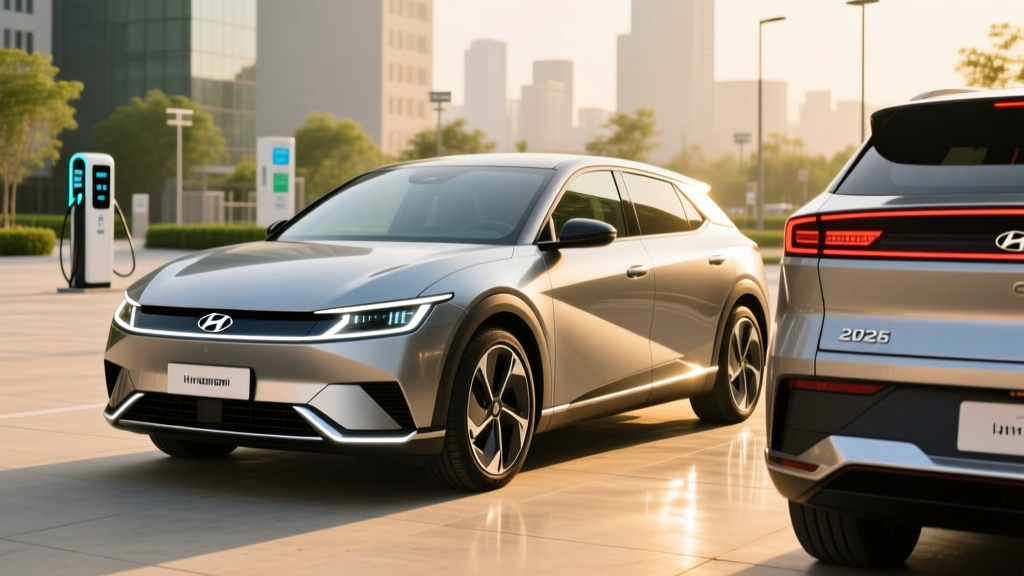
If you've been cross-shopping the Tesla Model Y and wondering whether a legitimate alternative to Tesla exists in 2026, the Hyundai Ioniq 5 deserves your full attention. Now built at Hyundai's Metaplant America in Georgia, the Ioniq 5 pairs an 800-volt electrical architecture with NACS native charging, meaning it plugs directly into Tesla Superchargers without an adapter. That single fact eliminates the biggest historical objection to non-Tesla EVs: charging-network access.
But access alone doesn't make a compelling purchase. The Ioniq 5 backs it up with a 318-mile EPA range on the Long Range RWD trim, peak DC fast-charging at 240 kW (10–80% in roughly 18 minutes under ideal conditions), and a starting MSRP that undercuts the Model Y Long Range while still qualifying many buyers for the full $7,500 federal tax credit under IRS §30D rules.
This review covers the 2026 Hyundai Ioniq 5 across every metric that matters to a data-driven EV buyer: real-world range, charging curves, ownership costs, and where it falls short.
2026 Hyundai Ioniq 5: Full Spec Sheet
| Spec | Value |
|---|---|
| EPA Range (Long Range RWD) | 318 miles |
| EPA Range (Long Range AWD) | 290 miles |
| Battery Capacity (usable) | 84.0 kWh |
| Battery Chemistry | NMC (Nickel Manganese Cobalt) |
| Peak DC Fast-Charge Rate | 240 kW (800V architecture) |
| 10–80% DC Fast Charge (ideal) | ~18 minutes |
| Level 2 Home Charge Rate | 10.9 kW (48A) |
| Miles Added per Hour (Level 2) | ~38 mi/hr |
| 0–60 mph (AWD) | 4.5 seconds |
| Horsepower (AWD) | 320 hp / 446 lb-ft torque |
| Drivetrain | RWD or Dual-Motor AWD |
| EPA Efficiency (AWD) | 110 MPGe combined (30 kWh/100 mi) |
| Cargo Volume (rear seats up) | 27.2 cu ft |
| Cargo Volume (rear seats folded) | 59.3 cu ft |
| Front Trunk (Frunk) | 0.85 cu ft (AWD) / 2.0 cu ft (RWD) |
| Rear Legroom | 39.4 inches |
| Towing Capacity | 2,300 lbs (AWD with tow package) |
| Battery/Powertrain Warranty | 10 years / 100,000 miles |
| Base MSRP (SE Standard Range) | $42,600 |
| Base MSRP (SE Long Range AWD) | $47,650 |
| As-Tested (Limited AWD) | $58,200 |
Real-World Range: What the EPA Sticker Doesn't Tell You
These numbers come from aggregated owner data and independent testing. The Ioniq 5's heat pump — standard on Long Range trims — helps mitigate cold-weather losses compared to EVs without active thermal management, but physics is physics: any EV loses 15–30% of range in sustained sub-freezing driving.
Efficiency on the AWD model lands at roughly 30 kWh per 100 miles in mixed driving, which is competitive with the Model Y Long Range (28–29 kWh/100 mi) but slightly behind. Where the Ioniq 5 recovers ground is in charging speed — and that matters more on road trips than a 10-mile range delta.
Charging Speed: The 800V Architecture Advantage
Hyundai's E-GMP platform runs on an 800-volt electrical architecture, which is the same voltage class used by the Porsche Taycan and Kia EV6. The practical benefit: the Ioniq 5 can accept DC fast-charging at up to 240 kW when connected to a 350 kW charger, and it sustains high charge rates longer than 400V competitors.
| Charging Level | Power (kW) | Miles Added per Hour | Notes |
|---|---|---|---|
| Level 1 (120V household) | 1.4 kW | ~5 mi/hr | Emergency/trickle only |
| Level 2 (240V, 48A home) | 10.9 kW | ~38 mi/hr | Full charge in ~8 hours |
| DC Fast Charge (350 kW station) | 240 kW peak | ~18 min (10–80%) | Requires battery preconditioning |
| DC Fast Charge (150 kW station) | ~130 kW sustained | ~25 min (10–80%) | More common station class |
| Tesla Supercharger (V3/V4) | Up to 240 kW | ~18 min (10–80%) | Native NACS port — no adapter |
Charging-curve reality check: The "240 kW peak" figure is exactly that — a peak. The Ioniq 5 holds above 200 kW from roughly 10% to 45% state of charge, then tapers progressively. From 80% to 100%, charging slows dramatically to protect the NMC cells, adding perhaps 15–20 minutes for that final 20%. For road-trip planning, budget stops around 10–80% to minimize time at the charger.
The native NACS port is a major 2026 differentiator. You can pull into any Tesla Supercharger stall and plug in directly — no CCS-to-NACS adapter, no app gymnastics. Hyundai's Plug & Charge protocol also handles payment automatically at most Supercharger stalls and Electrify America stations.
Performance and Driving Dynamics
The dual-motor AWD Ioniq 5 produces 320 horsepower and 446 lb-ft of instant torque, delivering a 4.5-second 0–60 mph time. That's quick enough to merge confidently and overtake without drama, though it trails the Model Y Long Range AWD (approximately 4.8 seconds for 2026, though Tesla's published figures have fluctuated). The Ioniq 5 XRT trim, introduced for 2025 and continuing into 2026, bumps ground clearance to 7.0 inches and adds all-terrain tires, trading roughly 10 miles of range for light off-road capability.
Ride quality leans toward comfort rather than sport. The suspension absorbs highway imperfections well, and road noise is notably lower than in the Model Y at speeds above 65 mph. Regenerative braking offers four levels selectable via steering-wheel paddles, including a true one-pedal driving mode (i-Pedal) that brings the car to a complete stop without touching the brake pedal.
Handling is competent but not engaging. If you prioritize driving enjoyment, the Model Y's lower center of gravity and firmer tuning give it an edge on back roads. If you prioritize daily comfort and quietness, the Ioniq 5 wins.
Interior, Tech, and Daily Livability
The Ioniq 5's cabin uses a "Living Space" design language with a flat floor, dual 12.3-inch displays (instrument cluster and infotainment), and a sliding center console that moves forward and back for rear-passenger access. Materials are above average for the segment — soft-touch surfaces on the dash and door panels, recycled fabric on seats — though some lower trim plastics feel cost-reduced.
Standout tech features:
- Vehicle-to-Load (V2L): An interior 120V outlet and exterior V2L adapter let you power devices, tools, or even a small appliance from the traction battery — up to 3.6 kW continuous output.
- Highway Driving Assist 2 (HDA2): Hyundai's Level 2 ADAS combines adaptive cruise, lane-centering, and lane-change assist. It's competent on interstates but requires hands-on-wheel supervision at all times — this is not self-driving.
- Digital Key 2: Use your smartphone or smartwatch to unlock and start the car, and share digital keys with family members.
- Over-the-air (OTA) updates: Hyundai pushes firmware updates for navigation, ADAS tuning, and battery-management optimization.
Notable drawbacks:
- No front trunk (frunk) on AWD models beyond a small 0.85 cu ft compartment — the Model Y offers 4.1 cu ft.
- Rear visibility is compromised by thick C-pillars; a digital rearview mirror is not available.
- Infotainment lacks a native app ecosystem comparable to Tesla's built-in streaming and gaming.
- Phone-as-key can be inconsistent with certain Android devices compared to Tesla's Bluetooth key.
Pricing, Trims, and Federal Tax Credit Eligibility
| Trim | Drivetrain | MSRP | Est. After §30D Credit* |
|---|---|---|---|
| SE Standard Range | RWD | $42,600 | $35,100 |
| SEL Long Range | RWD | $46,150 | $38,650 |
| SEL Long Range | AWD | $47,650 | $40,150 |
| Limited Long Range | AWD | $54,600 | $47,100 |
| XRT Long Range | AWD | $53,350 | $45,850 |
*Federal tax credit estimates assume buyer eligibility. Final credit amount depends on individual tax liability and IRS §30D compliance.
Because the Ioniq 5 is assembled at Hyundai's Metaplant America in Ellabell, Georgia, it clears the §30D domestic-assembly requirement that disqualifies many imported EVs. However, eligibility for the full $7,500 credit depends on several buyer-specific and vehicle-specific criteria that can change:
- MSRP cap: The Ioniq 5 (classified as an SUV by the IRS) must have an MSRP at or below $80,000 — all current trims qualify.
- Buyer income cap: Modified adjusted gross income must not exceed $150,000 (single), $225,000 (head of household), or $300,000 (married filing jointly).
- Battery sourcing: Critical minerals and battery components must meet escalating percentage thresholds from qualified trade partners. Hyundai has been working to secure North American battery supply, but the specific credit amount ($3,750 or $7,500) can shift as sourcing rules tighten annually. Always verify current-year compliance on IRS.gov before purchasing.
- Point-of-sale transfer: As of 2024, eligible buyers can transfer the credit to the dealer at purchase, reducing the out-of-pocket price immediately rather than waiting to claim it at tax time.
Ownership Costs, Warranty, and Long-Term Outlook
Hyundai covers the Ioniq 5's high-voltage battery and electric powertrain for 10 years or 100,000 miles, whichever comes first — one of the strongest warranties in the segment and double the duration of Tesla's 8-year/120,000-mile battery coverage (though Tesla's mileage limit is higher). The bumper-to-bumper warranty runs 5 years / 60,000 miles, and Hyundai includes 3 years / 36,000 miles of complimentary maintenance.
Insurance costs for the Ioniq 5 average roughly $1,800–$2,200 annually for a clean-record driver, which is moderately lower than the Model Y (typically $2,100–$2,600) due to lower repair-cost estimates. Get personalized quotes before purchasing — EV insurance varies significantly by state, ZIP code, and driving history.
Depreciation data for the 2024–2026 Ioniq 5 is still maturing, but early indicators from Kelley Blue Book and Edmunds suggest 3-year retention in the 52–58% range, trailing the Model Y's historical 58–65% but outpacing several other non-Tesla EVs. The native NACS port and domestic assembly should help support resale values going forward.
For total cost of ownership over 5 years and 75,000 miles, the Ioniq 5 SEL AWD (after the $7,500 credit) competes closely with a comparably equipped Toyota RAV4 Hybrid when you factor in electricity vs. gasoline, lower maintenance (no oil changes, fewer brake replacements due to regen), and the purchase-price delta.
Pros, Cons, and Who Should Buy the Ioniq 5
Pros
- Native NACS port — direct Tesla Supercharger access without an adapter
- 800V architecture enables 10–80% charging in ~18 minutes at 350 kW stations
- 10-year / 100,000-mile battery and powertrain warranty
- Qualifies for up to $7,500 federal tax credit (domestic assembly)
- Comfortable ride quality with low cabin noise
- V2L capability for powering devices and appliances
- Spacious rear seat with 39.4 inches of legroom
Cons
- Real-world highway range falls 40–50 miles short of EPA on AWD trims
- Small frunk (0.85 cu ft AWD) compared to Model Y's 4.1 cu ft
- No hands-free driving system comparable to Tesla FSD or GM Super Cruise
- Infotainment lacks native streaming apps and app store
- Rear visibility hampered by thick C-pillars
- Efficiency (30 kWh/100 mi AWD) slightly behind Model Y
Who the Ioniq 5 Suits Best
Daily commuters and families who want a comfortable, quiet EV with strong home-charging convenience and road-trip capability. The SEL AWD at roughly $40,150 after the federal credit delivers excellent value for a household that needs rear-seat space, cargo versatility, and access to the most reliable fast-charging network in North America.
Not ideal for: Buyers who prioritize cutting-edge driver-assist technology (Tesla's FSD Supervised and GM's Super Cruise offer more advanced hands-free capability), those who need maximum cargo volume for large gear, or anyone whose daily commute exceeds 250 miles one-way without a mid-route charging option.
Frequently Asked Questions
What is the real-world range of the 2026 Hyundai Ioniq 5?
The Long Range RWD carries a 318-mile EPA estimate; expect 270–290 miles in mixed real-world driving and 265–280 on the highway at 70–75 mph. The AWD model's 290-mile EPA rating translates to roughly 240–260 highway miles in moderate weather, dropping to 220–240 in sustained cold (below 32°F).
How fast does the Ioniq 5 charge at home and on the road?
At home on a 240V Level 2 charger (48A), the Ioniq 5 adds roughly 38 miles of range per hour, fully charging the 84 kWh battery in about 8 hours. On a 350 kW DC fast charger, it peaks at 240 kW and reaches 10–80% in approximately 18 minutes under ideal conditions. At more common 150 kW stations, expect 10–80% in about 25 minutes.
Does the 2026 Ioniq 5 qualify for the $7,500 federal EV tax credit?
The Ioniq 5 is assembled in Georgia, satisfying the §30D domestic-assembly requirement. All trims fall under the $80,000 SUV MSRP cap. However, buyer eligibility depends on income limits ($150K single / $300K joint) and evolving battery-sourcing requirements. The credit amount ($3,750 or $7,500) can shift as critical-mineral sourcing rules tighten. Verify current eligibility at IRS.gov or consult a tax professional before purchasing.
Can the Ioniq 5 use Tesla Superchargers?
Yes. The 2026 Ioniq 5 comes with a native NACS (North American Charging Standard) port, meaning it plugs directly into Tesla Supercharger V3 and V4 stalls without any adapter. Payment is handled through the Tesla app or Hyundai's Plug & Charge integration at supported stations.
Is the Ioniq 5 worth buying over the Tesla Model Y?
It depends on your priorities. Choose the Ioniq 5 if you value ride comfort, a stronger warranty (10 yr/100K mi vs. 8 yr/120K mi), lower insurance costs, and a lower entry price after tax credits. Choose the Model Y if you prioritize software ecosystem, available hands-free driving capability (FSD Supervised), a larger frunk, and marginally better energy efficiency. Both are strong vehicles — the Ioniq 5 is simply the more conventional, comfort-oriented alternative to Tesla.
What is the battery warranty on the Ioniq 5?
Hyundai covers the high-voltage battery and electric powertrain for 10 years or 100,000 miles, whichever comes first. The warranty guarantees the battery will retain a minimum level of capacity (typically 70% state of health) throughout the coverage period. If degradation exceeds the threshold, Hyundai will repair or replace the battery at no cost.