Quick Verdict: The Ioniq 5 in 2026
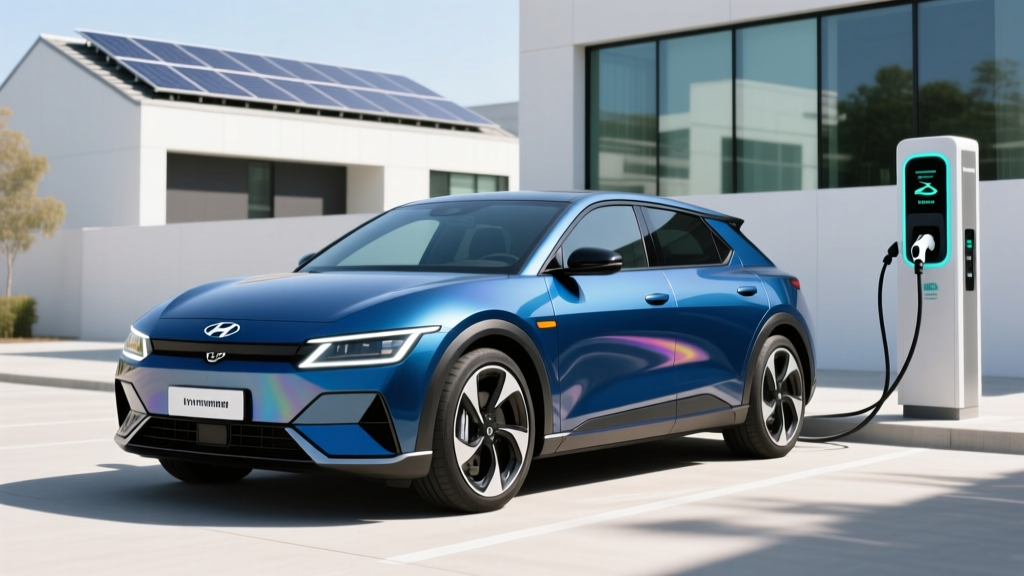
The 2026 Hyundai Ioniq 5 remains one of the most compelling midsize electric crossovers on the market. Built on Hyundai Motor Group's E-GMP platform with a standard NACS charge port, the Ioniq 5 delivers class-leading DC fast-charging speeds, a usable 84 kWh battery, and a practical cabin that suits daily commuting and road trips alike. For buyers researching the facts of renewable resources and how they translate to real-world EV ownership — from grid-tied home charging to solar-powered Level 2 setups — the Ioniq 5 is a strong match. Its efficiency (up to 132 MPGe combined) means you extract more miles per kilowatt-hour of renewably generated electricity than most competitors.
EPA estimated range: 310 miles (SE/SEL RWD, 18-inch wheels). Expect approximately 260–280 miles in mixed highway driving at 70+ mph, and 220–250 miles in sustained cold weather (below 30°F) due to battery heating demands and reduced regen efficiency. AWD trims with 20-inch wheels drop to an EPA-estimated 270 miles.
Specs at a Glance
| Attribute | 2026 Ioniq 5 SE/SEL RWD | 2026 Ioniq 5 Limited AWD |
|---|---|---|
| EPA Range | 310 mi | 270 mi |
| Battery (usable) | 84 kWh (NMC) | 84 kWh (NMC) |
| Drivetrain | RWD, single motor | Dual-motor AWD |
| Horsepower | 168 hp | 320 hp |
| 0–60 mph | 7.0 sec | 4.5 sec |
| Peak DC Fast Charge | 240 kW | 240 kW |
| 10–80% DC Time | ~18 min | ~18 min |
| Level 2 Charge Rate | 10.9 kW | 10.9 kW |
| MPGe (combined) | 132 MPGe | 110 MPGe |
| kWh/100 mi | 25 kWh | 30 kWh |
| Cargo (rear seats up) | 27.2 cu ft | 27.2 cu ft |
| Cargo (rear seats folded) | 59.3 cu ft | 59.3 cu ft |
| Frunk | 0.85 cu ft | 0.85 cu ft |
| Rear Legroom | 39.4 in | 39.4 in |
| Base MSRP | $43,600 | $54,100 |
| Battery Warranty | 10 yr / 100,000 mi | 10 yr / 100,000 mi |
Battery, Chemistry & Degradation
The 2026 Ioniq 5 uses an 84 kWh usable NMC (nickel manganese cobalt) battery pack. NMC chemistry offers higher energy density than LFP (lithium iron phosphate), which translates to more range in a smaller, lighter package — important for a crossover targeting 300+ miles. The trade-off is that NMC cells benefit from keeping state of charge (SoC) between 20% and 80% for daily use, reserving 100% charges for road trips. Hyundai's battery management system includes a top and bottom buffer to protect long-term health.
Based on real-world fleet data from earlier E-GMP vehicles, expect approximately 8–12% degradation over the first 100,000 miles, after which the curve flattens significantly. Hyundai's 10-year/100,000-mile battery warranty guarantees at least 70% capacity retention — one of the strongest in the segment. If you charge primarily at home on Level 2 and avoid frequent DC fast-charging to 100%, hitting 90%+ state of health (SoH) at 100,000 miles is realistic.
Charging: DC Fast, Level 2 & Home Setup
The Ioniq 5's 800-volt architecture is its defining technical advantage. While most competitors in this price range use 400V systems that peak around 150–170 kW, the Ioniq 5 sustains higher charge rates for longer.
| Charging Level | Power | Miles Added per Hour | Notes |
|---|---|---|---|
| Level 1 (120V) | ~1.4 kW | ~5 mi/hr | Emergency/trickle only |
| Level 2 (240V, 48A) | 10.9 kW | ~40 mi/hr | Full charge in ~8 hr |
| DC Fast (peak) | 240 kW | ~700 mi/hr (at peak) | 10–80% in ~18 min |
| DC Fast (sustained avg) | ~160 kW avg | — | Curve tapers above 55% SoC |
Charging curve reality: The Ioniq 5 hits its 240 kW peak between roughly 10% and 35% SoC, then gradually steps down. From 55% to 80%, expect roughly 100–120 kW. The 10–80% average of ~160 kW is still among the best in its class. At Electrify America or Tesla Supercharger (with the native NACS port on 2026 models), preconditioning the battery via the navigation-routed charging feature is essential to hit peak rates — arriving at a charger cold can cut peak speed by 40% or more.
Home charging: A 48-amp Level 2 home charger on a 240V/60A circuit delivers the full 10.9 kW, adding about 40 miles of range per hour. For most owners driving 30–50 miles daily, an overnight session easily replenishes the battery. Installation costs typically range from $800–$2,000 depending on panel capacity and conduit run. If your home uses solar panels — one of the most practical facts of renewable resources applied to EV ownership — a typical 8 kW residential solar array can generate enough daily energy to cover 80–100 miles of Ioniq 5 driving in sunny climates.
Performance & Driving Dynamics
The RWD model's 168 hp is adequate for commuting and merging, with a 7.0-second 0–60 mph time that feels peppy around town thanks to instant torque. The dual-motor AWD Limited transforms the character entirely: 320 hp and a 4.5-second 0–60 mph sprint make it genuinely quick. Both versions benefit from the E-GMP platform's low center of gravity and near 50/50 weight distribution.
Regenerative braking offers four levels, adjustable via steering wheel paddles. Level 3 (the strongest setting) enables near one-pedal driving in city traffic, though it doesn't quite bring the car to a complete stop like some competitors. The heat pump (standard on all trims) improves cold-weather efficiency by scavenging waste heat from the powertrain rather than relying solely on resistive cabin heating — a meaningful advantage in northern climates.
Pricing, Trims & Federal Tax Credit
The 2026 Ioniq 5 is offered in four trims. All trims qualify for evaluation under the IRS §30D federal tax credit, but eligibility depends on your income, the vehicle's MSRP, and battery-component/critical-mineral sourcing requirements that shift annually.
| Trim | MSRP | §30D Credit (if eligible) | Effective Price |
|---|---|---|---|
| SE Standard Range | $40,500 | Up to $7,500 | ~$33,000 |
| SE | $43,600 | Up to $7,500 | ~$36,100 |
| SEL | $47,200 | Up to $7,500 | ~$39,700 |
| Limited | $54,100 | Up to $7,500 | ~$46,600 |
§30D eligibility checklist (2026 rules):
- MSRP cap: SUVs/crossovers must be under $80,000 — all Ioniq 5 trims qualify.
- Buyer income cap: AGI must not exceed $150,000 (single), $225,000 (head of household), or $300,000 (joint).
- Battery sourcing: A percentage of critical minerals and battery components must be sourced from the U.S. or FTA partners. Hyundai has been progressively shifting supply chains; verify current-year compliance on the IRS clean vehicle manufacturer list before purchasing.
- Point-of-sale transfer: You can transfer the credit to the dealer at purchase, reducing your out-of-pocket cost immediately rather than waiting to claim it on your tax return.
Always confirm eligibility with a tax professional and check the latest fueleconomy.gov listings, as sourcing requirements tighten annually.
Interior, Tech & Safety
The Ioniq 5's cabin stands out with its flat floor (a benefit of the dedicated EV platform) and a sliding center console that moves up to 5.5 inches — useful for tight parking-space exits. The dual 12.3-inch displays (instrument cluster and infotainment) run Hyundai's latest infotainment software with wireless Apple CarPlay and Android Auto, over-the-air updates, and a digital key feature that lets your phone act as the key fob.
Driver assistance: Hyundai's SmartSense suite is standard and includes forward collision-avoidance assist, lane-keeping assist, blind-spot monitoring, and rear cross-traffic alert. The available Highway Driving Assist 2 (HDA 2) provides adaptive cruise control with lane-centering and automated lane changes when you activate the turn signal. This is a Level 2 SAE driver-assist system — you must keep your hands on the wheel and remain fully engaged at all times.
Safety: The Ioniq 5 earned a 5-star overall rating from NHTSA and a Top Safety Pick+ designation from IIHS in prior model years, with 2026 results pending.
Notable drawbacks:
- The frunk is tiny (0.85 cu ft) — barely fits a charging cable bag.
- Rear wiper is absent; the aerodynamic spoiler design sheds water but is insufficient in heavy rain.
- Road noise on coarse pavement is more noticeable than in the Kia EV6, its platform-mate.
Pros, Cons & Who Should Buy
- Best-in-class DC fast-charging speed (240 kW peak, 18 min 10–80%)
- NACS charge port standard — native Tesla Supercharger access
- Strong 10-year/100,000-mile battery warranty
- Flat floor and versatile interior with sliding console
- Heat pump standard on all trims
- Vehicle-to-load (V2L) adapter included — power devices or a campsite
- Small frunk (0.85 cu ft)
- No rear wiper
- RWD base model feels underpowered for the price
- Cabin road noise on rough surfaces
- One-pedal driving doesn't achieve full stop
Choose the Ioniq 5 if: You need fast road-trip charging, value a strong battery warranty, want native NACS/Supercharger access, and plan to pair your EV with home solar or renewable-grid charging. The RWD SE is ideal for commuters covering 30–60 miles daily; the AWD Limited suits families who need all-weather traction and extra power.
Look elsewhere if: You prioritize maximum cargo space (the Kia EV9 or Tesla Model X offer more), need three rows, or want the longest possible EPA range (the Lucid Air or Tesla Model S exceed 350 miles, though at higher prices).
How It Compares: Ioniq 5 vs. Key Rivals
Against the Tesla Model Y, the Ioniq 5 matches or beats on charging speed and interior material quality, but the Model Y offers more cargo volume (30.2 cu ft rear-up) and access to Tesla's Supercharger network — though that advantage narrows now that the Ioniq 5 ships with a native NACS port. The Model Y Long Range achieves 320 miles EPA but starts higher.
The Kia EV6 shares the E-GMP platform and nearly identical powertrain specs, but its sportback roofline sacrifices some rear headroom and cargo height. The Ford Mustang Mach-E offers comparable range but slower DC charging (~150 kW peak on most trims).
In terms of the broader conversation around the facts of renewable resources and EV ownership: the Ioniq 5's high efficiency (25 kWh/100 mi for RWD) means it requires less electricity per mile than heavier, less efficient EVs — making it a more practical choice if you're generating your own solar power or paying time-of-use rates on a green-energy utility plan.
Frequently Asked Questions
What is the real-world range of the 2026 Hyundai Ioniq 5?
The EPA rates the RWD model at 310 miles and the AWD at 270 miles. In real-world highway driving at 70–75 mph, expect 260–280 miles for RWD and 230–245 miles for AWD. Cold weather (below 30°F) can reduce range by 15–25%, bringing the RWD down to roughly 220–250 miles depending on cabin heat usage and terrain.
How fast does the Ioniq 5 charge at home and on DC fast chargers?
On a DC fast charger capable of 240 kW+, the Ioniq 5 charges from 10–80% in approximately 18 minutes, peaking at 240 kW before tapering. At home on a 240V Level 2 charger (48A), it charges at 10.9 kW, adding about 40 miles of range per hour — a full overnight session replenishes the entire battery.
Does the 2026 Ioniq 5 qualify for the $7,500 federal EV tax credit?
All Ioniq 5 trims fall under the $80,000 SUV MSRP cap. However, full credit eligibility depends on your adjusted gross income (under $150K single / $300K joint), and whether Hyundai's battery components and critical minerals meet the 2026 sourcing thresholds. Check the IRS clean vehicle list and consult a tax professional before relying on the credit.
Is the Ioniq 5 worth buying over the Tesla Model Y or Kia EV6?
The Ioniq 5 wins on charging speed and warranty coverage. The Model Y offers more cargo space and slightly more range. The EV6 is mechanically similar but trades cargo height for a sportier roofline. If fast DC charging and a long battery warranty are your top priorities, the Ioniq 5 is the strongest pick in this segment.
Can I power my home or devices with the Ioniq 5?
Yes. The Ioniq 5 includes a V2L (vehicle-to-load) adapter that provides up to 3.6 kW of 120V AC power through the exterior charge port or an interior outlet. This can power laptops, a small refrigerator, camping equipment, or serve as emergency backup during an outage — though it does not support full V2H (vehicle-to-home) bidirectional charging.
What is the battery replacement cost out of warranty?
Full pack replacement for E-GMP vehicles currently ranges from approximately $12,000–$18,000 including labor, though individual module replacement is possible at lower cost. Given the 10-year/100,000-mile warranty and NMC degradation curves, most owners will never need a full replacement under normal use.