Quick Answer: Is the Mercedes-Benz GLC EV Worth Buying?
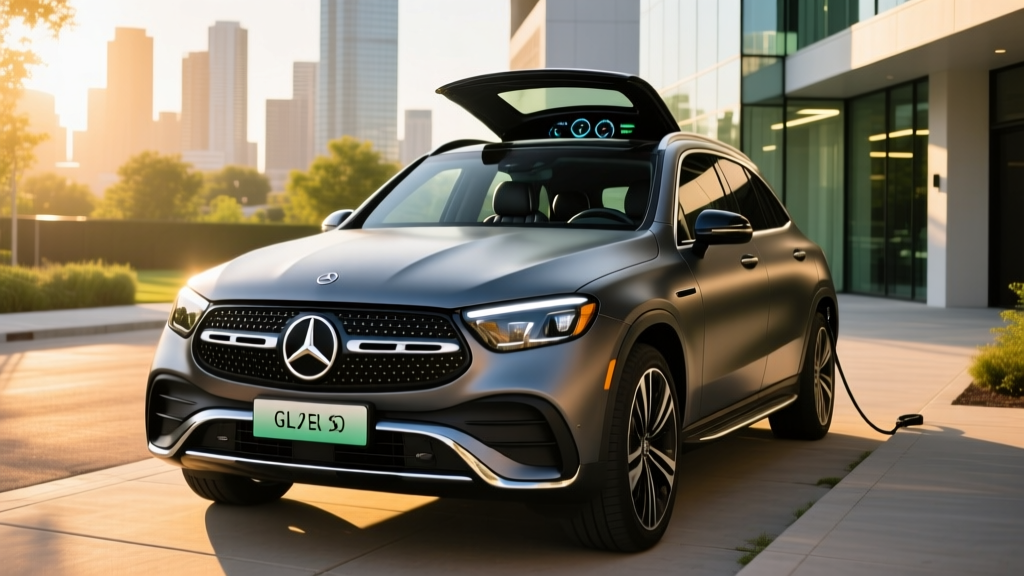
The 2026 Mercedes-Benz GLC EV delivers 320 miles of EPA-estimated range, peaks at 270 kW DC fast charging (10-80% in ~18 minutes), and starts around $62,000 before incentives. It's a strong choice if you have home Level 2 charging access, drive 30-60 miles daily, and value luxury refinement over maximum cargo space. However, expect 240-260 miles real-world highway range, and verify §30D tax credit eligibility based on your income and the vehicle's battery sourcing compliance.
Range, Battery, and Real-World Efficiency
The 2026 GLC EV uses a 94 kWh usable battery pack (NMC chemistry) powering dual motors for all-wheel drive. The EPA rates it at 320 miles combined, but real-world conditions tell a more nuanced story:
EPA Estimate: 320 miles
Real-World Expectations:
- Highway driving (70-80 mph): 240-260 miles
- Cold weather (below 32°F): 220-250 miles
- City/suburban mixed: 290-310 miles
Efficiency: 98 MPGe combined (34 kWh/100 miles)
The GLC EV's thermal management system includes a heat pump, which helps preserve range in cold climates—a critical feature if you live in the Northeast or Midwest. Preconditioning the battery while plugged in (via the Mercedes me app) can recover 10-15 miles of range in winter by warming the pack before you drive.
Charging Speed and Infrastructure
Understanding the difference between kW (power, or charge rate) and kWh (energy, or battery capacity) is essential. The GLC EV's 270 kW peak DC fast-charge rate means it can accept energy quickly—but only under ideal conditions.
| Level | Power | Time | Miles Added/Hour |
|---|---|---|---|
| Level 1 (120V) | 1.4 kW | 68 hours (0-100%) | 3-4 miles |
| Level 2 (240V, 48A) | 11.5 kW | 8.5 hours (0-100%) | 35-38 miles |
| DC Fast Charge | 270 kW peak | ~18 min (10-80%) | N/A |
Charging curve reality: The 270 kW peak only sustains from roughly 10-30% state of charge. Above 50%, the rate tapers to 150-180 kW; above 80%, it drops to 50-70 kW to protect battery longevity. On a road trip, plan stops at 150+ kW chargers (Electrify America, EVgo, or Tesla Superchargers with NACS adapter) for meaningful 15-20 minute top-ups.
The GLC EV uses the NACS (Tesla) connector standard as of 2025, giving you access to over 20,000 Superchargers nationwide—a major advantage over CCS-only vehicles.
Cost Breakdown: Purchase, Charging, and Ownership
Let's compare the 2026 GLC EV against the gas-powered GLC 300 4MATIC over 5 years and 60,000 miles:
| Cost Category | GLC EV | GLC 300 Gas |
|---|---|---|
| Purchase Price (MSRP) | $62,000 | $48,000 |
| Federal Tax Credit (§30D) | -$3,750 to $7,500* | $0 |
| Fuel/Energy | $3,200 (home charging) | $7,800 (25 MPG, $3.25/gal) |
| Maintenance | $1,200 | $3,400 |
| Insurance (avg) | $9,500 | $8,200 |
| Depreciation (est.) | $22,000 | $18,000 |
| Total 5-Year Cost | $42,150 - $45,900 | $51,400 |
*Tax credit caveats: The §30D credit phases based on battery component and critical mineral sourcing (per IRS guidelines). Income caps apply ($150K single, $300K joint). The GLC EV may qualify for $3,750 or $7,500 depending on model year and sourcing compliance—verify with your tax professional before purchase.
Home charging cost: At $0.14/kWh national average, fully charging the 94 kWh battery costs ~$13.16. That's 4.3 cents per mile versus 13 cents per mile for gas. If you lack home charging access and rely solely on public DC fast chargers ($0.35-0.45/kWh), your fuel cost jumps to $3.50-4.50 per charge—still cheaper than gas but less compelling.
EV vs Gas vs Hybrid: Which GLC Fits Your Life?
| Factor | GLC EV | GLC 300 (Gas) | GLC 350e (PHEV) |
|---|---|---|---|
| Range | 320 mi (EPA) | 400 mi (16.9 gal tank) | 340 mi total (54 mi electric) |
| Refuel/Recharge Time | 18 min (10-80% DC) | 5 min | 3.5 hr (Level 2) |
| Daily Commute (40 mi) | $1.72 (home) | $5.20 | $1.20 (electric-only) |
| Best For | Home charging, <70 mi/day | No home charging, road trips | Short commutes, occasional long trips |
| Maintenance | Minimal (no oil, fewer brakes) | Regular (oil, filters, brakes) | Moderate (both systems) |
Choose the GLC EV if: You have Level 2 home charging, drive under 70 miles daily, live in a moderate climate (or can precondition), and want minimal maintenance. The 320-mile range handles weekend trips with one 20-minute charge stop.
Choose the gas GLC 300 if: You lack reliable home charging, frequently drive 300+ miles in rural areas with sparse DC infrastructure, or tow heavy loads (the EV's towing capacity is 3,500 lbs vs 4,400 lbs for gas).
Choose the GLC 350e PHEV if: Your commute is under 50 miles (electric-only covers it), but you take monthly 400-mile road trips and want zero range anxiety. You'll need Level 2 home charging to maximize the 54-mile electric range.
First-Time EV Buyer Essentials
Home Charging Installation
Most GLC EV owners install a Level 2 (240V, 48-amp) home charger. Budget $800-2,200 for equipment and electrician labor, depending on your electrical panel's capacity. If your panel is 100 amps or older, expect a $1,500-3,000 upgrade to 200 amps—a non-negotiable safety requirement.
Recommended chargers: ChargePoint Home Flex ($700), Tesla Wall Connector ($475, NACS native), or Emporia Vue ($400). All deliver 11.5 kW at 48 amps, adding 35-38 miles of range per hour.
Battery Warranty and Longevity
Mercedes-Benz warranties the GLC EV's battery for 8 years or 100,000 miles, whichever comes first, guaranteeing at least 70% capacity retention. Real-world data from similar NMC packs suggests 85-90% capacity at 100,000 miles if you avoid frequent DC fast charging above 80% and don't regularly drain below 10%.
Battery replacement cost (out of warranty): $14,000-18,000. However, EPA data shows modern EV batteries rarely need full replacement—individual module repairs cost $2,000-4,000.
Cold-Weather Ownership
If you live where temperatures regularly drop below freezing, expect 20-30% range loss. The GLC EV's heat pump and battery preconditioning mitigate this, but you'll still see 220-250 miles in deep winter. Garage parking and plugging in overnight (even on Level 1) helps preserve range.
Common Misconceptions About the GLC EV
| Myth | Fact |
|---|---|
| "EVs are worse for the environment due to battery mining." | Over a 150,000-mile lifetime, the GLC EV produces 50-60% fewer emissions than the gas GLC, even accounting for battery production and U.S. grid mix (per EPA lifecycle analysis). |
| "I'll be stranded with a dead battery." | With 320 miles of range and 20,000+ NACS Superchargers, range anxiety is manageable with trip planning. The MBUX navigation routes through chargers automatically. |
| "EV batteries need replacement every 5 years." | Modern NMC packs last 150,000-200,000 miles with 80%+ capacity. The 8-year warranty protects against premature degradation. |
| "Home charging is too expensive to install." | Average Level 2 install is $1,200-1,800. Many utilities offer $300-500 rebates, and the fuel savings pay back the cost in 18-24 months. |
| "EVs can't handle road trips." | The GLC EV's 18-minute 10-80% charge time means a 600-mile trip requires two 20-minute stops—comparable to gas-car rest breaks. |
Decision Framework: Should You Buy the GLC EV?
Answer these questions to decide:
- Do you have access to Level 2 home charging (garage or driveway with 240V outlet)?
- Yes → Continue to question 2
- No → Consider the GLC 350e PHEV or wait until you can install charging
- Is your daily driving under 70 miles round-trip?
- Yes → The GLC EV's 320-mile range gives you 4+ days between charges
- No → The gas GLC 300 may be more practical, or ensure robust public DC charging near your route
- Do you live in a region with reliable DC fast-charging infrastructure (Electrify America, EVgo, Superchargers)?
- Yes → Road trips are viable with 18-minute stops
- No → The PHEV or gas model reduces long-trip stress
- Does your household income fall under §30D caps ($150K single, $300K joint) and can you use the tax credit?
- Yes → Factor $3,750-7,500 into your purchase decision
- No → The EV still saves on fuel/maintenance, but the upfront premium takes longer to recoup
- Are you comfortable with slightly higher insurance premiums ($100-150/month more than gas)?
- Yes → The 5-year total cost still favors the EV
- No → Get insurance quotes before committing
Verdict: If you answered "yes" to questions 1, 2, and 4, the GLC EV is a compelling luxury EV that will save you $5,000-7,000 over 5 years versus the gas model. If home charging or long rural drives are barriers, the PHEV offers a pragmatic middle ground.
Frequently Asked Questions
Does the 2026 GLC EV qualify for the full $7,500 federal tax credit?
It depends on battery sourcing compliance and your income. The §30D credit splits into two $3,750 halves: battery components and critical minerals. Mercedes-Benz has not confirmed full compliance for all 2026 GLC EV builds. Check the IRS qualified vehicles list before purchase, and consult a tax professional to confirm eligibility based on your AGI.
How long does it take to charge the GLC EV at home?
On a Level 2 (240V, 48A) charger, expect 8.5 hours from 0-100%. Most owners charge overnight, plugging in at 20-30% and waking to 80-90%—a 5-6 hour cycle. Level 1 (120V) charging adds only 3-4 miles per hour and is impractical as a primary method.
What's the real-world range in winter?
Expect 220-250 miles in temperatures below 32°F, a 20-30% reduction from the 320-mile EPA estimate. Using seat heaters instead of cabin heat, preconditioning while plugged in, and garage parking can recover 10-15 miles of that loss.
Can I tow with the GLC EV?
Yes, but capacity is limited to 3,500 lbs (vs 4,400 lbs for the gas GLC). Towing also reduces range by 30-40%—plan for more frequent charging stops if hauling a trailer.
Is the GLC EV's battery expensive to replace?
Out-of-warranty replacement costs $14,000-18,000, but this is rare. The 8-year/100,000-mile warranty covers defects and capacity loss below 70%. Most NMC batteries retain 85-90% capacity at 100,000 miles with proper care (avoiding frequent 0% or 100% states of charge).
How does the GLC EV compare to the Tesla Model Y?
The Model Y offers more range (330-350 miles), faster charging (250 kW sustained), and a lower starting price ($48,000). The GLC EV counters with superior interior materials, quieter ride quality, and Mercedes-Benz dealer service network access. If luxury refinement matters more than maximum efficiency, the GLC EV wins; if value and range are priorities, the Model Y is the benchmark.