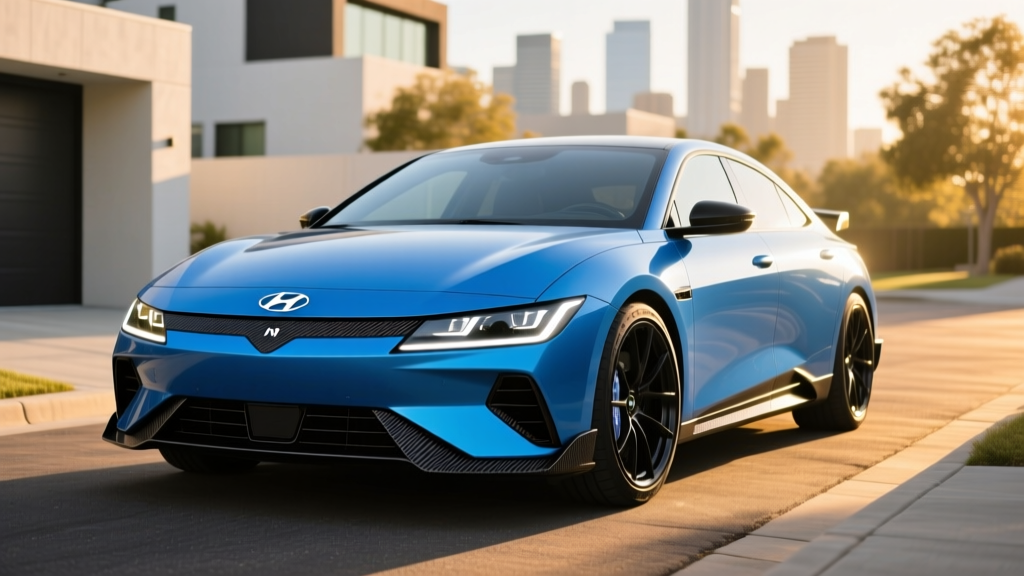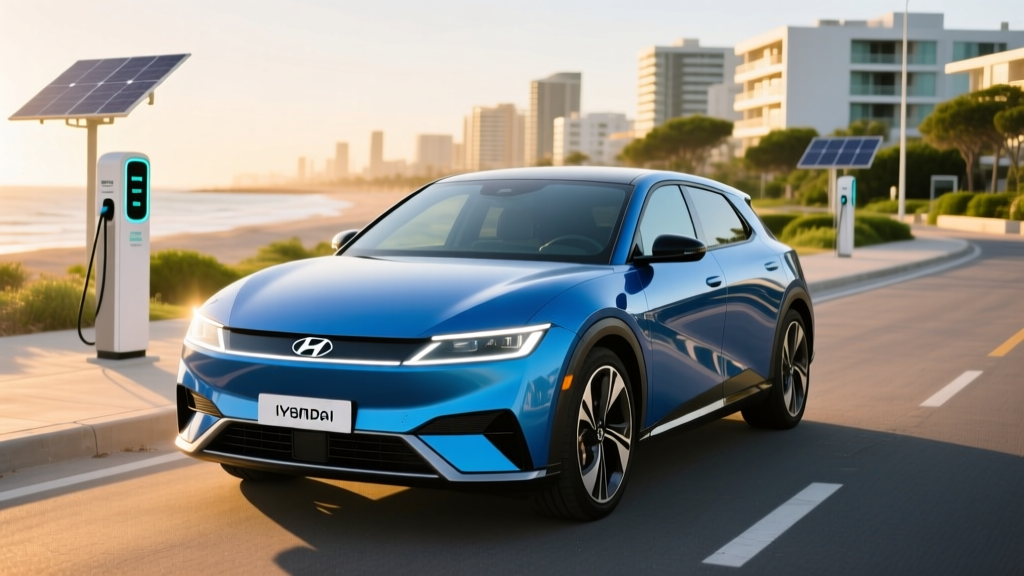
For shoppers researching non Tesla electric cars, the 2026 Hyundai Ioniq 5 remains a benchmark midsize crossover. Now equipped with a native NACS charge port and Tesla Supercharger access, Hyundai's retro-futuristic EV eliminates the biggest historical objection to non-Tesla ownership: charging network reliability. With up to 318 miles of EPA range, 800-volt architecture enabling sub-20-minute fast charges, and a refined ride, the Ioniq 5 competes head-on with the Tesla Model Y, Ford Mustang Mach-E, and Kia EV6.
This review covers the 2026 model year with updated battery specs, pricing, and federal tax credit eligibility under current IRS §30D rules.
2026 Hyundai Ioniq 5 At-a-Glance Specs
| Spec | SE/SEL RWD | SEL/Limited AWD | Ioniq 5 N |
|---|---|---|---|
| EPA Range | 318 mi | 290 mi | 221 mi |
| Battery (usable) | 84.0 kWh, NMC | 84.0 kWh, NMC | 84.0 kWh, NMC |
| Peak DC Charge Rate | 240 kW | 240 kW | 240 kW |
| 10–80% DCFC Time | ~18 min | ~18 min | ~18 min |
| Level 2 Rate | 10.9 kW (~35 mi/hr) | 10.9 kW (~35 mi/hr) | 10.9 kW (~35 mi/hr) |
| Horsepower | 168 hp | 320 hp | 641 hp |
| 0–60 mph | 7.4 sec | 4.5 sec | 3.25 sec |
| Drivetrain | RWD | Dual-motor AWD | Dual-motor AWD |
| MPGe (combined) | 114 MPGe | 101 MPGe | 78 MPGe |
| Base MSRP | $43,975 | $48,475 | $67,775 |
Sources: fueleconomy.gov, Hyundai News. Prices exclude destination ($1,495).
Real-World Range vs. EPA Sticker
Real-world expectation: 260–290 mi highway (RWD), 230–260 mi highway (AWD). In freezing temperatures (below 25°F), expect a 20–30% reduction, dropping the RWD to roughly 220–250 mi. The heat pump on AWD and Limited trims mitigates cold-weather losses compared to competitors without one.
The 84.0 kWh NMC battery delivers strong efficiency at 29 kWh/100 mi for the RWD. In mixed driving at 70 mph, the RWD consistently returns 270–285 miles before hitting 10% State of Charge. The AWD variant's extra motor and weight cut highway range to roughly 240–255 miles in moderate temperatures.
Unlike LFP chemistry, Hyundai's NMC cells offer higher energy density but benefit from the 20–80% daily charging practice for longevity. The battery management system includes a ~4% top and bottom buffer, so usable capacity is 84 kWh out of approximately 87.5 kWh gross.
Charging Speed: 800V Architecture Advantage
The Ioniq 5's E-GMP platform runs on an 800-volt architecture — a rarity at this price point and the main reason it charges faster than most non Tesla electric cars in its class. The native NACS port (introduced for the 2025 refresh) means direct Tesla Supercharger compatibility without an adapter.
| Charging Level | Power / Rate | Miles Added per Hour | Notes |
|---|---|---|---|
| Level 1 (120V) | 1.4 kW | ~4 mi/hr | Emergency / overnight trickle |
| Level 2 (240V, 48A) | 10.9 kW | ~35 mi/hr | Full charge in ~8.5 hours |
| DC Fast (peak) | 240 kW | — | 10–80% in ~18 min (preconditioned) |
| DC Fast (sustained avg 10–80%) | ~165 kW avg | — | Peak tapers after 55% SoC |
| Tesla Supercharger V3 | Up to 250 kW | — | Native NACS — no adapter needed |
Charging curve reality: The 240 kW peak holds from roughly 10–40% SoC, then steps down to ~180 kW through 55%, then drops more sharply past 70%. If you arrive at a charger with battery preconditioning active (triggered by navigating to the station), you'll see peak rates immediately. Without preconditioning — especially in cold weather — the first several minutes may be limited to 80–120 kW until the pack warms.
For home charging, a 48-amp Level 2 circuit on a 60-amp breaker delivers the full 10.9 kW, adding roughly 35 miles per hour. Most owners with a 30–40 mile commute will fully replenish overnight in 2–3 hours.
Performance and Driving Dynamics
The RWD single-motor setup (168 hp, 258 lb-ft) prioritizes efficiency over acceleration. The 7.4-second 0–60 time is adequate for commuting but won't thrill. The dual-motor AWD (320 hp, 446 lb-ft) transforms the character — 4.5 seconds to 60, confident highway merging, and genuine all-weather traction.
The Ioniq 5 N is a different animal entirely: 641 hp (650 with N Grin Boost), 3.25-second 0–60, simulated gear shifts, and track-capable thermal management. It's a legitimate performance car, but at $67,775 and 221 miles of range, it's a niche buy.
Ride quality across the lineup is compliant and well-damped. The 119.4-inch wheelbase yields generous rear legroom (39.4 inches), and the steering is light but direct. Road noise is well-suppressed at highway speeds — a noticeable improvement over earlier model years.
Interior, Cargo, and Technology
The cabin uses a flat-floor skateboard architecture with a sliding center console (14 cm of travel). Materials are a mix of recycled plastics and synthetic leather on higher trims. The dual 12.3-inch displays run Hyundai's latest infotainment with native navigation, wireless Apple CarPlay and Android Auto, and over-the-air updates.
- Cargo (behind rear seats): 27.2 cu ft
- Cargo (rear seats folded): 59.3 cu ft
- Frunk: 2.0 cu ft (AWD) / 4.0 cu ft (RWD) — enough for charging cables
- Rear legroom: 39.4 inches
- Front headroom: 40.2 inches
Standard driver assists include Hyundai SmartSense: forward collision-avoidance, lane-keeping assist, blind-spot monitoring, and rear cross-traffic alert. Highway Driving Assist 2 (HDA2) provides lane centering and adaptive cruise with stop-and-go — a competent SAE Level 2 system, though it requires hands on the wheel and does not approach Tesla's FSD or GM's Super Cruise in hands-free capability.
The Vehicle-to-Load (V2L) feature is a standout: an interior 120V outlet and exterior adapter let you power devices, appliances, or even another EV at up to 3.6 kW. Useful for camping, tailgating, or emergency backup power.
Pricing, Trims, and Federal Tax Credit
| Trim | MSRP (incl. destination) | Est. After §30D Credit* |
|---|---|---|
| SE Standard Range | $43,975 | $36,475 |
| SE | $47,475 | $39,975 |
| SEL | $50,475 | $42,975 |
| Limited | $56,475 | $48,975 |
| Ioniq 5 N | $69,270 | $61,770 |
*Estimated after max $7,500 federal credit. Actual eligibility depends on buyer income, MSRP caps, and battery-sourcing requirements. See checklist below.
- MSRP cap: SUVs/crossovers must be ≤$80,000 — all Ioniq 5 trims qualify ✓
- Income cap: AGI ≤$150,000 (single), $225,000 (head of household), $300,000 (joint)
- Battery sourcing: Critical minerals and battery components must meet phased-in domestic/free-trade thresholds — Hyundai's Georgia plant and updated supply chain improve eligibility for most trims, but verify at point of sale
- Point-of-sale transfer: Credit can be applied as a down-payment reduction at the dealer (effective Jan 2024 onward)
- Assembly: Final assembly must be in North America — Ioniq 5 is built in Ellabell, Georgia ✓
Always confirm eligibility with your tax professional and the dealer's point-of-sale tool. Rules subject to change per IRS.gov.
How the Ioniq 5 Stacks Up Against Non Tesla Electric Car Rivals
| Spec | 2026 Ioniq 5 AWD | 2026 Tesla Model Y LR | 2026 Ford Mach-E ER AWD | 2026 Kia EV6 GT-Line AWD |
|---|---|---|---|---|
| EPA Range | 290 mi | 320 mi | 290 mi | 282 mi |
| Battery | 84.0 kWh NMC | 78.1 kWh NMC | 91 kWh NMC | 77.4 kWh NMC |
| Peak DC Charge | 240 kW | 250 kW | 150 kW | 240 kW |
| 10–80% Time | ~18 min | ~20 min | ~38 min | ~18 min |
| 0–60 mph | 4.5 sec | 4.8 sec | 5.1 sec | 4.5 sec |
| Base MSRP (AWD) | $48,475 | $49,990 | $52,995 | $51,900 |
| NACS Port | Native | Native | Native (2025+) | Native (2025+) |
The Ioniq 5's strongest competitive advantage is the combination of 800V charging speed and pricing. The Mach-E charges significantly slower at 150 kW peak. The Model Y edges ahead on range and Supercharger network maturity, but the gap has narrowed with Hyundai's native NACS access. The Kia EV6 shares the E-GMP platform and matches charging speed, but has slightly less cargo room and a lower roofline that compromises rear headroom.
Warranty and Ownership Costs
- New vehicle warranty: 5 years / 60,000 miles
- Battery & powertrain: 10 years / 100,000 miles (capacity retention guaranteed above 70% SoH)
- Roadside assistance: 5 years / unlimited miles
- Complimentary maintenance: 3 years / 36,000 miles
Hyundai's 10-year battery warranty is among the best in the segment and matches Kia. The 70% State of Health threshold is standard — if the battery degrades below 70% of original capacity within the warranty period, Hyundai will repair or replace it. Real-world degradation data from 2022–2024 Ioniq 5 owners suggests approximately 5–7% capacity loss over the first 60,000 miles, well within the warranty floor.
Insurance premiums for the Ioniq 5 run roughly 15–25% higher than a comparable gas-powered Tucson, which is typical for EVs. Average annual premiums land in the $1,800–$2,400 range depending on state and driving record.
Pros and Cons
✓ Pros
- 800V architecture delivers class-leading 18-min 10–80% charging
- Native NACS port with full Supercharger access
- Spacious cabin with flat floor and sliding console
- V2L capability for off-grid power
- 10-year/100,000-mi battery warranty
- Competitive pricing, all trims under §30D MSRP cap
✗ Cons
- RWD 168 hp feels underpowered for the weight
- No hands-free driving assist (HDA2 requires hands-on)
- Frunk is small (2.0 cu ft on AWD)
- Rear wiper absent on pre-2025 builds (added for 2025+)
- Road noise still noticeable on coarse pavement
- Infotainment learning curve vs. Tesla's minimalist UI
Who Should Buy the 2026 Ioniq 5?
Best for: Daily commuters and families who want fast DC charging for road trips, a comfortable ride, and Tesla Supercharger access without owning a Tesla. The AWD SEL at ~$50,475 (potentially ~$42,975 after credit) is the value sweet spot.
Look elsewhere if: You want hands-free highway driving (GM Super Cruise or Ford BlueCruise), need maximum range (Model Y Long Range), or prioritize a performance driving experience without stepping up to the $67K+ Ioniq 5 N.
Towing note: The AWD Ioniq 5 is rated for 2,300 lbs with a braked trailer — adequate for a small utility trailer or a pair of jet skis, but not a camper.
Frequently Asked Questions
What is the real-world range of the 2026 Hyundai Ioniq 5?
The EPA rates the RWD at 318 miles and AWD at 290 miles. In real-world highway driving at 70 mph, expect 260–290 miles for RWD and 230–260 miles for AWD. Cold weather (below 25°F) can reduce range by 20–30%. The AWD model's heat pump partially offsets winter losses.
How fast does the Ioniq 5 charge at home and on the road?
At home on a 240V/48A Level 2 charger, the Ioniq 5 charges at 10.9 kW, adding roughly 35 miles per hour (full charge in about 8.5 hours). On DC fast chargers, it peaks at 240 kW and charges from 10–80% in approximately 18 minutes when battery preconditioning is active. It charges natively at Tesla Superchargers via its NACS port.
Does the 2026 Ioniq 5 qualify for the $7,500 federal EV tax credit?
Most likely yes, but eligibility depends on your income (≤$150K single / $300K joint), the specific trim's battery sourcing compliance, and MSRP under $80,000 (all trims qualify). The Ioniq 5 is assembled in Georgia, meeting North American final assembly requirements. Confirm at point of sale and with a tax professional. Per IRS §30D rules, the credit can be transferred to the dealer as a down-payment reduction.
Is the Ioniq 5 worth buying over the Tesla Model Y?
It depends on priorities. The Model Y offers more range (320 vs. 290 mi AWD), a slightly more mature Supercharger network experience, and over-the-air software updates. The Ioniq 5 counters with faster peak charging (240 kW vs. 250 kW but with a flatter curve), a more comfortable ride, physical controls, V2L capability, a longer battery warranty (10 vs. 8 years), and typically lower pricing on comparable trims. For buyers specifically seeking non Tesla electric cars, the Ioniq 5 is the strongest all-around alternative.
What's the biggest drawback of the Ioniq 5?
The most common complaint is the RWD model's modest 168 hp — it feels leisurely for a vehicle weighing over 4,200 lbs. The AWD variant solves this but costs ~$4,500 more and sacrifices 28 miles of EPA range. The lack of a hands-free driving system also puts it behind GM and Ford in ADAS capability.