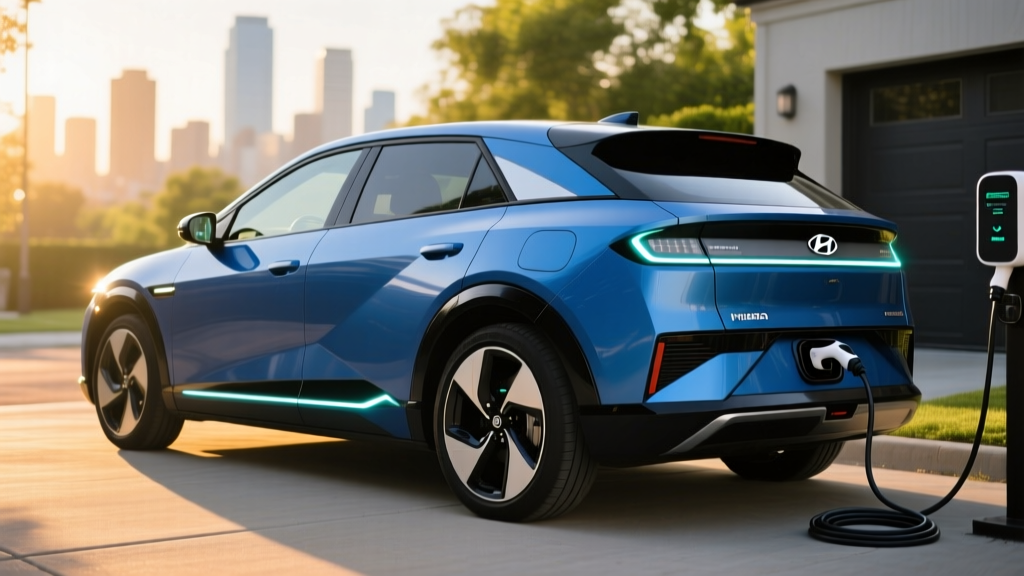
The Hyundai Ioniq 5 has remained a benchmark in the midsize electric crossover segment since its debut, and the 2026 model year continues that streak with meaningful refinements. For buyers weighing a 2026 Hyundai Ioniq 5 lease against purchasing outright, the calculus involves more than just monthly payments — it requires understanding real-world range, charging infrastructure compatibility, battery chemistry trade-offs, and the shifting landscape of federal tax incentives. This review dissects every spec, cost factor, and ownership variable you need before signing a lease agreement.
2026 Ioniq 5 Range, Battery, and Efficiency Breakdown
The 2026 Hyundai Ioniq 5 carries over the updated battery pack introduced for the 2025 refresh. Rear-wheel-drive (RWD) trims use a 63.0 kWh usable lithium-ion NMC (nickel manganese cobalt) battery, while all-wheel-drive (AWD) and the high-range RWD Long Range trims step up to an 84.0 kWh usable NMC pack. Hyundai has not switched to LFP chemistry for this model year, prioritizing energy density for the Ioniq 5's efficiency targets over the cycle-life advantages of LFP.
| Trim/Config | Battery (usable kWh) | Chemistry | EPA Range | MPGe (City/Hwy/Comb) | kWh/100 mi |
|---|---|---|---|---|---|
| SE/SEL RWD Standard Range | 63.0 kWh | NMC | 240 mi | 117 / 101 / 110 | 30 |
| SE/SEL/Limited RWD Long Range | 84.0 kWh | NMC | 310 mi | 123 / 104 / 114 | 29 |
| SE/SEL/Limited AWD | 84.0 kWh | NMC | 280 mi | 110 / 93 / 102 | 33 |
| Ioniq 5 N (Performance) | 84.0 kWh | NMC | 260 mi | 99 / 84 / 92 | 36 |
Charging Speed: 800V Architecture Advantage
The Ioniq 5's E-GMP platform retains its 800-volt electrical architecture, which remains one of the fastest-charging setups in its class. This matters because peak kW ratings only tell part of the story — sustained charging power through the curve is what determines actual wait time on road trips.
| Charge Level | Power / Rate | Time (10–80%) | Miles Added per Hour |
|---|---|---|---|
| Level 1 (120V household) | ~1.4 kW | N/A (overnight only) | ~4–5 mi/hr |
| Level 2 (240V home, 48A) | 10.9 kW | ~7.5 hours (full) | ~36 mi/hr |
| DC Fast Charge (350 kW station) | Peak 240 kW | ~18 minutes | N/A |
| DC Fast Charge (150 kW station) | Peak 150 kW | ~25 minutes | N/A |
| DC Fast Charge (50 kW station) | 50 kW | ~60 minutes | N/A |
The 18-minute 10–80% time assumes a 350 kW-capable CCS or NACS charger with the battery preconditioned (the Ioniq 5 does this automatically when a compatible fast charger is entered in the navigation system). The charge curve holds above 175 kW from roughly 10% to 55% SoC before tapering — meaning the bulk of your charging happens quickly. Above 80%, the curve drops sharply, so we recommend charging only to 80% on road trips for optimal time efficiency.
For the 2026 model year, Hyundai includes a NACS (Tesla Supercharger) port as standard equipment on all Ioniq 5 trims, eliminating the need for a CCS-to-NACS adapter. This opens access to Tesla's Supercharger network — a significant practical advantage for long-distance travel in areas where Electrify America or EVgo coverage is sparse.
Performance, Drivetrain, and the Ioniq 5 N
The standard Ioniq 5 lineup delivers competent but not thrilling performance. The RWD Long Range produces 225 horsepower and 258 lb-ft of torque from a single rear motor, achieving a 0–60 mph time of 7.0 seconds. The dual-motor AWD bumps output to 320 hp and 446 lb-ft, cutting the sprint to 5.0 seconds. Both configurations feel responsive around town, with the instant torque delivery that makes EVs feel quicker than their numbers suggest.
The Ioniq 5 N is a different animal entirely. With 641 hp (650 with N Grin Boost engaged) and dual motors, it hits 0–60 in 3.2 seconds. It also adds N-specific thermal management for sustained track use, simulated gear shifts via the N e-Shift system, and an 84 kWh battery tuned for power delivery over maximum range. The trade-off: 260 miles EPA range and noticeably higher energy consumption at 36 kWh/100 mi.
Interior Space, Tech, and Daily Livability
The Ioniq 5's flat-floor skateboard architecture translates into genuinely impressive interior volume. Front legroom measures 41.7 inches; rear legroom is 39.4 inches — competitive with midsize sedans despite the crossover form factor. Cargo space behind the rear seats is 27.2 cubic feet, expanding to 59.3 cubic feet with the rear seats folded. The front trunk (frunk) on RWD trims adds 0.85 cubic feet (AWD trims sacrifice this for the front motor).
The dual 12.3-inch display setup (instrument cluster and infotainment) runs Hyundai's latest infotainment software with wireless Apple CarPlay and Android Auto. Physical climate controls remain — a welcome decision that avoids the touchscreen-only frustration found in some competitors. Available features include a vehicle-to-load (V2L) outlet capable of supplying up to 3.6 kW of AC power, a panoramic sunroof (Limited trim), and Hyundai's Digital Key 2 allowing smartphone-based entry and start.
On the driver-assistance front, the Ioniq 5 includes Hyundai SmartSense as standard: adaptive cruise control with stop-and-go, lane-keeping assist, blind-spot monitoring, and forward collision avoidance. The available Highway Driving Assist 2 (HDA2) adds lane-centering and lane-change assist — a competent SAE Level 2 system that requires continuous driver attention. It is not autonomous driving.
2026 Hyundai Ioniq 5 Lease Pricing and Tax Credits
Leasing the 2026 Ioniq 5 introduces a distinct advantage over purchasing: the federal tax credit structure. Under current IRS §30D rules, the Ioniq 5 qualifies for up to $7,500 in federal tax credits when purchased — but only if the buyer meets income caps ($150,000 single / $300,000 joint), the vehicle MSRP stays under $80,000 (it does, for all trims except the N), and battery critical-mineral and component sourcing requirements are met. Hyundai has confirmed North American assembly (at the Metaplant in Georgia) and compliant battery sourcing for 2026.
However, when you lease, the commercial lessor (the financing entity) claims the $7,500 credit under the commercial clean vehicle credit (§45W), and reputable lessors pass this savings through as a capitalized-cost reduction — effectively lowering your lease payments. This bypasses the personal income cap and MSRP cap restrictions that apply to purchases.
| Trim | MSRP (incl. destination) | Est. Lease (36 mo / 10K mi/yr) | With $7,500 Credit Applied |
|---|---|---|---|
| SE RWD Standard Range | $43,500 | ~$499/mo | ~$290/mo |
| SEL RWD Long Range | $48,200 | ~$559/mo | ~$350/mo |
| Limited AWD | $55,800 | ~$649/mo | ~$440/mo |
| Ioniq 5 N | $67,500 | ~$799/mo | ~$590/mo |
These lease estimates are approximations based on typical money factors and residual values for 2026. Actual dealer offers vary by region, credit tier, and available Hyundai Motor Finance incentives. Always confirm the capitalized-cost reduction is reflected in your lease agreement before signing.
How the Ioniq 5 Stacks Against Key Rivals
The midsize electric crossover segment is crowded. Here's how the Ioniq 5 Long Range RWD compares on the metrics that matter most:
| Metric | Hyundai Ioniq 5 LR RWD | Tesla Model Y LR RWD | Ford Mustang Mach-E ER RWD | Kia EV6 LR RWD |
|---|---|---|---|---|
| EPA Range | 310 mi | 320 mi | 305 mi | 310 mi |
| Battery (kWh) | 84.0 NMC | 78.1 NMC | 88.0 NMC | 84.0 NMC |
| DC Fast Peak kW | 240 kW | 250 kW | 150 kW | 240 kW |
| 10–80% Time | ~18 min | ~20 min | ~38 min | ~18 min |
| 0–60 mph | 7.0 sec | 6.5 sec | 6.1 sec | 7.2 sec |
| Cargo (cu ft) | 27.2 / 59.3 | 30.2 / 72.1 | 29.7 / 59.7 | 24.4 / 50.2 |
| Base MSRP | $48,200 | $46,630 | $45,995 | $47,900 |
| NACS Port | Standard | Standard | Adapter required | Standard |
The Ioniq 5's primary advantages are its 800V charging speed (matching the Kia EV6 and far outpacing the Mach-E), standard NACS port, and Hyundai's industry-leading warranty. The Tesla Model Y offers more cargo space and slightly better range at a lower price, while the Mach-E provides a sportier driving feel but slower charging.
Warranty Coverage and Long-Term Battery Confidence
Hyundai backs the 2026 Ioniq 5 with a comprehensive warranty package that remains among the best in the EV market:
- New Vehicle Limited Warranty: 5 years / 60,000 miles
- Powertrain Warranty: 10 years / 100,000 miles
- EV Battery Warranty: 10 years / 100,000 miles (covers capacity loss below 70% of original)
- Complimentary Maintenance: 3 years / 36,000 miles
- Roadside Assistance: 5 years / unlimited miles
The 70% capacity retention threshold over 10 years is standard for the industry, but Hyundai's 10-year powertrain coverage exceeds most competitors. For lessees on a 36-month lease, this warranty is largely academic — you'll return the vehicle well within coverage. But it signals Hyundai's confidence in the E-GMP platform's durability and supports strong residual values, which directly benefit lease economics.
Pros, Cons, and Who Should Lease the 2026 Ioniq 5
Pros
- 800V architecture delivers 18-minute 10–80% DC fast charging
- Standard NACS port — full Tesla Supercharger access without adapters
- Spacious cabin with flat floor and generous rear legroom (39.4 in)
- V2L capability powers appliances, tools, or camping gear at 3.6 kW
- Class-leading 10-year/100,000-mile battery and powertrain warranty
- Lease structure can capture full $7,500 credit regardless of buyer income
Cons
- 240-mile Standard Range is limiting for road trips; Long Range is the practical choice
- Rear wiper is absent — a persistent complaint since launch
- Infotainment, while improved, still lags Tesla's UI responsiveness
- AWD range drops to 280 miles; not ideal for cold-climate commuters wanting maximum distance
- Frunk is tiny (0.85 cu ft on RWD, nonexistent on AWD)
- Insurance costs run 15–25% higher than comparable gas crossovers in most states
- Choose the Ioniq 5 if: You want the fastest DC charging in the segment, need Tesla Supercharger access, value interior space, and plan to lease for 24–36 months while battery tech evolves.
- Look elsewhere if: You need maximum cargo capacity (Model Y), prioritize sporty handling over charging speed (Mach-E GT), or regularly tow (the Ioniq 5 is rated for only 1,650 lbs with AWD — light utility trailers only).
Frequently Asked Questions
What is the real-world range of the 2026 Hyundai Ioniq 5?
The EPA rates the Long Range RWD at 310 miles. In real-world highway driving at 70–75 mph, expect 250–270 miles. In freezing winter conditions, that figure drops to approximately 220–240 miles. The Standard Range RWD's 240-mile EPA rating translates to roughly 190–210 miles on the highway.
How fast does the 2026 Ioniq 5 charge at home and on the road?
On a Level 2 home charger (240V, 48 amps), the Ioniq 5 charges at 10.9 kW — adding roughly 36 miles of range per hour, or a full charge in about 7.5 hours for the 84 kWh pack. On a 350 kW DC fast charger, it peaks at 240 kW and reaches 10–80% in approximately 18 minutes with battery preconditioning.
Does the 2026 Hyundai Ioniq 5 qualify for the federal EV tax credit?
Yes. When purchased, the Ioniq 5 qualifies for up to $7,500 under IRS §30D, provided the buyer's adjusted gross income does not exceed $150,000 (single) or $300,000 (joint), and the vehicle's MSRP is under $80,000 (all trims except the N qualify). Hyundai assembles the Ioniq 5 at its Georgia Metaplant with compliant battery sourcing. When leased, the lessor claims the commercial credit and typically passes the savings through as a cap-cost reduction.
Is leasing the 2026 Ioniq 5 better than buying?
Leasing offers two key advantages: it bypasses the personal income caps on the federal tax credit (the lessor claims it commercially), and it shields you from long-term battery degradation risk and EV resale-value uncertainty. Buying makes more sense if you plan to keep the vehicle 7+ years, drive fewer than 10,000 miles annually, and qualify for the full $7,500 credit at purchase. Consult a tax professional for your specific situation.
Is the Ioniq 5 a good EV for road trips?
Yes, particularly the Long Range trims. The combination of 310 miles of range, 18-minute fast charging, and standard NACS/Supercharger access makes it one of the most road-trip-capable EVs in its class. Plan stops around 350 kW-capable stations for the best experience — on 150 kW chargers, expect 25-minute stops instead of 18.
What are the biggest drawbacks of the 2026 Ioniq 5?
The most common complaints are the lack of a rear wiper, the small frunk (effectively useless on AWD trims), and higher insurance premiums compared to gas-powered competitors. The Standard Range's 240-mile EPA rating also feels inadequate for 2026 — we strongly recommend the Long Range for anyone who drives more than 40 miles round-trip daily.