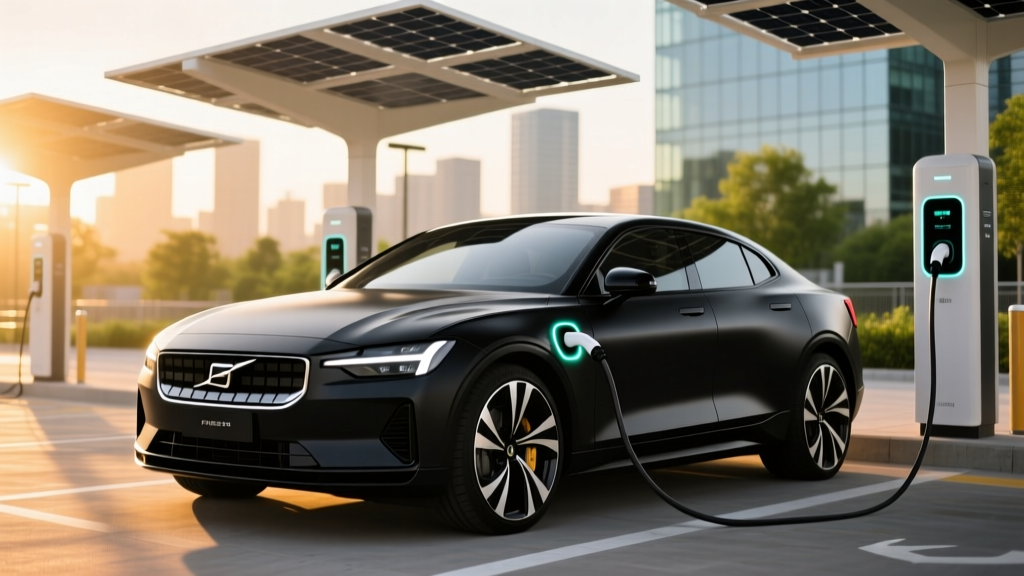
The Polestar 2 occupies a distinct niche in the premium electric sedan segment: Scandinavian design, Google-powered infotainment, and a driving character that leans European-sport over Silicon-Valley-tech. For 2026, the lineup continues with a single-motor rear-wheel-drive variant and a dual-motor all-wheel-drive performance option, both riding on Volvo's CMA platform. But with aggressive competition from the Tesla Model 3, Hyundai Ioniq 6, and BMW i4, the buying decision hinges on hard numbers — not brand cachet.
This review dissects the 2026 Polestar 2 MSRP across every trim, maps real-world range against EPA stickers, evaluates DC fast-charging behavior (including the critical taper above 80%), and untangles federal tax credit eligibility under current IRS §30D rules. Whether you're cross-shopping or ready to order, the data below tells you exactly what you'll pay, drive, and own.
2026 Polestar 2 MSRP by Trim: What You'll Actually Pay
Polestar simplified the 2026 lineup into two core powertrain configurations, with the Plus and Pilot packages available as add-ons rather than separate trim tiers. Destination fees are included in the figures below.
| Configuration | Drivetrain | HP | 0-60 mph | Base MSRP (incl. dest.) |
|---|---|---|---|---|
| Single Motor Standard Range | RWD | 299 hp | 5.9 sec | $49,900 |
| Single Motor Long Range | RWD | 299 hp | 5.9 sec | $53,400 |
| Dual Motor Long Range | AWD | 421 hp | 4.3 sec | $57,900 |
| Dual Motor + Performance Pack | AWD | 476 hp | 3.9 sec | $63,400 |
The Plus Package (heated steering wheel, 360° camera, Harman Kardon audio, heat pump) adds roughly $4,000. The Pilot Package (adaptive cruise, Pilot Assist with lane centering, LED cornering lights) runs approximately $3,500. A fully loaded Dual Motor with both packages and metallic paint pushes the as-tested price past $70,000 — territory where buyers start cross-shopping the BMW i4 M50 and Tesla Model 3 Performance.
Federal Tax Credit: Does the Polestar 2 Qualify for §30D?
This is where the Polestar 2 faces a structural disadvantage. The IRS §30D Clean Vehicle Credit requires final assembly in North America, among other rules. The 2026 Polestar 2 is manufactured in Luqiao, China, and does not qualify for the $7,500 federal tax credit.
- ❌ Final assembly in North America — Not met (assembled in China)
- ✅ MSRP under $55,000 (sedans) — Met for Standard Range; Long Range trims exceed cap
- ✅ Buyer income within limits ($150K single / $300K joint) — Buyer-dependent
- ❌ Battery component & critical mineral sourcing — Does not meet thresholds
Source: IRS §30D Clean Vehicle Credits. Rules subject to change; consult a tax professional.
The lack of federal credit means the effective price gap between a Polestar 2 Single Motor Standard Range ($49,900) and a Tesla Model 3 Long Range AWD (~$47,740 after the $7,500 point-of-sale credit) is wider than the sticker suggests. Some states — including California, Colorado, and New York — offer separate rebates that may partially offset this, but eligibility varies by jurisdiction. Check your state's energy office for current programs.
Range & Efficiency: EPA Stickers vs. Real-World Driving
The 2026 Polestar 2 Long Range models use an 82 kWh (gross) lithium-ion NMC (nickel manganese cobalt) battery pack, with approximately 78 kWh usable. The Standard Range variant carries a 69 kWh gross / ~67 kWh usable LFP (lithium iron phosphate) pack — heavier per kWh but offering longer cycle life and no concerns about charging to 100% daily.
| Configuration | Battery (usable) | Chemistry | EPA Range | MPGe (combined) | kWh/100 mi |
|---|---|---|---|---|---|
| Single Motor Std Range | 67 kWh | LFP | 270 mi | 107 MPGe | 31 |
| Single Motor Long Range | 78 kWh | NMC | 320 mi | 110 MPGe | 30 |
| Dual Motor Long Range | 78 kWh | NMC | 298 mi | 101 MPGe | 33 |
| Dual Motor + Perf Pack | 78 kWh | NMC | 276 mi | 94 MPGe | 36 |
EPA estimates assume a mix of city and highway driving at moderate temperatures. In our experience and consistent third-party testing:
- Highway-only at 75 mph: Expect 10-15% below EPA. A 320-mile Long Range delivers roughly 270-285 miles at sustained interstate speeds.
- Cold weather (below 32°F / 0°C): Range loss of 20-30% is typical for NMC packs without consistent preconditioning. The Long Range may deliver 220-255 miles in winter commuting. The optional heat pump (included in the Plus Package) mitigates this by 5-8 percentage points.
- City/regenerative driving: Can meet or slightly exceed EPA thanks to aggressive regen recapture — especially in the Standard Range LFP model.
Source: fueleconomy.gov
The Single Motor Long Range at 110 MPGe combined is competitive with the Hyundai Ioniq 6 SE Long Range (140 MPGe — a class leader) but trails the Tesla Model 3 Long Range (131 MPGe). The Polestar 2's boxy fastback shape creates more aerodynamic drag at highway speed than the teardrop-shaped Ioniq 6, which explains much of the efficiency gap.
Charging Speed: DC Fast Charging and Home Level 2
Charging speed is where the Polestar 2 shows its age against newer 800-volt rivals. The car runs on a 400-volt architecture, which limits peak DC fast-charge rates compared to Hyundai/Kia's E-GMP platform or the Porsche Taycan's 800V system.
| Charging Level | Single Motor Std Range (LFP) | Long Range (NMC) |
|---|---|---|
| DC Fast Charge (peak) | 135 kW | 205 kW |
| 10-80% DCFC time | ~32 min | ~26 min |
| Level 2 (240V, onboard charger) | 11 kW (~33 mi/hr) | 11 kW (~37 mi/hr) |
| Level 1 (120V, emergency) | ~1.4 kW (~4 mi/hr) | ~1.4 kW (~4 mi/hr) |
| Charge port / connector | CCS1 (NACS adapter available) | CCS1 (NACS adapter available) |
Charging curve reality: The 205 kW peak on Long Range models is a maximum that holds only between roughly 10-30% state of charge (SoC). Above 50%, the rate tapers to ~120 kW, and above 80% it drops further to ~50 kW to protect the battery. The advertised 26-minute 10-80% time assumes a charger capable of sustaining 205 kW and a preconditioned battery — meaning you've navigated to the charger using the car's built-in navigation, which activates thermal preconditioning. Cold-soaking the battery and arriving at a DCFC without preconditioning can add 10-15 minutes to that session.
Polestar now ships the 2026 Polestar 2 with a NACS adapter, granting access to Tesla's Supercharger network (16,000+ stalls in North America). This dramatically expands route flexibility on road trips. However, charging through an adapter can reduce peak rates by 5-10% compared to native connector use.
For home Level 2 charging at 11 kW, a full charge from 10-100% takes approximately 7-8 hours for the Long Range — ideal for overnight replenishment. A standard 48-amp Level 2 home charger (such as the ChargePoint Home Flex or Wallbox Pulsar Plus) on a 60-amp circuit is the recommended setup. Installation costs typically range from $800-$2,500 depending on panel proximity and whether your home's electrical service needs an upgrade from 100A to 200A.
Performance, Driving Dynamics, and Platform
The Polestar 2's CMA (Compact Modular Architecture) platform — shared with the Volvo XC40/C40 Recharge — delivers a firm, composed ride that reads more European touring sedan than tech-forward commuter. Steering is precise and well-weighted, and the chassis communicates road texture better than the numb electric steering found in many rivals.
| Spec | Std Range RWD | Long Range RWD | Long Range AWD | AWD + Performance |
|---|---|---|---|---|
| Horsepower | 299 hp | 299 hp | 421 hp | 476 hp |
| Torque | 361 lb-ft | 361 lb-ft | 546 lb-ft | 546 lb-ft |
| 0-60 mph | 5.9 sec | 5.9 sec | 4.3 sec | 3.9 sec |
| Top speed | 99 mph | 99 mph | 127 mph | 127 mph |
| Curb weight | ~4,380 lbs | ~4,540 lbs | ~4,720 lbs | ~4,750 lbs |
The Performance Pack ($5,500 on the Dual Motor) adds Öhlins dual-flow-valve dampers with manual 22-position adjustment, Brembo front brakes, 20-inch forged alloy wheels, and the software unlock to 476 hp. For track-curious drivers, the Öhlins setup is a genuine differentiator — no competitor in this price range offers adjustable performance dampers from the factory. That said, the ride on 20-inch wheels with the Öhlins set to firmer positions is noticeably stiff over broken pavement.
Interior, Cargo, and Technology
The Polestar 2's cabin reflects Scandinavian restraint: vegan MicroTech upholstery (leather is optional), a portrait-oriented 11.2-inch touchscreen running Google built-in (Maps, Assistant, Play Store), and a 12.3-inch digital driver display. The shifter is a small toggle, freeing console space. Build quality is excellent — panel gaps are tight, materials are premium, and the minimalist design ages better than screen-heavy competitors.
Practical dimensions:
- Front headroom: 40.0 in / rear headroom: 36.8 in
- Front legroom: 42.0 in / rear legroom: 34.0 in
- Cargo behind rear seats: 14.4 cu ft (hatchback liftback — wide opening)
- Cargo with rear seats folded: 38.7 cu ft
- Front trunk (frunk): 1.4 cu ft (small — fits a charging cable bag)
Rear seat space is the Polestar 2's most cited weakness. The 34.0 inches of rear legroom is tight for adults over 6 feet, and the transmission-tunnel hump (a legacy of the CMA platform's shared ICE/PHEV origins) compromises the middle seat. Compared to the Tesla Model 3 (35.3 in rear legroom, flat floor) or the Ioniq 6 (more generous hip room), the Polestar 2 reads as a four-seat car, not a five-seat one.
Tech highlights: Google Automotive OS is responsive, voice commands via Google Assistant are excellent, and native Google Maps with real-time traffic and EV-aware route planning (including charger stops and preconditioning) is a genuine advantage. Wireless Apple CarPlay is standard; Android Auto is redundant given the native Google integration. Available 360° camera and digital side mirrors (in select markets) round out the tech suite.
Driver assistance: The Polestar 2 comes with Pilot Assist (SAE Level 2) — adaptive cruise control with stop-and-go, lane centering, and lane-keeping aid. It is not an autonomous or hands-free system. The driver must keep hands on the wheel. Pilot Assist works well on highways but lacks the automatic lane-change capability of Tesla Autopilot or GM Super Cruise. The optional Pilot Package adds more advanced features including cross-traffic alert with brake support.
Warranty, Battery Longevity, and Ownership Costs
| Coverage | Term |
|---|---|
| Basic vehicle | 4 years / 50,000 miles |
| Powertrain | 4 years / 50,000 miles |
| Battery (capacity retention) | 8 years / 100,000 miles (70% minimum SoH) |
| Corrosion perforation | 12 years / unlimited miles |
| Roadside assistance | 4 years / unlimited miles |
| Complimentary maintenance | 3 years / 36,000 miles (scheduled service) |
The battery warranty guarantees that the high-voltage pack will retain at least 70% of its original capacity over 8 years or 100,000 miles — industry-standard and matching Tesla, Hyundai, and BMW. NMC batteries in the Long Range typically degrade 2-3% per year under normal use, meaning most owners will see ~85-90% state of health at the 8-year mark. The LFP pack in the Standard Range degrades more slowly and tolerates routine 100% charging, making it arguably the more durable long-term choice for high-mileage commuters.
Insurance costs for the Polestar 2 tend to run 15-25% higher than comparable ICE sedans, reflecting repair costs for the battery pack and aluminum/composite body panels. Expect annual premiums of $2,200-$3,400 depending on your profile and state. Always get a quote before ordering.
Polestar 2 vs. the Competition: Decision Framework
| Spec | Polestar 2 LR RWD | Tesla Model 3 LR AWD | Hyundai Ioniq 6 SE LR | BMW i4 eDrive40 |
|---|---|---|---|---|
| MSRP | $53,400 | $52,740 | $46,700 | $57,900 |
| Federal credit | $0 | $7,500 | $0 (Korea-built) | $7,500 |
| Effective price | $53,400 | $45,240 | $46,700 | $50,400 |
| EPA range | 320 mi | 341 mi | 361 mi | 307 mi |
| MPGe (combined) | 110 | 131 | 140 | 109 |
| Peak DCFC | 205 kW | 250 kW | 240 kW (800V) | 205 kW |
| 0-60 mph | 5.9 sec | 4.2 sec | 6.2 sec | 5.5 sec |
| Rear legroom | 34.0 in | 35.3 in | 35.2 in | 34.7 in |
- You value Scandinavian design and build quality over raw efficiency
- You want Google-native infotainment with excellent voice control
- Driving dynamics and steering feel are top priorities
- You want the Öhlins/Brembo Performance Pack — unique in this class
- You prefer a hatchback/liftback cargo opening over a sedan trunk
- Federal tax credit eligibility is a dealbreaker (see Model 3 or i4)
- Maximum range-per-dollar matters most (Ioniq 6 leads the class)
- You regularly carry rear-seat adults (tight legroom, center tunnel hump)
- You want the fastest DC charging (Ioniq 6's 800V system is quicker)
- Hands-free highway driving is a priority (GM Super Cruise or Ford BlueCruise)
Who the 2026 Polestar 2 Suits Best
Ideal buyer: A design-conscious professional or DINK (dual income, no kids) household who commutes 30-60 miles daily, has home Level 2 charging, and values driving engagement and cabin quality over spec-sheet dominance. The Polestar 2 rewards owners who appreciate details — the tactile knurled shifter, the gold seatbelts on Performance models, the laminated rear glass — rather than those who optimize purely for range-per-dollar.
Less ideal for: Families needing spacious rear seats, road-trippers in charging-desert regions (the 400V architecture means longer DCFC stops than 800V rivals), and buyers in states without supplemental EV rebates who would benefit significantly from the §30D federal credit.
Pros, Cons, and Final Verdict
- Premium Scandinavian interior and build quality
- Google Automotive OS with native Maps and Assistant
- Engaging steering and composed chassis tuning
- Öhlins/Brembo Performance Pack is class-unique
- Liftback cargo versatility (14.4 / 38.7 cu ft)
- NACS adapter included for Supercharger access
- 3 years complimentary scheduled maintenance
- No federal §30D tax credit (China assembly)
- Rear seat legroom is tight (34.0 in) with a center tunnel hump
- 400V architecture limits DCFC speed vs. 800V rivals
- Efficiency trails Ioniq 6 and Model 3 (110 vs 131-140 MPGe)
- Driver assist (Pilot Assist) is basic — no auto lane change
- Small frunk (1.4 cu ft) barely fits a cable bag
- Options packages push price past $70K quickly
Bottom line: The 2026 Polestar 2 is a genuinely good electric sedan that asks you to pay a premium — both in MSRP and in forfeited tax credits — for design, build quality, and driving character. If those intangibles matter to you, it delivers. If you're optimizing for cost-per-mile-of-range, the Tesla Model 3 and Hyundai Ioniq 6 make a stronger financial case.
Frequently Asked Questions
What is the real-world range of the 2026 Polestar 2?
The Long Range RWD carries a 320-mile EPA estimate. Expect roughly 270-285 miles at sustained highway speeds (75 mph), and 220-255 miles in cold weather (below freezing) without a heat pump. The Standard Range LFP model (270 EPA) delivers around 230-245 miles on the highway. City driving with regenerative braking can match or exceed EPA numbers.
How fast does the Polestar 2 charge at home and on DC fast chargers?
On a Level 2 home charger at 11 kW, the Long Range adds approximately 37 miles of range per hour, reaching a full charge in 7-8 hours. On DC fast chargers, the Long Range peaks at 205 kW and charges 10-80% in about 26 minutes (with battery preconditioning). The Standard Range LFP model peaks at 135 kW with a 10-80% time of roughly 32 minutes.
How much does the Polestar 2 cost after tax credits?
The Polestar 2 does not qualify for the $7,500 federal §30D credit because it is assembled in China and does not meet battery-sourcing requirements. Your effective price equals the MSRP minus any state or local incentives. For example, the Single Motor Long Range at $53,400 stays at $53,400 federally, though states like Colorado ($5,000 credit) or California (up to $7,000 via CVRP for income-qualified buyers) may reduce your net cost.
Is the Polestar 2 worth buying vs. the Tesla Model 3 or Ioniq 6?
It depends on your priorities. The Model 3 wins on effective price (after the $7,500 credit), range, efficiency, and Supercharger-native access. The Ioniq 6 dominates on range (361 mi) and efficiency (140 MPGe) with faster 800V charging. The Polestar 2 wins on interior materials, steering feel, Google-native infotainment, and the unique Öhlins Performance Pack. If design and driving engagement outweigh spec-sheet efficiency, the Polestar 2 justifies its premium.
Does the Polestar 2 qualify for the federal EV tax credit?
No. The 2026 Polestar 2 is manufactured in Luqiao, China, and fails the North American final assembly requirement of IRS §30D. It also does not meet the battery component and critical mineral sourcing thresholds. Always verify current rules at IRS.gov before purchasing, as trade policy and credit rules can shift.
What is the battery warranty on the Polestar 2?
Polestar covers the high-voltage battery for 8 years or 100,000 miles, whichever comes first, guaranteeing at least 70% state of health (capacity retention). This is standard for the premium EV segment and matches coverage from Tesla, BMW, and Hyundai.