Verdict: The Architecture That Changed the Game
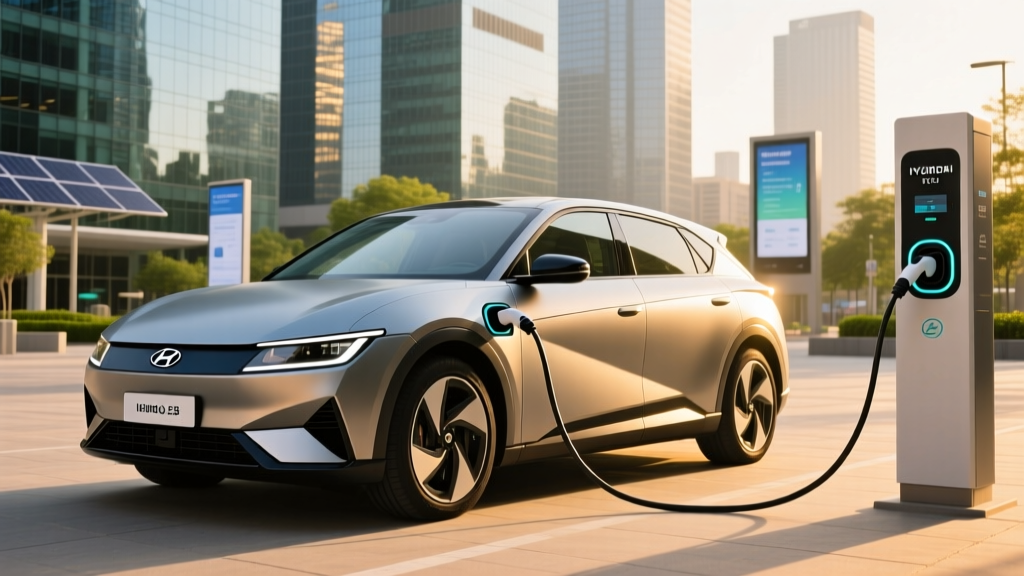
While much of the automotive world focuses on 0-60 times or screen sizes, the true engineering marvel of the Hyundai Ioniq 5 lies beneath the sheet metal. At the heart of its performance is the Integrated Charging Control Unit (ICCU) and the 800V E-GMP platform. For 2026, the Ioniq 5 remains a benchmark for EV efficiency and charging speed, though the transition to the NACS port and ongoing supply chain shifts have introduced new variables for buyers.
Our analysis of the 2026 model year reveals that while the EPA range remains competitive, the real-world efficiency of the ICCU system continues to lead the segment in thermal management and V2L (Vehicle-to-Load) versatility.
Range and Efficiency: EPA vs. Reality
The 2026 Ioniq 5 is available with two primary battery configurations. The Standard Range (RWD) utilizes a 63.0 kWh battery, while the Long Range (RWD and AWD) uses an 84.0 kWh usable capacity pack.
Real-World Range Expectations
EPA Estimate: Up to 318 miles (Long Range RWD with 18" wheels).
Real-World Highway (70 mph): Expect ~260–280 miles. The boxy retro-design creates a higher drag coefficient (0.28 Cd) than sleeker rivals, impacting high-speed efficiency.
Cold Weather (Below 32°F): Expect a 20-30% reduction. However, the Ioniq 5's standard heat pump and battery preconditioning help mitigate this loss better than most competitors.
| Trim / Drivetrain | Battery (Usable) | EPA Range | MPGe (City/Hwy) | kWh/100mi |
|---|---|---|---|---|
| SE/SEL Std Range RWD | 63.0 kWh (LFP) | 245 mi | 132 / 108 | 27 |
| SE/SEL/Limited LR RWD | 84.0 kWh (NMC) | 318 mi | 134 / 109 | 28 |
| SE/SEL/Limited LR AWD | 84.0 kWh (NMC) | 290 mi | 113 / 94 | 33 |
The ICCU and 800V Charging Architecture
The "ICCU" (Integrated Charging Control Unit) is the multi-functional power electronics hub that replaces the traditional OBC (On-Board Charger) and separate DC-DC converter. By integrating these systems, Hyundai has reduced weight and increased the efficiency of power flow between the battery, the motor, and the grid.
Most notably, the ICCU enables the Ioniq 5's 800V DC fast-charging capability without the need for a heavy, external boost converter at the charging station.
| Charging Level | Power / Rate | Time / Speed | Connector (2026) |
|---|---|---|---|
| Level 1 (120V) | 1.4 kW | ~3-4 mi/hr | NACS / J1772 Adapter |
| Level 2 (240V) | 10.9 kW | ~32 mi/hr (9-10 hrs full) | NACS |
| DC Fast Charge | Peak 240 kW | 10-80% in ~18 mins | NACS (CCS1 via adapter) |
Expert Note: The 18-minute 10-80% time is only achievable at a 350 kW charger with battery preconditioning active. On 150 kW CCS chargers (via adapter), expect 25-30 minutes.
Performance and Drivetrain Dynamics
The E-GMP platform is RWD-biased, providing a more engaging driving feel than the FWD-based EVs of the past. The AWD models add a front motor for enhanced traction and power.
- RWD Long Range: 225 hp, 0-60 mph in 7.0 seconds.
- AWD Long Range: 320 hp, 0-60 mph in 4.5 seconds.
- Ioniq 5 N: 641 hp (N GTS Boost), 0-60 mph in 3.3 seconds.
The suspension tuning is compliant but controlled, though the ride quality can be slightly "busy" on broken pavement due to the 20-inch wheels found on the Limited and N trims.
Pricing, Trims, and Federal Tax Credits
For 2026, the Ioniq 5 is assembled in Savannah, Georgia, which is a critical factor for federal incentive eligibility. However, buyers must navigate the IRS §30D requirements, which include MSRP caps and income limits.
| Trim | Base MSRP | Est. After $7,500 Credit | Credit Eligibility (IRS §30D) |
|---|---|---|---|
| SE Standard Range | $42,600 | $35,100 | Eligible (US Assembled) |
| SEL Long Range | $49,850 | $42,350 | Eligible (US Assembled) |
| Limited AWD | $58,200 | $50,700 | Eligible (US Assembled) |
IRS §30D Requirements for 2026:
- MSRP Cap: Must be under $55,000 for SUVs/Crossovers (Ioniq 5 qualifies).
- Income Cap: AGI must not exceed $150k (Single) or $300k (Joint).
- Sourcing: Battery components and critical minerals must meet phased-in US/FTA country requirements.
Interior, Tech, and the NACS Transition
The 2026 interior maintains the dual 12.3-inch panoramic display setup. The physical climate controls are a welcome ergonomic choice, though the infotainment system still lacks a native "Trip Planner" as robust as Tesla's or Rivian's.
The NACS Transition: Starting in late 2024/2025, Hyundai began transitioning to the North American Charging Standard (NACS). For 2026, most new inventory will feature the native NACS port, granting access to the Tesla Supercharger network. Buyers should still verify the port type on dealer lots, as some 2025 carryovers may still have CCS1.
Pros
- 800V architecture provides class-leading 18-min DC charging.
- Standard V2L (Vehicle-to-Load) can power home appliances or camping gear.
- Spacious 107 cu-ft passenger volume with a flat floor.
- Excellent IIHS Top Safety Pick+ rating.
Cons
- Frunk (front trunk) is virtually non-existent on AWD models.
- Rear windshield visibility is compromised by the thick C-pillar and lack of a wiper.
- No native rear wiper (a common complaint in rain/snow).
- Infotainment UI can be laggy compared to mobile-device standards.
Ownership and Warranty
Hyundai provides one of the most comprehensive warranty packages in the industry, which helps offset concerns about long-term battery degradation.
- Basic: 5 years / 60,000 miles
- Powertrain & Battery: 10 years / 100,000 miles (Original Owner)
- Roadside Assistance: 5 years / Unlimited miles
Based on long-term data from the E-GMP platform, the NMC batteries show excellent State of Health (SoH) retention, with most early models reporting less than 5% degradation after 50,000 miles of mixed DC fast-charging use.
FAQ: The ICCU and Ioniq 5 Technical Questions
What exactly does the ICCU do in the Ioniq 5?
The Integrated Charging Control Unit manages the flow of electricity between the 800V battery, the 400V/12V systems, and the charging port. It allows for bi-directional charging (V2L) and high-speed DC charging without extra hardware.
Is the Ioniq 5 LFP or NMC?
The Standard Range RWD models typically use LFP (Lithium Iron Phosphate) chemistry, which is more durable but heavier. The Long Range models use NMC (Nickel Manganese Cobalt) for higher energy density.
Can I use Tesla Superchargers with a 2026 Ioniq 5?
Yes. Most 2026 models are equipped with the NACS port natively. If you have a CCS1 model, you will need the official Hyundai/Plugshare adapter to access the Supercharger network.