Quick Verdict: The Ioniq 5 in 2026
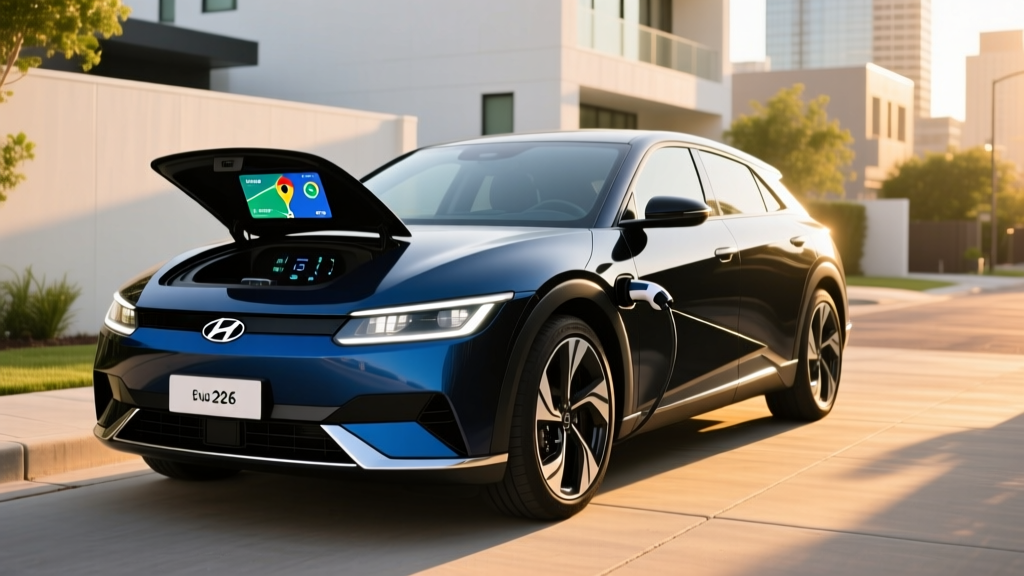
The 2026 Hyundai Ioniq 5 remains one of the most complete electric crossovers on the market. Built on Hyundai's E-GMP 800V architecture, it delivers class-leading DC fast-charging speeds, a usable EPA range north of 300 miles on the Long Range RWD trim, and an infotainment system now deeply integrated with Google services — including Google Maps lane assist, which projects lane-level guidance directly onto the 12.3-inch digital cluster and available head-up display. For 2026, Hyundai has standardized the NACS (Tesla-style) charge port on all trims, eliminating the CCS-to-NACS adapter hassle that early adopters dealt with since 2024.
EPA-estimated range: 318 miles (Long Range RWD, 18-inch wheels). In real-world highway driving at 70-75 mph, expect 265-285 miles in moderate temperatures. In cold weather (below 30°F), plan for 220-250 miles of usable range before needing a charge stop. The Long Range AWD drops to an EPA 290 miles, with real-world highway closer to 240-260 miles.
Range, Battery, and Efficiency
The 2026 Ioniq 5 is offered with two battery configurations:
| Spec | Standard Range RWD | Long Range RWD | Long Range AWD |
|---|---|---|---|
| Battery (usable) | 58.0 kWh (NMC) | 84.0 kWh (NMC) | 84.0 kWh (NMC) |
| EPA Range | 240 mi | 318 mi | 290 mi |
| Combined MPGe | 114 MPGe | 117 MPGe | 110 MPGe |
| kWh/100 mi | 29 | 28 | 30 |
| Drivetrain | RWD (single motor) | RWD (single motor) | AWD (dual motor) |
| Horsepower | 168 hp | 225 hp | 320 hp |
| 0-60 mph | 7.4 sec | 6.5 sec | 4.5 sec |
Hyundai continues to use nickel-manganese-cobalt (NMC) chemistry across the Ioniq 5 lineup. NMC offers higher energy density than lithium iron phosphate (LFP), which is why the Long Range pack fits 84 kWh of usable capacity without making the vehicle excessively heavy. The trade-off: LFP batteries tolerate daily 100% charging better and have longer cycle life, while NMC benefits from an 80% daily charge limit for longevity. Hyundai's battery management system includes a buffer above and below the stated capacity to protect against degradation.
Efficiency is strong for the segment. At 28 kWh/100 miles (Long Range RWD), the Ioniq 5 rivals the Tesla Model Y's efficiency while offering a more comfortable ride. According to fueleconomy.gov, the combined MPGe of 117 puts it among the most efficient electric SUVs available.
Charging Speed: 800V Architecture Still Pays Off
The Ioniq 5's 800V electrical architecture remains a genuine advantage over 400V competitors like the Volkswagen ID.4 and Subaru Solterra. Here's what charging looks like across levels:
| Charging Level | Power / Rate | Time / Miles Added |
|---|---|---|
| Level 1 (120V household) | ~1.4 kW | ~4-5 miles per hour |
| Level 2 (240V home, 48A) | 10.9 kW | ~36 miles per hour; full charge in ~8.5 hrs (Long Range) |
| DC Fast Charge (peak) | 240 kW peak | 10-80% in ~18 minutes (ideal conditions) |
| DC Fast Charge (sustained avg) | ~165 kW avg to 80% | Real-world 10-80% closer to 22-25 minutes |
A note on charging curves: the Ioniq 5 peaks at 240 kW only at low state-of-charge (roughly 10-30% SoC) and at a charger capable of 350 kW. Above 55% SoC, the rate tapers significantly — by 80%, you're pulling roughly 90-100 kW. This is normal for all EVs, but the Ioniq 5's 800V system sustains higher rates for longer than most 400V rivals, making the 10-80% time genuinely competitive. On a 150 kW Electrify America or EVgo stall, you'll see the car limited to the charger's output, so plan road trips around 350 kW stations where possible.
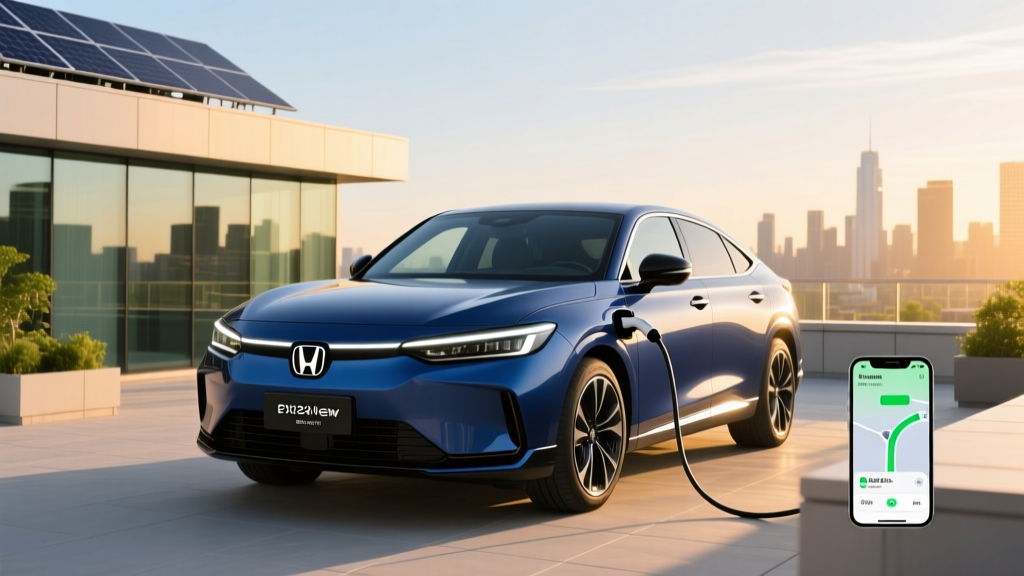
For 2026, the standard NACS port means direct access to Tesla Superchargers without an adapter. Hyundai's navigation system now includes Google Maps lane assist with EV-aware routing — the system considers real-time state-of-charge, charger availability, and terrain to suggest optimal stops, projecting turn-by-turn lane guidance onto the instrument cluster.
Interior, Tech, and Google Maps Lane Assist
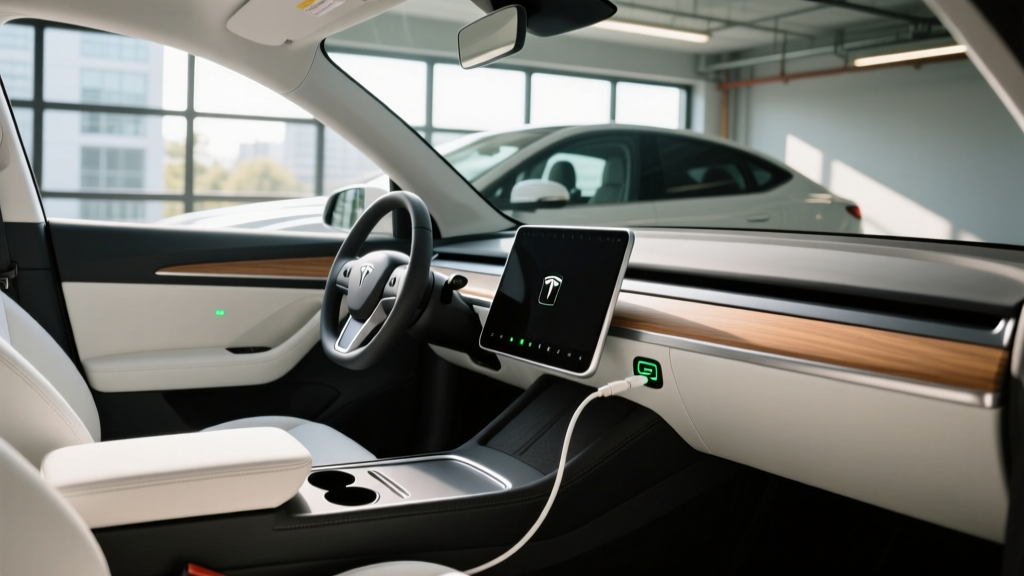
The Ioniq 5's cabin is defined by its flat floor (a benefit of the E-GMP skateboard platform), dual 12.3-inch displays, and a minimalist center console that slides fore and aft. Interior dimensions are generous:
- Front legroom: 41.7 inches
- Rear legroom: 39.4 inches
- Cargo behind rear seats: 27.2 cu ft
- Cargo with rear seats folded: 59.3 cu ft
- Frunk (front trunk): 2.0 cu ft (RWD) / 0.85 cu ft (AWD)
The 2026 infotainment system is built on Google Automotive Services, meaning Google Maps, Google Assistant, and the Play Store are native to the car. Google Maps lane assist is one of the most practical features this integration enables: on divided highways and complex interchanges, the cluster display shows a lane-level diagram highlighting exactly which lane to occupy for your upcoming exit or merge. Unlike phone-based navigation projected through Android Auto, the native integration means lane assist works even when your phone is in your pocket, and it's rendered in higher resolution on the car's own displays.
Driver-assistance tech includes Highway Driving Assist 2 (HDA-2), which provides adaptive cruise control with stop-and-go, lane-centering, and lane-change assistance on mapped highways. This is an SAE Level 2 system — the driver must remain attentive with hands on or near the wheel at all times. It is not self-driving. HDA-2 is competent for long highway stretches but requires active supervision, particularly in construction zones and faded lane markings.
Pricing, Trims, and Federal Tax Credit
Hyundai has streamlined the 2026 Ioniq 5 lineup. Pricing (including destination) starts in the low $40,000s for the Standard Range and reaches the mid-$50,000s for a fully loaded AWD Limited:
| Trim | Drivetrain | MSRP | Est. After §30D Credit* |
|---|---|---|---|
| SE Standard Range | RWD | $41,500 | ~$34,000 |
| SEL Long Range | RWD | $46,200 | ~$38,700 |
| SEL Long Range | AWD | $49,900 | ~$42,400 |
| Limited Long Range | AWD | $55,500 | ~$48,000 |
*Federal tax credit estimates assume buyer eligibility. The §30D credit under current IRS rules requires:
- MSRP cap: SUVs/crossovers must be priced at or below $80,000 (all Ioniq 5 trims qualify)
- Buyer income cap: $150,000 single / $225,000 head of household / $300,000 joint (modified AGI)
- Battery sourcing: Critical minerals and battery components must meet phased-in percentages from US or FTA-partner countries — verify the specific VIN with your dealer before purchase
- Point-of-sale transfer: Eligible buyers can transfer the credit to the dealer for an immediate price reduction at purchase
The credit amount varies: $7,500 is the maximum, but partial credits of $3,750 may apply if only one of the two sourcing requirements (minerals or components) is met. Always confirm eligibility for your specific vehicle and tax situation — consult a tax professional if uncertain.
Pros and Cons
- 800V DC fast-charging: 10-80% in ~18 min at a 350 kW station
- Standard NACS port for direct Supercharger access (2026)
- Spacious flat-floor cabin with 39.4" rear legroom
- Google Maps lane assist with native EV routing
- Strong efficiency at 117 MPGe combined (Long Range RWD)
- Vehicle-to-load (V2L) powers devices up to 3.6 kW
- 10-year/100,000-mile battery warranty
- AWD highway range drops to ~240-260 real-world miles
- Cold-weather range loss of 20-30% (common to all EVs, but notable)
- Frunk is tiny on AWD trims (0.85 cu ft)
- Rear wiper still absent on some trims
- HDA-2 requires hands-on-wheel monitoring (Level 2, not hands-free)
- Insurance premiums can run 15-25% higher than gas Tucson equivalents
Who Should Buy the 2026 Ioniq 5?
The Ioniq 5 fits several use cases well, but not all equally:
Commuters and daily drivers: Ideal. The Long Range RWD offers enough capacity for a 60-80 mile round trip with margin, and home Level 2 charging replenishes overnight at roughly $0.13/kWh (national average) — about $11 for a full charge vs. $45+ in gasoline for a comparable crossover.
Families: The rear seat is genuinely spacious, and two rear-facing car seats fit without compromising front legroom. Cargo space is adequate for strollers and groceries, though the 59.3 cu ft max trails the Kia EV9's three-row utility.
Road trippers: The 18-minute 10-80% DC fast-charge time makes highway travel viable, especially along I-5, I-95, and other Supercharger/EA-dense corridors. Plan for one 25-minute stop per 250 miles. In rural areas with sparse DC charging, range planning becomes critical.
Towing: The AWD model is rated for 2,300 lbs — enough for a light utility trailer or a pair of jet skis, but not a full-size camper. Towing cuts range roughly in half.
Warranty and Long-Term Ownership
Hyundai backs the Ioniq 5 with one of the strongest warranty packages in the EV space:
- Battery: 10 years / 100,000 miles (capacity retention above 70% of original)
- Powertrain: 10 years / 100,000 miles
- New vehicle limited: 5 years / 60,000 miles
- Complimentary maintenance: 3 years / 36,000 miles
The 70% capacity retention threshold is industry-standard. Real-world degradation data from early 2022-2024 Ioniq 5 owners suggests NMC packs lose roughly 5-8% capacity over the first 50,000 miles, then the curve flattens. At that rate, most owners will retain 88-92% capacity at 100,000 miles — well above the warranty threshold. Battery replacement, should it ever be needed out of warranty, currently ranges from $12,000-$18,000 including labor, though prices continue to decline as cell costs fall.
Frequently Asked Questions
What is the real-world range of the 2026 Hyundai Ioniq 5?
The EPA rates the Long Range RWD at 318 miles. In real-world highway driving at 70-75 mph with climate control active, expect 265-285 miles in mild weather and 220-250 miles in sub-freezing temperatures. The AWD model's real-world highway range is closer to 240-260 miles.
How fast does the Ioniq 5 charge at home and on the road?
At home on a 240V Level 2 charger (48A), the Long Range battery charges at 10.9 kW, adding roughly 36 miles of range per hour — a full charge takes about 8.5 hours. On a 350 kW DC fast charger, the 800V system peaks at 240 kW and reaches 10-80% in approximately 18 minutes under ideal conditions (low SoC, warm battery, preconditioned). Real-world 10-80% stops average 22-25 minutes.
How much does the Ioniq 5 cost after the federal tax credit?
If you qualify for the full $7,500 §30D credit, the SEL Long Range RWD drops from $46,200 MSRP to approximately $38,700. Eligibility depends on your modified AGI (income caps), the vehicle's MSRP (must be under $80,000 for SUVs — all trims qualify), and battery sourcing compliance. The credit can be transferred at point-of-sale for an immediate price reduction.
Is the Ioniq 5 worth buying over the Tesla Model Y or Kia EV6?
It depends on priorities. The Model Y offers slightly more range (EPA 320 mi) and access to the largest Supercharger network natively, plus more cargo volume. The Ioniq 5 counters with faster peak charging (240 kW vs. ~170 kW on the Model Y), a more comfortable ride, Google Maps lane assist integration, and a stronger 10-year warranty. The Kia EV6 shares the E-GMP platform and charging speed but has a lower roofline and less rear headroom. Per IIHS ratings, the Ioniq 5 continues to earn top safety marks.
Does the 2026 Ioniq 5 qualify for the federal EV tax credit?
All 2026 Ioniq 5 trims fall under the $80,000 MSRP cap for SUVs. However, the actual credit amount ($7,500 or $3,750) depends on battery-sourcing compliance for the specific VIN, and buyer eligibility depends on income limits ($150K single / $300K joint). Verify with your dealer and reference the IRS clean vehicle credit page before purchasing.
What does Google Maps lane assist do in the Ioniq 5?
Google Maps lane assist provides lane-level navigation guidance on the digital instrument cluster and available head-up display. On multi-lane highways and complex interchanges, it highlights the specific lane you need for your upcoming exit or merge. Because it runs natively via Google Automotive Services (not phone projection), it works independently of your phone and integrates with the vehicle's EV routing to account for charge stops.