Quick Verdict: The 2026 Hummer EV Pickup at a Glance
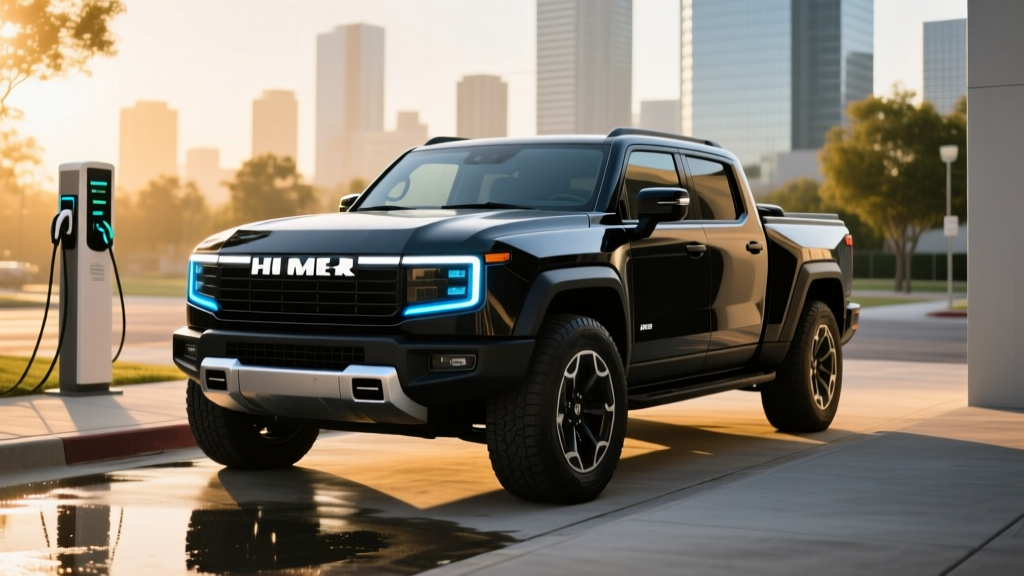
The 2026 GMC Hummer EV Pickup remains one of the most audacious electric vehicles on the road — a 9,000-pound supertruck that pairs 1,000 horsepower with genuine off-road capability and a usable 350-mile EPA range. For the 2026 model year, GMC has refined the Ultium platform with improved thermal management and slightly faster DC charging curves, but the fundamental proposition hasn't changed: this is the largest, heaviest, and most power-dense consumer EV you can buy. It's also one of the most expensive, starting above $100,000 before incentives, and its sheer size makes it impractical for many garages, parking structures, and urban environments.
If you need a full-size electric truck for towing, off-road recreation, or sheer presence — and you have the budget and garage space — the Hummer EV Pickup has no true equal. If you're looking for efficiency, daily-driver practicality, or value, competitors like the Rivian R1T, Ford F-150 Lightning, and Chevrolet Silverado EV serve those needs better.
| Specification | 2026 Hummer EV Pickup (2X / 3X) |
|---|---|
| EPA Range | ~350 miles (2X) / ~329 miles (3X) |
| Battery Capacity | ~212 kWh usable (NMC, Ultium double-stack) |
| Peak DC Fast Charge | 350 kW (800V architecture) |
| 10–80% DC Charge Time | ~32 minutes (at 350 kW station) |
| Level 2 Home Charge Rate | 11.5 kW (~27 mi/hr) |
| Horsepower | 625 hp (2X) / 830–1,000 hp (3X w/ Watts to Freedom) |
| 0–60 mph | ~3.5 sec (3X, Watts to Freedom mode) |
| Drivetrain | Dual-motor AWD (2X) / Tri-motor AWD (3X) |
| Towing Capacity | 7,500 lbs (estimated) |
| Base MSRP | ~$104,500 (2X) / ~$120,000 (3X) |
| Battery/Powertrain Warranty | 8 years / 100,000 miles |
| MPGe (Combined) | ~47 MPGe / ~72 kWh/100 mi |
Range and Efficiency: What 350 EPA Miles Actually Means
EPA Estimated Range: ~350 miles (2X dual-motor) / ~329 miles (3X tri-motor)
Real-World Expectation: Plan for 270–310 miles on highway road trips at 70+ mph. In cold weather (below 32°F), expect a 20–30% reduction — potentially dropping to 220–260 miles. City driving with regenerative braking can match or slightly exceed the EPA sticker.
The Hummer EV's 212 kWh Ultium battery pack is the largest in any production passenger vehicle, and it needs to be — this truck weighs over 9,000 pounds and pushes air like a brick wall. The EPA combined efficiency rating of roughly 47 MPGe (about 72 kWh per 100 miles) is far below smaller EVs. For comparison, a Rivian R1T Dual-Motor achieves around 70 MPGe combined, and a Ford F-150 Lightning Extended Range sits near 70 MPGe as well.
According to fueleconomy.gov, the Hummer EV's energy consumption is among the highest of any EV sold in the US. That matters for your electricity bill: charging 212 kWh from empty at the national average residential rate of $0.17/kWh costs roughly $36 at home. At public DC fast chargers averaging $0.40–$0.50/kWh, a 10–80% session can cost $60–$75.
Towing dramatically cuts range. Based on real-world owner reports and testing with similarly sized EV trucks, towing a 5,000-pound trailer at highway speeds can halve your range to roughly 150–175 miles. If towing is a primary use case, plan routes around DC fast-charger spacing carefully.
Charging Speed: 350 kW Peak, but Mind the Curve
The 2026 Hummer EV Pickup uses GM's 800V Ultium architecture, enabling a peak DC fast-charge rate of 350 kW at compatible stations. However, as with all EVs, peak rate is not sustained rate. The charging curve tapers significantly above 50–60% state of charge to protect the battery.
| Charging Level | Power | Miles Added per Hour | Notes |
|---|---|---|---|
| Level 1 (120V) | ~1.4 kW | ~2 mi/hr | Emergency/trickle only; full charge takes days |
| Level 2 (240V, 48A) | 11.5 kW | ~27 mi/hr | Full charge in ~18–20 hours; overnight top-up |
| DC Fast (350 kW peak) | Up to 350 kW | ~500+ mi/hr (peak) | 10–80% in ~32 min; requires 350 kW station |
| DC Fast (150 kW typical) | ~150 kW sustained | ~210 mi/hr | 10–80% in ~55–60 min; more common station type |
Preconditioning matters. The Hummer EV's battery thermal management system works best when the truck navigates to a DC fast charger, automatically warming or cooling the pack to optimal temperature. If you arrive at a charger with a cold-soaked battery and no preconditioning, expect significantly slower charge speeds — potentially 50% or less of peak rate.
At home, the 11.5 kW onboard charger means a full 0–100% charge takes roughly 18–20 hours on a Level 2 wall connector. Most owners will plug in nightly and maintain a 20–80% daily window, which is easily replenished overnight. The battery's NMC chemistry benefits from avoiding prolonged 100% states of charge for daily use; reserve full charges for road trips.
For home charging installation, expect to invest in a 60-amp circuit with a hardwired Level 2 charger (such as the ChargePoint Home Flex or Emporia Level 2). Installation costs typically range from $800 to $2,500 depending on panel capacity and run distance. With a 212 kWh battery, some owners opt for a panel upgrade to 200A service — budget an additional $1,500–$3,000 if needed.
Performance and Capability: 1,000 HP and Real Off-Road Hardware
The 2026 Hummer EV Pickup comes in two primary powertrain configurations:
- 2X (Dual-Motor): 625 horsepower, dual-motor AWD, ~350-mile range. 0–60 mph in approximately 4.5 seconds.
- 3X (Tri-Motor): Up to 830 horsepower standard, with the available Watts to Freedom (WTF) launch mode unlocking an estimated 1,000 horsepower. 0–60 mph in approximately 3.5 seconds — astonishing for a vehicle this heavy.
Watts to Freedom isn't just a software gimmick — it lowers the adaptive air suspension, preconditions the battery for maximum discharge, tightens steering response, and plays a haptic and audio launch sequence. It's theatrical and genuinely quick. That said, repeated hard launches will thermally stress the pack and reduce range.
Off-road capability is where the Hummer EV separates itself from the F-150 Lightning and Silverado EV. Standard and available hardware includes:
- Adaptive Air Ride Suspension: Up to 15.9 inches of ground clearance in Extract Mode
- Four-Wheel Steer (CrabWalk): Rear wheels turn up to 10 degrees, enabling diagonal movement for tight trail obstacles
- Underbody Armor: Steel skid plates protecting the battery and drivetrain
- 35-inch Goodyear Wrangler Territory MT tires on available trims
- Approach/Departure/Breakover Angles: Competitive with purpose-built off-road trucks when in Extract Mode
Towing capacity is rated at an estimated 7,500 pounds — adequate for most boat and camper trailers but less than the Ford F-150 Lightning's 10,000-pound max or a diesel heavy-duty truck. Payload capacity is roughly 1,300 pounds.
Interior, Cargo, and Technology
The Hummer EV Pickup seats five across a wide, flat cabin. Interior materials on the 3X trim are premium — leather, suede headliner, and metal accents — though some switchgear is shared with lower-tier GM products. The 13.4-inch infotainment touchscreen runs GM's latest Ultifi-based software with wireless Apple CarPlay and Android Auto, Google Built-In navigation, and over-the-air update capability.
Cargo dimensions:
- Bed length: 5 feet (with Infinity Roof panels removed for vertical loading)
- Front trunk (e-trunk/frunk): ~11.7 cubic feet — one of the largest in the EV truck segment
- Bed volume: ~37.7 cubic feet
- Rear-seat legroom: ~38.9 inches
The removable Infinity Roof panels (stored in the frunk) are a standout feature, converting the cabin to an open-air experience. The power MultiPro tailgate offers six configurations including a load-stop, step, and work surface.
Driver Assistance: The Hummer EV includes GM's Super Cruise on mapped divided highways — a SAE Level 2 hands-on-wheel-optional system that requires continuous driver attention. Super Cruise covers over 750,000 miles of compatible roads in the US and Canada. It is not self-driving; the driver must remain alert and ready to take over at all times. An infrared camera monitors driver eye position and will issue escalating warnings if attention lapses.
Pricing, Trims, and Federal Tax Credit Eligibility
The 2026 Hummer EV Pickup pricing reflects its position as a luxury supertruck:
| Trim | Base MSRP (est.) | Key Features |
|---|---|---|
| 2X (Dual-Motor) | ~$104,500 | 625 hp, ~350 mi range, air suspension, CrabWalk, Super Cruise |
| 3X (Tri-Motor) | ~$120,000 | 830–1,000 hp, ~329 mi range, Watts to Freedom, premium interior |
| Edition 1 (if offered) | ~$130,000+ | Limited-run, fully loaded, exclusive badging and colors |
Federal Tax Credit (§30D): The Hummer EV Pickup faces a significant tax credit obstacle. Under current IRS §30D rules, electric pickup trucks must have an MSRP at or below $80,000 to qualify for the up-to-$7,500 federal credit. The Hummer EV's starting price well exceeds this cap, making it ineligible for the §30D new EV tax credit at any trim level. This is a firm rule — no amount of income qualification or battery sourcing compliance can overcome the MSRP cap.
Buyers should also be aware of income caps under §30D (adjusted gross income of $300,000 for joint filers, $225,000 for heads of household, $150,000 for single filers) and critical-mineral/battery-sourcing requirements that determine whether the credit is $3,750 or the full $7,500 for qualifying vehicles. For detailed and current rules, consult the IRS clean vehicle credit page and a qualified tax professional.
Some state-level incentives may still apply — check your local DMV or energy office — but these vary widely by jurisdiction.
Warranty, Ownership Costs, and Long-Term Battery Outlook
GMC backs the Hummer EV's battery pack and electric powertrain with an 8-year / 100,000-mile warranty, with a guaranteed minimum capacity retention of 70% during that period. The bumper-to-bumper limited warranty covers 3 years / 36,000 miles.
The 212 kWh NMC (nickel manganese cobalt) Ultium pack is liquid-cooled and actively thermally managed. Based on GM's Ultium platform data and industry-wide NMC degradation curves, owners can reasonably expect 10–15% capacity loss over 100,000–150,000 miles of normal use. The large pack size provides a built-in buffer — even at 85% state of health, you'd still have roughly 295 miles of original range available.
Insurance is a significant ownership cost. Due to the vehicle's price, repair complexity, and power output, expect annual premiums in the $3,500–$5,500 range depending on your location, driving record, and coverage levels. Get quotes before purchasing.
Tires are another recurring expense. The 35-inch Goodyear Wrangler Territory MT tires cost approximately $450–$550 each, and the Hummer EV's weight accelerates wear. Budget for a full set replacement every 25,000–35,000 miles under normal driving.
How It Compares: Hummer EV vs. Rivian R1T, F-150 Lightning, Silverado EV
| Spec | 2026 Hummer EV 3X | 2026 Rivian R1T Tri-Motor | 2026 F-150 Lightning Platinum | 2026 Silverado EV 4WT |
|---|---|---|---|---|
| EPA Range | ~329 mi | ~328 mi | ~320 mi | ~492 mi |
| Battery (kWh) | ~212 | ~149 | ~131 | ~200 |
| Horsepower | 830–1,000 | 850 | 580 | 664 |
| 0–60 mph | ~3.5 sec | ~3.0 sec | ~3.8 sec | ~4.5 sec |
| Max DC Charge | 350 kW | 220 kW | 150 kW | 350 kW |
| Towing (lbs) | 7,500 | 11,000 | 10,000 | 10,000 |
| Base MSRP | ~$120,000 | ~$106,000 | ~$98,000 | ~$75,000 |
| Tax Credit | Not eligible (MSRP cap) | Not eligible (MSRP cap) | Eligible (w/ sourcing) | Eligible (w/ sourcing) |
Choose the Hummer EV Pickup if: You want maximum presence, unmatched off-road tech (CrabWalk, Extract Mode), a massive battery for range security, and you're not budget-constrained. It's a lifestyle and recreation vehicle, not an efficiency play.
Choose the Rivian R1T if: You want a more refined daily-driver truck with better efficiency, strong off-road ability, higher towing capacity, and a slightly smaller footprint.
Choose the F-150 Lightning if: You want a familiar full-size truck form factor, strong towing, Pro Power Onboard for job-site use, and federal tax credit eligibility.
Choose the Silverado EV if: You prioritize maximum range (492 miles on the 4WT), fleet/commercial capability, and GM's Ultium platform at a lower price point.
Pros and Cons
Pros
- Massive 212 kWh battery provides genuine range security even under load
- CrabWalk four-wheel steering is uniquely useful on tight trails
- 350 kW DC charging capability (when stations are available)
- Enormous frunk (11.7 cu ft) and versatile MultiPro tailgate
- Super Cruise hands-free highway driving on 750,000+ miles of roads
- Removable Infinity Roof panels for open-air driving
- 3.5-second 0–60 in a 9,000-lb truck is genuinely startling
Cons
- MSRP above $100K — no federal tax credit eligibility
- Very low efficiency (~47 MPGe) means high electricity costs
- Over 9,000 lbs — exceeds some residential driveway and parking-garage limits
- Towing capacity (7,500 lbs) trails F-150 Lightning and R1T
- Tire replacement costs are high; weight accelerates wear
- 5-foot bed is short for a full-size truck
- Insurance premiums are among the highest in the EV segment
- Width (86+ inches) makes urban driving and tight garages challenging
Who Should Buy the 2026 Hummer EV Pickup?
The 2026 Hummer EV Pickup is best suited for:
- Off-road enthusiasts who want electric torque, CrabWalk maneuverability, and Extract Mode ground clearance without sacrificing highway range
- Luxury truck buyers who prioritize presence, technology, and performance over efficiency and value
- Recreational users with boats, ATVs, or light campers who want open-air driving and a massive frunk for gear
It is not ideal for daily commuters in dense urban areas (the width and length are taxing), budget-conscious buyers (no tax credit, high insurance, expensive tires), or those who regularly tow heavy loads above 7,500 pounds.
Frequently Asked Questions
What is the real-world range of the 2026 Hummer EV Pickup?
Expect 270–310 miles on highway road trips at 70+ mph, and 220–260 miles in sub-freezing temperatures. The EPA sticker of ~350 miles (2X) is achievable in moderate city driving with regenerative braking.
How fast does the Hummer EV charge at home and on the road?
At home on a Level 2 charger (11.5 kW), expect about 27 miles of range per hour, with a full charge taking 18–20 hours. On a 350 kW DC fast charger, 10–80% takes approximately 32 minutes. On a more common 150 kW charger, 10–80% takes about 55–60 minutes.
Does the 2026 Hummer EV qualify for the federal EV tax credit?
No. Under IRS §30D rules, pickup trucks must have an MSRP at or below $80,000 to qualify. The Hummer EV starts above $100,000, making it ineligible regardless of buyer income or battery sourcing. Consult irs.gov for current rules.
Is the Hummer EV Pickup worth buying over the Rivian R1T or F-150 Lightning?
It depends on priorities. If you want maximum off-road technology, the largest battery in any consumer EV, and unmatched presence, the Hummer EV has no rival. If you value efficiency, towing capacity, daily-driver practicality, or tax credit eligibility, the Rivian R1T or F-150 Lightning are more rational choices.
How long will the Hummer EV battery last?
GM warranties the Ultium battery for 8 years / 100,000 miles with a minimum 70% capacity retention guarantee. Based on NMC chemistry degradation data, owners can expect 10–15% capacity loss over 100,000–150,000 miles under normal use. The large 212 kWh pack provides a substantial buffer.
Can the Hummer EV Pickup tow a travel trailer?
Yes, up to its 7,500-pound rated capacity. However, towing significantly reduces range — expect roughly 150–175 miles at highway speeds with a 5,000-pound trailer. Plan charging stops accordingly.