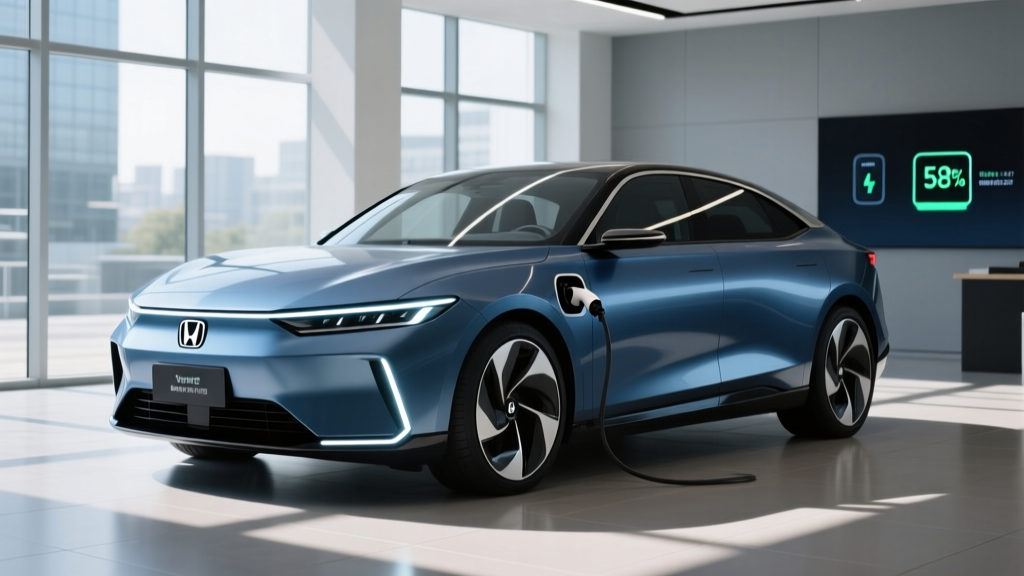
The Honda Prologue occupies a curious space in the midsize electric SUV segment. Built on General Motors' Ultium platform through a cross-company partnership, it pairs Honda's interior ergonomics and brand loyalty with GM's battery and powertrain engineering. For 2026, the Prologue receives meaningful updates that sharpen its competitiveness against the Hyundai Ioniq 5, Ford Mustang Mach-E, and Tesla Model Y. If you've been searching for detailed Honda Prologue specifications — range, charging speeds, pricing, and whether it actually qualifies for the federal tax credit — this review covers every number that matters to a real buyer.
Range and Efficiency: The Real-World Picture
The 2026 Honda Prologue is available with front-wheel drive (FWD) or all-wheel drive (AWD), and range varies meaningfully between the two. Honda targets a maximum EPA-estimated range of 296 miles for the FWD variant, while AWD models drop to approximately 275 miles on the EX and Elite trims. Efficiency lands around 89 MPGe combined (roughly 36 kWh/100 mi) for FWD and approximately 84 MPGe combined for AWD, based on EPA data.
The 296-mile EPA estimate applies to the FWD configuration under mixed driving. In real-world highway testing at sustained 70-75 mph speeds, expect 245–265 miles before needing a charge. Cold-weather driving (below 30°F) can reduce range by 15–25%, putting winter highway range closer to 220–230 miles. AWD models will see a further 5–8% reduction. These figures are typical for the Ultium platform and competitive with the segment, but buyers in northern climates or those who primarily drive highway miles should plan around ~240 miles of usable range to maintain a comfort buffer.
Battery, Chemistry, and the Ultium Platform
The Prologue uses an 85 kWh usable lithium-ion battery pack built on GM's Ultium architecture. The cell chemistry is NMC (nickel manganese cobalt), which prioritizes energy density and cold-weather performance over the cycle-life advantages of LFP (lithium iron phosphate) chemistry found in some competitors like the base Tesla Model Y. NMC is the standard choice for vehicles prioritizing maximum range in a single charge, though it does require more careful long-term charging habits — keeping daily State of Charge (SoC) between 20–80% is recommended for longevity.
The battery pack is integrated into a skateboard-style chassis, contributing to a low center of gravity and a flat floor that benefits interior space. Thermal management is liquid-cooled with active preconditioning, which matters significantly for DC fast-charging speeds (more on that below).
Charging Speeds: DC Fast, Level 2, and Home Setup
Charging capability is where the Ultium platform shows its strengths — and one area where the Prologue still trails the segment leaders. The 2026 Prologue supports a peak DC fast-charge rate of 150 kW, enabling a 10–80% charge in approximately 32 minutes under optimal conditions. This is competitive with the Ford Mustang Mach-E but notably slower than the Hyundai Ioniq 5's 240 kW capability and the Tesla Model Y's ~250 kW peak.
| Charging Level | Power / Rate | Miles Added per Hour | Time to Full (0–100%) |
|---|---|---|---|
| Level 1 (120V household) | ~1.4 kW | ~3–4 miles/hr | ~60+ hours |
| Level 2 (240V home/public) | 11.5 kW (48A) | ~27 miles/hr | ~8.5 hours |
| DC Fast Charge | Peak 150 kW | ~350 mi/hr (peak) | 10–80% in ~32 min |
At home on a Level 2 charger (240V, 48-amp circuit), the Prologue accepts up to 11.5 kW, adding roughly 27 miles of range per hour of charging. A full overnight charge from near-empty takes about 8.5 hours — practical for daily commuting if you install a Level 2 wallbox. Honda includes a dual-level charge cord with the vehicle that can plug into a standard 120V outlet (Level 1, painfully slow) or a 240V NEMA 14-50 outlet for faster Level 2 charging without a dedicated wallbox.
Charging curve reality check: The 150 kW peak is not sustained across the entire session. Expect the Prologue to hold near-peak speeds from roughly 10–50% SoC, then taper progressively. Above 80%, charging slows dramatically to protect the battery — this is normal for NMC chemistry, and it's why the 10–80% metric is the industry standard for comparing fast-charge times.
The Prologue uses the NACS (North American Charging Standard) connector for 2026, aligning with Honda's transition to Tesla's plug. This grants access to Tesla Supercharger stations (via adapter or native NACS port depending on build date), significantly expanding the public fast-charging network available to owners.
Performance and Drivetrain
| Specification | FWD | AWD |
|---|---|---|
| Horsepower | 220 hp | 288 hp |
| Torque | 236 lb-ft | 332 lb-ft |
| 0–60 mph | ~8.0 seconds | ~5.8 seconds |
| Drivetrain | Single motor, FWD | Dual motor, AWD |
| Towing Capacity | 1,500 lbs | 1,500 lbs |
The AWD Prologue's 288 horsepower and 5.8-second 0–60 time make it genuinely quick for a family SUV — merging onto highways and passing slower traffic is effortless. The FWD variant, at 220 hp and ~8 seconds to 60, is adequate for commuting but won't thrill anyone coming from a sporty gas SUV. Both configurations use a single-speed reduction gear with smooth, linear power delivery characteristic of electric drivetrains.
Ride quality is tuned toward comfort rather than sportiness. The Prologue absorbs road imperfections well, and cabin noise levels are low — a benefit of having no internal combustion engine. Regenerative braking is adjustable via paddle shifters behind the steering wheel, allowing everything from coasting to near-one-pedal driving, though it doesn't quite reach full one-pedal capability that brings the vehicle to a complete stop without touching the brake.
Interior, Cargo, and Technology
The Prologue seats five passengers with generous proportions. Rear legroom measures approximately 41.4 inches — among the best in the segment and a genuine advantage over the Model Y's tighter rear quarters. Front legroom comes in at 41.6 inches, and headroom is ample front and rear thanks to the flat floor and tall roofline.
Cargo volume behind the second row is 25.2 cubic feet, expanding to approximately 57.7 cubic feet with the rear seats folded. This is competitive with the Ioniq 5 but falls short of the Model Y's ~76 cu ft maximum. There is no front trunk (frunk), which is a missed opportunity given the Ultium platform's packaging flexibility.
The infotainment system runs on a 11.3-inch touchscreen with wireless Apple CarPlay and Android Auto (on upper trims), Google built-in navigation, and a 11-inch digital driver display. The interface is Honda's latest generation, which is a significant improvement over older Honda systems — responsive, logically laid out, and with physical knobs for volume and tuning that EV buyers consistently request. The Elite trim adds a head-up display, heated and ventilated front seats, heated rear seats, and a panoramic moonroof.
Driver-assistance technology includes Honda Sensing with adaptive cruise control, lane-keeping assist, blind-spot monitoring, and rear cross-traffic alert. This is a Level 2 SAE driver-assist system — the driver must remain fully engaged and hands on the wheel. It is not autonomous driving. The system is competent for highway cruising but doesn't match the hands-free capability of GM's Super Cruise or Ford's BlueCruise on mapped highways.
Pricing, Trims, and Federal Tax Credit Eligibility
| Trim | Drivetrain | MSRP | Est. After §30D Credit |
|---|---|---|---|
| EX | FWD | $47,400 | ~$39,900* |
| EX | AWD | $49,400 | ~$41,900* |
| Touring | AWD | $53,400 | ~$45,900* |
| Elite | AWD | $58,900 | ~$51,400* |
*Tax credit estimates assume full $7,500 eligibility under IRS §30D. Actual credit depends on individual tax liability, income caps, battery sourcing compliance, and point-of-sale transfer rules. Always verify with a tax professional and the IRS §30D guidance.
The Prologue's starting price of $47,400 for the EX FWD trim positions it in the upper-middle tier of the segment. However, federal tax credit eligibility is a significant factor. Under current IRS §30D rules, the Prologue may qualify for up to $7,500 in federal tax credits — but only if several conditions are met:
- MSRP cap: SUVs must be under $80,000 — all Prologue trims qualify.
- Buyer income cap: AGI must not exceed $150,000 (single), $225,000 (head of household), or $300,000 (joint filers).
- Battery sourcing: Critical minerals and battery components must meet phased-in domestic-content thresholds. Because the Prologue uses GM's Ultium battery (assembled in the U.S. with evolving supply chains), eligibility for the full $7,500 vs. a partial $3,750 credit can vary by model year and production batch. Confirm current sourcing status at fueleconomy.gov.
- Point-of-sale transfer: Eligible buyers can transfer the credit to the dealer at purchase, reducing the out-of-pocket price immediately rather than waiting for a tax refund.
The Prologue is assembled at GM's Factory ZERO in Michigan, which supports domestic manufacturing requirements but does not automatically guarantee full credit eligibility due to the separate battery-sourcing rules. Buyers should verify the specific VIN's credit status before purchase.
Warranty and Long-Term Ownership
Honda covers the Prologue with a 3-year/36,000-mile limited vehicle warranty and a 5-year/60,000-mile powertrain warranty. The battery pack carries an 8-year/100,000-mile warranty against defects and excessive capacity loss (typically defined as dropping below 70% of original capacity). This battery warranty is industry-standard and matches what GM, Ford, and Hyundai offer.
Long-term battery degradation data for the Ultium platform is still accumulating, but early evidence from GM's other Ultium vehicles (Cadillac Lyriq, GMC Hummer EV) suggests manageable degradation curves when owners follow recommended charging practices. Avoiding frequent DC fast-charging to 100% and minimizing time spent at very low or very high SoC will help preserve battery health over a decade or more of ownership.
Pros, Cons, and the Competition
- Spacious rear seat and comfortable ride quality
- NACS connector provides Tesla Supercharger access
- Competitive range (296 mi FWD) with real-world usability
- Strong Honda dealer network and brand trust
- Physical infotainment controls alongside the touchscreen
- Potential $7,500 federal tax credit lowers effective price
- 150 kW peak DC charging trails segment leaders (Ioniq 5: 240 kW)
- No front trunk (frunk) despite skateboard platform
- Starting price higher than some competitors before incentives
- Driver-assist lacks hands-free highway capability
- Towing limited to 1,500 lbs (trails Mach-E and Model Y)
- FWD base model feels underpowered for the class
Against the Hyundai Ioniq 5, the Prologue trades faster charging and a more futuristic design for a more conventional SUV shape and Honda's reputation. The Ioniq 5 charges from 10–80% in roughly 18 minutes at a 350 kW-capable station — a meaningful advantage on road trips. The Tesla Model Y offers more cargo space, faster charging, and access to the most reliable charging network natively, but its interior quality and ride comfort draw mixed reviews. The Ford Mustang Mach-E is sportier to drive with similar range but has a firmer ride and less rear-seat room.
Who Should Buy the Honda Prologue?
The 2026 Prologue is best suited for Honda-loyal families and commuters who want a comfortable, spacious electric SUV from a brand they trust, primarily for daily driving and occasional road trips. If you have home Level 2 charging, drive fewer than 200 miles per day, and value rear-seat space and ride comfort over maximum charging speed or sporty handling, the Prologue delivers a well-rounded package. It's less ideal for frequent long-distance road trippers (who should prioritize faster-charging competitors), buyers who need serious towing capacity, or those who want hands-free highway driving assist.
Frequently Asked Questions
What is the real-world range of the Honda Prologue?
The FWD Prologue achieves an EPA-estimated 296 miles, but real-world highway driving at 70+ mph yields approximately 245–265 miles. Cold weather (below 30°F) can reduce this further by 15–25%. AWD models see roughly 275 miles EPA and ~220–245 miles in real-world highway use.
How fast does the Prologue charge at home and on the road?
At home on a 240V Level 2 charger (48A), the Prologue charges at up to 11.5 kW, adding about 27 miles per hour — a full charge takes roughly 8.5 hours. On DC fast chargers, it peaks at 150 kW with a 10–80% charge time of approximately 32 minutes.
Does the Honda Prologue qualify for the $7,500 federal EV tax credit?
The Prologue may qualify for up to $7,500 under IRS §30D, but eligibility depends on your income (AGI caps apply), the specific vehicle's battery-sourcing compliance, and your tax liability. The MSRP is under the $80,000 SUV cap. Verify eligibility for your specific VIN at fueleconomy.gov and consult a tax professional.
Is the Honda Prologue worth buying over the Tesla Model Y or Hyundai Ioniq 5?
The Prologue is worth considering if you prioritize Honda brand trust, a spacious and comfortable rear seat, and NACS Supercharger access in a conventional SUV design. Choose the Ioniq 5 if fast-charging speed is a priority. Choose the Model Y if cargo space and charging network reliability are paramount. The Prologue's advantage is its blend of Honda ergonomics, competitive range, and dealer support.
Does the Prologue have a frunk (front trunk)?
No. Despite riding on GM's Ultium skateboard platform, Honda did not include a front trunk. All cargo space is in the rear (25.2 cu ft behind the second row, ~57.7 cu ft with seats folded).
What connector does the 2026 Prologue use?
The 2026 Prologue uses the NACS (North American Charging Standard) connector, providing native or adapter-based access to Tesla Supercharger stations alongside Electrify America, EVgo, and other networks.