Quick Verdict: The Electric Truck That Actually Works Like a Truck
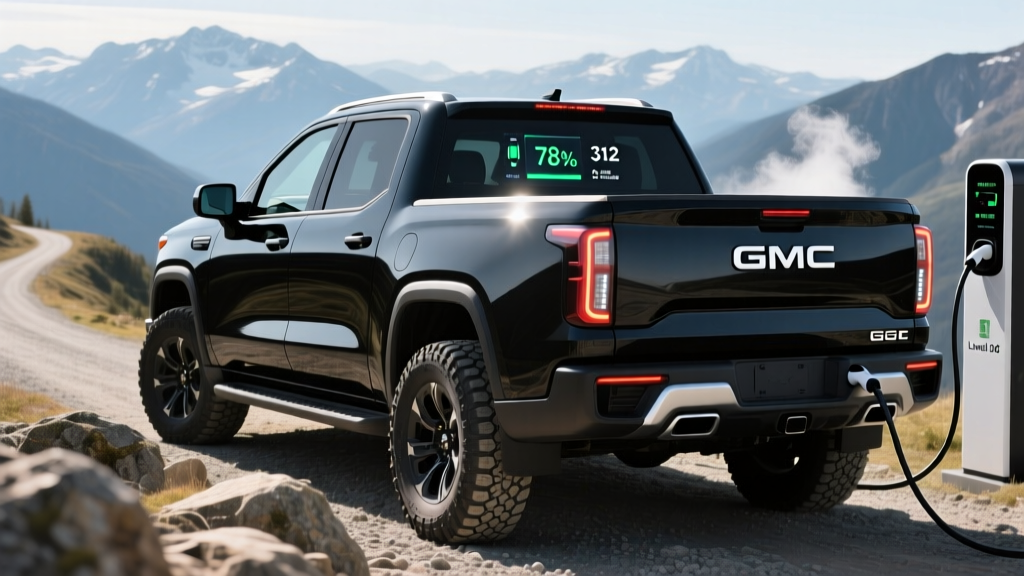
The 2026 GMC Sierra EV enters its second full model year with a clearer identity: it's the premium, tech-forward electric pickup built on GM's Ultium platform, sharing its bones with the Chevrolet Silverado EV but wearing a more upscale suit and commanding a higher price. With an EPA-estimated range reaching 440 miles on the top-trim Denali Edition 1, a maximum DC fast-charge rate of 350 kW, and a towing capacity rated up to 12,500 pounds (when properly equipped), the Sierra EV makes a credible case for replacing a diesel or gas half-ton for buyers who can absorb the entry cost.
But the real story isn't the headline numbers — it's the execution. The Sierra EV's midgate (GM's MultiPro MidGate) transforms the bed from a 5-foot-11-inch space into a nearly 10-foot cargo floor, the available four-wheel steering tightens its turning radius to a surprisingly manageable 42.2 feet, and the 800-volt architecture means you're spending less time tethered to a fast charger than most competitors. Where it stumbles: the base price still clears $80,000 on well-equipped trims, the ride quality can feel busy over broken pavement, and real-world highway range drops meaningfully below the EPA sticker — especially when towing.
Range and Efficiency: EPA Numbers vs. What You'll Actually See
EPA Estimated: 440 miles (Denali Edition 1, 24-module pack) / 390 miles (Elevation, 20-module pack)
Real-World Expectation: Plan for 340–380 miles on mixed highway driving at 70 mph in moderate temperatures. In freezing conditions (below 30°F), expect a 15–25% reduction, bringing usable highway range to roughly 270–320 miles depending on pack size. When towing a 5,000-lb trailer at highway speeds, range can drop to 180–220 miles.
The 2026 Sierra EV offers two Ultium battery configurations. The larger 24-module pack provides approximately 205 kWh of usable capacity and is standard on the Denali Edition 1 and available on the AT4 trim. The smaller 20-module pack, with roughly 170 kWh usable, is standard on the Elevation trim. Both use NMC (nickel-manganese-cobalt) pouch-cell chemistry — GM has not adopted LFP for the Sierra EV, prioritizing energy density for maximum range in this heavy platform.
Efficiency ratings land around 43–47 MPGe combined depending on trim and wheel size, which translates to roughly 48–52 kWh per 100 miles. That's thirstier than a Tesla Model Y or Ford F-150 Lightning, but expected given the Sierra EV's greater mass (over 8,900 lbs curb weight on the Denali) and larger frontal area. If your commute is mostly city and suburban driving with regenerative braking opportunities, you'll trend closer to — or occasionally above — the EPA estimate. Sustained 75+ mph highway cruising is where the physics of a 9,000-pound brick work against you.
| Trim | Battery (Usable kWh) | EPA Range | MPGe (Combined) | kWh/100 mi |
|---|---|---|---|---|
| Elevation (20-module) | ~170 kWh (NMC) | 390 mi | 43 MPGe | ~52 |
| AT4 (24-module) | ~205 kWh (NMC) | 440 mi | 45 MPGe | ~50 |
| Denali Edition 1 (24-module) | ~205 kWh (NMC) | 440 mi | 47 MPGe | ~48 |
Source: EPA Fuel Economy — verify current model-year data as trims update.
Charging: 350 kW Peak, but the Curve Tells the Full Story
The Sierra EV's 800-volt architecture is its most underappreciated advantage. On a compatible 350 kW DC fast charger (like those found at Electrify America and select EVgo stations), GM states a 10–80% charge time of approximately 20 minutes for the 24-module pack. Peak charge rate hits 350 kW, but — and this is critical for trip planning — that peak is only sustained in a narrow state-of-charge window, roughly 10–30%. Above 50%, the charge rate tapers progressively: expect ~200 kW at 60%, dropping to ~120 kW at 75%, and below 50 kW once you pass 85%.
This taper behavior is normal for NMC chemistry and large packs, but it means the last 10% (80–90%) can add nearly as much time as the 10–80% session. For road trips, the optimal strategy is to charge to 80% and go — don't wait for 95% unless you absolutely need the range to reach the next stop.
| Charging Level | Power (kW) | Speed (Approx.) | Best Use Case |
|---|---|---|---|
| Level 1 (120V household) | 1.4 kW | ~3 mi/hr | Emergency top-off only |
| Level 2 (240V, 48A) | 11.5 kW | ~25 mi/hr | Daily home charging (~16 hr for 20→80%) |
| Level 2 (240V, 80A — optional) | 19.2 kW | ~41 mi/hr | Faster home/work charging (~10 hr for 20→80%) |
| DC Fast Charge (peak) | Up to 350 kW | ~200 mi in 15 min (10–40%) | Road trips — 10–80% in ~20 min |
The Sierra EV comes equipped with a NACS (North American Charging Standard) port natively, giving direct access to the Tesla Supercharger network without an adapter — a significant practical advantage in 2026 as Supercharger coverage dwarfs other networks in reliability and station density. The onboard AC charger is 19.2 kW capable (80A), though you'll need a hardwired Level 2 wall connector on a 100-amp circuit to actually achieve that rate. Most home installations with a 48A charger (on a 60A circuit) will deliver 11.5 kW, adding roughly 25 miles per hour of charging — enough to fully replenish overnight for most daily driving.
Home installation note: the Sierra EV's 19.2 kW AC charging capability is wasted on a standard 48A wall connector. If you want to maximize home charge speed, budget for a 100-amp dedicated circuit and an 80A-capable EVSE. This typically requires a 200-amp (or ideally 400-amp) main electrical panel. Expect $1,500–$3,500 for the electrical work depending on panel proximity and local permit costs — consult a licensed electrician for your specific situation.
Performance and Drivetrain: 754 HP, but It's a Heavy Hauler
The 2026 Sierra EV is offered exclusively with a dual-motor all-wheel-drive powertrain across all trims. Output varies:
- Elevation: 625 hp / 615 lb-ft torque — 0–60 mph in ~4.5 seconds
- AT4: 665 hp / 660 lb-ft torque — 0–60 mph in ~4.2 seconds
- Denali Edition 1 (Max Range with available performance package): 754 hp / 785 lb-ft torque — 0–60 mph in ~3.8 seconds
These are genuinely impressive numbers for a vehicle that tips the scales near 9,000 pounds. The instant electric torque makes the Sierra EV feel far quicker in real-world passing and merging than its weight would suggest. However, this isn't a sports truck — the steering is numb by design, body roll is present in corners, and the regenerative braking system, while offering one-pedal driving capability, has a slightly artificial pedal feel that takes a few days to acclimate to.
The available Four-Wheel Steer (standard on Denali Edition 1) is the hidden gem of this platform. By turning the rear wheels up to 10 degrees in the opposite direction at low speeds, GM has shrunk the Sierra EV's turning circle to 42.2 feet — comparable to a midsize Chevrolet Colorado. At highway speeds, the rear wheels turn in-phase for improved lane-change stability. It's a feature that makes daily driving a full-size electric pickup far less punishing in parking lots and tight suburban streets.
Towing capacity reaches 12,500 pounds with the available Max Trailering Package on the Denali. However, towing at or near that capacity will slash range roughly in half compared to unloaded driving — plan for 180–220 miles between charges when pulling a heavy trailer, and precondition the battery before reaching fast chargers to minimize charging time.
Interior, Tech, and Cargo: Premium Cabin, Clever Bed
The Sierra EV's cabin represents a clear step up from the Silverado EV, with available materials including open-pore wood, brushed aluminum, and available semi-aniline leather on the Denali. The centerpiece is a 16.8-inch diagonal infotainment touchscreen running GM's latest Google Built-in software, which integrates Google Maps, Google Assistant, and the Google Play Store natively. A secondary 11-inch digital instrument cluster sits behind the steering wheel, and an available head-up display projects speed and navigation onto the windshield.
The infotainment system is responsive and the Google Maps integration is excellent for EV route planning — it factors in charging stops, battery preconditioning, and elevation changes automatically. However, the reliance on touchscreen controls for climate and seat functions (with minimal physical buttons) draws mixed reactions. Wireless Apple CarPlay and Android Auto are standard, as is a Wi-Fi hotspot.
Cargo and passenger dimensions:
- Bed length: 5 ft 11 in (standard) / 9 ft 7 in (with MultiPro MidGate open into the cabin)
- Front trunk (e-trunk): 10.7 cu ft — lockable, weather-sealed, with a 400-lb payload capacity and available power open/close
- Front legroom: 44.5 inches
- Rear legroom: 43.4 inches
- Rear headroom: 40.1 inches
- Max payload capacity: ~1,800 lbs (varies by trim)
The e-trunk is a genuine utility advantage — it's large enough for two full-size suitcases or a week's groceries, it locks independently of the bed, and the available power tailgate makes it accessible without reaching over the hood. The MultiPro MidGate, which folds the rear cabin wall forward to extend the bed floor through the cab, is the Sierra EV's most distinctive truck feature and works well for hauling lumber, kayaks, or ladders while still seating a front passenger.
Pricing, Trims, and Federal Tax Credit Eligibility
The 2026 GMC Sierra EV is positioned as a premium electric truck, and pricing reflects that. Here's the trim-level breakdown:
| Trim | Base MSRP | Key Features | Est. As-Tested |
|---|---|---|---|
| Elevation (20-module) | ~$80,395 | 625 hp, 390-mi range, 16.8" screen, e-trunk | $85,000–$90,000 |
| AT4 (24-module) | ~$90,095 | 665 hp, 440-mi range, off-road suspension, skid plates | $95,000–$102,000 |
| Denali Edition 1 (24-module) | ~$99,495 | 754 hp, 440-mi range, 4-wheel steer, Super Cruise, premium interior | $100,000–$110,000 |
Federal tax credit (§30D) eligibility: This is where the Sierra EV faces a significant hurdle. Under current IRS rules, the §30D Clean Vehicle Credit provides up to $7,500, but the credit is subject to several restrictions that affect Sierra EV buyers:
- MSRP cap: Pickup trucks must have an MSRP at or below $80,000 to qualify. The Elevation trim's base MSRP of ~$80,395 puts it right at the edge — a base-model Elevation with no options may qualify, but any added packages or destination charges push it over the cap. The AT4 and Denali trims are well above the $80,000 threshold and do not qualify for the federal purchase credit.
- Buyer income cap: Modified adjusted gross income must not exceed $300,000 (joint filers), $225,000 (head of household), or $150,000 (individual).
- Battery sourcing requirements: The vehicle must meet critical minerals and battery component sourcing thresholds set by the IRS, which GM has generally met for Ultium-based vehicles assembled in the U.S. — but always verify the specific VIN on the IRS eligible vehicle list before purchasing.
- Point-of-sale transfer: Eligible buyers can transfer the credit to the dealer at purchase, reducing the out-of-pocket cost immediately rather than waiting for a tax refund.
For the Sierra EV Elevation, a qualifying buyer might see an effective price of ~$72,895 after the $7,500 credit. For AT4 and Denali buyers, the full MSRP applies — no federal purchase credit is available due to the MSRP cap. Always verify current eligibility at IRS.gov and consult a tax professional before making purchase decisions based on credit availability.
Warranty, Ownership Costs, and Long-Term Battery Outlook
GM backs the 2026 Sierra EV with the following warranty coverage:
- Battery and propulsion system: 8 years / 100,000 miles (whichever comes first), covering defects and capacity degradation below 60% of original capacity
- Limited vehicle warranty: 3 years / 36,000 miles bumper-to-bumper
- Powertrain (non-EV components): 5 years / 60,000 miles
- Corrosion protection: 6 years / 100,000 miles
The 60% capacity retention threshold on the battery warranty is less generous than some competitors — Hyundai and Kia, for instance, warrant their EV batteries to 70% retention. In practice, GM's Ultium packs have shown modest degradation in early real-world data, with most owners reporting 93–97% state of health after the first year. NMC chemistry degrades faster than LFP under repeated DC fast charging and high-temperature exposure, so Sierra EV owners who DC fast-charge daily may see faster capacity loss over 5–8 years compared to LFP-equipped vehicles.
Insurance costs for the Sierra EV are above average for the electric truck segment. Expect annual premiums in the $2,800–$3,800 range depending on your location, driving record, and coverage level — roughly 15–25% higher than a comparably priced gas Sierra 1500 Denali, reflecting the higher repair costs associated with EV platforms and aluminum-intensive body panels.
Maintenance savings are real but modest: no oil changes, no transmission fluid, fewer brake replacements thanks to regenerative braking. GM estimates annual maintenance savings of $400–$600 versus a gas Sierra, which partially offsets the higher insurance cost over a 5-year ownership period.
Driver Assistance: Super Cruise Done Right
GM's Super Cruise is a Level 2 driver-assistance system. It controls steering, acceleration, and braking on compatible highways, but the driver must remain attentive and ready to take over at all times. An infrared camera monitors driver eye gaze and will issue escalating alerts — then disengage — if attention lapses. This is not self-driving; it is a hands-free but eyes-required system.
Super Cruise is available on the AT4 (with the Technology Package) and standard on the Denali Edition 1. As of 2026, GM's compatible highway coverage exceeds 750,000 miles across the U.S. and Canada. The system remains one of the best Level 2 implementations on the market — smooth lane changes, reliable lane-centering, and confident highway on-ramp/off-ramp handling. The Sierra EV's Super Cruise also supports trailer-towing mode, adjusting following distance and acceleration profiles when a trailer is detected.
Beyond Super Cruise, the Sierra EV includes GM's standard safety suite: automatic emergency braking with pedestrian detection, lane-keep assist, blind-spot monitoring with trailer coverage, rear cross-traffic alert, and a high-resolution surround-view camera system. The NHTSA and IIHS ratings should be checked as testing for the 2026 model year is completed.
Pros, Cons, and Who Should Buy the 2026 Sierra EV
✅ Pros
- Class-leading 440-mile EPA range (24-module pack)
- 350 kW DC fast charging with 800V architecture
- MultiPro MidGate extends bed to nearly 10 feet
- Massive, lockable 10.7 cu ft e-trunk
- Four-Wheel Steer makes it surprisingly maneuverable
- Super Cruise with trailer-towing support
- Native NACS port — direct Tesla Supercharger access
- 12,500-lb max towing capacity
❌ Cons
- Base price starts near $80K; Denali clears $100K
- Most trims exceed $80K MSRP cap — no federal tax credit
- Real-world highway and towing range drop significantly
- Ride quality can be firm and busy over rough pavement
- 60% battery warranty retention threshold is below competitors
- Heavy at ~9,000 lbs — affects tire wear and efficiency
- Touchscreen-heavy interior controls lack physical redundancy
- Insurance premiums run 15–25% above gas equivalent
Who Should Buy the 2026 GMC Sierra EV?
Choose the Sierra EV if: You need a full-size pickup for work or recreation, want maximum range for long highway commutes or road trips, value premium interior quality, have reliable access to home Level 2 charging, and can absorb a $80K–$110K purchase price without relying on the federal tax credit. The Denali Edition 1 is ideal for tech-focused buyers who want Super Cruise and four-wheel steering as daily-driver features.
Look elsewhere if: You're budget-conscious and need the $7,500 federal credit (the Ford F-150 Lightning and base Silverado EV trims fall under the MSRP cap), you tow heavy trailers long distances daily (range loss makes this impractical without careful planning), or you prefer a more traditional truck ride and physical-button interior.
Sierra EV vs. Key Competitors: How It Stacks Up
| Spec | GMC Sierra EV Denali | Ford F-150 Lightning (Ext. Range) | Chevrolet Silverado EV 4WT | Rivian R1T (Dual-Motor Max) |
|---|---|---|---|---|
| EPA Range | 440 mi | 320 mi | 440 mi | 410 mi |
| Max DC Charge | 350 kW | 150 kW | 350 kW | 220 kW |
| 0–60 mph | ~3.8 sec | ~3.8 sec | ~4.0 sec | ~3.5 sec |
| Max Towing | 12,500 lbs | 10,000 lbs | 12,500 lbs | 11,000 lbs |
| Starting MSRP | ~$80,395 | ~$59,995 | ~$68,095 | ~$79,900 |
| Tax Credit Eligible? | Elevation only (MSRP cap) | Yes (most trims) | Select trims | Select trims |
The Sierra EV's closest rival is its corporate cousin, the Silverado EV — they share the Ultium platform, battery packs, and powertrains, but the Sierra commands a premium for its more upscale interior, exclusive features (four-wheel steering on Denali), and GMC brand positioning. The F-150 Lightning remains the value leader and is far more likely to qualify for the federal tax credit, but it trails significantly in range and DC charging speed. The Rivian R1T offers a more engaging driving experience and better off-road capability, but with less range, a smaller bed, and a higher price for equivalent equipment.
Frequently Asked Questions
What is the real-world range of the 2026 GMC Sierra EV?
On the highway at 70 mph in moderate temperatures, expect 340–380 miles from the 24-module (440-mile EPA) pack and roughly 300–340 miles from the 20-module (390-mile EPA) pack. Cold weather (below 30°F) reduces range by 15–25%, and towing a heavy trailer can cut range nearly in half — plan for 180–220 miles when towing 5,000+ lbs at highway speed.
How fast does the Sierra EV charge at home and on the road?
On a 350 kW DC fast charger, the 24-module pack charges from 10–80% in approximately 20 minutes, with peak charging at 350 kW in the lower state-of-charge range. At home on a 48A Level 2 charger (11.5 kW), you'll add about 25 miles per hour — a full overnight charge handles most daily needs. An optional 80A Level 2 setup (19.2 kW) adds roughly 41 miles per hour but requires a 100-amp dedicated circuit.
Does the 2026 Sierra EV qualify for the $7,500 federal tax credit?
It depends on the trim. The §30D credit requires pickup trucks to have an MSRP at or below $80,000. The Elevation trim's base MSRP of ~$80,395 is borderline — a base Elevation may qualify, but adding options will push it over the cap. The AT4 (~$90,095) and Denali Edition 1 (~$99,495) exceed the cap and do not qualify. Buyer income limits ($150K individual / $300K joint) and battery sourcing requirements also apply. Verify eligibility at IRS.gov and with your dealer before purchasing.
Is the Sierra EV worth buying over the Ford F-150 Lightning or Silverado EV?
The Sierra EV is worth the premium if you prioritize maximum range (440 miles vs. the Lightning's 320), faster DC charging (350 kW vs. 150 kW), a more upscale interior, and features like four-wheel steering and Super Cruise. If budget is the primary concern, the F-150 Lightning starts $20,000 lower and qualifies for the federal tax credit on most trims. The Silverado EV is mechanically identical to the Sierra EV at a lower price point, but with a less premium cabin and fewer exclusive features.
Can the Sierra EV tow a camper or boat long-distance?
Yes, but with careful planning. The 12,500-lb max towing capacity is competitive, and Super Cruise supports trailer mode. However, towing at highway speeds typically reduces range to 180–220 miles (or less with heavier loads). You'll need to plan charging stops every 150–180 miles to maintain a safety buffer, and charging sessions with a trailer attached require pull-through charger sites, which are still limited on many networks. For frequent long-distance towing, a diesel remains more practical today.
What is the battery warranty and expected lifespan?
GM covers the Ultium battery and propulsion system for 8 years or 100,000 miles, warranting capacity retention above 60% of original. Real-world data from early Ultium vehicles suggests 93–97% state of health after the first year with mixed charging habits. NMC chemistry benefits from avoiding daily 100% charges and minimizing DC fast charging when possible — setting daily charge limits to 80–90% and using Level 2 for routine charging will maximize long-term battery health.