The Short Answer on the 2026 GLC EV
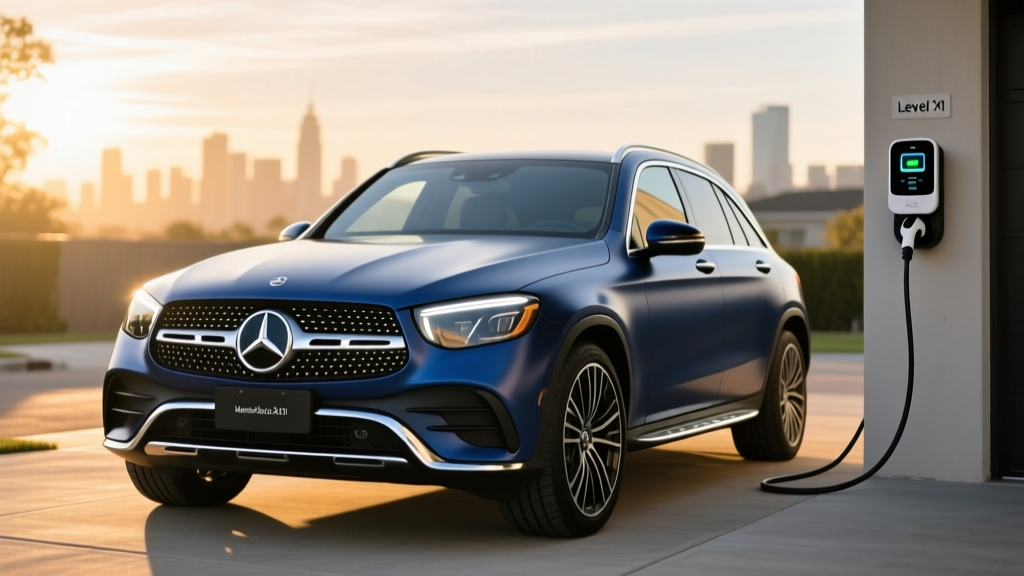
The 2026 Mercedes-Benz GLC EV (internationally known as the GLC EQ, built on the MMA platform) is a compact luxury electric SUV targeting approximately 300–350 miles of EPA-estimated range, with an 85–90 kWh usable battery pack and peak DC fast-charging capability near 220 kW (10–80% in roughly 25–30 minutes). Pricing is expected to start around $60,000–$65,000 MSRP before destination, positioning it against the BMW iX3, Audi Q6 e-tron, and Tesla Model Y Performance. Because it is assembled outside North America (likely Bremen, Germany), the 2026 GLC EV is unlikely to qualify for the full $7,500 federal §30D tax credit due to battery-sourcing and final-assembly requirements. Buyers should budget based on the sticker price and explore state-level incentives separately.
Range, Battery & Efficiency: What the Numbers Look Like
Mercedes has confirmed the MMA platform supports both 400V and 800V architectures, with the GLC EV expected to use the 800V variant for faster charging. The battery pack uses NMC (nickel-manganese-cobalt) chemistry with an estimated 85–90 kWh usable capacity. Mercedes' WLTP-cycle claims for the European GLC EQ suggest 600+ km (~373 miles), but WLTP is historically 10–15% more optimistic than the US EPA cycle.
Real-World Range Expectations
EPA estimate (projected): 300–350 miles
Highway driving (70–80 mph): Expect 250–290 miles
Cold weather (below 32°F): Expect 220–270 miles (20–30% reduction)
City/regenerative driving: Could match or slightly exceed EPA
The GLC EV's efficiency should land around 2.8–3.2 kWh/mile (roughly 100–115 MPGe combined), which is competitive but not class-leading. For comparison, the Tesla Model Y Long Range achieves 122 MPGe combined with a smaller battery thanks to superior aerodynamics and lighter weight. Heavier luxury EVs with AWD and larger batteries sacrifice some efficiency for comfort and performance.
Charging Speed & Infrastructure: 800V Architecture Pays Off
The 800V electrical architecture enables peak DC fast-charging rates near 220 kW. However, as with all EVs, peak rate is not sustained rate. The charging curve tapers significantly above 80% state of charge (SoC) to protect battery health.
| Charging Level | Power (kW) | Miles Added per Hour | Typical Use Case |
|---|---|---|---|
| Level 1 (120V household) | ~1.4 kW | ~3–5 miles | Emergency/overnight top-up |
| Level 2 (240V home/work) | ~11 kW | ~30–35 miles | Daily home charging |
| DC Fast Charge | Up to ~220 kW peak | ~180 miles in 15 min (10–60%) | Road trips, public stations |
10–80% DC fast charge time: Approximately 25–30 minutes under optimal conditions (preconditioned battery, charger capable of 220+ kW, moderate ambient temperature). In real-world testing, sustained average rates often land between 130–160 kW due to taper, so plan for 30–35 minutes at a typical Electrify America or Tesla Supercharger station.
The GLC EV will use the NACS (Tesla) connector in North America, following Mercedes-Benz's commitment to adopt the Tesla charging standard. This grants access to Tesla's Supercharger network (17,000+ stalls) plus all other networks using NACS or CCS adapters. This is a significant advantage over older CCS-only luxury EVs.
Performance, Powertrain & Driving Dynamics
The base GLC EV is expected to offer a single-motor rear-wheel-drive variant with approximately 268 hp, while the dual-motor AWD 4MATIC variant should produce 355–400 hp. A high-performance AMG variant could exceed 500 hp, though that will command a substantial price premium.
| Trim | Drivetrain | Horsepower | 0–60 mph | Est. MSRP |
|---|---|---|---|---|
| GLC 300e (RWD) | Rear-motor | ~268 hp | ~6.5 sec | ~$60,000 |
| GLC 350e 4MATIC | Dual-motor AWD | ~355 hp | ~5.0 sec | ~$67,000 |
| GLC 400e 4MATIC | Dual-motor AWD | ~400 hp | ~4.5 sec | ~$73,000 |
Mercedes' air suspension (AIRMATIC) and rear-axle steering are expected to be available, providing the plush ride quality the GLC nameplate is known for. Regenerative braking will offer multiple levels, including a one-pedal driving mode, though Mercedes traditionally defaults to a moderate regen setting rather than aggressive one-pedal like Tesla or Nissan.
Pricing, Tax Credits & Total Cost of Ownership
The 2026 GLC EV will likely start around $60,000–$65,000 for the base RWD trim, with well-equipped AWD models reaching $70,000–$80,000 after options. This positions it firmly in the compact luxury EV segment.
Federal §30D Tax Credit Eligibility (2026 Rules)
- Final assembly: Must be in North America — the GLC EV is assembled in Germany, likely disqualifying it
- MSRP cap: SUVs must be under $80,000 — most trims qualify
- Buyer income cap: $150K single / $300K joint filers
- Battery sourcing: Critical minerals and battery components must meet escalating percentage thresholds from US/free-trade partners
- Point-of-sale transfer: If eligible, credit can be applied at purchase rather than waiting for tax filing
Bottom line: The 2026 GLC EV's German assembly almost certainly eliminates the $7,500 federal credit. Check IRS §30D guidelines for updates, and investigate your state's EV incentives separately.
5-Year Cost of Ownership Comparison
| Cost Category | GLC EV (AWD) | Gas GLC 300 (AWD) |
|---|---|---|
| Purchase price (after incentives) | $67,000 | $48,000 |
| Fuel/energy (60K miles) | $4,500 (home charging) | $9,000 (gas at $3.50/gal, 24 mpg) |
| Maintenance (5 years) | $1,500 | $3,500 |
| Insurance (5 years) | $12,000 | $9,500 |
| Depreciation (est.) | $28,000 | $22,000 |
| Total 5-year cost | $113,000 | $92,000 |
The EV saves roughly $6,000 in fuel and maintenance over five years, but the higher purchase price, insurance premiums, and depreciation offset most savings. The GLC EV is a premium product, and buyers are paying for the technology, refinement, and brand — not purely for economics. If your goal is maximum cost savings, a Tesla Model Y or Hyundai Ioniq 5 will deliver better financial returns.
Real-World Ownership Considerations
Home charging access: The GLC EV's 11 kW onboard charger means a full charge from 10% takes about 8–9 hours on a Level 2 home charger (240V, 48A). If you lack home charging access, relying solely on public DC fast charging will increase your "fueling" costs by 2–3x (public rates average $0.35–$0.50/kWh vs. $0.12–$0.18/kWh at home) and add inconvenience.
Cold-weather impact: NMC batteries lose 20–30% range in sub-freezing temperatures. If you live in Minnesota, Maine, or Colorado, plan for 220–270 miles of real-world winter range. The GLC EV's heat pump (standard on most Mercedes EVs) helps, but physics is physics. Preconditioning the battery while plugged in mitigates both range loss and charging-speed reduction.
Driving patterns: If your daily commute is under 60 miles and you can charge at home, the GLC EV will rarely require public charging. For frequent road trippers (500+ miles/week), the 25–30 minute fast-charge stops add up compared to a gas car's 5-minute fill-up. Plan accordingly.
Insurance costs: Luxury EVs carry 15–25% higher insurance premiums than gas equivalents due to repair costs, battery replacement risk, and higher vehicle values. Get quotes before purchasing.
Common Misconceptions About the 2026 GLC EV
| Myth | Fact |
|---|---|
| "It will get the $7,500 federal tax credit." | German assembly disqualifies it from §30D. State incentives may apply. |
| "350 miles of range means I'll always get 350 miles." | Highway, cold weather, and terrain reduce range 15–30%. Expect 250–290 miles in real-world mixed driving. |
| "DC fast charging always takes 15 minutes." | Peak 220 kW rate tapers above 80%. Plan for 25–35 minutes for a 10–80% charge. |
| "EVs have no maintenance costs." | Tires, cabin filters, brake fluid, and wipers still need service. EVs cost ~50% less to maintain, not zero. |
| "The battery will need replacement in 5 years." | Mercedes warranties the battery for 8 years/100,000 miles (minimum 70% capacity retention). Modern NMC packs last 150,000–200,000+ miles with gradual degradation. |
Decision Framework: Should You Buy the 2026 GLC EV?
Buy the 2026 GLC EV if:
- You want a compact luxury SUV with premium materials, air suspension, and the Mercedes brand
- You have home charging access (Level 2 strongly recommended)
- Your daily driving is under 200 miles and you road-trip 2–4 times per year
- You value quiet, smooth electric powertrain refinement over maximum performance
- You can afford the $60K–$75K price range without relying on the federal tax credit
Consider alternatives if:
- You need the $7,500 federal credit — look at Tesla Model Y, Ford Mustang Mach-E, or Cadillac Lyriq (all US-assembled)
- You lack home charging and rely on apartments/street parking — a PHEV or gas vehicle may be more practical
- You prioritize value — the Hyundai Ioniq 5 or Kia EV6 offer similar range and faster charging for $20K less
- You want maximum performance — the Tesla Model Y Performance or BMW iX3 M Sport deliver sharper handling
FAQ: 2026 Mercedes-Benz GLC EV
When will the 2026 GLC EV be available in the US?
Mercedes has announced the MMA platform and European GLC EQ, with US deliveries expected in late 2025 as a 2026 model year vehicle. Final specs and pricing will be confirmed closer to launch.
What is the battery warranty?
Mercedes typically offers 8 years/100,000 miles with a minimum 70% state-of-health guarantee. This is industry-standard and matches Tesla, BMW, and Audi.
Can I use Tesla Superchargers?
Yes. The 2026 GLC EV will use the NACS connector natively, granting access to Tesla's Supercharger network without an adapter.
How does it compare to the gas GLC?
The EV offers similar interior space, more refined acceleration, lower fuel costs, but higher purchase price and insurance. If you drive 15,000+ miles/year and charge at home, the EV's fuel savings add up. For low-mileage drivers, the gas GLC may be more economical overall.
Is the GLC EV self-driving?
No. Mercedes offers Drive Pilot (Level 3 in limited conditions in Germany/California/Nevada) and standard Level 2 driver-assist features. The driver must remain engaged at all times. This is not autonomous driving.
Note: Specs in this article are based on Mercedes' announced MMA platform details and European GLC EQ information as of early 2026. Final US-market EPA ratings, pricing, and features will be confirmed at launch. Consult fueleconomy.gov for official EPA data once available.