Quick Verdict: The Electric Truck That Works Like a Truck
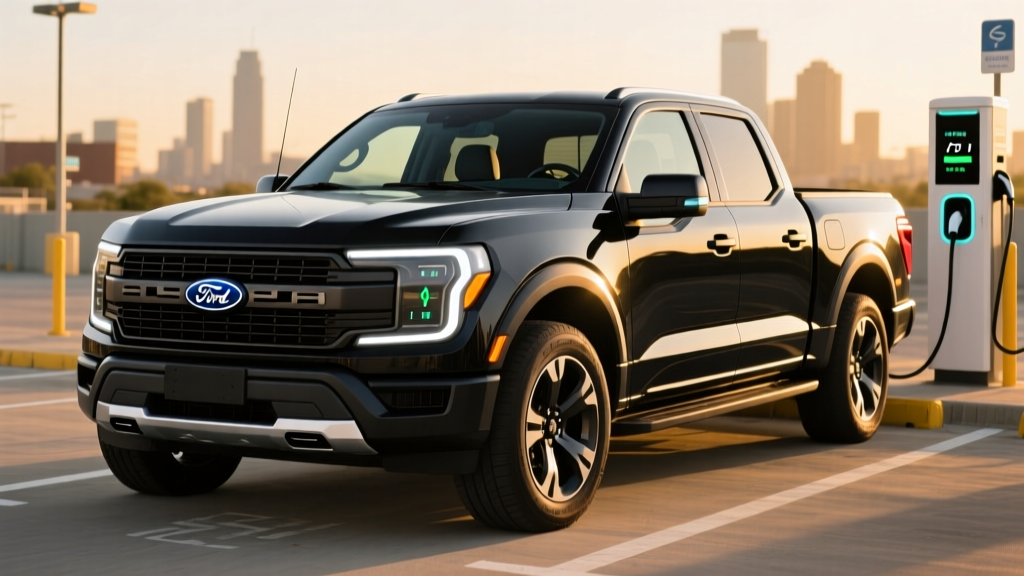
The 2026 Ford F-150 Lightning remains the benchmark for full-size electric pickups that buyers actually use for work, not just weekend flexing. With up to 320 miles of EPA-estimated range on the Extended Range battery, a usable payload north of 1,800 pounds, and a Mega Power Frunk that genuinely replaces a job-site toolbox, Ford has refined the formula over four model years without losing sight of what truck owners need. The competition has caught up in key areas — the Chevrolet Silverado EV offers more range, and the Rivian R1T delivers more tech polish — but the Lightning's combination of dealer-network serviceability, Pro Power Onboard, and BlueCruise hands-free highway driving keeps it relevant for the buyer who wants an EV that slots seamlessly into an existing truck-ownership routine.
The caveat, as always with full-size electric trucks, is physics. Range drops sharply when you tow. Fast-charging speeds, while improved, still trail the best SUV platforms. And the base price, while lower than at launch, remains steep before incentives. Here's the full breakdown with the numbers that matter.
Range, Battery, and Real-World Efficiency
Ford offers the 2026 Lightning with two battery configurations. The Standard Range pack is a 98 kWh usable lithium-ion NMC (nickel manganese cobalt) battery, while the Extended Range pack steps up to 131 kWh usable, also NMC chemistry. Ford does not currently offer an LFP (lithium iron phosphate) option in the Lightning lineup, which means you get the higher energy density of NMC at the cost of slightly faster long-term degradation compared to LFP rivals.
| Specification | Standard Range | Extended Range |
|---|---|---|
| Usable Battery Capacity | 98 kWh (NMC) | 131 kWh (NMC) |
| EPA Estimated Range | 240 miles | 320 miles |
| MPGe (Combined) | 76 MPGe | 70 MPGe |
| kWh per 100 Miles | ~44 kWh | ~48 kWh |
| Drivetrain | Dual-Motor AWD | Dual-Motor AWD |
Real-World Range Reality Check
EPA Sticker: 320 miles (Extended Range)
Expect in practice: 260–290 miles on mixed highway/city driving at 70–75 mph. Sustained highway speeds above 75 mph push consumption closer to 52–55 kWh/100mi, dropping effective range to roughly 240–260 miles.
Cold weather (below 32°F): Plan for a 20–30% reduction, meaning 170–220 miles on the Extended Range pack depending on cabin heat usage and whether you precondition. The Lightning's liquid thermal management system helps, but a large 131 kWh pack takes significant energy to warm from cold-soaked.
Towing (5,000+ lb trailer): Expect 120–160 miles effective range. This is the Lightning's most significant limitation and is consistent with every full-size electric truck on the market. If you tow frequently over long distances, plan charging stops carefully.
The Extended Range model's combined 70 MPGe translates to roughly 48 kWh per 100 miles. That's thirstier than the Standard Range model's 76 MPGe (~44 kWh/100mi) because of the additional 700+ pounds of battery mass. For context, a Tesla Model Y Long Range achieves around 28 kWh/100mi — but it doesn't weigh 6,800 pounds or have a 5.5-foot bed.
Charging: DC Fast, Level 2, and Home Setup
Ford equips the 2026 Lightning with a CCS1 connector on Standard Range models and has transitioned Extended Range trims to the NACS (North American Charging Standard) connector, granting native access to Tesla Supercharger stalls with a Ford-provided adapter included. This is a meaningful advantage for road-trip charging reliability in 2026, as the Supercharger network remains the most consistently operational DC fast-charging infrastructure in the U.S.
| Charging Level | Standard Range (98 kWh) | Extended Range (131 kWh) |
|---|---|---|
| Level 1 (120V / 12A) | ~2 mi/hr (1.4 kW) | ~2 mi/hr (1.4 kW) |
| Level 2 (240V / 48A) | ~19 mi/hr (11.5 kW) | ~19 mi/hr (11.5 kW) |
| Level 2 (240V / 80A — Ford Charge Station Pro) | ~30 mi/hr (19.2 kW) | ~30 mi/hr (19.2 kW) |
| DC Fast Charge (Peak) | 150 kW | 155 kW |
| DC Fast 10–80% Time | ~38 minutes | ~41 minutes |
The DC fast-charging numbers deserve honest interpretation. The Extended Range pack peaks at roughly 155 kW, but that peak is sustained only between approximately 15–40% state of charge. Above 60%, the charge curve tapers significantly — you'll see 80–90 kW in the 60–70% range and drop to under 50 kW approaching 80%. This is standard behavior for large NMC packs managed conservatively for longevity, but it means the 10–80% time of roughly 41 minutes is an average, not a sustained rate.
At home, the 80-amp Ford Charge Station Pro is the optimal setup and requires a 100-amp dedicated circuit. Expect a professional installation cost of $1,500–$3,000 depending on your panel capacity and conduit run, on top of the $1,290 hardware cost. If your home has a 200-amp main panel with spare capacity, you're in good shape. If you need a panel upgrade to 400 amps, add $2,500–$5,000 to your budget. Always consult a licensed electrician for a site-specific assessment.
For overnight charging on the 80-amp station, the Extended Range pack will go from 20% to full in roughly 10 hours — adequate for most daily routines if you plug in when you get home.
Performance and Capability
Every 2026 Lightning ships with a dual-motor all-wheel-drive powertrain. The Standard Range models produce 563 horsepower and 775 lb-ft of torque, while Extended Range models bump output to 580 hp with the same 775 lb-ft. The torque figure is available from zero RPM, which is where the Lightning's acceleration advantage over gas F-150s becomes visceral.
| Metric | Standard Range | Extended Range |
|---|---|---|
| Horsepower | 563 hp | 580 hp |
| Torque | 775 lb-ft | 775 lb-ft |
| 0–60 mph | ~4.0 seconds | ~3.8 seconds |
| Max Payload | 1,800 lbs | 1,500 lbs (battery weight penalty) |
| Max Towing (with Max Tow Pkg) | 7,700 lbs | 10,000 lbs |
| Drivetrain | Dual-Motor AWD | Dual-Motor AWD |
The payload disparity between Standard and Extended Range is worth noting: the heavier 131 kWh pack eats into payload capacity by roughly 300 pounds. If payload is critical for your work use case, the Standard Range XLT is the spec to choose. For towing, the Extended Range with the Max Trailer Tow Package hits 10,000 pounds — but remember that range-halving effect when you hook up a heavy trailer.
Ford's BlueCruise hands-free driving system is available on Lariat and Platinum trims. This is an SAE Level 2 driver-assistance system, meaning you must remain attentive and keep your eyes on the road — the driver monitoring camera enforces this. BlueCruise operates on over 130,000 miles of pre-mapped divided highways and handles steering, acceleration, and braking. It does not navigate roundabouts, city streets, or construction zones autonomously. Think of it as a significantly upgraded cruise control for highway stretches, not a replacement for an engaged driver.
Pricing, Trims, and Federal Tax Credit Eligibility
The 2026 Lightning lineup spans four trims, with pricing that has stabilized after several years of adjustment. Here's where the lineup stands at the start of the 2026 model year:
| Trim | Battery | Base MSRP | §30D Credit Eligibility | Effective Price (if eligible) |
|---|---|---|---|---|
| Pro | Standard Range (98 kWh) | $54,995 | Up to $7,500 | ~$47,495 |
| XLT | Standard Range (98 kWh) | $59,995 | Up to $7,500 | ~$52,495 |
| Lariat | Extended Range (131 kWh) | $74,995 | Up to $7,500 | ~$67,495 |
| Platinum | Extended Range (131 kWh) | $94,875 | Up to $7,500 | ~$87,375 |
Federal tax credit rules (IRS §30D) — critical caveats:
- MSRP Cap: Trucks and vans must have an MSRP at or below $80,000 to qualify. The Platinum trim at $94,875 exceeds this cap and is not eligible for the §30D credit.
- Buyer Income Limits: Modified adjusted gross income must not exceed $150,000 (single), $225,000 (head of household), or $300,000 (married filing jointly).
- Battery Sourcing: The full $7,500 requires meeting both critical-mineral ($3,750) and battery-component ($3,750) sourcing requirements. Ford has worked to localize Lightning battery production through its BlueOvalSK joint venture in Kentucky, but exact credit amounts depend on current-year mineral sourcing percentages. Some trims may qualify for only $3,750 if sourcing thresholds are partially met.
- Point-of-Sale Transfer: As of 2024, you can transfer the credit to the dealer at purchase, reducing your out-of-pocket cost immediately rather than waiting to claim it on your tax return. This requires dealer participation and IRS registration.
Always verify current eligibility on IRS.gov and consult a tax professional before relying on credit amounts for purchase decisions. Rules can change with new guidance or legislative action.
Cargo, Interior Space, and Standout Features
The Lightning's SuperCrew cab provides seating for five with 43.6 inches of rear legroom — identical to the gas F-150 SuperCrew and genuinely comfortable for adults on long trips. The 5.5-foot Styleside bed offers 52.8 cubic feet of cargo volume, and the bed floor sits lower than a gas F-150's thanks to the absence of a rear differential hump, making loading easier.
The Mega Power Frunk (front trunk) remains one of the Lightning's most practical differentiators. It provides 14.1 cubic feet of lockable, drainable storage with 400 pounds of payload capacity. Ford equips it with four 120V outlets and two USB-C ports, plus LED lighting. On the job site, it doubles as a secure tool chest. On a tailgate, it's a cooler and charging station.
Pro Power Onboard is the Lightning's killer feature for work and emergency use. Available in 2.4 kW (standard on Pro/XLT) or 9.6 kW (available on Lariat/Platinum) configurations, it turns the truck's battery into a mobile generator. The 9.6 kW version can run a welder, power a job-site compressor, or — via a home integration system — back up essential home circuits during an outage for up to three days (estimated, depending on household draw). This is not theoretical: owners have documented using the Lightning as whole-home backup during multi-day outages.
The infotainment system centers on a 12-inch touchscreen (15.5-inch portrait screen on Lariat and Platinum) running Ford's SYNC 4A software with wireless Apple CarPlay and Android Auto. The Platinum's vertical screen is visually impressive but can require more glance-time than a horizontal layout. Physical knobs for volume and climate remain, which is a win for usability.
Notable drawbacks: The Lightning's ride quality on 22-inch wheels (Platinum) is noticeably firm over broken pavement — the independent rear suspension is an improvement over the gas F-150's leaf springs, but it's still a heavy truck on stiff sidewalls. Rear visibility is compromised by the headrests and high bed walls; the 360-degree camera system is essentially mandatory and is standard on Lariat and above. Regenerative braking is effective but the one-pedal driving mode could be more aggressive compared to competitors like the Rivian R1T.
Warranty and Long-Term Ownership
Ford backs the 2026 Lightning with a competitive warranty package:
- Basic Vehicle Warranty: 3 years / 36,000 miles
- Powertrain Warranty: 5 years / 60,000 miles
- EV Battery & Electric Components: 8 years / 100,000 miles (capacity retention threshold: 70% of original capacity)
The 70% retention threshold is industry-standard, matching what Chevrolet, Hyundai, and most competitors offer. In practical terms, Ford's NMC packs have shown modest degradation in early model-year Lightning data — most owners report 93–96% state of health after 30,000 miles. The larger concern is out-of-warranty replacement cost: a 131 kWh Extended Range pack replacement is estimated at $20,000–$28,000 (parts and labor), though prices are expected to decline as the battery supply chain matures.
For buyers concerned about long-term battery longevity, Ford's thermal management system actively heats and cools the pack, and the battery management system maintains a buffer above and below the displayed state of charge to protect against deep cycling. Avoid routinely charging to 100% on DC fast chargers and try to keep daily charging between 20–80% for optimal cycle life — the same best practices that apply to all NMC-based EVs.
Competition and Buying Decision
The Lightning competes in a narrowing but formidable field. Here's how it stacks up on the metrics that matter:
| Attribute | Ford F-150 Lightning (Ext. Range) | Chevrolet Silverado EV (4WT) | Rivian R1T (Dual-Motor Max) |
|---|---|---|---|
| EPA Range | 320 mi | 440 mi | 410 mi |
| Peak DC Charge | 155 kW | 350 kW | 220 kW |
| 0–60 mph | 3.8 sec | 4.5 sec | 3.5 sec |
| Max Towing | 10,000 lbs | 10,000 lbs | 11,000 lbs |
| Starting MSRP | $54,995 | $57,900 | $79,900 |
| Dealer Service Network | Extensive (Ford dealers) | Extensive (Chevy dealers) | Limited (Rivian service centers + mobile) |
The Silverado EV's Ultium platform delivers superior range and dramatically faster DC charging (350 kW peak vs. the Lightning's 155 kW). If road-trip charging speed and maximum range are your top priorities, the Chevy is the stronger pick. The Rivian R1T offers more advanced air suspension, a quad-motor option, and a more premium interior, but at a significantly higher price point and with a thinner service network.
Pros
- Pro Power Onboard (9.6 kW) is unmatched for work/emergency use
- Mega Power Frunk with 14.1 cu ft of lockable storage
- Competitive pricing, especially after §30D credit
- Extensive Ford dealer network for service
- BlueCruise hands-free highway driving on Lariat+
- Strong 0–60 acceleration for a 6,800-lb truck
- Independent rear suspension improves ride over gas F-150
Cons
- DC fast charging at 155 kW trails Silverado EV (350 kW) and R1T (220 kW)
- Towing range drops to 120–160 miles with a heavy trailer
- Extended Range battery adds weight, reducing payload to 1,500 lbs
- Platinum trim exceeds $80K MSRP cap, losing §30D eligibility
- Firm ride on 22-inch wheels (Platinum)
- NMC chemistry degrades faster than LFP over long ownership
- 5.5-foot bed is shorter than some gas F-150 configurations
Who Should Buy the 2026 F-150 Lightning?
Choose the Lightning if: You need Pro Power Onboard for work or home backup, value a massive frunk for job-site tools, want hands-free highway driving via BlueCruise, and prefer the security of a widespread Ford dealer service network. The XLT Standard Range at ~$52,500 after the tax credit is the value sweet spot.
Look elsewhere if: You tow heavy trailers over long distances regularly (the Silverado EV's 440-mile range and 350 kW charging are better suited), you want maximum range for road trips, or you prioritize the fastest possible DC charging stops.
Frequently Asked Questions
What is the real-world range of the 2026 Ford F-150 Lightning?
The Extended Range model carries an EPA estimate of 320 miles, but expect 260–290 miles in mixed driving at highway speeds. Cold weather (below freezing) can reduce this to 170–220 miles. Towing a 5,000-pound trailer cuts range to approximately 120–160 miles. The Standard Range model's 240-mile EPA estimate translates to roughly 190–220 miles in real-world mixed use.
How fast does the Lightning charge at home and on the road?
On a DC fast charger, the Extended Range pack peaks at 155 kW and charges from 10–80% in approximately 41 minutes. At home on a 240V/80A Ford Charge Station Pro, you'll add roughly 30 miles of range per hour, fully replenishing a depleted Extended Range pack in about 10 hours. On a standard 240V/48A outlet, expect about 19 miles per hour of charging.
Does the 2026 F-150 Lightning qualify for the federal EV tax credit?
The Pro, XLT, and Lariat trims qualify for up to $7,500 under IRS §30D, provided the buyer meets income limits ($150K single / $300K joint) and the vehicle's battery sourcing meets critical-mineral and component thresholds. The Platinum trim at $94,875 exceeds the $80,000 MSRP cap for trucks and is not eligible. Credit amounts may be $3,750 or $7,500 depending on current sourcing compliance — verify at IRS.gov.
Is the F-150 Lightning worth buying vs. the Silverado EV or Rivian R1T?
The Lightning wins on work-truck utility (Pro Power Onboard, frunk, dealer network) and value pricing. The Silverado EV is superior for road-trip range (440 mi) and DC charging speed (350 kW). The Rivian R1T offers more premium technology and a quad-motor option but at a much higher price. For most buyers using a truck for daily commuting plus occasional work, the Lightning at the XLT trim level offers the best balance.
Can the Lightning power my home during an outage?
Yes, with the available 9.6 kW Pro Power Onboard system and a Ford-approved home integration system (installed by a licensed electrician), the Lightning can back up essential circuits in your home. Ford estimates up to three days of backup power for an average home drawing roughly 30 kWh per day, though actual duration depends on your specific load. This requires a transfer switch or integrated inverter setup and is not a plug-and-play feature.
How long will the Lightning's battery last?
Ford warranties the battery for 8 years or 100,000 miles against degradation below 70% of original capacity. Real-world data from 2022–2025 model-year Lightnings shows most packs retaining 93–96% state of health at 30,000 miles. With proper care (avoiding routine 100% charges on DC fast charging, keeping daily SoC between 20–80%), NMC packs in liquid-cooled systems like the Lightning's are expected to provide 150,000–200,000+ miles before approaching the 70% threshold.