Quick Answer: Should You Wait for the 2026 Escalade EV?
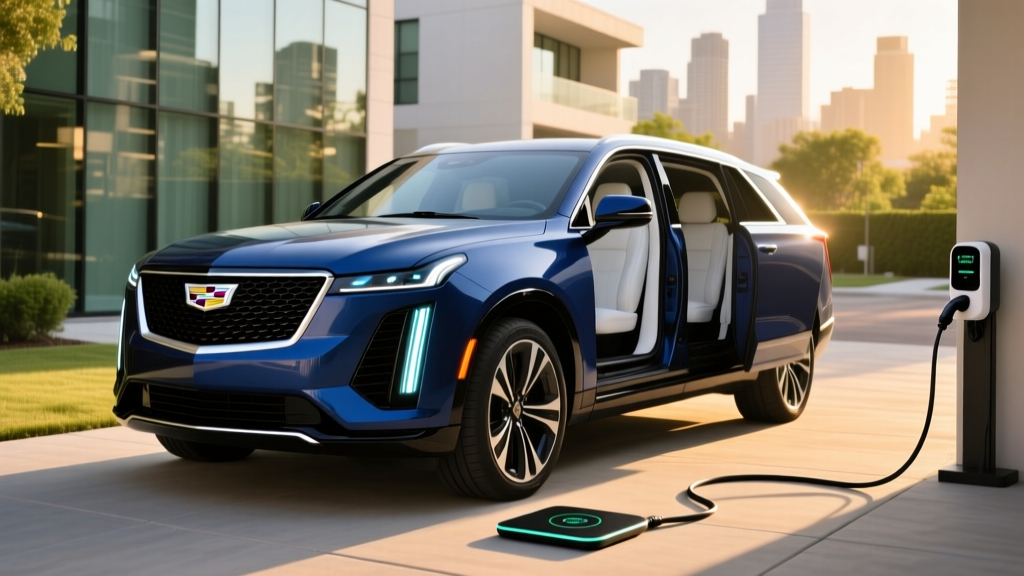
The 2026 Cadillac Escalade EV (officially branded as the Escalade IQ) is Cadillac's flagship electric luxury SUV, built on GM's Ultium platform. It offers an EPA-estimated 459 miles of range from a massive 200+ kWh usable battery, up to 750 horsepower, and a starting MSRP around $129,990. It qualifies for no federal §30D tax credit due to its MSRP exceeding the $80,000 SUV cap. If you need a three-row electric luxury hauler with best-in-class range and can install a Level 2 home charger, the Escalade IQ delivers. If your budget is tighter or you lack reliable home charging access, the gas Escalade or a smaller EV like the Cadillac Lyriq may be smarter.
2026 Escalade IQ: Confirmed Specs at a Glance
Cadillac began delivering the Escalade IQ in late 2024 as a 2025 model. For the 2026 model year, specifications remain largely carried over with minor software and trim adjustments. Here are the confirmed figures from Cadillac's official Escalade IQ page and EPA data:
| Specification | Value |
|---|---|
| EPA Range (Luxury 1 / Sport 1) | 459 miles |
| EPA Range (Luxury 2 / Sport 2) | 431 miles |
| Battery Capacity (usable) | ~200 kWh (NMC, Ultium) |
| Battery Chemistry | NCMA (nickel-cobalt-manganese-aluminum) |
| Peak DC Fast Charge Rate | 350 kW (800V architecture) |
| 10–80% DC Fast Charge Time | ~25 minutes (estimated) |
| Level 2 AC Charging (max) | 19.2 kW |
| Horsepower (Velocity Max mode) | 750 hp |
| Torque | 785 lb-ft |
| 0–60 mph | ~3.4 seconds (Velocity Max) |
| Seating | Up to 7 passengers (3 rows) |
| Towing Capacity | 8,000 lbs (estimated) |
| Starting MSRP (Luxury 1) | $129,990 |
| Battery/Powertrain Warranty | 8 years / 100,000 miles |
Real-World Range: What 459 EPA Miles Actually Means
A 459-mile EPA rating is extraordinary — among the highest of any production EV sold in the U.S. But EPA estimates assume mixed driving at moderate temperatures. Here's what to expect in practice:
2026 Escalade IQ Range Expectations
- EPA Combined: 459 mi (Luxury 1) / 431 mi (Luxury 2, with larger 24" wheels)
- Highway (70–80 mph, 75°F): Expect ~370–400 mi. Large SUVs suffer significant aero drag at speed.
- Cold Weather (20°F, with heat pump): Expect ~320–360 mi. The Escalade IQ includes a heat pump, which mitigates but doesn't eliminate cold-weather losses (~20–30%).
- Towing (5,000+ lb trailer): Expect ~200–250 mi. Towing in any EV roughly halves range.
The 200+ kWh battery is enormous — roughly double the capacity of a Tesla Model Y Long Range. That mass (the Escalade IQ weighs over 9,000 lbs) means efficiency is modest at roughly 47–50 MPGe combined (~2.0–2.1 kWh/mile). You're trading efficiency for sheer range and presence, which is exactly the Escalade formula.
Charging the Escalade IQ: Speeds, Infrastructure, and Home Setup
DC Fast Charging
The Escalade IQ uses an 800-volt architecture enabling peak charge rates up to 350 kW at compatible stations (like Electrify America's 350 kW stalls or Tesla Superchargers with a NACS adapter — GM adopted NACS for 2025+ models). At 350 kW, GM estimates a 10–80% charge in roughly 25 minutes.
However, real-world charging curves taper significantly above 80%. Expect a full 10–100% session to take 45–55 minutes. The massive battery also means that even at a sustained 200 kW average (accounting for taper), you're adding roughly 14 miles of range per minute of charging — impressive but not instant.
Home Charging: The Non-Negotiable Requirement
With a 200 kWh battery, Level 1 (120V) charging is essentially useless — it would take over 7 days to fill from empty. Level 2 is mandatory for practical ownership:
| Charging Method | Power | Miles Added per Hour | Full Charge Time (10–100%) |
|---|---|---|---|
| Level 1 (120V outlet) | ~1.4 kW | ~0.7 mi/hr | ~140+ hours |
| Level 2 (240V, 48A circuit) | 11.5 kW | ~5.5 mi/hr | ~36 hours |
| Level 2 (240V, 80A circuit) | 19.2 kW | ~9.5 mi/hr | ~22 hours |
| DC Fast (350 kW peak) | 350 kW | ~170 mi in 10 min | ~25 min (10–80%) |
Home install reality: The Escalade IQ supports up to 19.2 kW AC charging, but that requires a 100-amp dedicated circuit and a hardwired wall connector. Most homes have 200-amp main panels, meaning a panel upgrade to 300–400 amps may be necessary. Budget $2,500–$6,000+ for a professional Level 2 installation with potential panel work. Consult a licensed electrician for your specific situation.
For daily driving of 40–60 miles, a 48A Level 2 charger (adding ~30 miles overnight) is sufficient. But if you regularly deplete the battery on road trips, the 19.2 kW option recovers range much faster.
Escalade IQ vs. Gas Escalade: 5-Year Cost Comparison
The gas-powered 2026 Escalade starts around $83,000 and achieves roughly 16 MPG combined with its 6.2L V8. Here's how a 5-year / 75,000-mile ownership period compares:
| Cost Category | 2026 Escalade IQ (EV) | 2026 Escalade (Gas V8) |
|---|---|---|
| Purchase Price (base MSRP) | $129,990 | $83,000 |
| Federal Tax Credit (§30D) | $0 (exceeds $80K SUV cap) | $0 |
| Fuel/Energy (75,000 mi) | $4,500–$6,750 (home + DC mix) | $16,400 (16 MPG, $3.50/gal) |
| Maintenance (5 yr) | $1,500–$2,500 | $4,500–$6,000 |
| Insurance (5 yr est.) | $18,000–$24,000 | $14,000–$18,000 |
| Estimated Depreciation (5 yr) | $52,000–$65,000 | $33,000–$42,000 |
| Total 5-Year Cost | $206,000–$229,000 | $151,000–$169,000 |
Key takeaway: The Escalade IQ saves roughly $10,000–$14,000 in fuel and maintenance over five years. But the $47,000 higher purchase price and steeper depreciation on a $130K vehicle mean the gas Escalade remains significantly cheaper to own overall. The IQ is a technology and experience purchase, not a cost-savings play. Per fueleconomy.gov, electricity costs vary enormously by region — if you pay $0.30+/kWh (common in California), your savings shrink further.
Federal Tax Credit and Incentives: What You Actually Qualify For
This is where many luxury EV buyers face disappointment. Under current IRS §30D rules, the Escalade IQ does not qualify for the federal clean vehicle credit:
§30D Credit Eligibility for the Escalade IQ
- MSRP Cap for SUVs: $80,000 maximum — the Escalade IQ starts at $129,990 ❌
- Buyer Income Cap: $300K MFJ / $150K single — irrelevant here since MSRP disqualifies
- Battery Sourcing: Must meet critical mineral and battery component requirements — moot
- Point-of-Sale Transfer: Available for qualifying vehicles — not applicable
State incentives may apply. Some states (California, Colorado, New York) offer additional rebates that may have different MSRP caps or no caps at all. Check your state's energy office or DMV for current programs. Consult a tax professional for your specific situation — incentive rules change frequently.
Common Misconceptions About the Escalade IQ
| Myth | Fact |
|---|---|
| "It qualifies for the $7,500 tax credit" | No. The MSRP cap for SUVs under §30D is $80,000. The Escalade IQ starts at $129,990. |
| "459 miles means I'll never need to charge on road trips" | At highway speeds in cold weather, expect 320–370 real miles. Plan one stop on 500+ mile trips. |
| "I can charge it on a regular outlet" | A 120V outlet adds less than 1 mile per hour. A 200 kWh battery requires Level 2 (240V) for any practical use. |
| "It's self-driving with Super Cruise" | Super Cruise is an SAE Level 2 hands-free driver-assist system. You must remain alert and supervise at all times. It is not autonomous driving. |
| "The battery will need replacement in 5 years" | GM warranties the Ultium battery for 8 years/100,000 miles against degradation below 60% capacity. NMC batteries in liquid-cooled packs typically retain 85–90% after 100K miles based on fleet data. |
| "It charges as fast as a Tesla" | At 350 kW peak, it's comparable. But the 200 kWh battery means a full session takes longer than a Model Y's ~82 kWh pack at similar kW rates. |
Driver Assistance: Super Cruise, Not Self-Driving
SAE Automation Level: Level 2 (Partial Automation)
The Escalade IQ comes equipped with GM Super Cruise, a hands-free driving system on over 750,000 miles of mapped roads in North America. This is SAE Level 2 — the vehicle controls steering, acceleration, and braking, but the driver must remain attentive and ready to take over immediately. An infrared camera monitors your eyes. If you look away or become unresponsive, the system escalates warnings and eventually stops the vehicle.
Super Cruise is genuinely excellent for highway cruising and reduces fatigue on long trips. But it does not handle city streets, construction zones, or unmapped roads. It will not navigate a roundabout or stop-and-go surface street without driver input. Think of it as an advanced cruise control, not a chauffeur.
What Super Cruise Does NOT Do
- Does not drive on unmapped or local roads
- Does not handle adverse weather (heavy rain, snow, fog)
- Does not allow you to sleep, read, or use your phone
- Is not a Level 4 autonomous system like Waymo
Decision Framework: Is the 2026 Escalade IQ Right for You?
Choose the Escalade IQ If:
- You want the longest-range three-row luxury EV available and budget is not the primary constraint
- You have (or can install) a Level 2 home charger on a 60A+ circuit
- You regularly drive 200+ miles in a day and want to minimize charging stops
- You value instant torque, silent operation, and the latest Cadillac tech (55" LED dash, AKG audio)
- You tow occasionally and need 8,000-lb capacity with zero tailpipe emissions
Choose the Gas Escalade If:
- Total cost of ownership matters and the $47K price gap is significant
- You lack access to home or workplace Level 2 charging
- You frequently tow heavy loads over 300+ miles (towing range drops to ~200 mi in the IQ)
- You live in an area with sparse DC fast-charging infrastructure
Consider the Cadillac Lyriq or Competitor If:
- Your budget is $60K–$90K (Lyriq starts ~$58,590 and may qualify for partial incentives)
- You don't need three rows — the Lyriq is a two-row midsize SUV with ~314 miles of range
- You want a smaller, more efficient EV that's easier to park and cheaper to insure
Frequently Asked Questions
What is the real-world range of the 2026 Escalade IQ?
The EPA rates it at 459 miles (Luxury 1) or 431 miles (Luxury 2 with 24" wheels). In real-world highway driving at 75 mph in mild weather, expect 370–400 miles. In cold weather (below 30°F), expect 320–360 miles. Towing cuts range roughly in half to 200–250 miles.
How long does it take to charge the Escalade IQ at home?
On a 48-amp Level 2 charger (11.5 kW), a full charge from 10% takes about 36 hours. On an 80-amp circuit (19.2 kW), about 22 hours. For daily use of 40–60 miles, overnight charging on a 48A circuit is perfectly adequate — you'll add ~55 miles in 10 hours.
Does the 2026 Escalade IQ qualify for any tax credits?
It does not qualify for the federal §30D clean vehicle credit because its MSRP ($129,990+) exceeds the $80,000 cap for SUVs. Some state-level incentives may apply depending on your location. Check with your state energy office and a tax professional.
Is Super Cruise on the Escalade IQ self-driving?
No. Super Cruise is SAE Level 2 driver assistance. It provides hands-free steering, acceleration, and braking on mapped highways, but requires continuous driver supervision. You must keep your eyes on the road and be ready to take over at any moment.
What does it cost to charge vs. fueling a gas Escalade?
At the U.S. average residential electricity rate of ~$0.16/kWh, charging the IQ's 200 kWh battery costs roughly $32 for a full charge, yielding about $0.07–$0.09 per mile. A gas Escalade at 16 MPG and $3.50/gallon costs about $0.22 per mile. Over 75,000 miles, that's roughly $5,250–$6,750 in electricity vs. $16,400 in gasoline — a savings of ~$10,000 in fuel alone. However, if you rely primarily on public DC fast charging at $0.40–$0.60/kWh, your per-mile cost rises to $0.15–$0.20, narrowing the gap significantly.
What is the battery warranty?
GM covers the Ultium battery pack for 8 years or 100,000 miles, whichever comes first, against defects and capacity loss below 60% of original capacity. The powertrain (motors, inverters) carries the same 8-year/100,000-mile coverage.
Can I use Tesla Superchargers with the Escalade IQ?
Yes. GM adopted the NACS (North American Charging Standard) connector for its 2025+ EVs. The 2026 Escalade IQ comes with a NACS charge port, giving it native access to Tesla's Supercharger network (now open to non-Tesla vehicles via the NACS standard) as well as Electrify America, EVgo, and other networks using NACS adapters or native NACS stalls.