Quick Verdict: The Affordable Long-Range EV Gets Refinement Tweaks
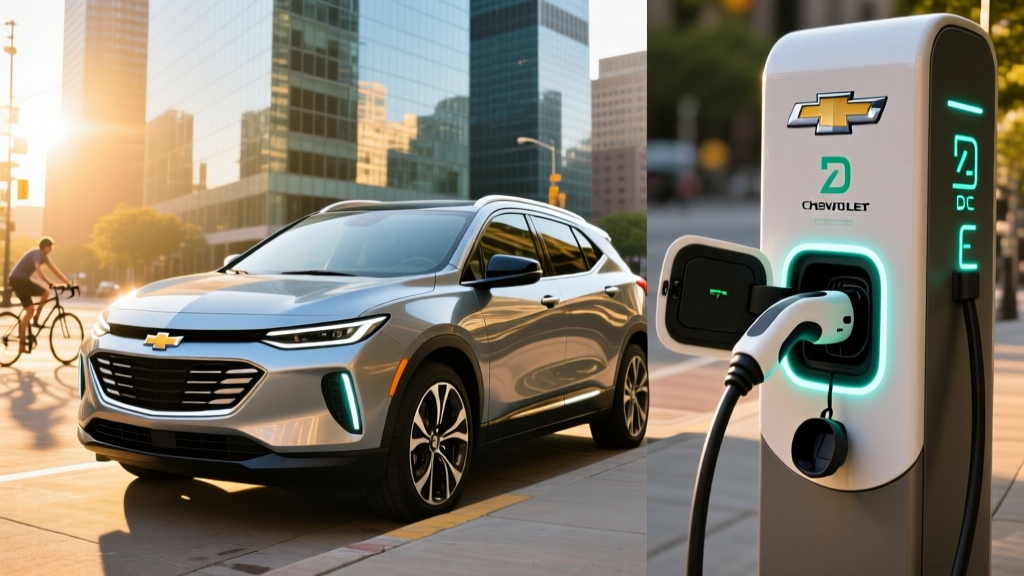
The Chevrolet Equinox EV entered the market as one of the most accessible long-range electric crossovers, and the latest 2026 Equinox EV updates bring incremental but meaningful refinements. Built on GM's Ultium platform, the 2026 model retains the 319-mile EPA-estimated range on front-wheel-drive trims while adding updated infotainment software, revised driver-assist calibration, and a reshuffled trim lineup that simplifies the buying decision. Starting at $33,600 before destination, it undercuts most 300-plus-mile EVs by a wide margin — and still qualifies for the full $7,500 federal tax credit for eligible buyers, bringing the effective price near $26,100.
But spec sheets don't tell the whole story. After spending time with the platform across multiple model years, I've found the Equinox EV excels at daily commuting and suburban family duty while showing its limitations on road-trip charging speed and cold-weather efficiency. Here's everything you need to know about what changed, what didn't, and whether this is the right EV for your driveway.
What's New: Key 2026 Equinox EV Updates
GM has kept changes surgical rather than sweeping for 2026. The most significant updates include:
- Trim simplification: The lineup now consolidates around LT (base), Midnight, and RS trims, with the entry-level 2LT discontinued after 2025. This pushes the effective base price up slightly but eliminates the lowest-range battery option.
- Software and infotainment: An updated Google Built-in interface with faster response times, improved voice recognition, and wireless phone projection across all trims.
- Super Cruise availability: GM's hands-off-wheel Level 2 driver-assist system expands availability to the LT trim via an optional package, previously restricted to RS and Midnight.
- New exterior colors: Two new paint options replace outgoing colors, and the Midnight appearance package gains new 21-inch wheel designs.
- Standard safety suite refresh: Chevy Safety Assist gains improved intersection automatic emergency braking calibration and enhanced rear cross-traffic braking sensitivity.
Critically, the powertrain, battery pack, and charging hardware carry over unchanged from the 2025 model year. If you were hoping for a faster charge curve or a larger battery, those updates have not arrived yet.
Range, Battery, and Real-World Efficiency
EPA Estimated: 319 miles (FWD) / 285 miles (AWD)
Real-World Expectation: 270–295 miles mixed driving (FWD); 240–265 miles (AWD). Highway cruising at 75 mph reduces range to approximately 250–270 miles FWD. In sub-freezing temperatures (below 32°F), expect a 15–25% reduction, bringing effective range to roughly 220–270 miles FWD depending on cabin heating use and whether you precondition.
The Equinox EV uses a single Ultium battery pack with 85 kWh of usable capacity (approximately 102 kWh gross) employing NMC (nickel manganese cobalt) lithium-ion chemistry. GM has not switched to LFP for this model, which means you get higher energy density but should avoid routinely charging to 100% for daily use — an 80% daily charge limit is recommended for NMC longevity.
Efficiency on the EPA cycle rates at 114 MPGe combined for the FWD model, translating to roughly 29 kWh per 100 miles. That's competitive with the Hyundai Ioniq 5 (114 MPGe combined RWD) but trails the Tesla Model Y (122 MPGe RWD). On the highway, expect efficiency to worsen to 32–35 kWh/100 mi due to the Equinox EV's boxy crossover profile and 4,300-pound curb weight.
| Spec | FWD (LT / Midnight) | AWD (RS / Midnight) |
|---|---|---|
| EPA Range | 319 miles | 285 miles |
| Battery (Usable / Gross) | 85 kWh / ~102 kWh | 85 kWh / ~102 kWh |
| Chemistry | NMC | NMC |
| Horsepower | 213 hp | 288 hp |
| Torque | 236 lb-ft | 355 lb-ft |
| 0–60 mph | ~8.0 sec | ~6.2 sec |
| Drivetrain | Single motor FWD | Dual motor AWD |
| EPA Efficiency (Combined) | 114 MPGe / 29 kWh/100mi | 102 MPGe / 33 kWh/100mi |
| Max DC Fast Charge | 170 kW | 170 kW |
| 10–80% DCFC Time | ~42 min | ~42 min |
| Level 2 Charge Rate | 11.5 kW (~34 mi/hr) | 11.5 kW (~34 mi/hr) |
| Cargo Volume (rear seats up / down) | 26.4 cu ft / 57.2 cu ft | 26.4 cu ft / 57.2 cu ft |
| Rear Legroom | 37.8 in | 37.8 in |
Charging Speed: Home and DC Fast Charging
The Equinox EV's charging hardware is where pragmatic buyers should pay close attention — because while the range is impressive, the charge speed is merely adequate for 2026.
| Charging Level | Power | Speed (Miles per Hour) | Notes |
|---|---|---|---|
| Level 1 (120V household) | ~1.4 kW | ~4 mi/hr | Emergency/top-up only; full charge takes 60+ hours |
| Level 2 (240V home) | 11.5 kW | ~34 mi/hr | Full charge in ~8.5 hours; requires 48-amp circuit (60-amp breaker) |
| DC Fast Charging | 170 kW peak | Up to ~190 mi in 30 min | 10–80% in ~42 min; tapers significantly above 80% |
At a DC fast charger, the Equinox EV peaks at 170 kW but only sustains that rate briefly between roughly 10–30% state of charge. The charge curve tapers progressively, dropping to around 100 kW by 50% and falling further to 50–60 kW above 70%. This means the 10–80% session takes approximately 42 minutes — functional for road trips but noticeably slower than competitors like the Hyundai Ioniq 5 (which peaks at 240 kW and hits 10–80% in about 18 minutes on a 350 kW charger) or the Tesla Model Y (peaking at 250 kW, 10–80% in roughly 25 minutes).
For home Level 2 charging, the 11.5 kW onboard charger is solid. A full overnight charge from 20% to 100% takes about 7–8 hours on a properly installed 48-amp Level 2 station. Installation costs for a home Level 2 setup typically run $800–$2,000 depending on whether your electrical panel needs an upgrade — factor in a potential $1,500–$3,000 panel upgrade if you're running a 200-amp service that's already near capacity. Always consult a licensed electrician for final specs.
Preconditioning note: The Equinox EV supports battery preconditioning when you navigate to a DC fast charger via the built-in Google Maps navigation. Using this feature warms the battery for faster charge acceptance, particularly important in cold weather where charge speeds can drop 30–40% without preconditioning.
Pricing, Trims, and Federal Tax Credit Eligibility
| Trim | Drivetrain | MSRP | Est. After $7,500 Credit* |
|---|---|---|---|
| LT 2RS (FWD) | FWD | $33,600 | $26,100 |
| LT 2RS (AWD) | AWD | $36,400 | $28,900 |
| Midnight (FWD) | FWD | $35,800 | $28,300 |
| Midnight (AWD) | AWD | $38,600 | $31,100 |
| RS Launch (AWD) | AWD | $41,900 | $34,400 |
*Destination charge (~$1,395) not included. Tax credit shown is the maximum federal §30D credit; eligibility depends on buyer income, battery sourcing, and MSRP caps. See details below.
The Equinox EV's pricing is its strongest competitive weapon. At $33,600 for the base FWD LT, it is the least expensive 300-plus-mile EV crossover on the US market as of early 2026. For context, the Hyundai Ioniq 5 SE Standard Range starts around $42,000 with only 245 miles of range, and the Tesla Model Y begins near $44,990.
Federal Tax Credit: Does the Equinox EV Qualify?
As of the current tax year, the Chevrolet Equinox EV qualifies for the full $7,500 federal tax credit under IRS §30D, and it is eligible for the point-of-sale transfer, meaning the credit can be applied as an immediate discount at the dealership rather than waiting for a tax refund. However, eligibility is not automatic for every buyer. Key requirements per IRS guidelines include:
- Buyer income caps: Modified adjusted gross income must not exceed $150,000 (single), $225,000 (head of household), or $300,000 (joint filing).
- MSRP cap: The vehicle MSRP must not exceed $80,000 for SUVs/trucks/vans. All Equinox EV trims clear this easily.
- Battery sourcing requirements: A percentage of critical minerals and battery components must be sourced from the US or free-trade-agreement countries. GM assembles the Ultium battery cells in Ohio (Ultium Cells LLC, a joint venture with LG Energy Solution), which satisfies current sourcing thresholds.
- Transfer election: Buyers can elect to transfer the credit to the dealer at point of sale for an immediate price reduction, even if they have no tax liability — a significant advantage for lower-income buyers.
Tax rules can shift with legislation. Consult a tax professional and verify current eligibility at fueleconomy.gov before purchasing.
Performance, Driving, and Technology
The Equinox EV is tuned for comfort and efficiency, not sportiness. The FWD model produces 213 horsepower and reaches 60 mph in approximately 8.0 seconds — adequate for merging and passing but not thrilling. The dual-motor AWD variant bumps output to 288 hp and 355 lb-ft of torque, dropping the 0–60 time to around 6.2 seconds. The instant torque delivery makes the AWD model feel quicker than the numbers suggest in city driving.
Ride quality is a highlight. The Ultium platform's low center of gravity and substantial weight give the Equinox EV a planted, composed feel over rough pavement. The steering is light and numb — clearly tuned for ease of use over engagement — and body roll is well-controlled. This is a comfortable commuter and family hauler, not a canyon carver.
Interior and Technology
The cabin centers on a 17.7-inch diagonal infotainment touchscreen (standard on all trims) running Google Built-in, which provides native Google Maps, Google Assistant, and Play Store apps. Wireless Apple CarPlay and Android Auto are standard. The interface is responsive for 2026, with the latest software update improving voice-command accuracy and reducing the lag that plagued early 2024–2025 models.
A 11-inch digital driver display replaces the traditional instrument cluster, showing range, efficiency, navigation, and driver-assist status. Physical controls remain for climate, volume, and steering wheel functions — a welcome choice in an era of screen-only interfaces.
Super Cruise (GM's hands-off-wheel Level 2 system) is available on equipped models and works on over 750,000 miles of compatible roads in the US and Canada. It uses a driver-attention camera to monitor your eyes and allows true hands-off driving on mapped highways. However, it remains a Level 2 system — you must stay attentive and cannot nap, read, or look away from the road. It does not navigate intersections, handle construction zones, or operate on unmapped roads.
Super Cruise is a Level 2 driver-assistance system. The driver must remain engaged and monitor the road at all times. It is not "self-driving." Only Level 4 services like Waymo operate without a human driver in defined areas.
Cargo, Space, and Practicality
Interior room is generous for the compact crossover segment. Rear-seat passengers get 37.8 inches of legroom — comparable to the Toyota RAV4 and noticeably more than the Hyundai Ioniq 5's 36.4 inches. Headroom is ample front and rear thanks to the flat Ultium floor.
Cargo capacity measures 26.4 cubic feet behind the rear seats and 57.2 cubic feet with the rear seats folded. There is no front trunk (frunk) — the space under the hood houses conventional HVAC and power electronics. The cargo area is square and usable, with a low load floor that makes loading groceries or luggage easy. A power liftgate is standard on Midnight and RS trims.
Towing capacity is limited to 1,500 pounds when properly equipped — enough for a small utility trailer or a couple of dirt bikes, but not suitable for boat or camper towing. This is a crossover, not a truck.
Warranty and Long-Term Ownership
GM backs the Equinox EV with:
- Battery and propulsion warranty: 8 years / 100,000 miles (whichever comes first), covering defects and capacity loss below a specified threshold (typically 70% state of health).
- Bumper-to-bumper limited warranty: 3 years / 36,000 miles.
- Powertrain warranty: 5 years / 60,000 miles.
- Roadside assistance: 5 years / 60,000 miles.
- Complimentary maintenance: 1 year / 1 visit (oil changes don't apply, but tire rotations and inspections are covered).
The 8-year/100,000-mile battery warranty is industry-standard, matching Tesla, Hyundai, and Ford. NMC chemistry typically shows 10–15% degradation over the first 100,000 miles based on fleet data from earlier Ultium vehicles, though GM's thermal management system (active liquid cooling and heating) should keep degradation moderate. Avoid habitual DC fast charging above 80% and routine 100% charges to maximize long-term battery health.
How It Compares: Equinox EV vs. Key Competitors
| Spec | Chevy Equinox EV (FWD) | Hyundai Ioniq 5 (RWD) | Tesla Model Y (RWD) | Ford Mustang Mach-E (RWD) |
|---|---|---|---|---|
| Starting MSRP | $33,600 | $42,000 | $44,990 | $42,995 |
| EPA Range | 319 mi | 303 mi (LR) | 320 mi | 250 mi (SR) / 320 mi (ER) |
| Max DCFC kW | 170 kW | 240 kW | 250 kW | 150 kW |
| 10–80% DCFC | ~42 min | ~18 min | ~25 min | ~45 min |
| 0–60 mph | ~8.0 sec | ~7.0 sec | ~6.5 sec | ~6.3 sec |
| Federal Tax Credit | $7,500 | $7,500 | $7,500 | $7,500 |
| Cargo (rear up) | 26.4 cu ft | 27.2 cu ft | 30.2 cu ft | 29.7 cu ft |
The Equinox EV wins decisively on price. After the federal credit, a base FWD Equinox EV costs roughly $26,100 — thousands less than any competitor with comparable range. Where it loses ground is DC fast charging speed (42 minutes vs. 18–25 minutes for Ioniq 5 and Model Y), cargo volume (smaller than Model Y and Mach-E), and performance (the slowest 0–60 in this group).
Choose the Equinox EV if: You want the lowest possible entry price for a 300+ mile EV, you mostly drive locally or on moderate commutes, you charge at home overnight, you value a comfortable ride over sporty handling, and you qualify for the $7,500 federal credit.
Look elsewhere if: You take frequent long road trips (the 42-minute charge time adds up), you need maximum cargo space (Model Y offers 30+ cu ft), you want the fastest DC charging available (Ioniq 5 or Model Y), or you prioritize performance and driving dynamics.
Pros and Cons
- Best-in-class pricing — $33,600 base, ~$26,100 after tax credit
- Genuine 319-mile EPA range (FWD) — among the longest in its class
- Comfortable ride quality and low cabin noise
- Spacious rear seat with 37.8 inches of legroom
- Large 17.7-inch infotainment screen with Google Built-in
- Super Cruise available — one of the best Level 2 systems available
- Qualifies for full $7,500 federal tax credit with point-of-sale transfer
- DC fast charging is slow — 170 kW peak, 42-minute 10–80% time
- FWD acceleration is leisurely at 8.0 seconds to 60 mph
- No front trunk (frunk) for additional storage
- Cargo volume trails Model Y and Mach-E by several cubic feet
- NMC battery chemistry requires more careful charge habits than LFP
- AWD range drops to 285 miles — a 34-mile penalty
- Real-world highway and cold-weather range significantly below EPA sticker
Frequently Asked Questions
What is the real-world range of the 2026 Equinox EV?
Expect 270–295 miles in mixed driving for the FWD model and 240–265 miles for AWD. Highway driving at sustained speeds above 70 mph drops range to roughly 250–270 miles FWD. In freezing temperatures, plan for a 15–25% reduction, meaning 220–270 miles FWD depending on conditions and preconditioning use.
How fast does the Equinox EV charge at home and on the road?
At home on a 240V Level 2 charger (11.5 kW), the Equinox EV adds roughly 34 miles of range per hour, with a full charge taking about 8.5 hours. On DC fast chargers, it peaks at 170 kW but takes approximately 42 minutes to go from 10% to 80% due to a tapering charge curve. This is slower than most competitors in 2026.
How much does the Equinox EV cost after tax credits?
The base FWD LT trim starts at $33,600 MSRP. With the full $7,500 federal tax credit applied at point of sale, the effective price drops to approximately $26,100 (plus ~$1,395 destination). Higher trims range from $28,300 to $34,400 after credit. Eligibility depends on income, battery sourcing, and MSRP thresholds per IRS §30D rules.
Is the Equinox EV worth buying vs. the Tesla Model Y or Hyundai Ioniq 5?
If your priority is the lowest cost of entry with long range and you charge primarily at home, the Equinox EV is the strongest value proposition in the segment. If you road-trip frequently, the Model Y and Ioniq 5 charge significantly faster and offer more cargo space. The Equinox EV trades charging speed and cargo room for a price advantage of $8,000–$12,000 before incentives.
Does the Equinox EV have a frunk?
No. The Equinox EV does not include a front trunk. The under-hood area is occupied by HVAC components and power electronics. All cargo must go in the rear cargo area (26.4 cu ft).
Can the Equinox EV tow?
Yes, but modestly. Maximum towing capacity is 1,500 pounds when properly equipped — suitable for a small utility trailer or bike rack, but not for campers, boats, or horse trailers.
What battery chemistry does the Equinox EV use, and how should I care for it?
The Equinox EV uses NMC (nickel manganese cobalt) lithium-ion chemistry. For optimal longevity, charge to 80% for daily use and reserve 100% charges for road trips. Avoid letting the battery sit at very low (below 10%) or very high (above 90%) states of charge for extended periods. Use preconditioning before DC fast charging, especially in cold weather.