Quick Verdict: The Sporty Compact EV SUV That Almost Gets It All Right
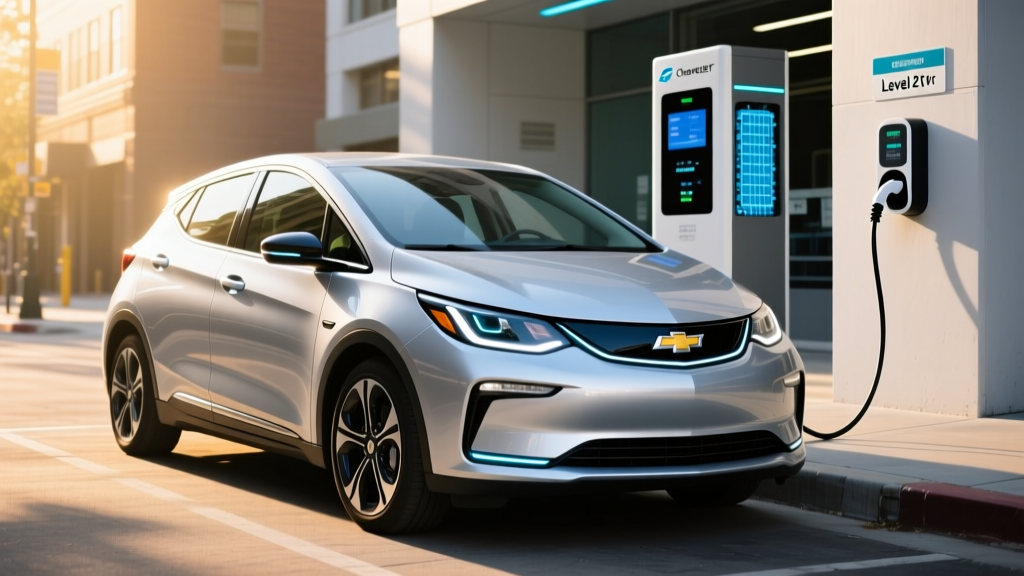
The 2026 Chevrolet Equinox EV RS is Chevy's bid to prove that a mainstream electric compact SUV can wear a sporty badge without compromising practicality. Built on GM's Ultium platform and riding on the same architecture as the Blazer EV and Cadillac Lyriq, the Equinox EV RS slots in as the performance-oriented trim of the Equinox EV lineup. It delivers 315 miles of EPA-estimated range, a dual-motor all-wheel-drive system producing 288 horsepower, and an aggressive design that separates it from the more subdued LT and Launch Edition trims.
But does the RS badge justify its premium over the base Equinox EV? After examining the specs, charging behavior, ownership economics, and competitive landscape, the answer is nuanced. The RS is the most engaging Equinox EV to drive, but its higher price pushes it dangerously close to the federal tax credit's MSRP ceiling — and competitors like the Hyundai Ioniq 5 and Tesla Model Y offer compelling counterarguments. Here's everything you need to know before configuring one.
Range, Battery, and Efficiency: What the Numbers Actually Mean
| Spec | Value |
|---|---|
| EPA-Estimated Range | 315 miles (AWD RS) |
| Battery Capacity (Usable) | ~85 kWh |
| Battery Chemistry | NMC (Nickel Manganese Cobalt) |
| EPA Efficiency | 95 MPGe combined / 35 kWh/100 mi |
| Drivetrain | Dual-motor AWD |
| Heat Pump | Standard |
The Equinox EV RS uses an NMC (nickel manganese cobalt) Ultium battery pack with approximately 85 kWh of usable capacity. Unlike the LFP (lithium iron phosphate) packs found in some base-trim EVs from competitors, NMC offers higher energy density — meaning more range in a smaller, lighter package — at the cost of slightly faster long-term degradation and a recommended 80% daily charge limit rather than 100%.
EPA Sticker: 315 miles (AWD RS trim)
Real-World Highway (70 mph, mild weather): Expect roughly 265–285 miles. Aerodynamic drag at sustained highway speeds reduces efficiency by 10–15% versus the EPA combined cycle.
Cold-Weather (below 32°F): Plan for 220–250 miles. Even with the standard heat pump, lithium-ion chemistry loses efficiency in freezing temps, and cabin heating draws significant energy. Preconditioning while plugged in recovers some of this loss.
City/Commuter Driving: You may see 310–330+ miles thanks to regenerative braking and lower average speeds.
The standard heat pump is a significant advantage for buyers in northern climates. Heat pumps move ambient heat rather than generating it resistively, cutting winter cabin-heating energy consumption by roughly 30–40% compared to PTC heaters. This translates directly to less range loss in cold weather — a meaningful edge over competitors that still use resistive heating.
At 35 kWh per 100 miles, the Equinox EV RS is competitive but not class-leading. The Hyundai Ioniq 5 AWD achieves roughly 30 kWh/100 mi, and the Tesla Model Y Long Range AWD sips about 28 kWh/100 mi. Over a year of 12,000 miles, that difference adds up to roughly 60–80 extra kWh — about $10–$15 at home charging rates, but potentially $30–$50 if you rely heavily on DC fast charging.
Charging Speed: DC Fast Charging and Home Level 2
| Charging Level | Power / Rate | Time / Speed |
|---|---|---|
| DC Fast Charge (Peak) | 150 kW | 10–80% in ~30 minutes |
| DC Fast Charge (Sustained Avg) | ~95–110 kW (10–80%) | Varies by charger & battery temp |
| Level 2 (Home / Public AC) | 11.5 kW (48A) | ~29 miles of range per hour; 0–100% in ~9.5 hours |
| Level 1 (120V Outlet) | 1.4 kW (12A) | ~3.5 miles per hour; 30+ hours for full charge |
The Equinox EV RS peaks at 150 kW on DC fast charging, which is adequate for road trips but trails the class leaders. The Hyundai Ioniq 5 and Kia EV6, with their 800V architectures, peak at 230–240 kW and can hit 10–80% in roughly 18 minutes. The Tesla Model Y peaks around 250 kW on V3 Superchargers. At 150 kW, the Equinox EV RS will spend about 12 extra minutes at a charger on a long road trip — noticeable if you're doing multiple 300-mile legs in a day.
Equally important is the charge curve. The Equinox EV RS holds near-peak power through roughly 40–50% state of charge before tapering. By 80% SoC, power drops to around 50–60 kW, which is typical for NMC chemistry on a 400V architecture. GM's battery preconditioning — activated when you navigate to a DC fast charger in the infotainment system — warms the pack to optimize charge acceptance, so always use the built-in navigation for charger routing.
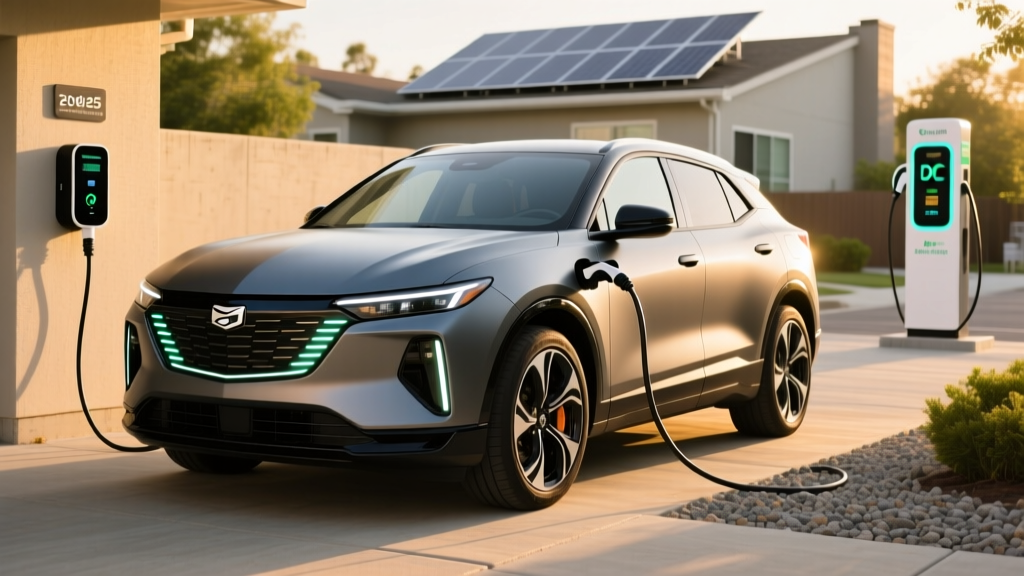
For home charging, the onboard 11.5 kW AC charger is a strong point. A 48-amp Level 2 home charger (like a ChargePoint Home Flex or Emporia Vue) connected to a 60-amp circuit will fully replenish the battery overnight in about 9.5 hours. Expect roughly 29 miles of range per hour of Level 2 charging — enough to cover most daily commutes with a short top-up.
Home installation note: A 60-amp dedicated circuit typically requires a 200-amp electrical panel. If your home has a 100-amp panel, a panel upgrade ($1,500–$3,000) may be necessary. Always have a licensed electrician assess your panel capacity before purchasing a Level 2 charger.
Performance and Driving Dynamics
| Spec | Value |
|---|---|
| Horsepower | 288 hp (combined dual-motor) |
| Torque | 342 lb-ft |
| 0–60 mph | ~6.2 seconds (AWD) |
| Drivetrain | Dual-motor AWD |
| Drive Modes | Normal, Sport, Snow/Ice, Tow/Haul |
| Towing Capacity | 1,500 lbs (when properly equipped) |
The RS trim's dual-motor AWD setup delivers 288 hp and 342 lb-ft of instant torque, launching the Equinox EV RS to 60 mph in approximately 6.2 seconds. That's brisk for a compact SUV — quicker than the gasoline Equinox RS (which managed around 7.5 seconds) and competitive with the Ford Mustang Mach-E Select AWD (~6.3 seconds). It won't embarrass a Tesla Model Y Long Range (4.8 seconds), but the Equinox EV RS was never aiming for that bracket.
Where the RS earns its badge is in chassis tuning. GM has firmed up the suspension relative to the LT trim, and the low center of gravity from the floor-mounted battery pack keeps body roll well-controlled through corners. Steering is heavier in Sport mode, though it lacks the precision feedback of the Ioniq 5 or Mach-E. The regenerative braking system offers multiple levels of aggressiveness, and the one-pedal driving mode is smooth and predictable — a must for stop-and-go commuter traffic.
The 1,500-lb towing capacity is modest. If you need to tow a small utility trailer or a pair of jet skis, it'll work. For anything heavier, the Ford F-150 Lightning or Rivian R1S are more appropriate platforms.
Interior, Tech, and Cargo Space
The Equinox EV RS cabin is dominated by a 17.7-inch diagonal infotainment touchscreen — one of the largest in the compact EV SUV segment — paired with an 11-inch digital instrument cluster. The system runs GM's latest Ultifi-based software with Google Built-In (Google Maps, Google Assistant, Google Play Store), wireless Apple CarPlay, and wireless Android Auto.
Standout tech features:
- 17.7-inch infotainment display with Google Built-In
- Super Cruise availability (hands-free driving on 400,000+ miles of compatible roads — SAE Level 2, driver monitoring required)
- Head-up display (standard on RS)
- Wireless phone charging pad
- EV-specific route planning with automatic battery preconditioning
- Over-the-air (OTA) software updates
Cargo and passenger dimensions:
- Cargo volume (behind 2nd row): 26.4 cu ft
- Cargo volume (2nd row folded): 57.2 cu ft
- Front trunk (frunk): Not available on Equinox EV
- Rear legroom: 38.1 inches
- Front headroom: 40.0 inches
The absence of a frunk is a missed opportunity — the Ultium platform doesn't package one for the Equinox EV, unlike the Blazer EV or the Hyundai Ioniq 5 (which offers 0.85 cu ft up front). Cargo space behind the second row is adequate for weekly groceries and a couple of suitcases, but the 57.2 cu ft maximum with seats folded trails the Tesla Model Y (72 cu ft) and the Ioniq 5 (59.3 cu ft). If maximum cargo flexibility is a priority, those competitors have an edge.
The Super Cruise system, available on the RS trim, is one of the best Level 2 driver-assist systems on the market. It uses a driver-attention camera to monitor eye gaze and allows truly hands-free driving on mapped divided highways. This is not autonomous driving — you must remain attentive and ready to take over — but on long interstate stretches, it significantly reduces fatigue. Expect to pay extra for the Super Cruise subscription after the initial trial period.
Pricing, Trims, and Federal Tax Credit
| Trim | Drivetrain | Base MSRP | Est. After §30D Credit* |
|---|---|---|---|
| LT (FWD) | FWD | $33,600 | ~$26,100 |
| LT (AWD) | AWD | $36,600 | ~$29,100 |
| RS (AWD) | AWD | $43,400 | ~$35,900 |
| RS w/ Super Cruise & Pkg | AWD | ~$48,500 | ~$41,000 |
*Estimated prices assume full $7,500 federal tax credit eligibility. Actual credit depends on individual tax situation and IRS sourcing rules.
The 2026 Equinox EV RS AWD starts at approximately $43,400 (including destination). Adding Super Cruise, premium audio, and the available appearance packages can push the as-tested price to $48,000–$50,000.
The Equinox EV RS may qualify for up to $7,500 under IRS §30D, but eligibility depends on multiple factors:
- MSRP Cap: SUVs must be under $80,000 — the Equinox EV RS qualifies at $43,400 base.
- Buyer Income Cap: Modified AGI must not exceed $150,000 (single), $225,000 (head of household), or $300,000 (joint).
- Battery Sourcing: Critical minerals and battery components must meet phased-in percentage thresholds from US or FTA-partner countries. GM has worked to shift Ultium battery sourcing to US/FTA suppliers, but verify current-year compliance on fueleconomy.gov before purchasing.
- Assembly: Vehicle must undergo final assembly in North America. The Equinox EV is built in Ramos Arizpe, Mexico — which qualifies under USMCA, but verify specific VIN eligibility.
- Point-of-Sale Transfer: You can elect to transfer the credit to the dealer at purchase, reducing your out-of-pocket cost immediately rather than waiting for tax filing.
Important: Tax credit rules change frequently. Consult a tax professional and verify your specific VIN's eligibility at fueleconomy.gov before committing to a purchase.
Warranty and Ownership Costs
| Coverage | Term |
|---|---|
| Battery & Propulsion (Limited) | 8 years / 100,000 miles |
| Battery Capacity Retention | Warranted to retain ≥70% of original capacity during coverage period |
| Bumper-to-Bumper | 3 years / 36,000 miles |
| Powertrain (non-battery) | 5 years / 60,000 miles |
| Corrosion | 6 years / 100,000 miles |
| Roadside Assistance | 5 years / 60,000 miles |
The 8-year/100,000-mile battery warranty with a 70% capacity retention threshold is standard for the industry and matches what Hyundai, Ford, and Tesla offer. NMC chemistry typically degrades 10–15% over the first 100,000 miles under normal use (avoiding frequent 100% charges and DC fast charging in extreme heat). GM's Ultium pack includes active liquid thermal management, which helps slow degradation — but you should still follow best practices: charge to 80% daily, precondition before fast charging, and avoid letting the battery sit at 0% or 100% for extended periods.
Insurance costs for the Equinox EV RS are likely to run 10–20% higher than the gasoline Equinox RS, reflecting higher repair costs for EV-specific components and the elevated MSRP. Expect annual premiums of $1,800–$2,400 depending on your state, driving record, and coverage level. Get quotes from your insurer before purchasing to avoid surprises.
How It Stacks Up Against Competitors
| Spec | Equinox EV RS AWD | Hyundai Ioniq 5 AWD | Tesla Model Y LR AWD | Ford Mach-E Select AWD |
|---|---|---|---|---|
| EPA Range | 315 mi | 290 mi | 330 mi | 290 mi |
| Battery (Usable) | ~85 kWh | 77.4 kWh | ~75 kWh | 75.7 kWh |
| Peak DC Charge | 150 kW | 238 kW | 250 kW | 150 kW |
| 10–80% DC Time | ~30 min | ~18 min | ~22 min | ~30 min |
| Horsepower | 288 hp | 320 hp | 384 hp | 305 hp |
| 0–60 mph | ~6.2 sec | ~5.0 sec | ~4.8 sec | ~5.5 sec |
| Cargo (behind 2nd) | 26.4 cu ft | 27.2 cu ft | 30.2 cu ft | 29.7 cu ft |
| Base MSRP (AWD) | $43,400 | ~$50,000 | ~$47,000 | ~$43,000 |
- 315-mile EPA range is among the best in the compact EV SUV class
- Standard heat pump improves cold-weather efficiency
- 17.7-inch display and Google Built-In infotainment are excellent
- Super Cruise availability for hands-free highway driving
- Competitive starting MSRP for AWD with this much range
- Quiet, comfortable ride quality on the highway
- 150 kW DC fast charging is slow vs. Ioniq 5 and Model Y
- No front trunk (frunk) reduces total cargo versatility
- Less cargo space than Model Y and Mach-E with seats up
- RS trim price climbs quickly with packages, approaching credit/competition limits
- 1,500-lb towing capacity is the lowest in the comparison set
- NMC battery requires 80% daily charge limit (vs. 100% for LFP rivals)
Who Should Buy the 2026 Equinox EV RS?
The Equinox EV RS is best suited for daily commuters and small families who prioritize range and tech over maximum charging speed and cargo volume. If your typical week involves a 30–60 mile round-trip commute with weekend errands, the 315-mile range means you'll charge at home once or twice a week on Level 2 and almost never think about range. The Super Cruise system makes it a standout for anyone with a long interstate commute.
Choose the Equinox EV RS if:
- You want 300+ miles of range in a mainstream-badged AWD SUV under $45,000
- Hands-free highway driving (Super Cruise) is a priority
- You live in a cold climate and value the standard heat pump
- You primarily charge at home and take road trips only a few times per year
Look elsewhere if:
- You road-trip frequently and need the fastest possible DC charging (consider Ioniq 5 or Model Y)
- You need maximum cargo space for gear, dogs, or camping equipment (Model Y wins)
- You tow regularly (consider the F-150 Lightning or Rivian R1S)
- You prefer to charge to 100% daily without battery-health concerns (consider an LFP-equipped rival)
Frequently Asked Questions
What is the real-world range of the 2026 Equinox EV RS?
The EPA rates the AWD RS at 315 miles combined. In real-world highway driving at 70 mph in moderate temperatures, expect 265–285 miles. In freezing weather, plan for 220–250 miles even with the heat pump. City driving with regenerative braking can match or slightly exceed the EPA figure.
How fast does the Equinox EV RS charge at home and on DC fast chargers?
On DC fast charging, it peaks at 150 kW and reaches 10–80% in about 30 minutes. At home on a 48-amp Level 2 charger (11.5 kW), it adds roughly 29 miles of range per hour and charges fully in about 9.5 hours. On a standard 120V outlet (Level 1), expect about 3.5 miles per hour.
Does the 2026 Equinox EV RS qualify for the $7,500 federal tax credit?
It may qualify for up to $7,500 under IRS §30D, depending on your income (AGI caps apply: $150K single / $300K joint), the vehicle's battery-sourcing compliance, and final assembly location. The MSRP of $43,400 is well under the $80,000 SUV cap. Verify your specific VIN at fueleconomy.gov and consult a tax professional before relying on the credit. Point-of-sale transfer to the dealer is available if eligible.
Is the Equinox EV RS worth buying over the Tesla Model Y or Hyundai Ioniq 5?
It depends on your priorities. The Equinox EV RS offers the best range-per-dollar of the three at its base price and includes Super Cruise. The Ioniq 5 charges significantly faster (238 kW peak, ~18 min 10–80%). The Model Y has the most cargo space, the largest Supercharger network, and the quickest acceleration. If range, comfort, and mainstream dealer service matter most, the Equinox EV RS is a strong pick. If fast charging and cargo space top your list, cross-shop the Ioniq 5 and Model Y.
What is the battery warranty on the Equinox EV RS?
GM covers the Ultium battery and electric propulsion components for 8 years or 100,000 miles, whichever comes first. The battery is warranted to retain at least 70% of its original capacity during the coverage period. This is standard for the industry and matches Hyundai, Ford, and Tesla.
Does the Equinox EV RS have a front trunk (frunk)?
No. Unlike some competitors (the Ioniq 5 has a small frunk, and the Mach-E offers a drainable frunk), the Equinox EV does not include front trunk storage. All cargo must go in the rear hatch area.
Can I use Super Cruise on any road?
No. Super Cruise works only on over 400,000 miles of GM-mapped compatible divided highways in the US and Canada. It is an SAE Level 2 system — you must remain attentive, and the driver-monitoring camera tracks your eye gaze at all times. It does not handle city streets, construction zones, or unmapped roads.