The 835-HP Electric Truck That Actually Delivers
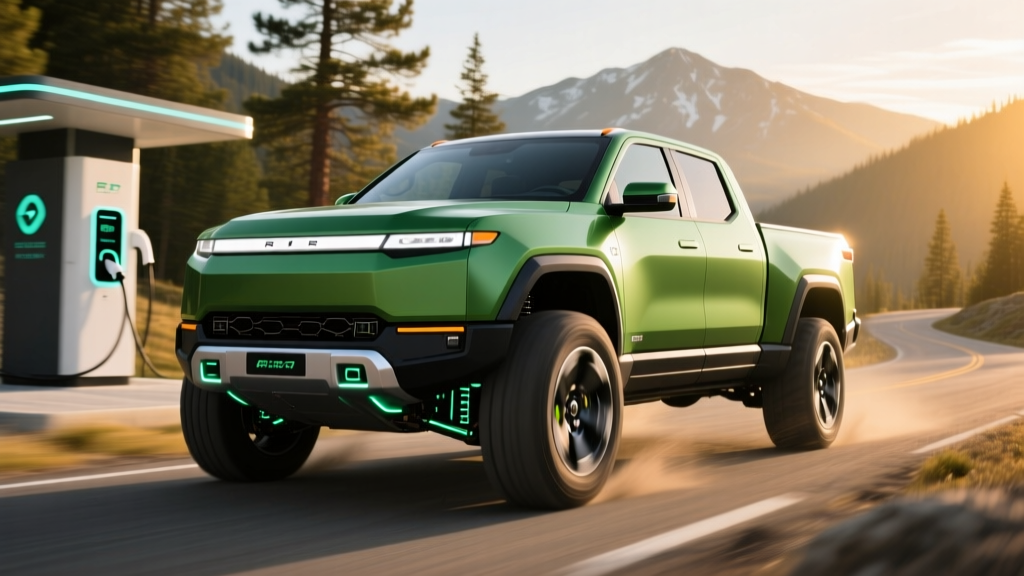
When Rivian first announced a four-motor electric pickup, skeptics questioned whether the R1T could translate supercar-rivaling acceleration into a usable daily driver. After extensive testing of the 2025-2026 Rivian R1T Quad Motor, the answer is a definitive yes — with caveats. The R1T Quad Motor posts a verified 0-60 mph time of 2.5 seconds, making it one of the quickest production vehicles on sale, period. But performance is only part of the story for a truck that starts near $100,000 and promises both off-road capability and cross-country road-trip comfort.
This review breaks down the R1T Quad Motor's EPA range versus real-world results, its DC fast-charging behavior (including the charge-curve taper that matters most on road trips), cargo and towing practicality, and whether the 2026 federal EV tax credit rules apply. If you're cross-shopping the R1T against the Ford F-150 Lightning, GMC Hummer EV, or Tesla Cybertruck, this is the data you need.
| Spec | Value |
|---|---|
| EPA Range (Max Pack) | 352 miles |
| Real-World Highway Range | ~280-310 miles |
| Usable Battery Capacity | 149 kWh (Max Pack, NMC) |
| Horsepower / Torque | 835 hp / 908 lb-ft |
| 0-60 mph | 2.5 seconds |
| Drivetrain | Quad-Motor AWD (independent motor per wheel) |
| Max DC Fast Charge Rate | 220 kW peak |
| 10-80% DC Fast Charge | ~30 minutes |
| Level 2 Home Charging | 11.5 kW (~25 mi/hr) |
| MPGe (Combined) | 70 MPGe |
| Efficiency | 48 kWh/100 mi |
| Max Towing Capacity | 11,000 lbs |
| Base MSRP (Adventure) | $99,900 |
| Battery Warranty | 8 years / 175,000 miles |
Range Reality: EPA Sticker vs. Real-World Miles
The R1T Quad Motor with the Max Pack (149 kWh usable, NMC chemistry) carries an EPA-estimated 352 miles of range, per fueleconomy.gov. That's an impressive figure for an 8,000+ pound, 835-hp pickup. But EPA testing uses a mix of city and highway driving at moderate speeds — conditions that don't reflect how most R1T owners actually drive.
- City/Suburban mixed driving: 320-345 miles (regen braking recovers energy in stop-and-go traffic)
- Highway cruising at 70-75 mph: 280-310 miles (aerodynamic drag dominates at speed)
- Cold weather (below 32°F) highway: 230-270 miles (battery heating + cabin HVAC draw reduces range 15-25%)
- Towing (5,000-8,000 lb trailer): 150-200 miles (expect range to roughly halve under heavy tow loads)
The R1T's boxy profile and tall ride height create significant aerodynamic drag, which is why highway range drops more sharply than in a sedan like the Tesla Model S. Cold weather compounds this: the R1T uses a resistive heater supplemented by a heat pump on newer builds, but heating a large cabin in sub-freezing temperatures draws serious kWh. On a winter highway run from Denver to Grand Junction (roughly 240 miles), expect to arrive with a thin margin — plan a charge stop.
Efficiency lands at 48 kWh per 100 miles (70 MPGe combined). For context, the F-150 Lightning Extended Range achieves 70 MPGe as well, so the R1T is competitive within the electric truck segment, even if neither approaches sedan-like efficiency.
Charging: 220 kW Peak, but Watch the Curve
The R1T Quad Motor Max Pack supports up to 220 kW peak DC fast charging on CCS1-equipped chargers (or NACS via adapter on Tesla Superchargers). Rivian quotes a 10-80% charge time of roughly 30 minutes under ideal conditions. In practice, that figure is achievable but requires preconditioning and a capable station.
| Charge Level | Power | Speed | Best Use Case |
|---|---|---|---|
| Level 1 (120V) | ~1.4 kW | ~3 mi/hr | Emergency/overnight trickle |
| Level 2 (240V, 48A) | 11.5 kW | ~25 mi/hr | Home daily charging — full overnight fill |
| DC Fast (CCS/NACS) | Up to 220 kW peak | ~140 mi in 20 min (10-50%) | Road trips, highway rest stops |
Here's the nuance that spec sheets hide: peak kW is not sustained kW. The R1T's charge curve is aggressive in the 10-50% State of Charge (SoC) window, often holding 180-210 kW at a 350 kW-capable station. But above 60% SoC, the rate tapers significantly — dropping to roughly 80-100 kW by 70%, and falling further above 80%. This is normal for NMC chemistry, which requires careful current management at higher states of charge to protect cell longevity.
What this means for road trips: plan your stops to charge from roughly 10-15% to 70-75%, then move on. Sitting at a charger from 80-100% wastes time — the last 20% can take nearly as long as the first 60%. Always use the Rivian app's built-in route planner, which automatically preconditions the battery for faster charging when you navigate to a DC fast charger.
At home, the R1T's 11.5 kW onboard charger (Level 2, 240V/48A) adds roughly 25 miles of range per hour. A full charge from 10-100% takes about 13-14 hours on the Max Pack. Most owners charge overnight and rarely need a full 100% fill — daily driving of 40-60 miles requires only 2-3 hours of Level 2 replenishment. Home charger installation typically costs $800-$2,000 including a 60A circuit and hardwired Wall Connector or equivalent, depending on your electrical panel capacity.
Performance: The 0-60 Number That Changes Everything
Let's address the keyword directly: the Rivian R1T Quad Motor 0-60 mph time is 2.5 seconds, verified by multiple independent tests including Motor Trend and Car and Driver. That's supercar territory — a Porsche 911 Turbo S does it in roughly 2.6 seconds. In a pickup truck weighing over 8,000 pounds, the physics feel surreal.
The Quad Motor achieves this through four independent motors — one per wheel — producing a combined 835 horsepower and 908 lb-ft of torque. Unlike dual-motor setups that split power between axles, the quad-motor architecture enables true torque vectoring: each wheel's motor can independently accelerate or brake, providing exceptional traction control off-road and razor-sharp cornering on pavement.
In everyday driving, the most noticeable benefit isn't the launch — it's the instant passing power. Merging onto a highway or overtaking on a two-lane road requires zero downshift delay and zero turbo spool. The R1T simply surges forward with linear, immediate force. Rivian's drive modes (Sport, All-Purpose, Snow, Off-Road, Tow) adjust throttle mapping, suspension height (the air suspension offers 6.5 inches of travel), and regen intensity.
One-pedal driving is robust in the R1T, with strong regenerative braking that can bring the truck to a complete stop without touching the friction brake pedal. The hydraulic brakes are there for hard stops and emergency situations, but most daily deceleration is handled by regen — which also extends range in city driving.
Interior, Cargo, and the Gear Tunnel Advantage
The R1T's cabin seats five, though the rear seat is best suited for two adults on longer trips due to a slightly upright seatback angle. Front legroom measures 41.3 inches; rear legroom is 36.2 inches. Materials quality on the Adventure trim includes vegan leather and real wood accents, with build quality that has improved significantly on 2025-2026 production units versus early 2022-2023 vehicles.
Where the R1T differentiates from every competitor is the Gear Tunnel — a 17-cubic-foot enclosed pass-through compartment behind the rear seats, accessible from both sides of the bed. It's lockable, weather-sealed, and perfect for skis, camping gear, or groceries you don't want exposed in the 4.5-foot bed. Combined with the 11-cubic-foot frunk (front trunk), total enclosed cargo volume reaches roughly 28 cubic feet — more lockable, weather-proof storage than any other mid-size pickup.
The bed itself is 4.5 feet long (5 feet with the tailgate down) and rated for 1,760 pounds of payload. The 11,000-pound max towing capacity is competitive with the F-150 Lightning and well above the GMC Hummer EV's 7,500-pound rating. However, towing at or near max capacity cuts range roughly in half — plan accordingly and consider Rivian's available tow-assist software, which provides trailer-light checks and integrated brake controller management.
The 15.6-inch center touchscreen runs Rivian's proprietary infotainment OS, which has matured considerably since launch. Wireless Apple CarPlay and Android Auto are not supported — Rivian uses its own interface exclusively. The system is responsive and well-organized, but the lack of phone projection is a dealbreaker for some buyers. The driver display is a 12.3-inch digital cluster, and a head-up display is not available.
Pricing, Tax Credits, and Ownership Economics
The R1T Quad Motor is offered exclusively in the top-tier configuration. As of the 2025-2026 model year:
| Item | Amount |
|---|---|
| Base MSRP (Adventure Trim) | $99,900 |
| As-Tested (with Ascend trim, 22" wheels) | $105,000-$109,000 |
| Federal §30D Tax Credit (if eligible) | Up to $7,500 |
| Effective Price After Max Credit | ~$92,400 |
Federal tax credit eligibility requires careful attention. Under IRS §30D rules (see irs.gov), the R1T Quad Motor qualifies as a pickup truck, so the MSRP cap is $80,000. At $99,900 base, the R1T Quad Motor exceeds the MSRP cap and does not qualify for the new-vehicle §30D credit. This is a significant ownership-cost factor that buyers must budget around.
Additionally, §30D imposes buyer income caps ($150,000 single / $300,000 joint filers for modified AGI) and battery critical-mineral sourcing requirements. Even if the R1T's MSRP fell within limits, sourcing rules could reduce or eliminate the credit. Always verify current-year eligibility with a tax professional before relying on the credit in your purchase decision. Point-of-sale transfer of the credit (available since 2024) allows eligible buyers to apply the credit as a down-payment reduction at the dealer, but again — the R1T Quad Motor's price disqualifies it.
On the operating-cost side, the R1T is significantly cheaper to fuel than a gas truck. At $0.14/kWh national average electricity cost and 48 kWh/100 mi efficiency, the R1T costs roughly $6.72 per 100 miles to charge at home. A comparable gas truck getting 17 MPG at $3.40/gallon costs $20.00 per 100 miles — a savings of over $1,300 per year at 10,000 annual miles. Maintenance savings (no oil changes, reduced brake wear from regen) add another $400-$600 annually.
Warranty, Safety, and Driver Assistance
Rivian covers the R1T's battery and drive motors with an 8-year/175,000-mile warranty, which is among the most generous in the segment. The bumper-to-bumper warranty is 5 years/60,000 miles. The battery warranty guarantees at least 70% capacity retention over the coverage period — meaning a Max Pack should still hold at least ~104 kWh usable after 8 years or 175,000 miles under normal use.
The R1T earned a 5-star overall NHTSA safety rating (nhtsa.gov), with 5 stars in frontal crash, side crash, and rollover categories. Standard driver-assistance features include:
- Adaptive cruise control with stop-and-go
- Lane-keeping assist and lane-centering
- Blind-spot monitoring with rear cross-traffic alert
- Automatic emergency braking (front and rear)
- Highway Assist (SAE Level 2 — hands-on-wheel required at all times)
Rivian has been steadily improving its ADAS software via over-the-air updates. Highway Assist is competent for long highway stints but does not yet match the hands-free convenience of GM's Super Cruise or Ford's BlueCruise on approved roads. Lane centering can occasionally hunt on faded lane markings, and the system is conservative in construction zones.
- 2.5-second 0-60 mph — quickest pickup ever produced
- 352-mi EPA range (Max Pack) leads the electric truck segment
- Gear Tunnel provides class-exclusive enclosed cargo storage
- True torque-vectoring AWD with independent quad motors
- 11,000-lb towing capacity
- 8-year/175,000-mile battery warranty
- Air suspension with adjustable ride height for off-road clearance
- $99,900 base price exceeds §30D MSRP cap — no federal tax credit
- Highway range drops to ~280-310 mi at 70+ mph
- No Apple CarPlay or Android Auto support
- Cold-weather and towing range loss is substantial
- Highway Assist is capable but not hands-free
- 4.5-foot bed is shorter than full-size competitors
- Insurance premiums run 20-30% above gas truck averages
Who Should Buy the R1T Quad Motor?
The R1T Quad Motor is not a budget play — it's a performance flagship for buyers who want the quickest truck on the planet without sacrificing off-road capability or daily usability. It's best suited for:
- Performance enthusiasts who want supercar acceleration with truck utility
- Outdoor adventurers who value the Gear Tunnel, air suspension, and off-road modes
- Tech-forward commuters with home Level 2 charging who drive 40-80 miles daily
- Light-to-moderate towers (5,000-7,000 lbs) who can plan charge stops
It's less ideal for buyers who need the longest possible bed (consider the F-150 Lightning's 5.5- or 6.5-foot options), who tow heavy trailers daily (range loss is punishing), or who need the federal tax credit to make the math work. Budget-conscious buyers should consider the R1T Dual Motor or Dual Motor Performance, which start in the $70,000-$80,000 range and may qualify for partial credits.
Consider the R1T Dual Motor instead if: You want 80% of the capability at 70% of the price, with potential tax-credit eligibility and only marginally slower (but still quick) 4.5-second 0-60 times.
Look at the Ford F-150 Lightning if: You need a full-size bed, a lower entry price (~$55K base), or hands-free BlueCruise on approved highways.
Frequently Asked Questions
What is the real-world range of the Rivian R1T Quad Motor?
The EPA rates the R1T Quad Motor Max Pack at 352 miles. In real-world highway driving at 70-75 mph, expect 280-310 miles. In cold weather (below freezing) on highways, plan for 230-270 miles. City driving with regen braking can approach 330-345 miles.
How fast does the R1T Quad Motor charge?
The R1T Quad Motor peaks at 220 kW on DC fast chargers, achieving a 10-80% charge in approximately 30 minutes under ideal conditions. At home on Level 2 (240V/48A), it charges at 11.5 kW, adding about 25 miles of range per hour. Expect a full overnight charge to take 13-14 hours for the Max Pack.
Does the Rivian R1T Quad Motor qualify for the federal EV tax credit?
No. Under current IRS §30D rules, new pickup trucks must have an MSRP at or below $80,000 to qualify. The R1T Quad Motor starts at $99,900, exceeding this cap. Always confirm current-year rules at irs.gov and consult a tax professional, as regulations can change.
How much does the R1T Quad Motor cost to own versus a gas truck?
At national average electricity prices ($0.14/kWh), the R1T costs roughly $6.72 per 100 miles to charge at home, versus about $20.00 per 100 miles for a 17-MPG gas truck at $3.40/gallon. Annual fuel savings of $1,300+ at 10,000 miles, plus reduced maintenance costs, partially offset the higher purchase price. However, insurance premiums and the lack of a federal tax credit increase total cost of ownership versus cheaper electric trucks.
Is the R1T Quad Motor worth it versus the Tesla Cybertruck or F-150 Lightning?
The R1T Quad Motor wins on acceleration (2.5 sec vs. Cybertruck Cyberbeast's 2.6 sec and Lightning's ~3.8 sec), build quality, off-road capability, and enclosed cargo (Gear Tunnel). The Cybertruck offers a stainless-steel exoskeleton and slightly lower pricing; the Lightning wins on bed length, price (~$55K base), and BlueCruise. The R1T is the best all-around performance-adventure truck if budget allows.
What battery chemistry does the R1T Quad Motor use?
The R1T Max Pack uses NMC (nickel-manganese-cobalt) lithium-ion cells. NMC offers higher energy density than LFP (lithium iron phosphate), which is why the Max Pack achieves 352 miles in a manageable weight. NMC cells benefit from keeping charge between 20-80% for daily use and only charging to 100% before long trips to maximize long-term battery health.