Quick Verdict: The Affordable Long-Range Crossover Gets Sharper
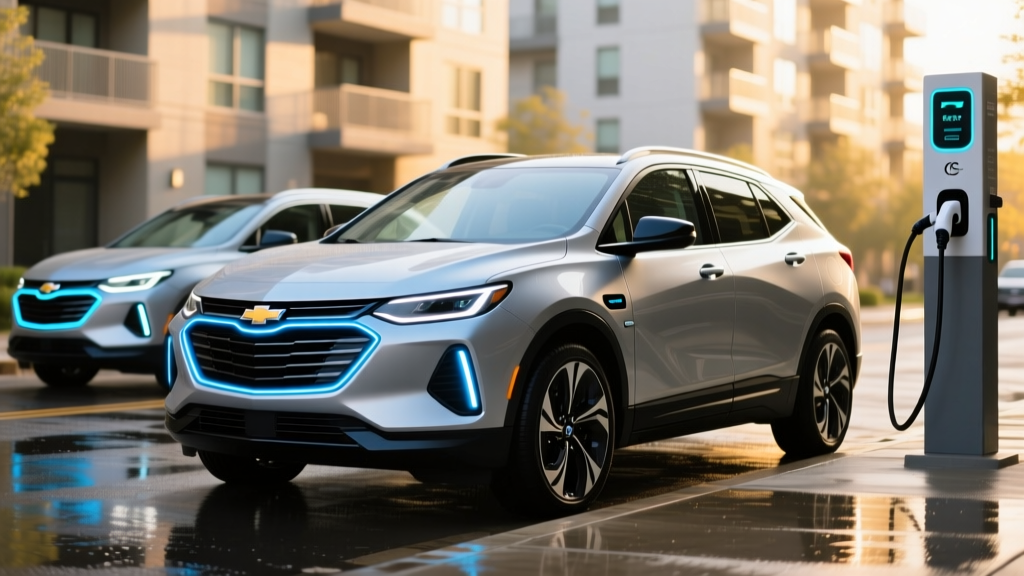
The 2026 Chevrolet Equinox EV continues to occupy a rare position in the electric vehicle market: a mainstream compact crossover delivering over 300 miles of EPA-estimated range at a starting price that undercuts most rivals. Built on GM's Ultium platform with an 85 kWh (usable) lithium-ion battery, the Equinox EV targets buyers who want practicality without paying luxury premiums. For 2026, Chevrolet has streamlined the lineup into three primary trims—LT, RS, and the new-for-2026 Midnight appearance package on the RS—while retaining the core powertrain and battery architecture that debuted with the 2024 model year.
The real question for shoppers isn't whether the Equinox EV is a competent electric crossover—it is. The decision comes down to which of the Chevy Equinox EV trims aligns with your budget, range requirements, and feature priorities. Below, we break down every trim with exact specs, real-world range expectations, charging performance, and tax-credit-adjusted pricing so you can make a precise comparison.
2026 Chevy Equinox EV Trim Lineup at a Glance
| Trim | Drivetrain | HP / Torque | EPA Range | 0-60 mph | Base MSRP |
|---|---|---|---|---|---|
| LT FWD (2LT) | FWD (single motor) | 213 hp / 236 lb-ft | 319 mi | ~8.0 sec | $33,600 |
| LT AWD (2LT Launch) | AWD (dual motor) | 288 hp / 355 lb-ft | 285 mi | ~6.7 sec | $36,600 |
| RS FWD (3RS) | FWD (single motor) | 213 hp / 236 lb-ft | 319 mi | ~8.0 sec | $41,400 |
| RS AWD (3RS) | AWD (dual motor) | 288 hp / 355 lb-ft | 285 mi | ~6.7 sec | $44,900 |
| RS Midnight AWD | AWD (dual motor) | 288 hp / 355 lb-ft | 285 mi | ~6.7 sec | $46,400 |
All trims share the same 85 kWh usable Ultium battery pack. The range difference between FWD and AWD trims comes down to the second motor's weight and parasitic drag, not a smaller battery. This is a critical distinction—GM does not offer a reduced-capacity pack on any Equinox EV trim.
Range, Efficiency, and Real-World Expectations
FWD trims: EPA 319 miles. Real-world highway driving at 70-75 mph yields approximately 265-285 miles. In freezing temperatures (below 32°F), expect 220-250 miles without preconditioning.
AWD trims: EPA 285 miles. Real-world highway: ~235-255 miles. Cold weather: ~195-220 miles without preconditioning.
The Equinox EV's efficiency ratings land at approximately 109 MPGe combined for FWD models and 97 MPGe combined for AWD models, according to fueleconomy.gov. In consumption terms, that's roughly 29 kWh/100 miles (FWD) and 33 kWh/100 miles (AWD). These are respectable figures for a crossover in this weight class, though the Hyundai Ioniq 5 and Tesla Model Y edge slightly ahead in efficiency per kWh.
Several factors compress real-world range below the EPA sticker. Highway driving at sustained speeds above 70 mph increases aerodynamic drag disproportionately—the Equinox EV's boxy crossover profile doesn't help here. Cold weather impacts are significant: lithium-ion batteries lose 20-30% of usable capacity in sub-freezing conditions, and cabin heating draws additional power. The Equinox EV does include a heat pump on all trims for 2026, which mitigates cold-weather losses compared to resistive heating, but physics still wins. Preconditioning the battery while plugged in (using the myChevrolet app) before departure recovers a meaningful portion of that lost range.
Charging Speeds: DC Fast Charging and Home Level 2
| Charging Level | Power / Rate | Time / Miles Added |
|---|---|---|
| Level 1 (120V household) | ~1.4 kW | ~3-4 miles per hour |
| Level 2 (240V, 48A) | 11.5 kW | ~34 miles per hour; full charge in ~9 hours |
| DC Fast Charge (peak) | 150 kW (max) | 10-80% in ~32 minutes |
| DC Fast Charge (10-50%) | Sustained ~120-140 kW | ~15 minutes (best-case curve) |
The Equinox EV's onboard charger supports up to 11.5 kW on Level 2, which is competitive for overnight home charging. At a properly installed 48-amp Level 2 station (requiring a 60-amp circuit), you'll add roughly 34 miles of range per hour—enough to replenish a full day's driving in 2-3 hours.
On DC fast charging, the 150 kW peak rate is where the Equinox EV shows its budget positioning. Competitors like the Hyundai Ioniq 5 (peak 240 kW with its 800V architecture) and the Tesla Model Y (peak ~250 kW on V3 Superchargers) charge considerably faster in the 10-80% window. The Equinox EV's charge curve holds near peak through about 50% state of charge, then tapers progressively. In practice, a 10-80% session takes approximately 32 minutes at a capable 150+ kW station on networks like Electrify America or EVgo. That's adequate for road trips with planned stops, but it means you'll spend 10-15 minutes longer at each charger compared to 800V competitors.
For NACS versus CCS compatibility: the 2026 Equinox EV comes equipped with the North American Charging Standard (NACS) port natively. This grants direct access to Tesla Supercharger stations (now open to non-Tesla EVs via NACS) without an adapter, a significant practical advantage over CCS-equipped rivals that still require a CCS-to-NACS adapter for Supercharger access.
Performance, Ride, and Drivetrain Details
The front-wheel-drive single-motor configuration produces 213 horsepower and 236 lb-ft of torque. Acceleration to 60 mph takes approximately 8.0 seconds—adequate for highway merging and daily commuting, but not quick by EV standards. The torque delivery is immediate and linear, as expected from an electric motor, which makes the FWD Equinox EV feel peppier in city driving than the 0-60 time suggests.
Stepping to the dual-motor AWD configuration bumps output to 288 horsepower and 355 lb-ft of torque, dropping the 0-60 time to roughly 6.7 seconds. This is a meaningful improvement for buyers in snow-belt states or those who want confident passing power. The AWD system uses an independent rear motor that disengages under light-load cruising to preserve efficiency—a clever software trick that narrows the efficiency gap between FWD and AWD in mixed driving.
Ride quality is tuned toward comfort rather than sportiness. The Equinox EV absorbs road imperfections well, and the low center of gravity from the under-floor battery pack keeps body roll controlled through corners. Steering is light and numb—fine for parking lots, less engaging on back roads. Towing capacity is rated at 1,500 pounds across all trims when properly equipped, which covers a small utility trailer or bike rack but rules out any serious hauling.
Interior, Cargo, and Technology
The Equinox EV's cabin is defined by a 17.7-inch diagonal infotainment touchscreen that dominates the dashboard, paired with an 11-inch digital instrument cluster. The system runs GM's latest Ultifi-based software with Google Built-In (Google Maps, Google Assistant, and Play Store apps native to the vehicle). Wireless Apple CarPlay and Android Auto are standard on all trims. The interface is responsive, though the heavy reliance on touchscreen controls for climate and vehicle settings can be distracting while driving—physical knobs for volume and temperature would be a welcome improvement.
Passenger space is generous for the compact crossover segment:
- Front headroom: 40.0 inches
- Front legroom: 42.7 inches
- Rear headroom: 38.7 inches
- Rear legroom: 37.8 inches
Cargo volume measures 26.4 cubic feet behind the rear seats and 57.2 cubic feet with the rear seats folded flat. There is no front trunk (frunk)—the space under the hood houses power electronics and HVAC components. This is a missed opportunity that competitors like the Ford Mustang Mach-E and Hyundai Ioniq 5 exploit for additional storage.
Standard driver-assistance features across all trims include Chevy Safety Assist: automatic emergency braking with pedestrian detection, forward collision alert, lane keep assist with lane departure warning, following distance indicator, and automatic high beams. Available Super Cruise (GM's hands-free Level 2 highway driving system) is offered on RS trims as part of an option package. Super Cruise enables hands-off-wheel driving on over 750,000 miles of mapped divided highways in the US and Canada, but it requires driver attention monitoring via an infrared camera and does not handle city streets or unmapped roads.
Pricing, Tax Credits, and Total Cost
| Trim | Base MSRP | Est. §30D Credit | Effective Price | Destination |
|---|---|---|---|---|
| LT FWD (2LT) | $33,600 | Up to $7,500* | ~$26,100 | +$1,395 |
| LT AWD (2LT) | $36,600 | Up to $7,500* | ~$29,100 | +$1,395 |
| RS FWD (3RS) | $41,400 | Up to $7,500* | ~$33,900 | +$1,395 |
| RS AWD (3RS) | $44,900 | Up to $7,500* | ~$37,400 | +$1,395 |
| RS Midnight AWD | $46,400 | Up to $7,500* | ~$38,900 | +$1,395 |
*Federal tax credit eligibility under IRS §30D is subject to multiple requirements as of 2026:
- MSRP cap: The Equinox EV qualifies as an SUV/crossover, so the MSRP cap is $80,000. All trims clear this easily.
- Buyer income limits: Modified adjusted gross income (MAGI) must not exceed $150,000 (single), $225,000 (head of household), or $300,000 (married filing jointly).
- Battery sourcing: The $7,500 credit splits into two halves—$3,750 for critical minerals sourcing and $3,750 for battery component manufacturing. GM has worked to shift Ultium battery sourcing to North America, but exact credit amounts ($3,750 or $7,500) depend on the specific battery's supply chain at time of manufacture. Confirm with your dealer and a tax professional before relying on the full amount.
- Point-of-sale transfer: For 2026, buyers can transfer the credit to the dealer at purchase, reducing the purchase price directly rather than waiting for a tax refund. This is available regardless of tax liability.
The Equinox EV LT FWD at approximately $26,100 after the full credit (if eligible) represents one of the lowest entry points for a 300+ mile EV in the US market. Even if only the $3,750 half-credit applies, the effective price of ~$29,850 remains highly competitive.
Warranty and Battery Coverage
Chevrolet backs the 2026 Equinox EV with the following warranty structure:
- Battery & propulsion system: 8 years / 100,000 miles (whichever comes first), covering capacity loss below 70% of original
- Limited vehicle warranty: 3 years / 36,000 miles bumper-to-bumper
- Powertrain (non-battery): 5 years / 60,000 miles
- Corrosion: 6 years / 100,000 miles
- Roadside assistance: 5 years / 60,000 miles
The 70% capacity retention threshold on the battery warranty is industry-standard (matching Tesla, Ford, and Hyundai). Real-world Ultium battery degradation data is still accumulating given the platform's 2022 launch, but early indicators from GM's Bolt EUV and fleet data suggest degradation in the 5-8% range over the first 100,000 miles for NMC chemistry packs with proper thermal management.
Pros, Cons, and the Competition
- 319-mile EPA range (FWD) is best-in-class at this price point
- Native NACS port for direct Supercharger access
- Spacious cabin with competitive rear legroom
- Available Super Cruise for hands-free highway driving
- Strong federal tax credit eligibility keeps effective prices low
- Heat pump standard on all trims
- 150 kW DC fast-charge peak is slower than 800V rivals
- No front trunk (frunk) for additional cargo
- Touchscreen-heavy climate/vehicle controls lack physical redundancy
- FWD acceleration is leisurely at ~8.0 seconds to 60 mph
- 1,500-lb towing limit is below some gas-powered competitors
- Interior materials feel budget-tier on the LT trim
Against key competitors, the Equinox EV's value proposition is clear. The Hyundai Ioniq 5 charges faster (240 kW peak, 10-80% in ~18 minutes) and has a more distinctive design, but starts higher (~$42,000) and offers less maximum range on its standard battery. The Tesla Model Y provides access to the Supercharger network (though the Equinox EV now matches this natively), quicker acceleration, and slightly better efficiency, but its starting price is higher and its interior is more austere. The Ford Mustang Mach-E is sportier to drive but starts at a premium and has less range per dollar.
Choose the LT FWD if: Maximum range and lowest price are your priorities, you live in a mild climate, and you don't need AWD. This is the value champion.
Choose the LT AWD if: You need all-weather traction but want to stay under $40,000 before incentives. The 34-mile range penalty is worth the security.
Choose the RS FWD if: You want the sportier exterior, larger wheels, and available Super Cruise while keeping range at 319 miles.
Choose the RS AWD or Midnight if: You want the full feature set, all-weather capability, and don't mind the range trade-off for a loaded crossover.
Frequently Asked Questions
What is the real-world range of the Chevy Equinox EV?
The EPA rates FWD trims at 319 miles and AWD trims at 285 miles. In real-world highway driving at 70-75 mph, expect 265-285 miles from FWD and 235-255 from AWD. In freezing temperatures, those figures drop to roughly 220-250 (FWD) and 195-220 (AWD) without battery preconditioning.
How fast does the Equinox EV charge at home and on the road?
On a Level 2 home charger (240V, 48A), the Equinox EV charges at up to 11.5 kW, adding about 34 miles per hour and reaching a full charge in approximately 9 hours. On DC fast chargers, it peaks at 150 kW, reaching 10-80% in about 32 minutes.
How much does the Equinox EV cost after federal tax credits?
The LT FWD starts at $33,600 MSRP. With the full $7,500 §30D credit (if you meet income and sourcing requirements), the effective price drops to approximately $26,100 before destination. Actual credit may be $3,750 or $7,500 depending on battery component and critical mineral sourcing at time of manufacture.
Does the 2026 Equinox EV qualify for the federal EV tax credit?
Yes, all trims fall well under the $80,000 MSRP cap for SUVs. However, eligibility depends on your income (MAGI limits of $150K/$225K/$300K by filing status) and the specific battery's compliance with critical mineral and component sourcing rules under IRS §30D. The credit can be transferred to the dealer at point of sale.
Is the Equinox EV worth buying versus the Tesla Model Y or Hyundai Ioniq 5?
If price-per-mile-of-range is your top metric and you don't need the fastest DC charging, the Equinox EV LT FWD at ~$26,100 after credits is extremely difficult to beat. If fast-charging speed matters for frequent road trips, the Ioniq 5's 240 kW capability is meaningfully better. If you want the most mature software and the broadest Supercharger experience, the Model Y still leads—but the Equinox EV's native NACS port closes that gap considerably.
What battery chemistry does the Equinox EV use?
The Equinox EV uses GM's Ultium battery platform with NMC (nickel manganese cobalt) chemistry. NMC offers higher energy density than LFP (lithium iron phosphate), enabling the 319-mile range in a compact crossover footprint, though it typically shows slightly more degradation over very high mileage compared to LFP.